A.N. Bach Institute of Biochemistry, Research Center of Biotechnology of the Russian Academy of Sciences, Leninsky Prospect 33, Moscow 119071, Russia.
Sensors (Basel). 2017 Dec 25;18(1):36. doi: 10.3390/s18010036.
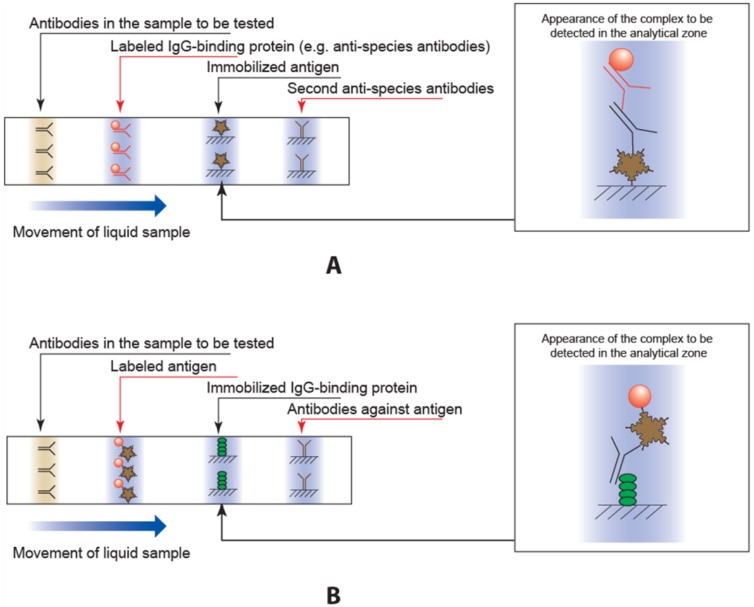
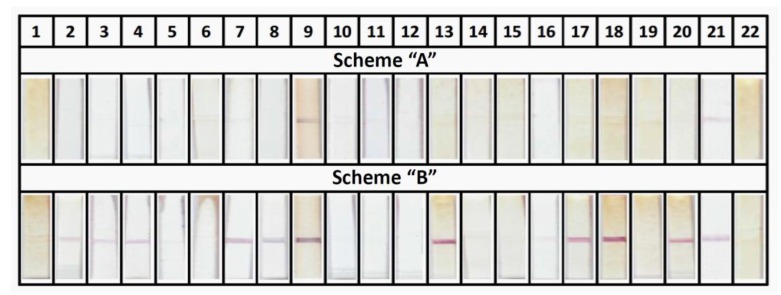
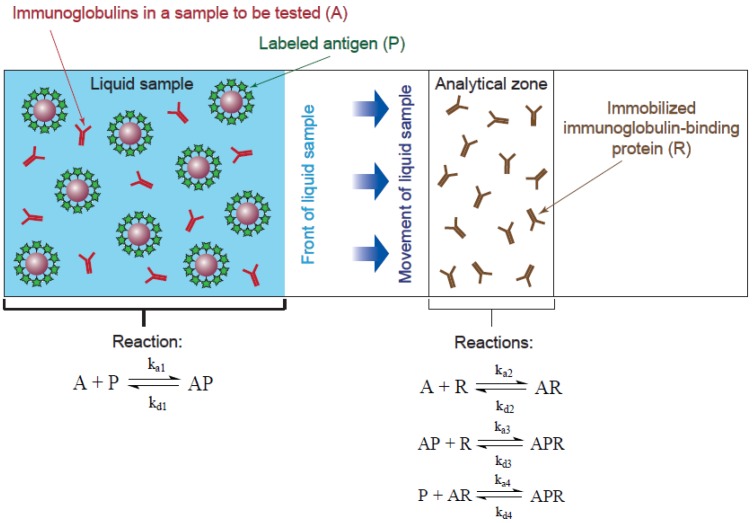
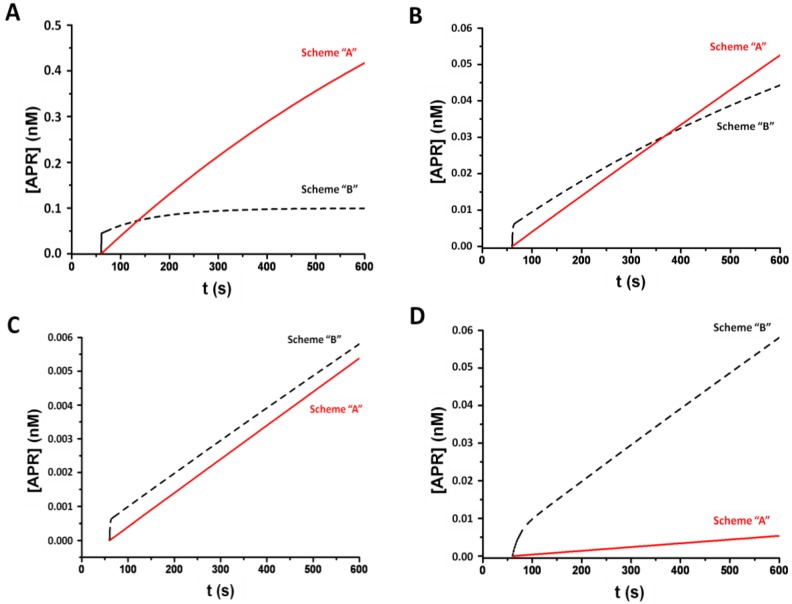
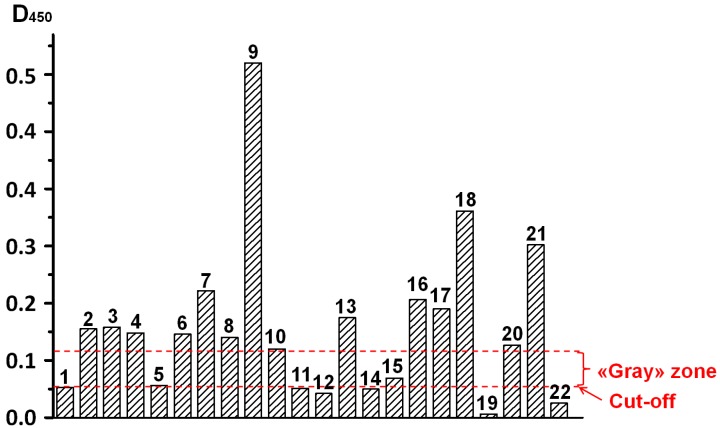
In this study, a comparative theoretical and experimental analysis of two immuno-chromatographic serodiagnostics schemes, which differ in the immobilization of immunoreagents and the order of the formation of immune complexes, is performed. Based on the theoretical models, the assays are characterized to determine which scheme has a higher quantity of the detected complex and thus ensures the sensitivity of the analysis. The results show that for the effective detection of low-affinity antibodies, the scheme involving the immobilization of the antigen on gold nanoparticles and the antibody-binding protein on the test strip was more sensitive than the predominantly used scheme, which inverts the immunoreagents' locations. The theoretical predictions were confirmed by the experimental testing of sera collected from tuberculosis patients.
本研究对两种免疫层析血清诊断方案进行了对比理论和实验分析,这两种方案在免疫试剂的固定化和免疫复合物形成的顺序上有所不同。基于理论模型,对检测方法进行了特征描述,以确定哪种方案具有更高数量的检测复合物,从而确保分析的灵敏度。结果表明,对于低亲和力抗体的有效检测,将抗原固定在金纳米粒子上和将抗体结合蛋白固定在测试条上的方案比主要使用的反转免疫试剂位置的方案更灵敏。理论预测得到了从肺结核患者采集的血清的实验测试的证实。