Department of Biochemistry and Molecular Biology, University of British Columbia, Vancouver, BC V6T 1Z3, Canada.
Department of Ophthalmology and Visual Sciences, University of British Columbia, Vancouver, BC V5Z 3N9, Canada.
Int J Mol Sci. 2020 Dec 27;22(1):185. doi: 10.3390/ijms22010185.
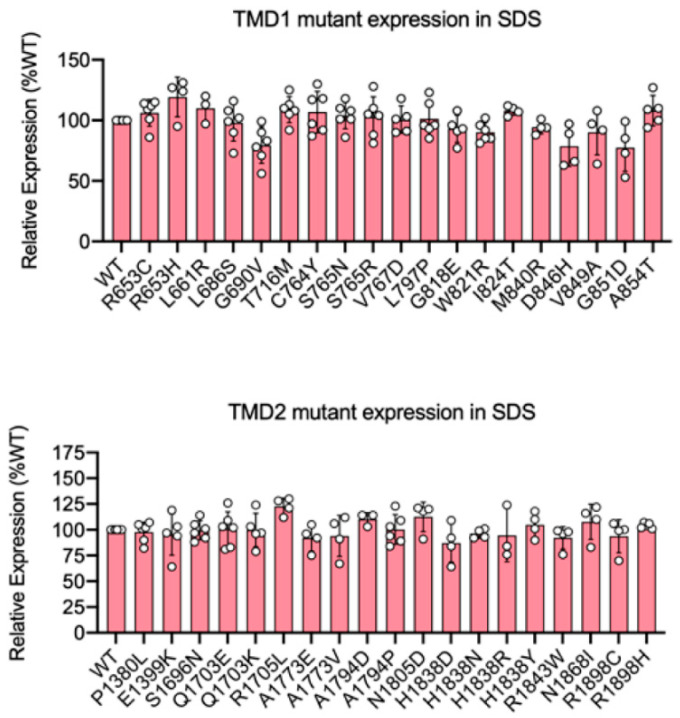
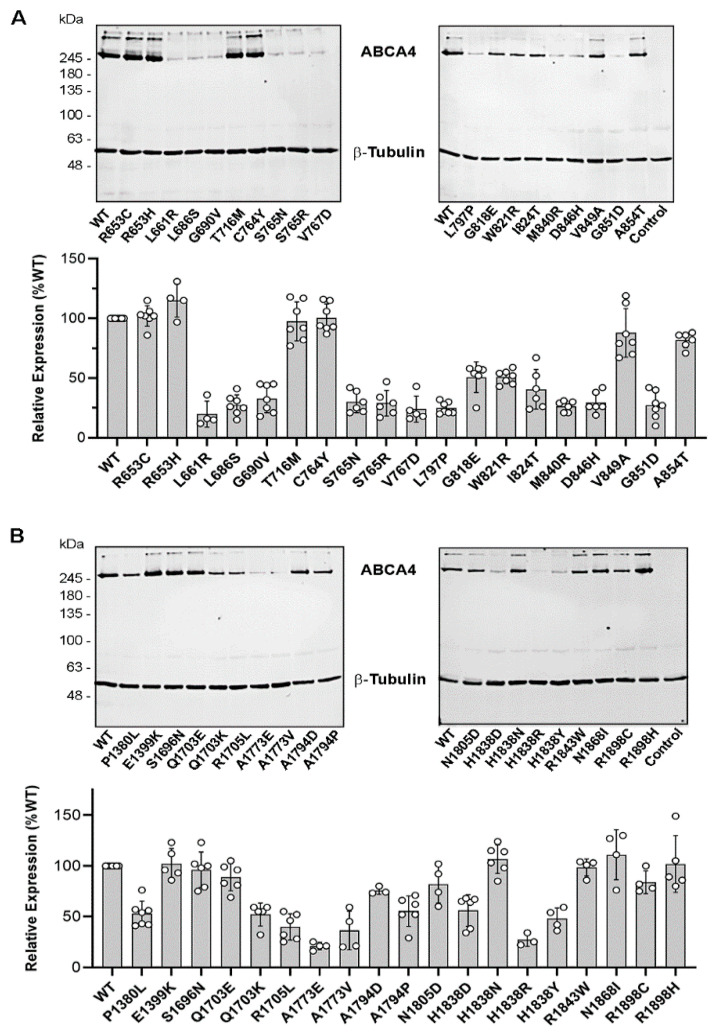
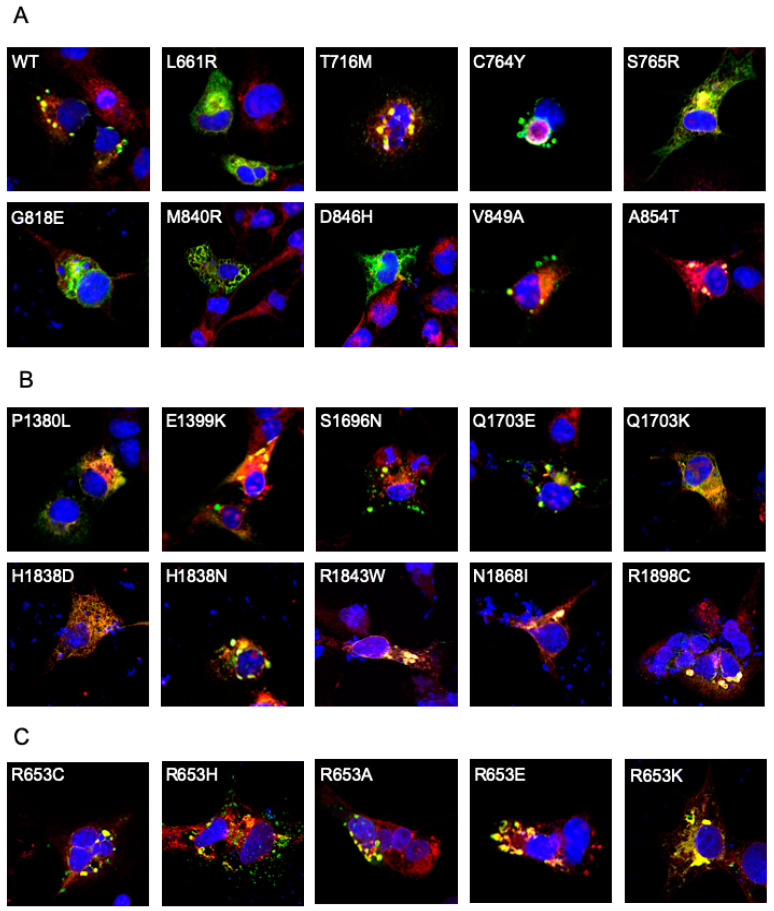
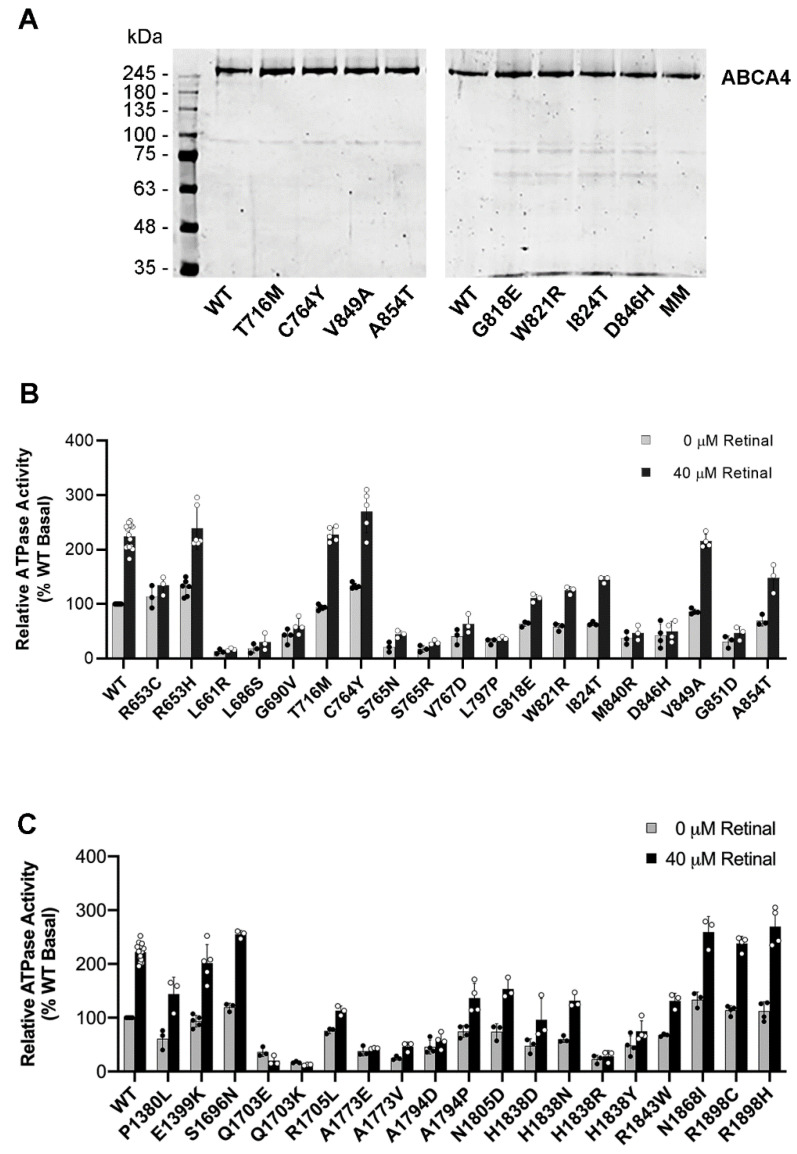
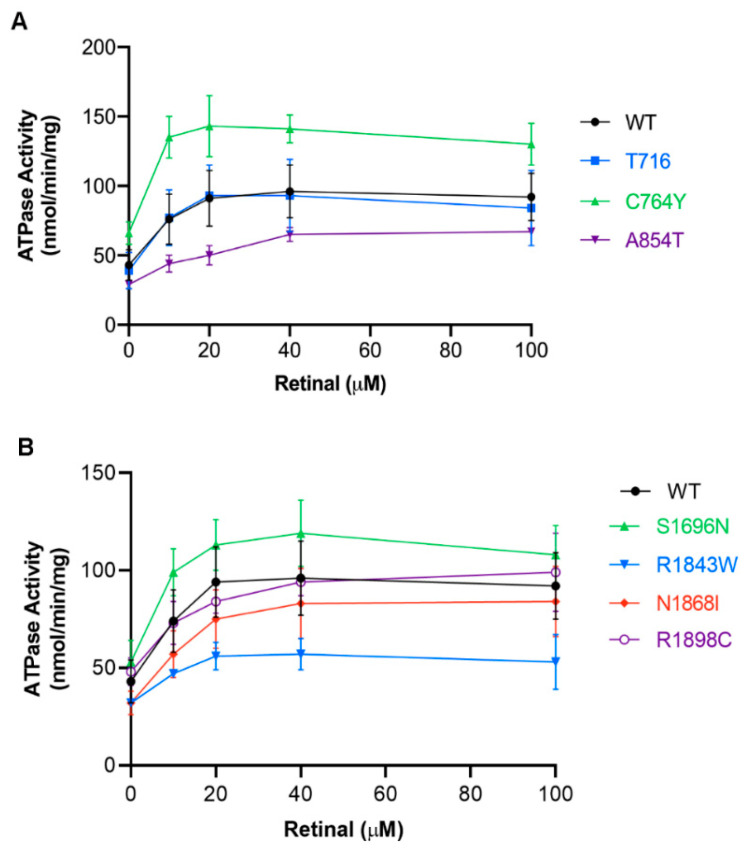
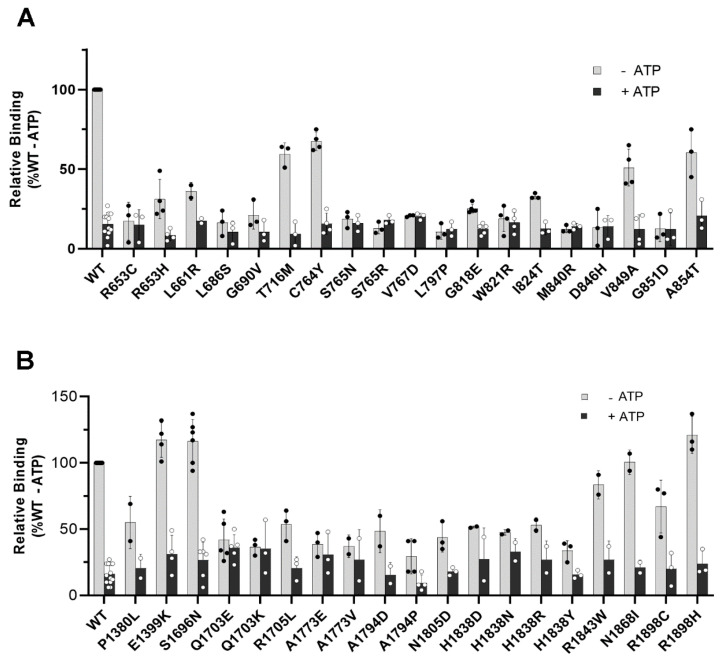
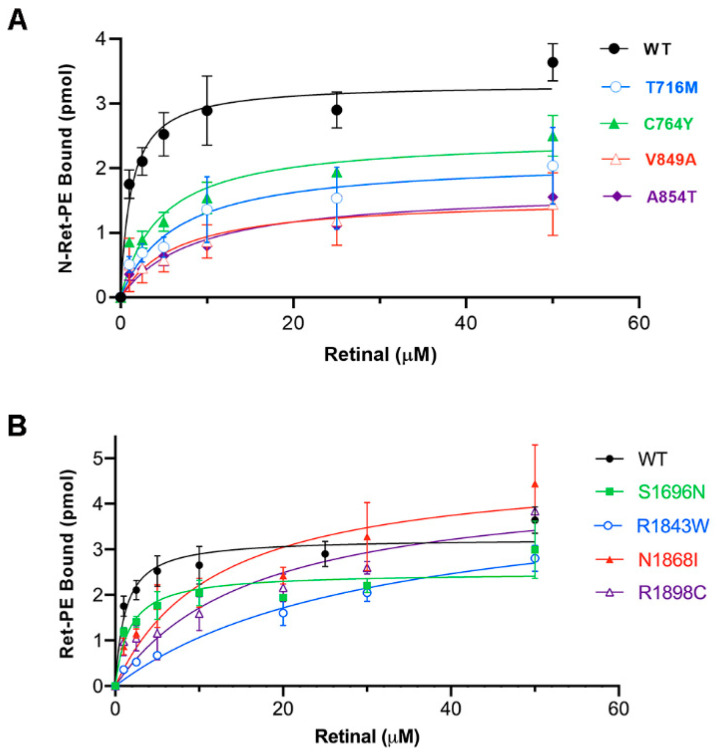
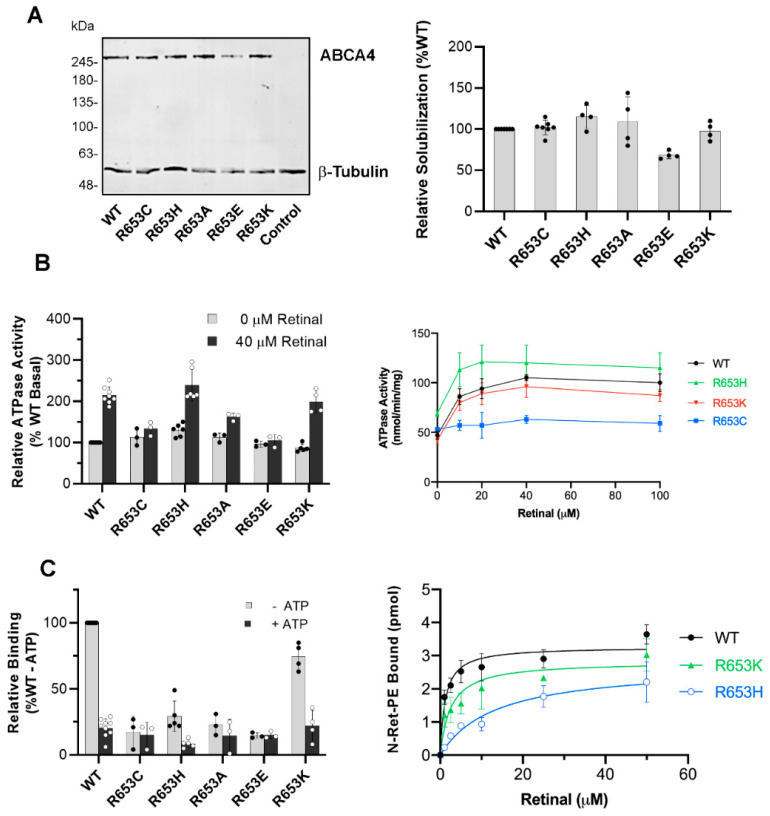
ABCA4 is an ATP-binding cassette (ABC) transporter expressed in photoreceptors, where it transports its substrate, -retinylidene-phosphatidylethanolamine (-Ret-PE), across outer segment membranes to facilitate the clearance of retinal from photoreceptors. Mutations in cause Stargardt macular degeneration (STGD1), an autosomal recessive disorder characterized by a loss of central vision and the accumulation of bisretinoid compounds. The purpose of this study was to determine the molecular properties of ABCA4 variants harboring disease-causing missense mutations in the transmembrane domains. Thirty-eight variants expressed in culture cells were analyzed for expression, ATPase activities, and substrate binding. On the basis of these properties, the variants were divided into three classes: Class 1 (severe variants) exhibited significantly reduced ABCA4 expression and basal ATPase activity that was not stimulated by its substrate -Ret-PE; Class 2 (moderate variants) showed a partial reduction in expression and basal ATPase activity that was modestly stimulated by -Ret-PE; and Class 3 (mild variants) displayed expression and functional properties comparable to normal ABCA4. The p.R653C variant displayed normal expression and basal ATPase activity, but lacked substrate binding and ATPase activation, suggesting that arginine 653 contributes to -Ret-PE binding. Our classification provides a basis for better understanding genotype-phenotype correlations and evaluating therapeutic treatments for STGD1.
ABCA4 是一种 ATP 结合盒(ABC)转运蛋白,在感光细胞中表达,在那里它将其底物 - 视黄醛基磷酸乙醇胺(-Ret-PE)穿过外节膜运输,以促进感光细胞中视网膜的清除。ABCA4 基因突变导致 Stargardt 黄斑营养不良(STGD1),这是一种常染色体隐性疾病,其特征是中央视力丧失和双视黄醛化合物的积累。本研究的目的是确定跨膜结构域中携带致病错义突变的 ABCA4 变体的分子特性。在培养细胞中表达的 38 种变体进行了表达、ATP 酶活性和底物结合分析。根据这些特性,变体被分为三类:第 1 类(严重变体)表现出明显降低的 ABCA4 表达和基础 ATP 酶活性,其底物 -Ret-PE 不能刺激其活性;第 2 类(中度变体)显示表达和基础 ATP 酶活性部分降低,被 -Ret-PE 适度刺激;第 3 类(轻度变体)显示与正常 ABCA4 相当的表达和功能特性。p.R653C 变体表现出正常的表达和基础 ATP 酶活性,但缺乏底物结合和 ATP 酶激活,表明精氨酸 653 有助于 -Ret-PE 结合。我们的分类为更好地理解基因型-表型相关性和评估 STGD1 的治疗方法提供了基础。