Wang Hai-Li, Zhang Jun, Li Yu-Ping, Dong Lun, Chen Ying-Zhu
Department of Clinical Medicine, Dalian Medical University, Dalian, Liaoning 116000, P.R. China.
Department of Neurosurgery, Clinical Medical College of Yangzhou University, Yangzhou, Jiangsu 225001, P.R. China.
Exp Ther Med. 2021 Feb;21(2):125. doi: 10.3892/etm.2020.9557. Epub 2020 Dec 4.
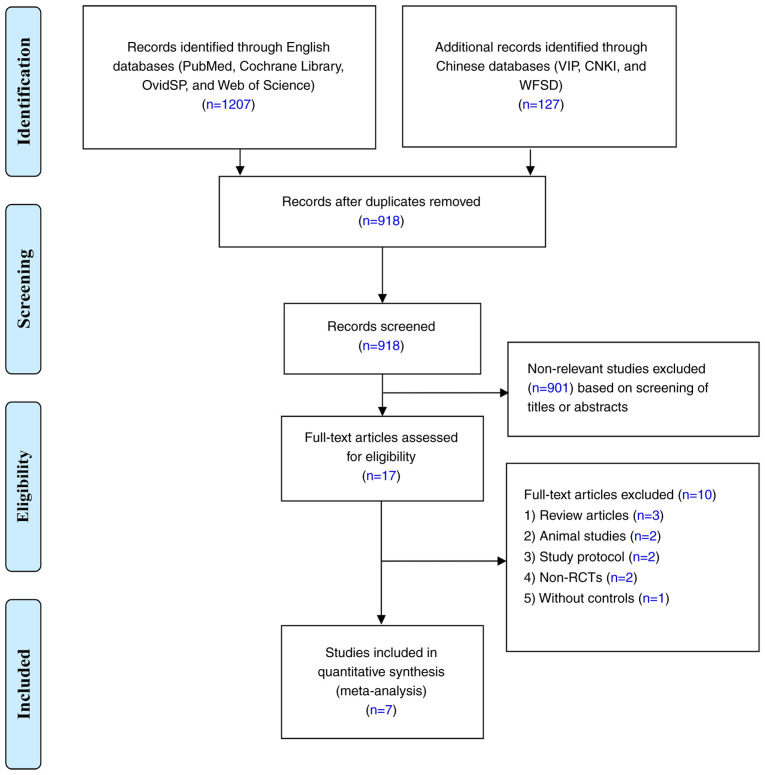
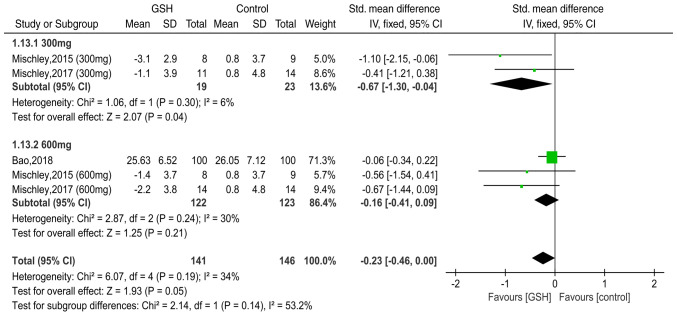
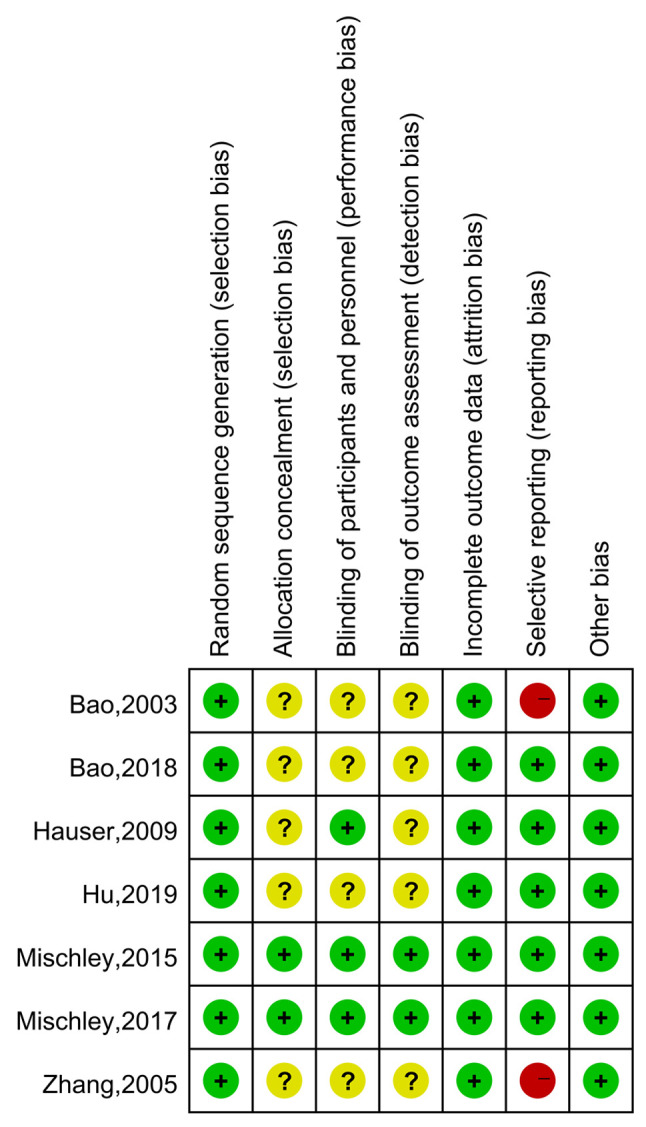
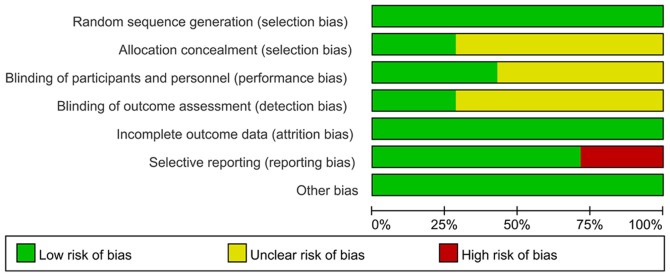
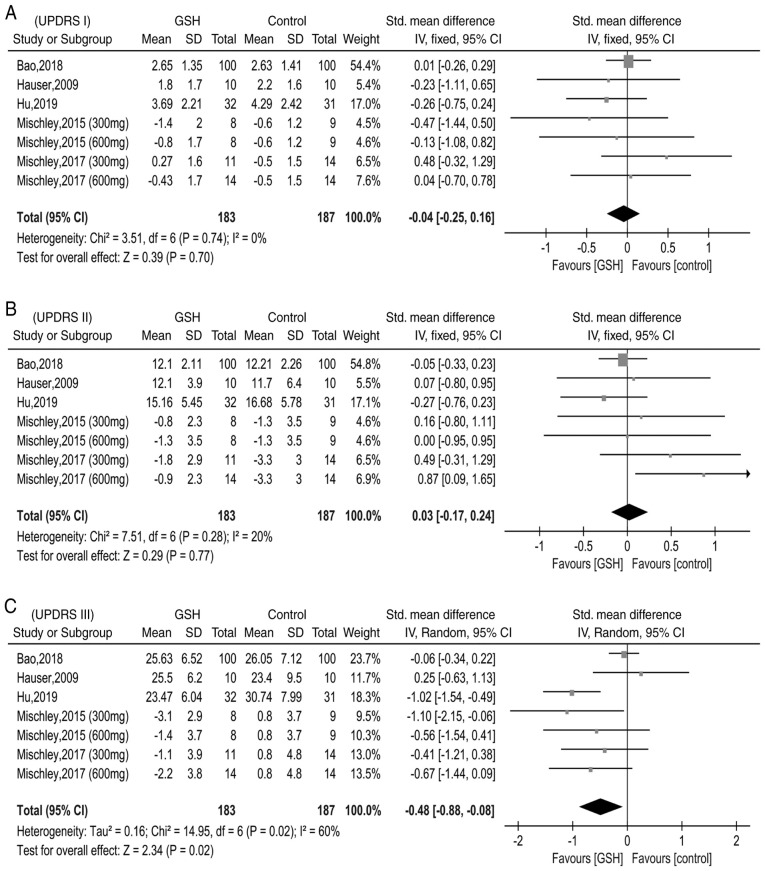
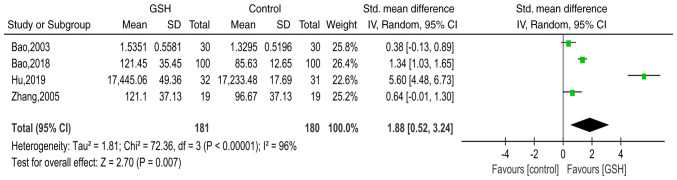
The aim of the present study was to assess the efficacy and safety of glutathione (GSH) for the treatment of Parkinson's disease (PD). The PubMed, Cochrane Library, OvidSP, Web of Science, China Science and Technology Journal Database, Chinese National Knowledge Infrastructure and China Wanfang Standards Database databases were systematically searched from the inception dates to October 1st, 2019, using the key words'glutathione' or 'GSH' and 'Parkinson' or 'Parkinson's disease' or 'PD'. The quality of the included articles was assessed using the bias risk assessment tool of the Cochrane systematic evaluator manual (version 5.1.0). Pooled analysis of the relevant data was performed using RevMan 5.3 software and subgroup analysis was performed to determine the impact of the dosage (300 vs. 600 mg) on the outcome measures. A total of seven randomized controlled trials involving 450 participants were included in the meta-analysis. The results of the present study indicated a statistically significant difference between the GSH and control groups, in terms of the Unified Parkinson's Disease Rating Scale (UPDRS) III [standard mean difference (SMD), -0.48; 95% CI, -(0.88-0.08); P=0.02] and GSH peroxidase (SMD, 1.88; 95% CI, 0.52-3.24; P=0.007). However, the differences in the UPDRS I (SMD, -0.04; 95% CI, -0.25-0.16; P=0.70) and UPDRS II (SMD, 0.03; 95% CI, -0.17-0.24; P=0.77) score and in side effects were not statistically significant between the groups. Subgroup analyses revealed that the dosage (300 vs. 600 mg) was an influencing factor for UPDRS III. The present study demonstrated that GSH may mildly improve motor scores in PD, but not at the expense of increased adverse events.
本研究的目的是评估谷胱甘肽(GSH)治疗帕金森病(PD)的疗效和安全性。从各数据库建库起始日期至2019年10月1日,系统检索了PubMed、Cochrane图书馆、OvidSP、Web of Science、中国科技期刊数据库、中国知网和万方数据库,检索关键词为“谷胱甘肽”或“GSH”以及“帕金森”或“帕金森病”或“PD”。采用Cochrane系统评价员手册(5.1.0版)的偏倚风险评估工具对纳入文章的质量进行评估。使用RevMan 5.3软件对相关数据进行汇总分析,并进行亚组分析以确定剂量(300 vs. 600 mg)对结局指标的影响。荟萃分析共纳入7项随机对照试验,涉及450名参与者。本研究结果表明,在统一帕金森病评定量表(UPDRS)III方面,GSH组与对照组之间存在统计学显著差异[标准均数差(SMD),-0.48;95%可信区间,-(0.88 - 0.08);P = 0.02]以及谷胱甘肽过氧化物酶方面(SMD,1.88;95%可信区间,0.52 - 3.24;P = 0.007)。然而,两组在UPDRS I(SMD,-0.04;95%可信区间,-0.25 - 0.16;P = 0.70)和UPDRS II(SMD,0.