Department of Urology, Guangdong Provincial People's Hospital, Guangdong Academy of Medical Sciences, Guangzhou 510080, China.
Shantou University Medical College, Shantou 515041, China.
J Immunol Res. 2020 Nov 28;2020:2415374. doi: 10.1155/2020/2415374. eCollection 2020.
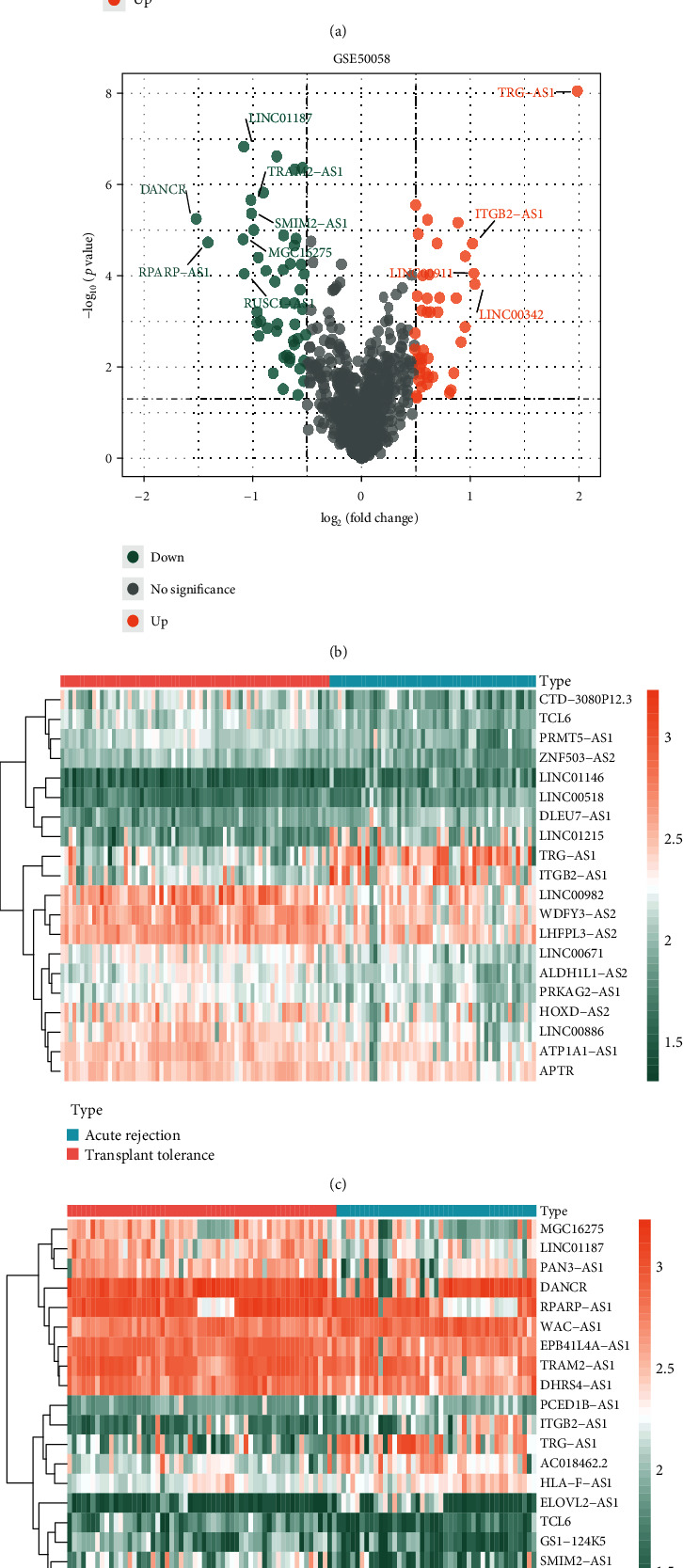
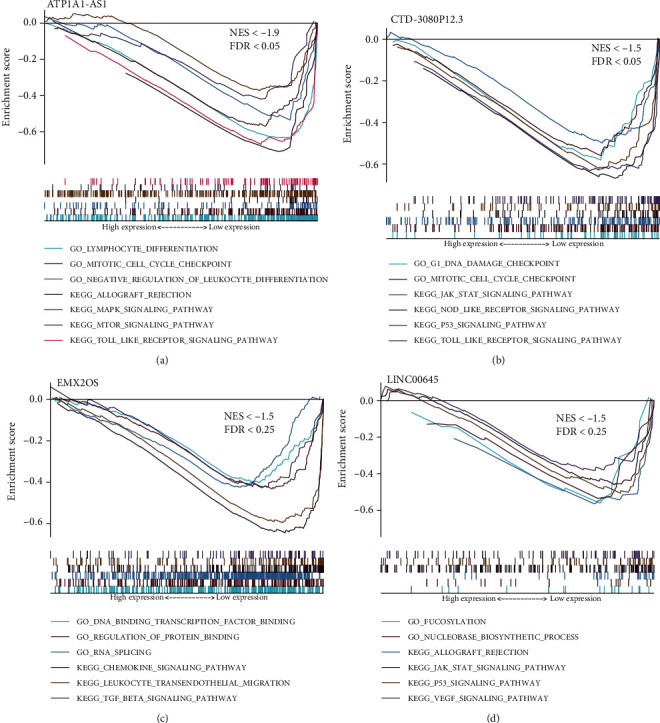
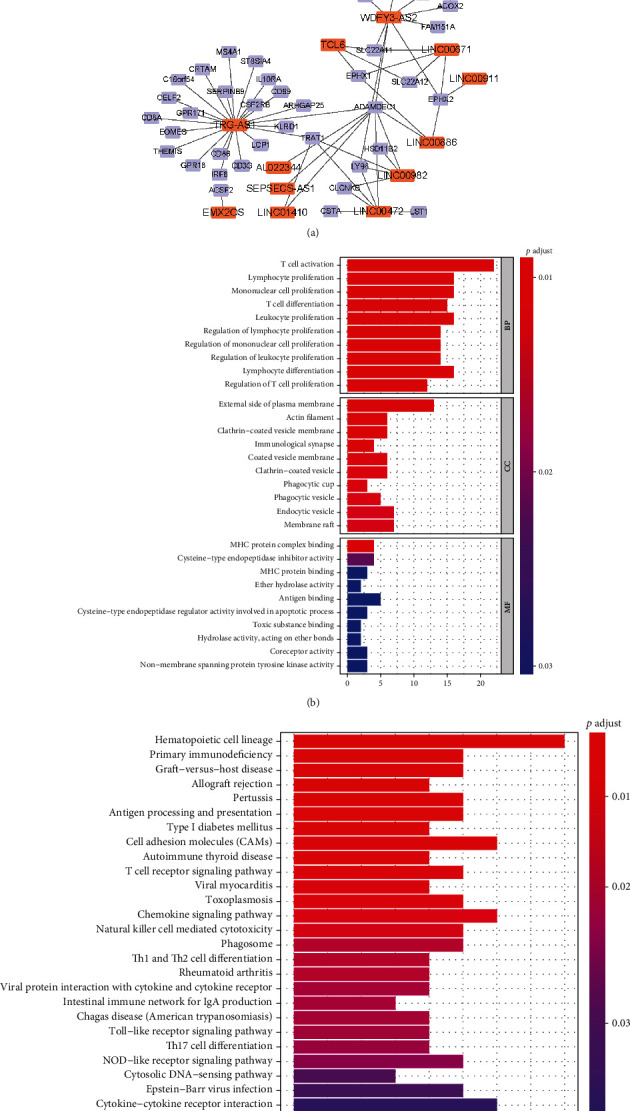
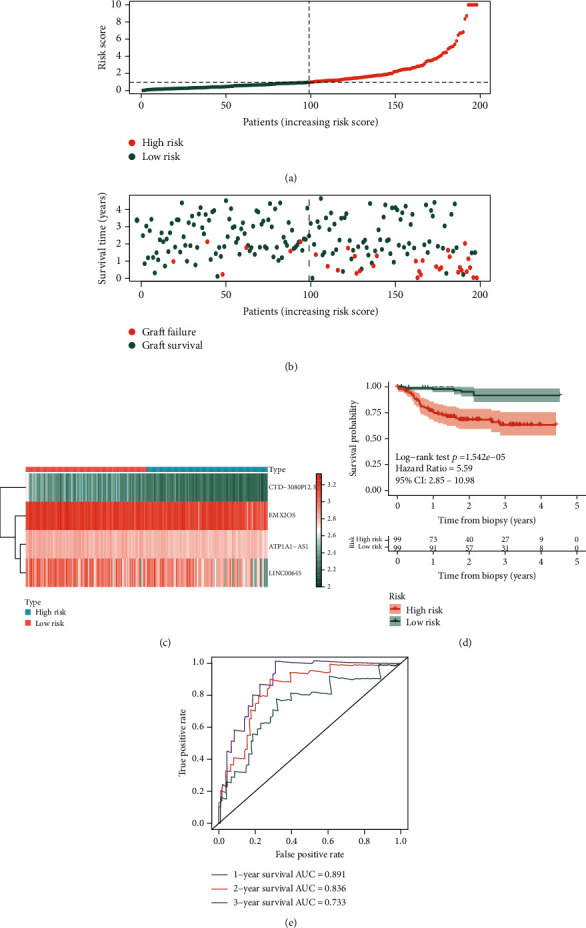
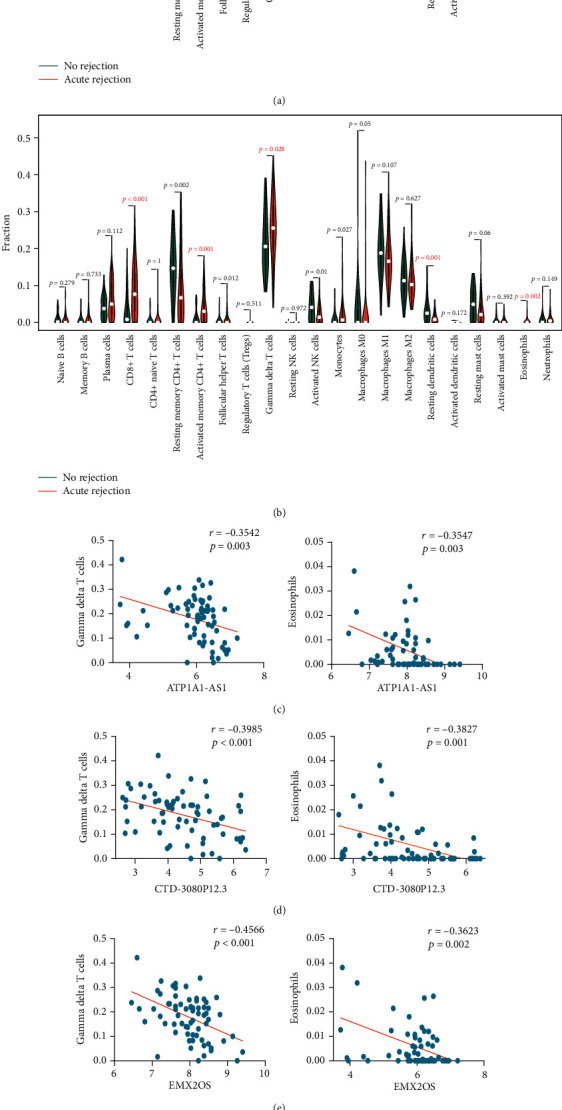
Acute rejection (AR) after kidney transplant is one of the major obstacles to obtain ideal graft survival. Reliable molecular biomarkers for AR and renal allograft loss are lacking. This study was performed to identify novel long noncoding RNAs (lncRNAs) for diagnosing AR and predicting the risk of graft loss. The several microarray datasets with AR and nonrejection specimens of renal allograft downloaded from Gene Expression Omnibus database were analyzed to screen differentially expressed lncRNAs (DElncRNAs) and mRNAs (DEmRNAs). Univariate and multivariate Cox regression analyses were used to identify optimal prognosis-related DElncRNAs for constructing a risk score model. 39 common DElncRNAs and 185 common DEmRNAs were identified to construct a lncRNA-mRNA regulatory relationship network. DElncRNAs were revealed to regulate immune cell activation and proliferation. Then, 4 optimal DElncRNAs, ATP1A1-AS1, CTD-3080P12.3, EMX2OS, and LINC00645, were selected from 17 prognostic DElncRNAs to establish the 4-lncRNA risk score model. In the training set, the high-risk patients were more inclined to graft loss than the low-risk patients. Time-dependent receiver operating characteristics analysis revealed the model had good sensitivity and specificity in prediction of 1-, 2-, and 3-year graft survival after biopsy (AUC = 0.891, 0.836, and 0.733, respectively). The internal testing set verified the result well. Gene set enrichment analysis which expounded NOD-like receptor, the Toll-like receptor signaling pathways, and other else playing important role in immune response was enriched by the 4 lncRNAs. Allograft-infiltrating immune cells analysis elucidated the expression of 4 lncRNAs correlated with gamma delta T cells and eosinophils, etc. Our study identified 4 novel lncRNAs as potential biomarkers for AR of renal allograft and constructed a lncRNA-based model for predicting the risk of graft loss, which would provide new insights into mechanisms of AR.
急性肾移植排斥反应 (AR) 是获得理想移植物存活率的主要障碍之一。目前缺乏用于诊断 AR 和预测移植物丢失风险的可靠分子生物标志物。本研究旨在鉴定用于诊断 AR 和预测移植物丢失风险的新型长非编码 RNA (lncRNA)。从基因表达综合数据库下载了与肾移植排斥反应和非排斥反应标本相关的多个微阵列数据集进行分析,以筛选差异表达的 lncRNA (DElncRNA) 和信使 RNA (DEmRNA)。使用单变量和多变量 Cox 回归分析来鉴定最佳预后相关的 DElncRNA 以构建风险评分模型。鉴定出 39 个常见的 DElncRNA 和 185 个常见的 DEmRNA 来构建 lncRNA-mRNA 调控关系网络。DElncRNA 被揭示可调节免疫细胞的激活和增殖。然后,从 17 个预后 DElncRNA 中选择 4 个最佳的 DElncRNA (ATP1A1-AS1、CTD-3080P12.3、EMX2OS 和 LINC00645) 建立 4-lncRNA 风险评分模型。在训练集中,高风险患者比低风险患者更倾向于发生移植物丢失。时间依赖性接收器操作特征分析表明,该模型在预测活检后 1 年、2 年和 3 年的移植物存活率方面具有良好的敏感性和特异性(AUC=0.891、0.836 和 0.733)。内部测试集验证了该结果。通过 4 个 lncRNA 进行基因集富集分析,富集了 NOD 样受体、Toll 样受体信号通路和其他在免疫反应中发挥重要作用的通路。同种异体移植浸润免疫细胞分析阐明了 4 个 lncRNA 的表达与 γδ T 细胞和嗜酸性粒细胞等相关。本研究鉴定了 4 个新型 lncRNA 作为肾移植 AR 的潜在生物标志物,并构建了基于 lncRNA 的模型来预测移植物丢失的风险,这将为 AR 机制提供新的见解。