Guangdong Medical University, Zhanjiang City, 524023, Guangdong Province, China.
Department of Urology, Yangjiang People's Hospital affiliated to Guangdong Medical University, Yangjiang, 42 Dongshan Road, Jiangcheng District, Guangdong Province, 529500, China.
BMC Urol. 2023 Nov 15;23(1):186. doi: 10.1186/s12894-023-01357-9.
Kidney renal clear cell carcinoma (KIRC) is a common malignant tumor of the urinary system. This study aims to develop new biomarkers for KIRC and explore the impact of biomarkers on the immunotherapeutic efficacy for KIRC, providing a theoretical basis for the treatment of KIRC patients.
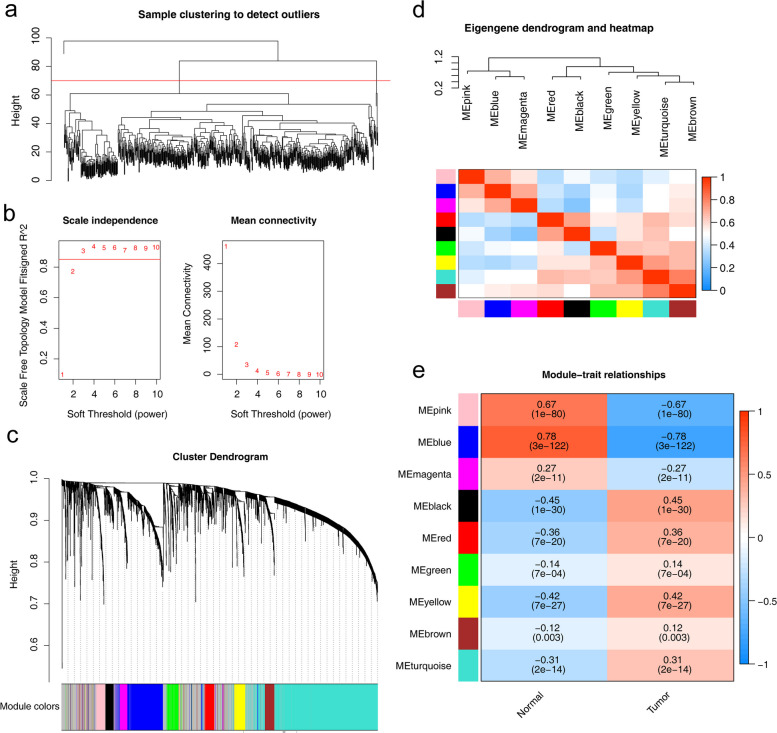
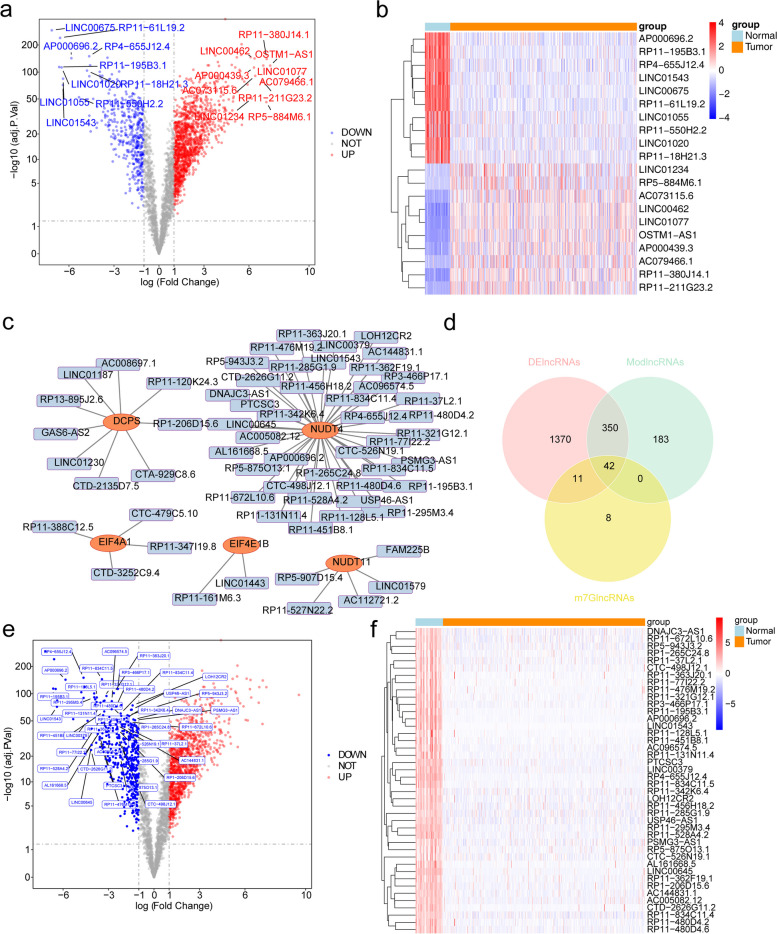
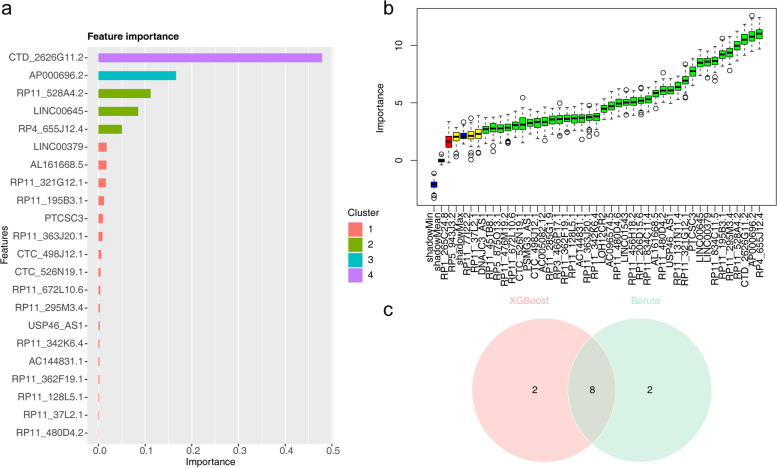
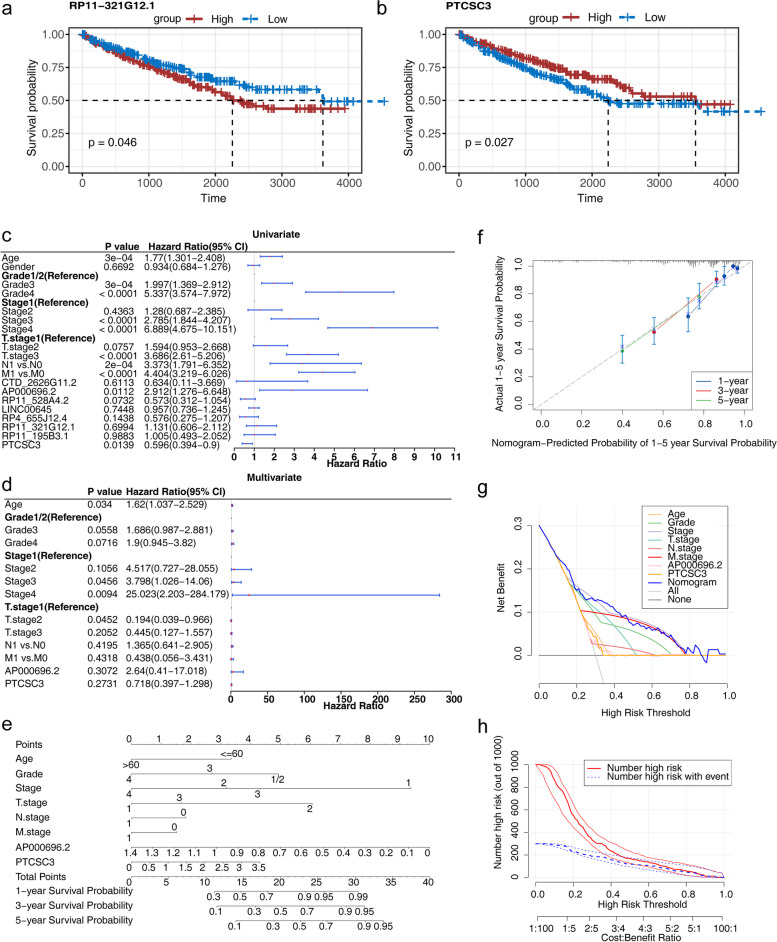
Transcriptome data for KIRC was obtained from the The Cancer Genome Atlas (TCGA) and International Cancer Genome Consortium (ICGC) databases. Weighted gene co-expression network analysis identified KIRC-related modules of long noncoding RNAs (lncRNAs). Intersection analysis was performed differentially expressed lncRNAs between KIRC and normal control samples, and lncRNAs associated with N(7)-methylguanosine (m7G), resulting in differentially expressed m7G-associated lncRNAs in KIRC patients (DE-m7G-lncRNAs). Machine Learning was employed to select biomarkers for KIRC. The prognostic value of biomarkers and clinical features was evaluated using Kaplan-Meier (K-M) survival analysis, univariate and multivariate Cox regression analysis. A nomogram was constructed based on biomarkers and clinical features, and its efficacy was evaluated using calibration curves and decision curves. Functional enrichment analysis was performed to investigate the functional enrichment of biomarkers. Correlation analysis was conducted to explore the relationship between biomarkers and immune cell infiltration levels and common immune checkpoint in KIRC samples.
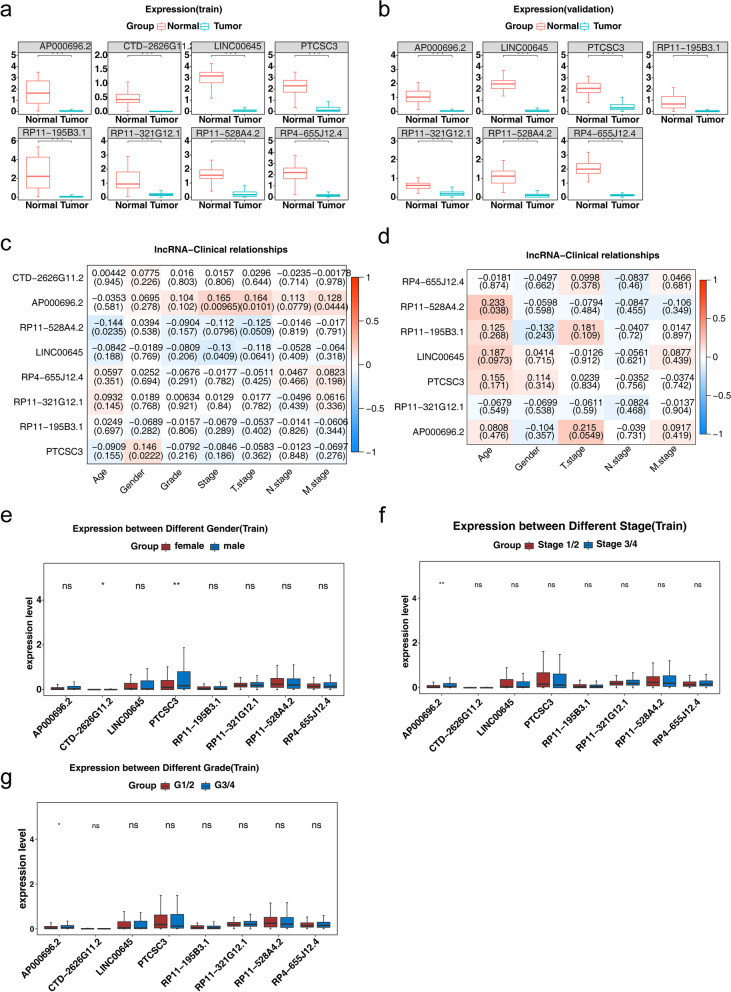
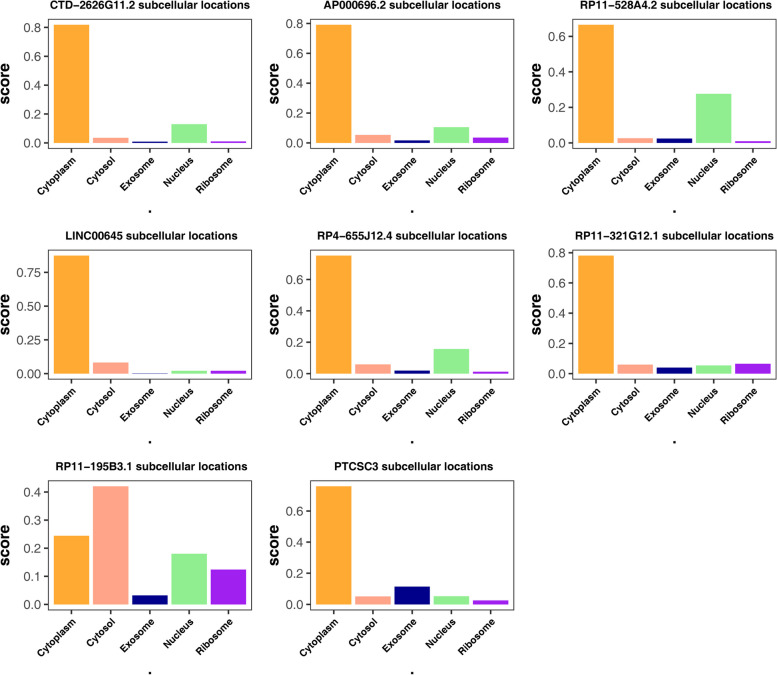
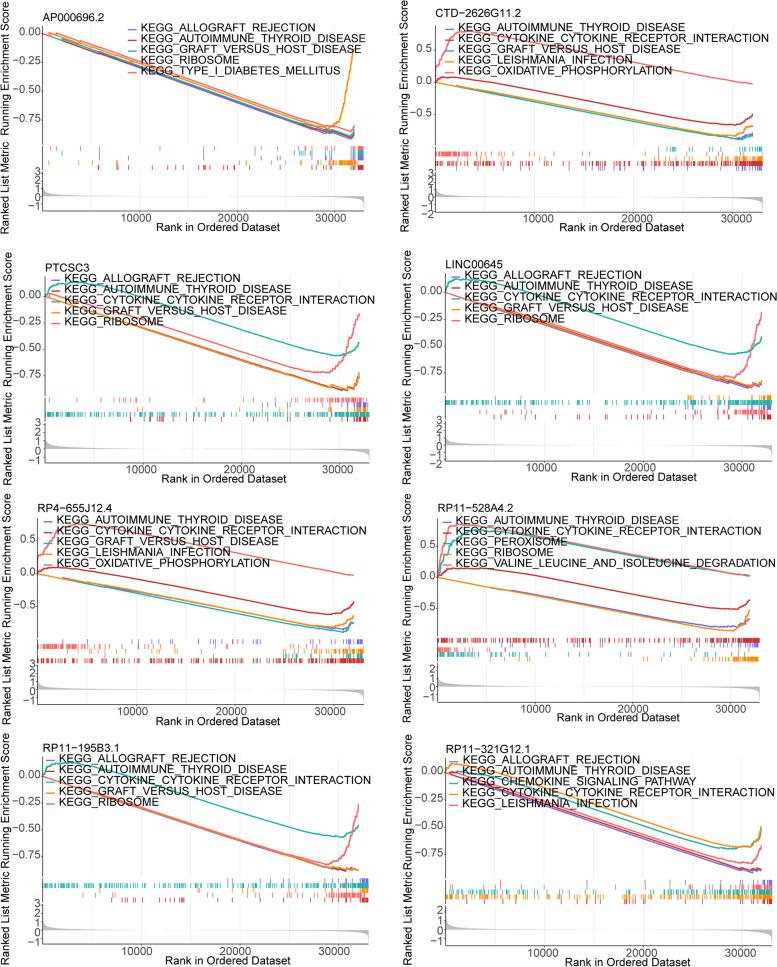
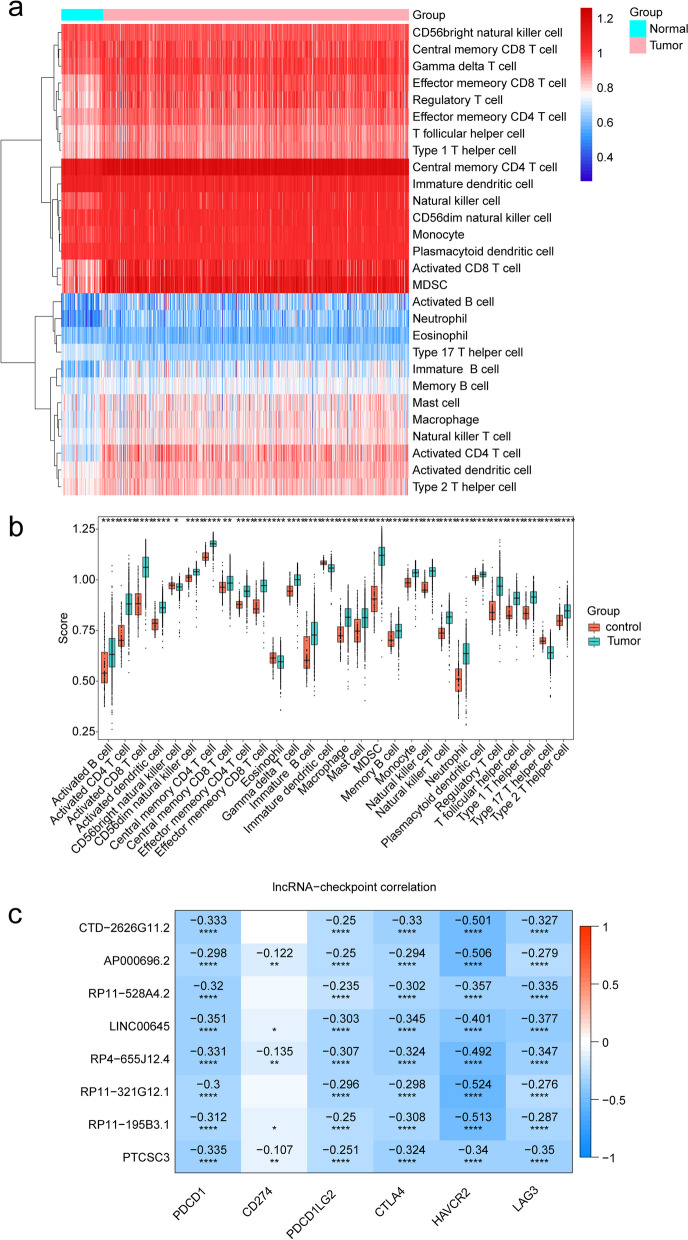
By intersecting 575 KIRC-related module lncRNAs, 1773 differentially expressed lncRNAs, and 62 m7G-related lncRNAs, we identified 42 DE-m7G-lncRNAs. Using XGBoost and Boruta algorithms, 8 biomarkers for KIRC were selected. Kaplan-Meier survival analysis showed significant survival differences in KIRC patients with high and low expression of the PTCSC3 and RP11-321G12.1. Univariate and multivariate Cox regression analyses showed that AP000696.2, PTCSC3 and clinical characteristics were independent prognostic factors for patients with KIRC. A nomogram based on these prognostic factors accurately predicted the prognosis of KIRC patients. The biomarkers showed associations with clinical features of KIRC patients, mainly localized in the cytoplasm and related to cytokine-mediated immune response. Furthermore, immune feature analysis demonstrated a significant decrease in immune cell infiltration levels in KIRC samples compared to normal samples, with a negative correlation observed between the biomarkers and most differentially infiltrating immune cells and common immune checkpoints.
In summary, this study discovered eight prognostic biomarkers associated with KIRC patients. These biomarkers showed significant correlations with clinical features, immune cell infiltration, and immune checkpoint expression in KIRC patients, laying a theoretical foundation for the diagnosis and treatment of KIRC.
肾透明细胞癌(KIRC)是泌尿系统常见的恶性肿瘤。本研究旨在为 KIRC 开发新的生物标志物,并探讨生物标志物对 KIRC 免疫治疗效果的影响,为 KIRC 患者的治疗提供理论依据。
从 The Cancer Genome Atlas(TCGA)和 International Cancer Genome Consortium(ICGC)数据库中获取 KIRC 的转录组数据。加权基因共表达网络分析鉴定出与 KIRC 相关的长链非编码 RNA(lncRNA)模块。对 KIRC 与正常对照样本之间差异表达的 lncRNA 进行交集分析,并对与 N(7)-甲基鸟苷(m7G)相关的 lncRNA 进行分析,最终得到 KIRC 患者中差异表达的 m7G 相关 lncRNA(DE-m7G-lncRNAs)。采用机器学习方法筛选 KIRC 的生物标志物。采用 Kaplan-Meier(K-M)生存分析、单因素和多因素 Cox 回归分析评估生物标志物和临床特征的预后价值。基于生物标志物和临床特征构建列线图,并通过校准曲线和决策曲线评估其效能。进行功能富集分析以研究生物标志物的功能富集情况。采用相关性分析探讨 KIRC 样本中生物标志物与免疫细胞浸润水平和常见免疫检查点的关系。
通过交集 575 个 KIRC 相关模块 lncRNA、1773 个差异表达 lncRNA 和 62 个 m7G 相关 lncRNA,鉴定出 42 个 DE-m7G-lncRNA。采用 XGBoost 和 Boruta 算法筛选出 8 个 KIRC 的生物标志物。Kaplan-Meier 生存分析显示,PTCSC3 和 RP11-321G12.1 高表达的 KIRC 患者生存差异有统计学意义。单因素和多因素 Cox 回归分析表明,AP000696.2、PTCSC3 和临床特征是 KIRC 患者的独立预后因素。基于这些预后因素的列线图可以准确预测 KIRC 患者的预后。生物标志物与 KIRC 患者的临床特征相关,主要定位于细胞质,与细胞因子介导的免疫反应有关。此外,免疫特征分析表明,与正常样本相比,KIRC 样本中免疫细胞浸润水平显著降低,且生物标志物与大多数差异浸润免疫细胞和常见免疫检查点呈负相关。
综上所述,本研究发现了 8 个与 KIRC 患者相关的预后生物标志物。这些生物标志物与 KIRC 患者的临床特征、免疫细胞浸润和免疫检查点表达具有显著相关性,为 KIRC 的诊断和治疗提供了理论基础。