MacroGenics, Rockville, MD, USA.
MacroGenics, Brisbane, CA, USA.
Cell Rep Med. 2020 Dec 22;1(9):100163. doi: 10.1016/j.xcrm.2020.100163.
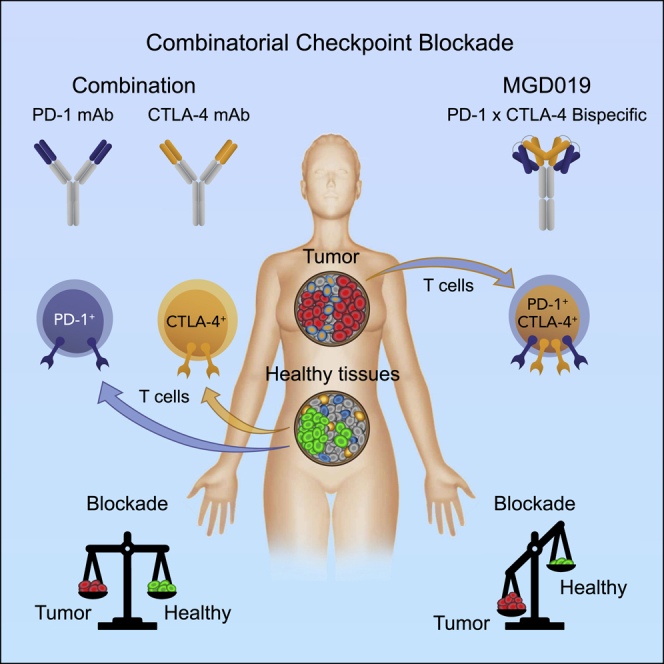
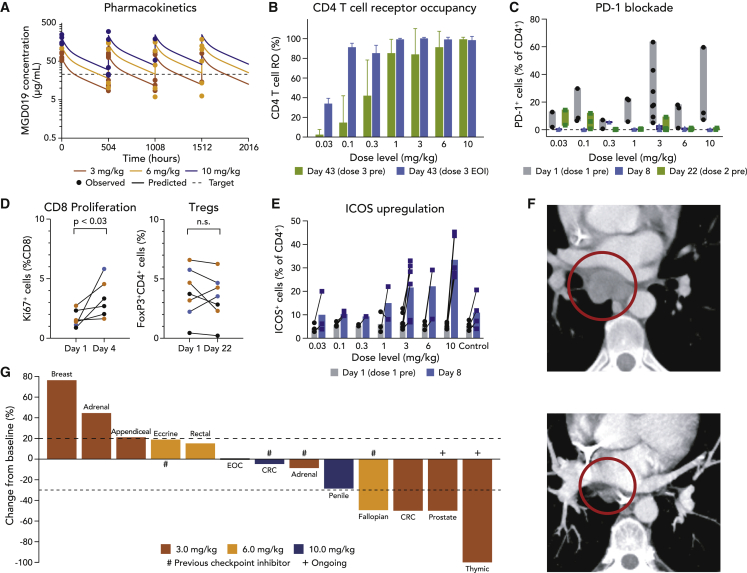
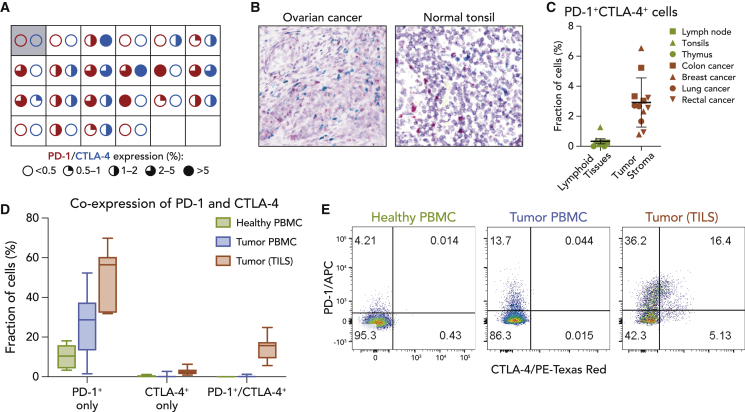
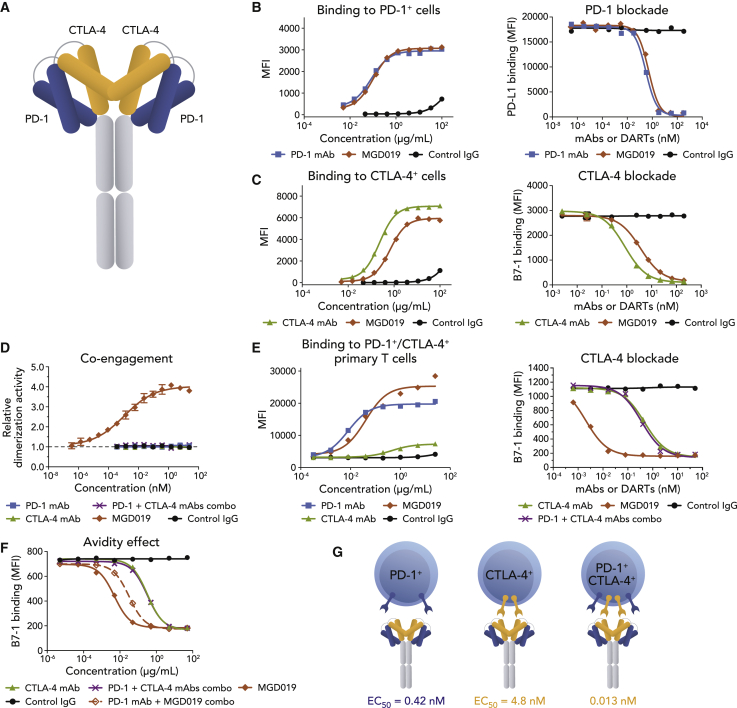
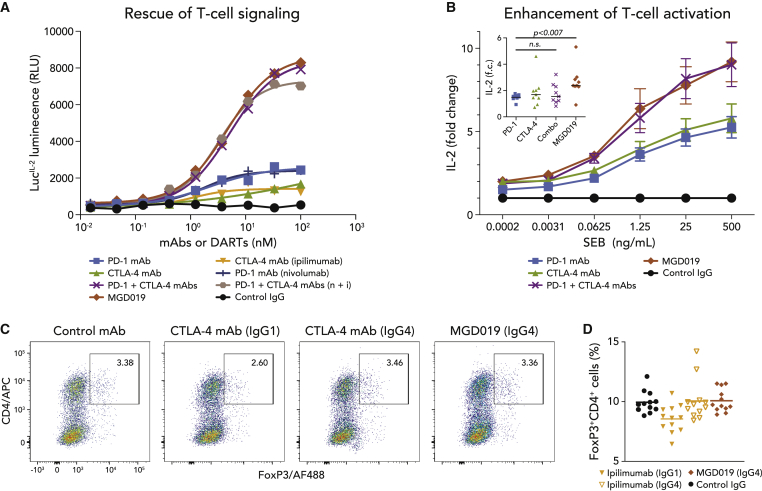
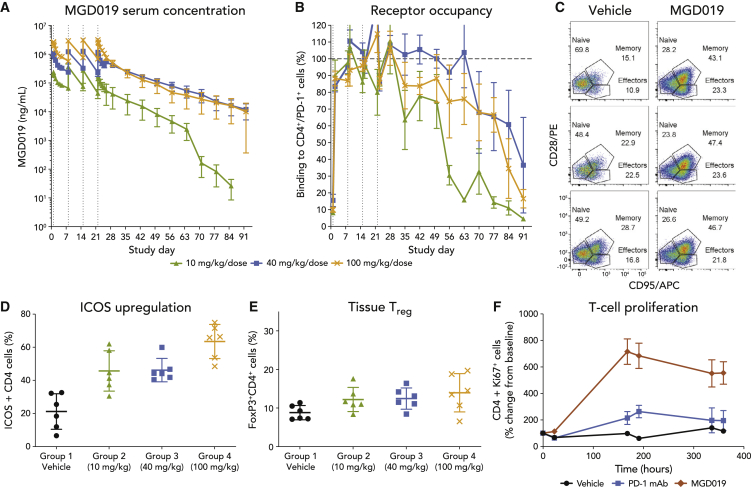
Combination immunotherapy with antibodies directed against PD-1 and CTLA-4 shows improved clinical benefit across cancer indications compared to single agents, albeit with increased toxicity. Leveraging the observation that PD-1 and CTLA-4 are co-expressed by tumor-infiltrating lymphocytes, an investigational PD-1 x CTLA-4 bispecific DART molecule, MGD019, is engineered to maximize checkpoint blockade in the tumor microenvironment via enhanced CTLA-4 blockade in a PD-1-binding-dependent manner. , MGD019 mediates the combinatorial blockade of PD-1 and CTLA-4, confirming dual inhibition via a single molecule. MGD019 is well tolerated in non-human primates, with evidence of both PD-1 and CTLA-4 blockade, including increases in Ki67CD8 and ICOSCD4 T cells, respectively. In the ongoing MGD019 first-in-human study enrolling patients with advanced solid tumors (NCT03761017), an analysis undertaken following the dose escalation phase revealed acceptable safety, pharmacodynamic evidence of combinatorial blockade, and objective responses in multiple tumor types typically unresponsive to checkpoint inhibitor therapy.
与针对 PD-1 和 CTLA-4 的单克隆抗体的免疫疗法相比,联合免疫疗法在癌症适应证中显示出改善的临床获益,尽管毒性增加。利用 PD-1 和 CTLA-4 共同表达于肿瘤浸润淋巴细胞的观察结果,一种研究性的 PD-1 x CTLA-4 双特异性 DART 分子 MGD019 通过以 PD-1 结合依赖性方式增强 CTLA-4 阻断来设计,以最大限度地增强肿瘤微环境中的检查点阻断。MGD019 介导 PD-1 和 CTLA-4 的组合阻断,通过单个分子证实双重抑制。MGD019 在非人类灵长类动物中具有良好的耐受性,具有 PD-1 和 CTLA-4 阻断的证据,包括分别增加 Ki67CD8 和 ICOSCD4 T 细胞。在正在进行的 MGD019 首次人体研究中,招募了晚期实体瘤患者(NCT03761017),在剂量递增阶段后进行的分析显示出可接受的安全性、组合阻断的药效学证据,以及在多种通常对检查点抑制剂治疗无反应的肿瘤类型中观察到客观反应。