Graduate Institute of Biochemistry and Molecular Biology, College of Medicine, National Taiwan University, Taipei 100233, Taiwan.
Int J Mol Sci. 2020 Dec 28;22(1):224. doi: 10.3390/ijms22010224.
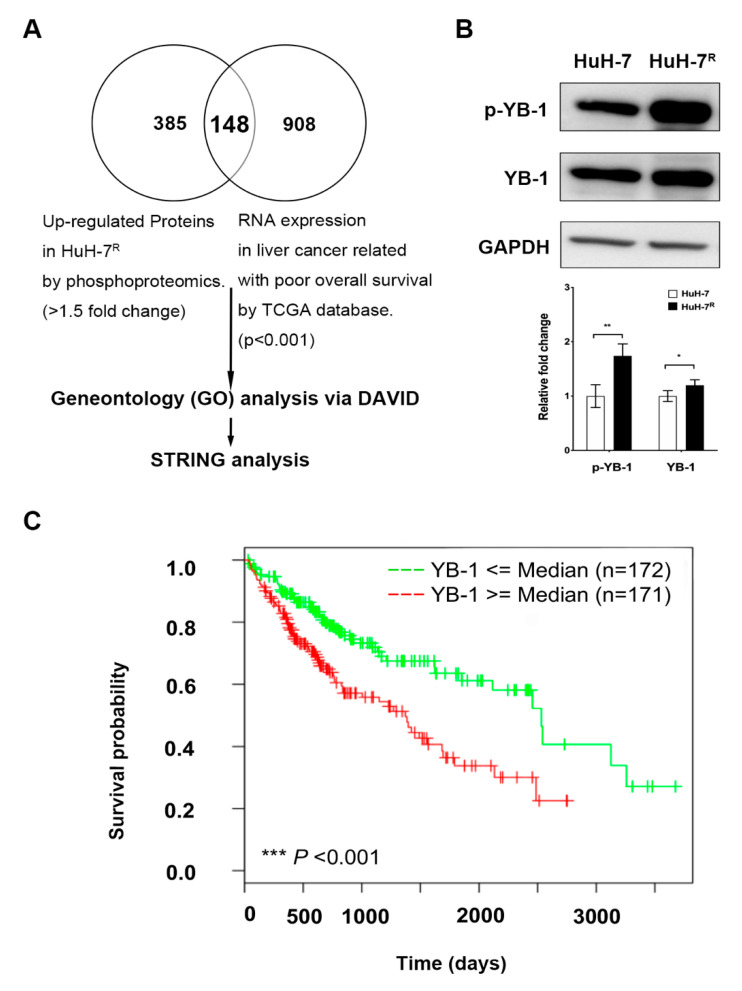
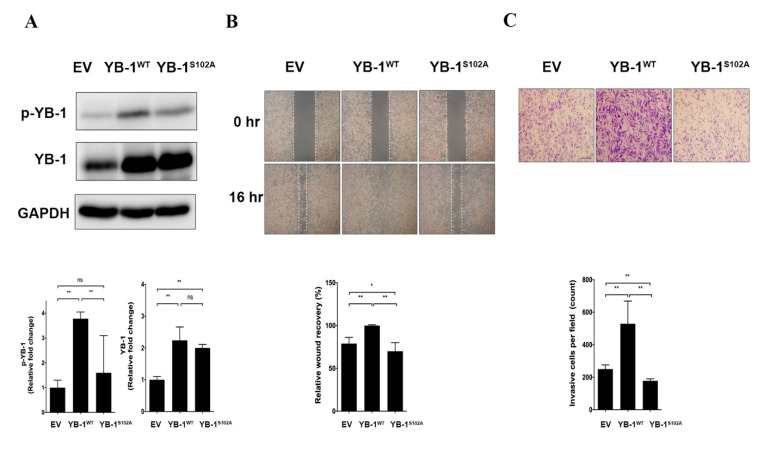
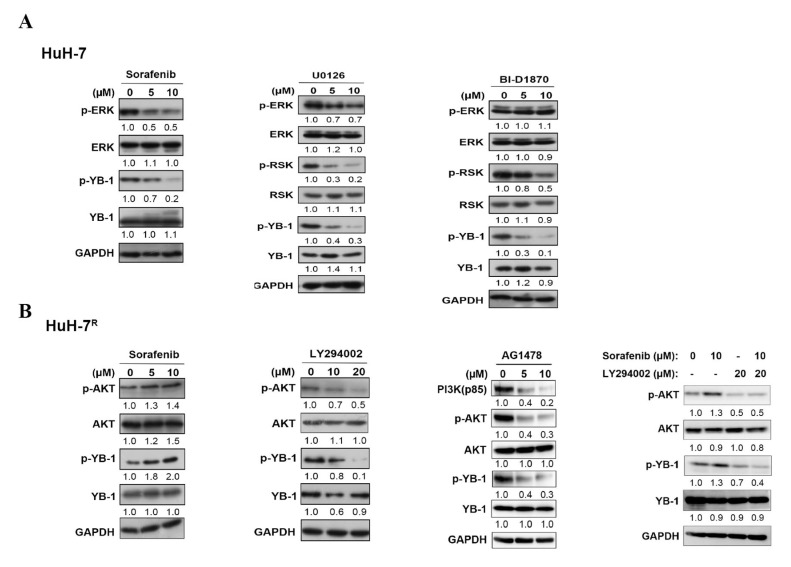
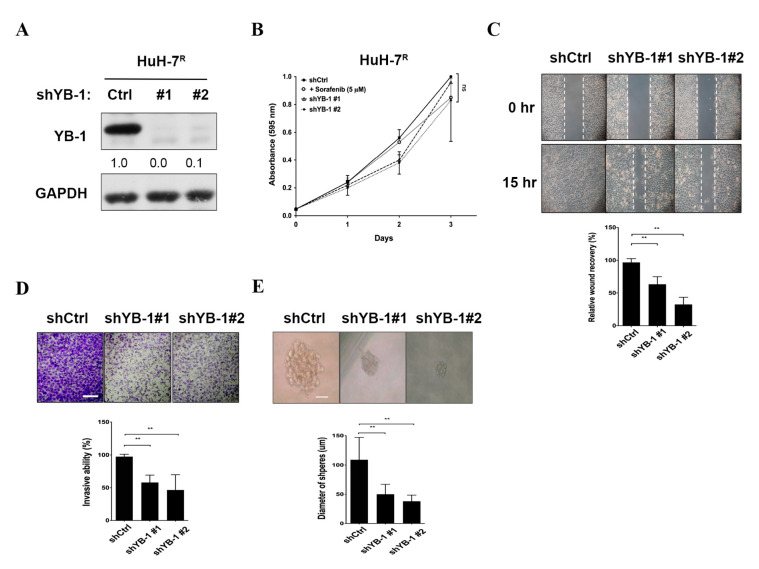
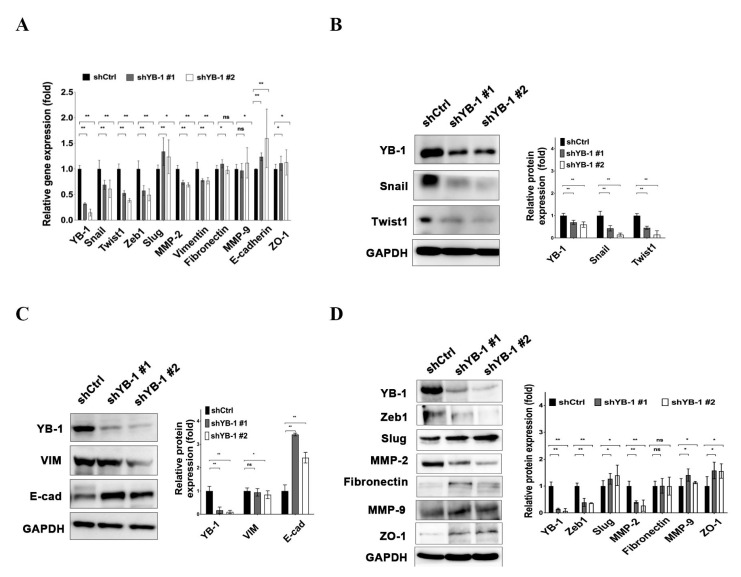
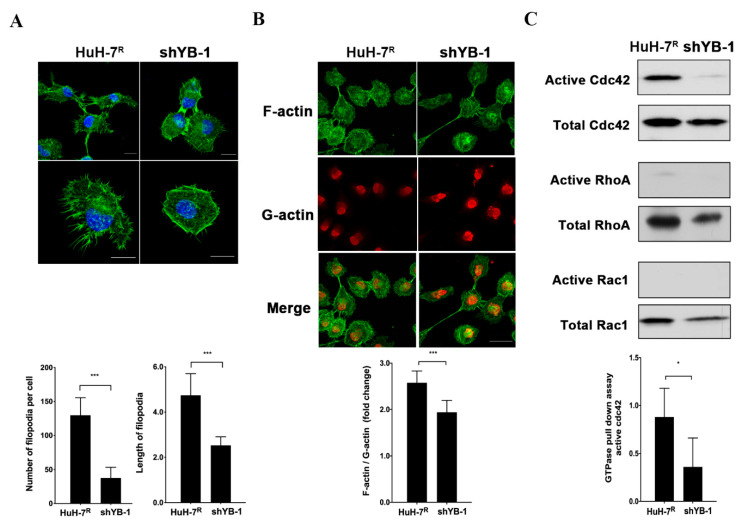
Hepatocellular carcinoma is one of the most common cancer types worldwide. In cases of advanced-stage disease, sorafenib is considered the treatment of choice. However, resistance to sorafenib remains a major obstacle for effective clinical application. Based on integrated phosphoproteomic and The Cancer Genome Atlas (TCGA) data, we identified a transcription factor, Y-box binding protein-1 (YB-1), with elevated phosphorylation of Ser102 in sorafenib-resistant HuH-7 cells. Phosphoinositide-3-kinase (PI3K) and protein kinase B (AKT) were activated by sorafenib, which, in turn, increased the phosphorylation level of YB-1. In functional analyses, knockdown of YB-1 led to decreased cell migration and invasion in vitro. At the molecular level, inhibition of YB-1 induced suppression of zinc-finger protein SNAI1 (Snail), twist-related protein 1 (Twist1), zinc-finger E-box-binding homeobox 1 (Zeb1), matrix metalloproteinase-2 (MMP-2) and vimentin levels, implying a role of YB-1 in the epithelial-mesenchymal transition (EMT) process in HuH-7 cells. Additionally, YB-1 contributes to morphological alterations resulting from F-actin rearrangement through Cdc42 activation. Mutation analyses revealed that phosphorylation at S102 affects the migratory and invasive potential of HuH-7 cells. Our collective findings suggest that sorafenib promotes YB-1 phosphorylation through effect from the EGFR/PI3K/AKT pathway, leading to significant enhancement of hepatocellular carcinoma (HCC) cell metastasis. Elucidation of the specific mechanisms of action of YB-1 may aid in the development of effective strategies to suppress metastasis and overcome resistance.
肝细胞癌是全球最常见的癌症类型之一。在晚期疾病中,索拉非尼被认为是治疗的首选。然而,对索拉非尼的耐药性仍然是有效临床应用的主要障碍。基于整合的磷酸蛋白质组学和癌症基因组图谱(TCGA)数据,我们在索拉非尼耐药的 HuH-7 细胞中发现了一个转录因子 Y 盒结合蛋白-1(YB-1),其丝氨酸 102 磷酸化水平升高。磷酸肌醇 3-激酶(PI3K)和蛋白激酶 B(AKT)被索拉非尼激活,这反过来又增加了 YB-1 的磷酸化水平。在功能分析中,YB-1 的敲低导致体外细胞迁移和侵袭减少。在分子水平上,YB-1 的抑制诱导锌指蛋白 SNAI1(Snail)、Twist 相关蛋白 1(Twist1)、锌指 E 框结合同源盒 1(Zeb1)、基质金属蛋白酶-2(MMP-2)和波形蛋白水平的抑制,表明 YB-1 在 HuH-7 细胞中的上皮-间充质转化(EMT)过程中发挥作用。此外,YB-1 通过激活 Cdc42 促进 F-肌动蛋白重排引起的形态改变。突变分析表明,S102 磷酸化影响 HuH-7 细胞的迁移和侵袭潜力。我们的综合研究结果表明,索拉非尼通过 EGFR/PI3K/AKT 通路促进 YB-1 磷酸化,导致肝癌(HCC)细胞转移显著增强。阐明 YB-1 的具体作用机制可能有助于开发抑制转移和克服耐药性的有效策略。