Department of Pharmacology & Chemical Biology, University of Pittsburgh School of Medicine, Pittsburgh, Pennsylvania, USA.
Department of Pharmacology & Chemical Biology, University of Pittsburgh School of Medicine, Pittsburgh, Pennsylvania, USA.
J Biol Chem. 2021 Jan-Jun;296:100242. doi: 10.1074/jbc.RA120.015188. Epub 2021 Jan 8.
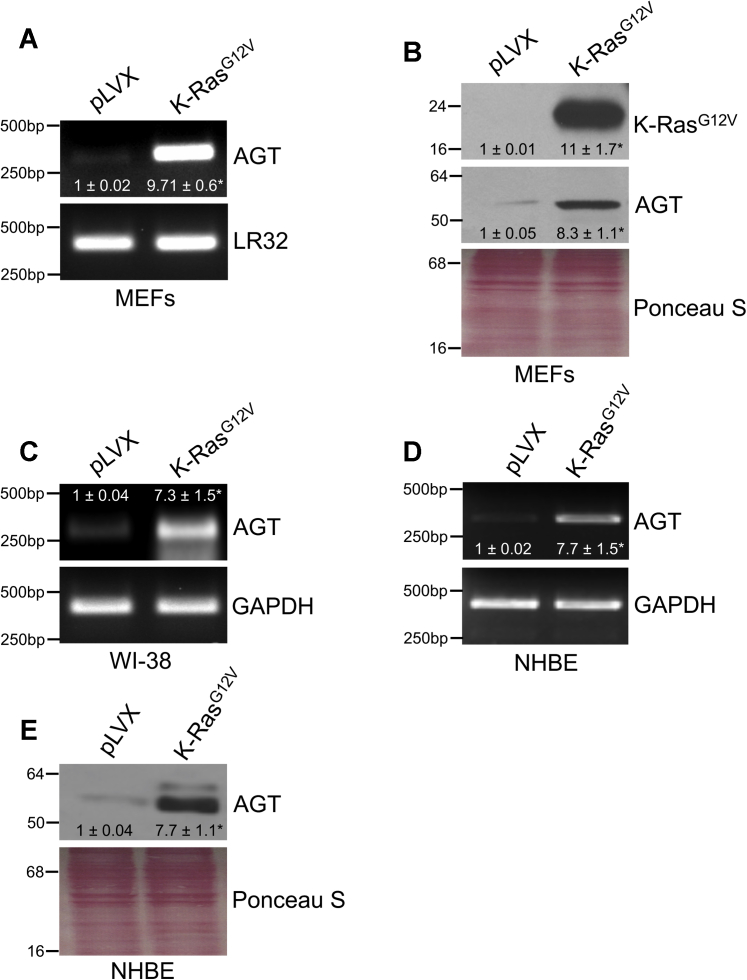
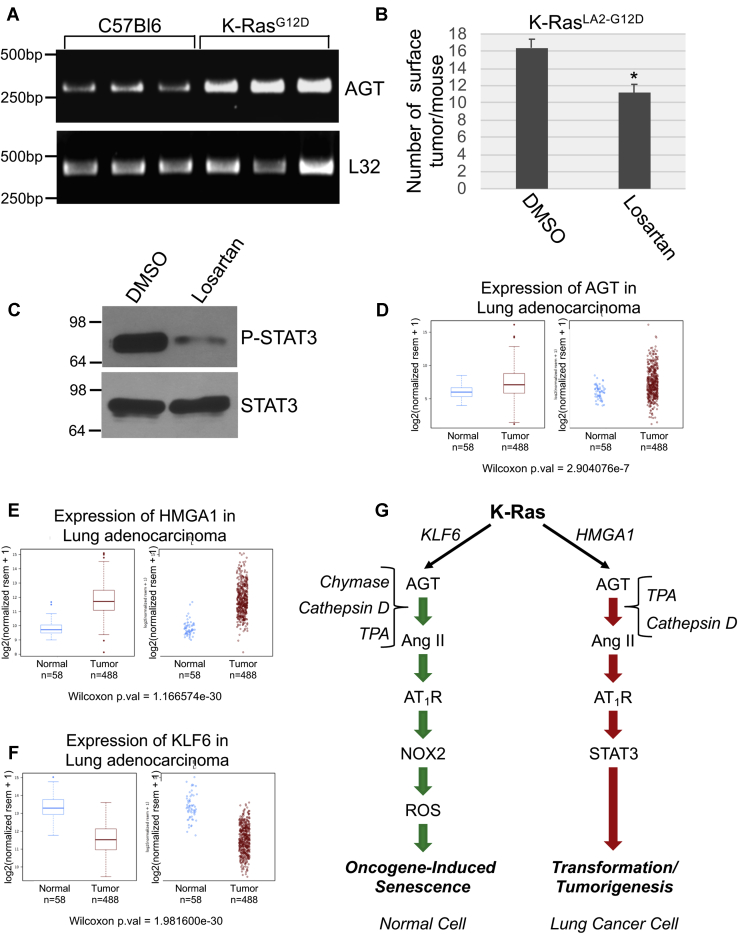
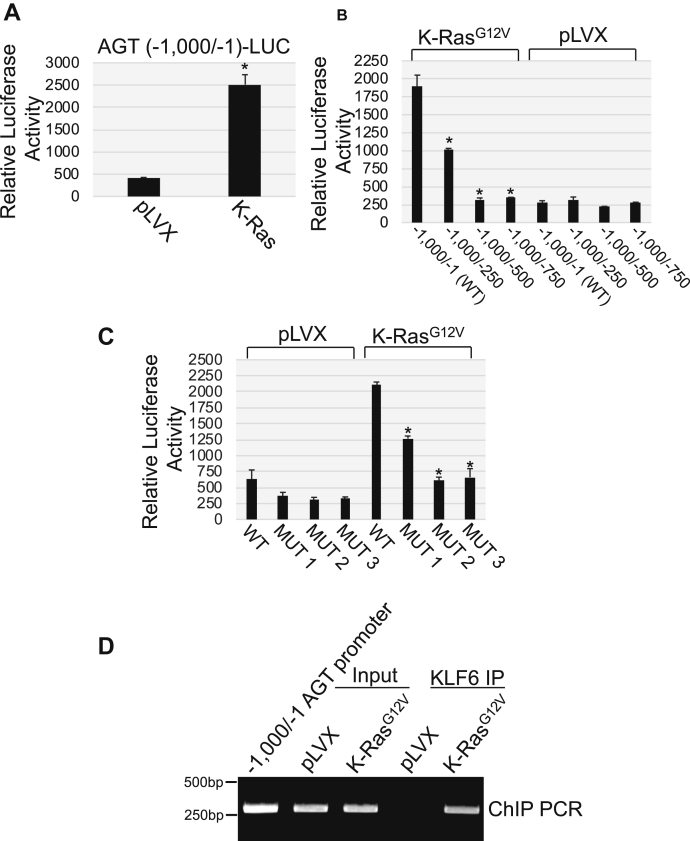
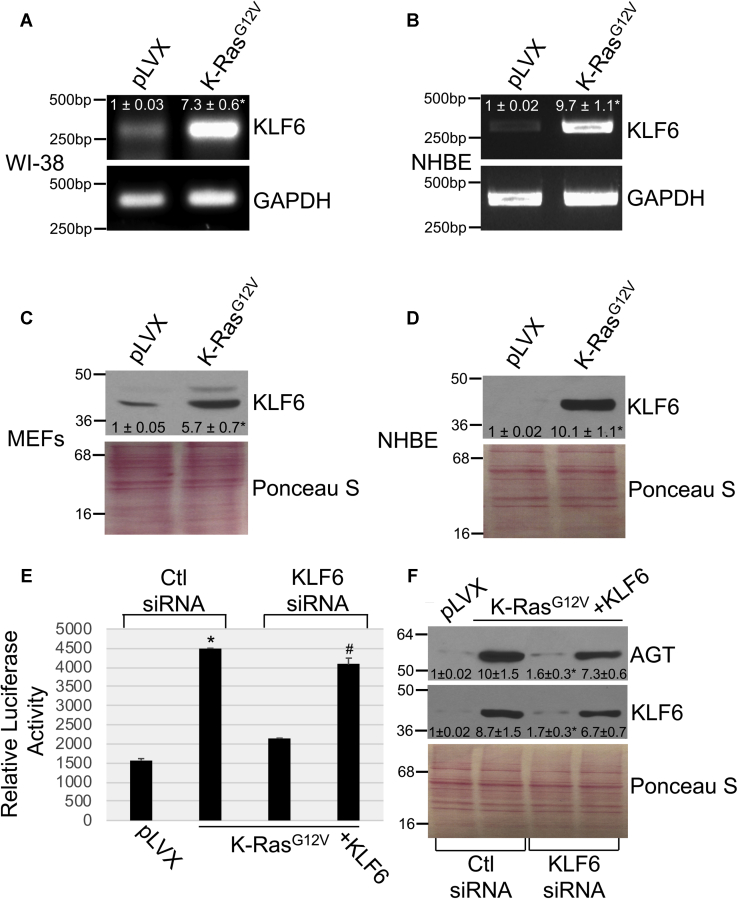
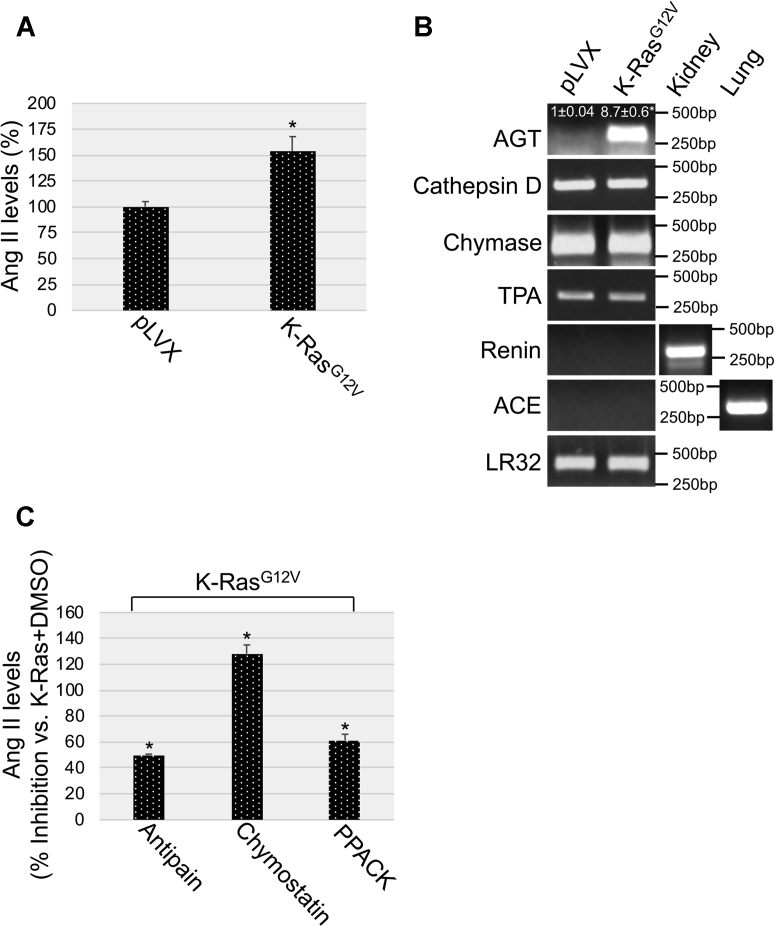
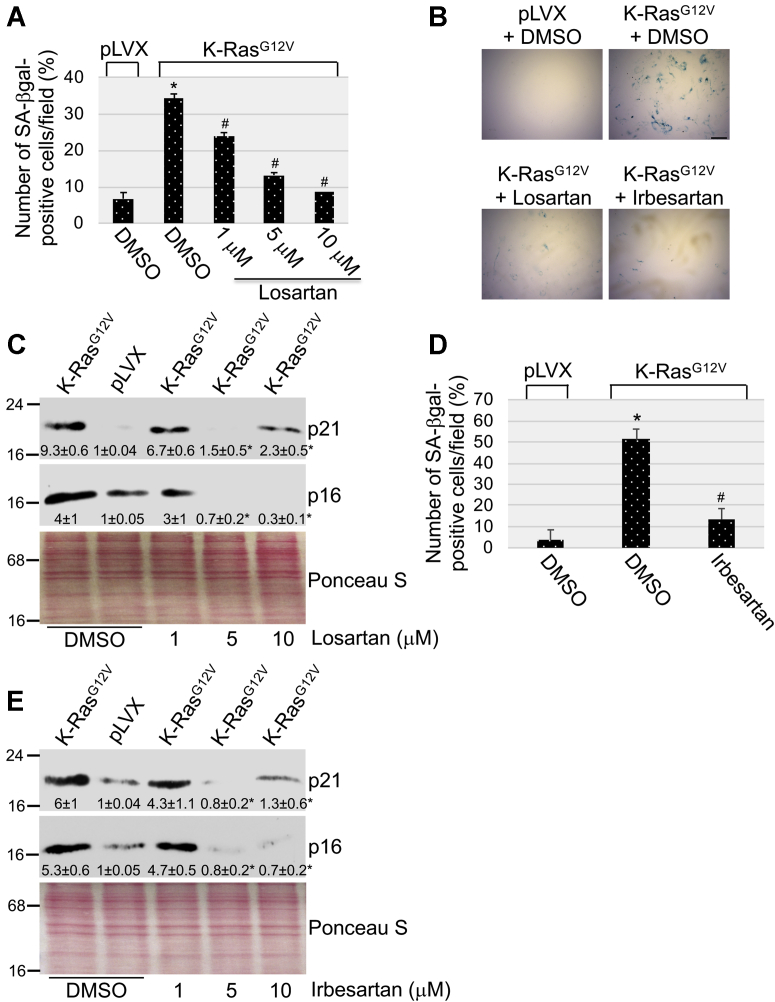
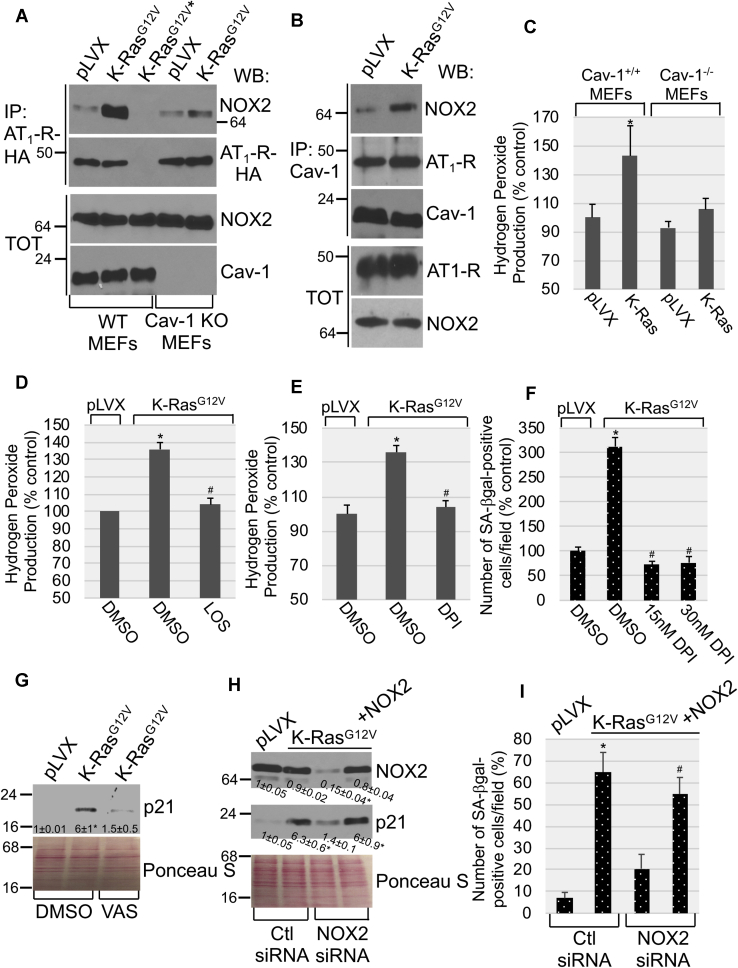
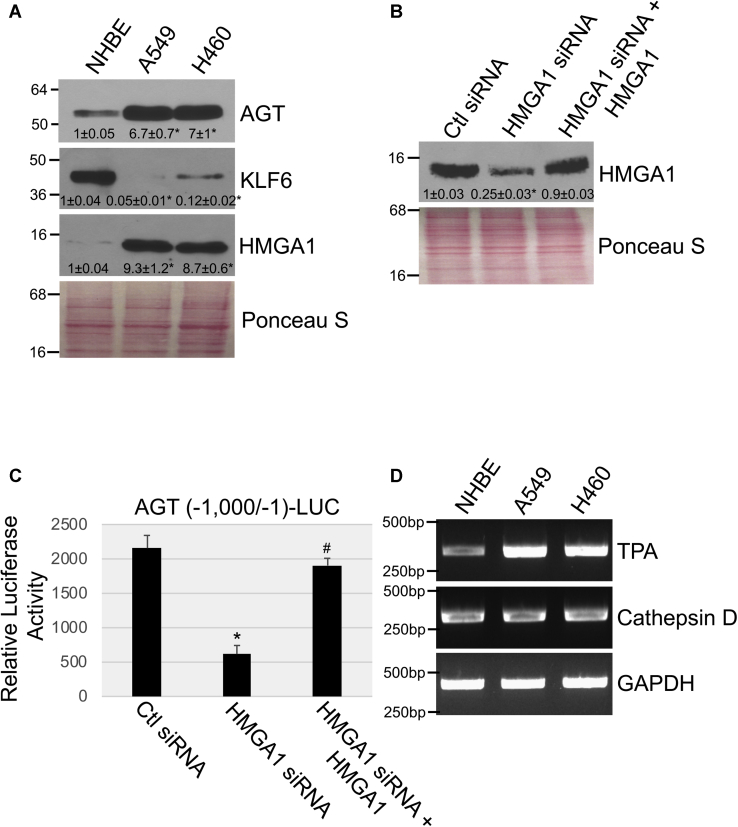
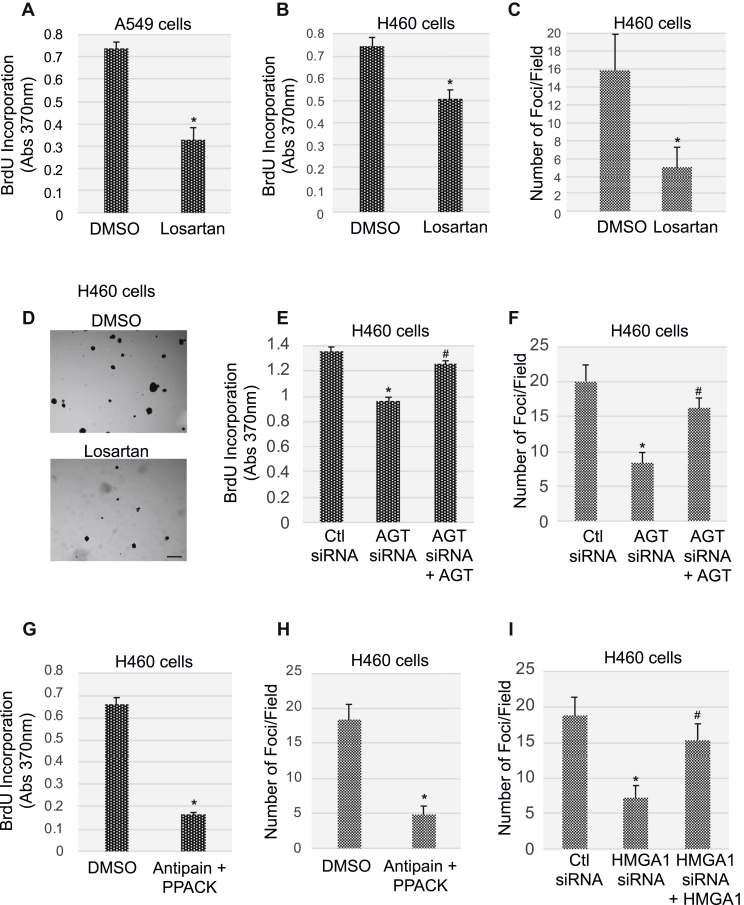
Oncogenic K-Ras (K-Ras) promotes senescence in normal cells but fuels transformation of cancer cells after the senescence barrier is bypassed. The mechanisms regulating this pleiotropic function of K-Ras remain to be fully established and bear high pathological significance. We find that K-Ras activates the angiotensinogen (AGT) gene promoter and promotes AGT protein expression in a Kruppel-like factor 6-dependent manner in normal cells. We show that AGT is then converted to angiotensin II (Ang II) in a cell-autonomous manner by cellular proteases. We show that blockade of the Ang II receptor type 1 (AT-R) in normal cells inhibits oncogene-induced senescence. We provide evidence that the oncogenic K-Ras-induced synthesis of Ang II and AT-R activation promote senescence through caveolin-1-dependent and nicotinamide adenine dinucleotide phosphate oxidase 2-mediated oxidative stress. Interestingly, we find that expression of AGT remains elevated in lung cancer cells but in a Kruppel-like factor 6-independent and high-mobility group AT-hook 1-dependent manner. We show that Ang II-mediated activation of the AT-R promotes cell proliferation and anchorage-independent growth of lung cancer cells through a STAT3-dependent pathway. Finally, we find that expression of AGT is elevated in lung tumors of K-Ras mice, a mouse model of lung cancer, and human lung cancer. Treatment with the AT-R antagonist losartan inhibits lung tumor formation in K-Ras mice. Together, our data provide evidence of the existence of a novel cell-autonomous and pleiotropic Ang II-dependent signaling pathway through which oncogenic K-Ras promotes oncogene-induced senescence in normal cells while fueling transformation in cancer cells.
致癌性 K-Ras(K-Ras)促进正常细胞衰老,但在越过衰老障碍后为癌细胞的转化提供燃料。调节 K-Ras 这种多效性功能的机制仍有待完全建立,并具有很高的病理意义。我们发现 K-Ras 通过依赖于 Krüppel 样因子 6 的方式激活血管紧张素原(AGT)基因启动子并促进正常细胞中 AGT 蛋白的表达。我们表明,AGT 随后通过细胞内蛋白酶以细胞自主的方式转化为血管紧张素 II(Ang II)。我们表明,在正常细胞中阻断血管紧张素 II 受体 1(AT-R)可抑制致癌基因诱导的衰老。我们提供的证据表明,致癌性 K-Ras 诱导的 Ang II 合成和 AT-R 激活通过 caveolin-1 依赖性和烟酰胺腺嘌呤二核苷酸磷酸氧化酶 2 介导的氧化应激促进衰老。有趣的是,我们发现 AGT 的表达在肺癌细胞中仍然升高,但以依赖于 Krüppel 样因子 6 独立和高迁移率族 AT 钩 1 依赖的方式升高。我们表明,Ang II 介导的 AT-R 激活通过 STAT3 依赖性途径促进肺癌细胞的增殖和非锚定依赖性生长。最后,我们发现 AGT 的表达在 K-Ras 小鼠的肺肿瘤中升高,K-Ras 小鼠是一种肺癌模型,以及人类肺癌。用 AT-R 拮抗剂洛沙坦治疗可抑制 K-Ras 小鼠的肺肿瘤形成。总之,我们的数据提供了证据,证明存在一种新型的细胞自主和多效性的 Ang II 依赖性信号通路,通过该通路,致癌性 K-Ras 促进正常细胞中的致癌基因诱导衰老,同时为癌细胞的转化提供燃料。