School of Medical Sciences, University of Campinas, Campinas, Brazil.
Department of Biomedicine, Federal University of Piaui, Parnaiba, Brazil.
Front Immunol. 2020 Dec 14;11:535147. doi: 10.3389/fimmu.2020.535147. eCollection 2020.
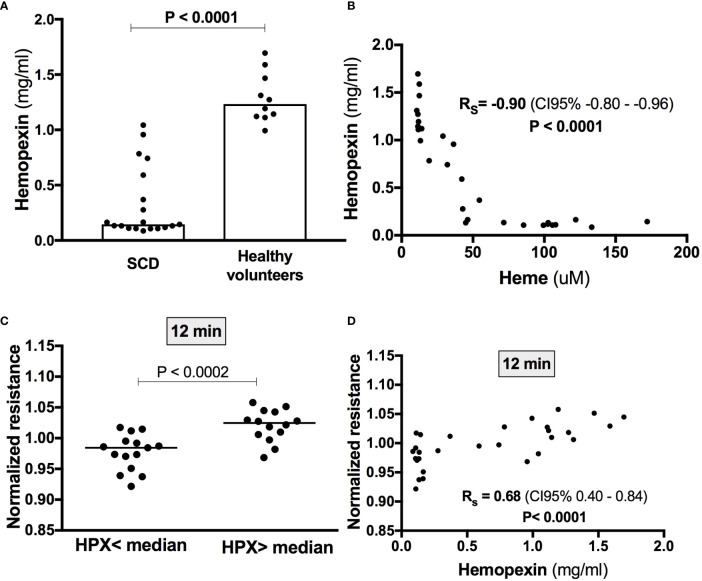
Free extracellular heme has been shown to activate several compartments of innate immunity, acting as a danger-associated molecular pattern (DAMP) in hemolytic diseases. Although localized endothelial barrier (EB) disruption is an important part of inflammation that allows circulating leukocytes to reach inflamed tissues, non-localized/deregulated disruption of the EB can lead to widespread microvascular hyperpermeability and secondary tissue damage. In mouse models of sickle cell disease (SCD), EB disruption has been associated with the development of a form of acute lung injury that closely resembles acute chest syndrome (ACS), and that can be elicited by acute heme infusion. Here we explored the effect of heme on EB integrity using human endothelial cell monolayers, in experimental conditions that include elements that more closely resemble conditions. EB integrity was assessed by electric cell-substrate impedance sensing in the presence of varying concentrations of heme and sera from SCD patients or healthy volunteers. Heme caused a dose-dependent decrease of the electrical resistance of cell monolayers, consistent with EB disruption, which was confirmed by staining of junction protein VE-cadherin. In addition, sera from SCD patients, but not from healthy volunteers, were also capable to induce EB disruption. Interestingly, these effects were not associated with total heme levels in serum. However, when heme was added to sera from SCD patients, but not from healthy volunteers, EB disruption could be elicited, and this effect was associated with hemopexin serum levels. Together our studies provide additional support to the concept of heme as a DAMP in hemolytic conditions.
游离细胞外血红素已被证明能激活先天免疫的几个部分,在溶血性疾病中作为一种危险相关分子模式 (DAMP)。虽然局部内皮屏障 (EB) 的破坏是炎症的一个重要部分,使循环白细胞能够到达发炎组织,但非局部/失调的 EB 破坏可导致广泛的微血管通透性增加和继发性组织损伤。在镰状细胞病 (SCD) 的小鼠模型中,EB 破坏与一种类似于急性胸痛综合征 (ACS) 的急性肺损伤的发展有关,并且可以通过急性血红素输注来诱发。在这里,我们使用人内皮细胞单层在更接近 条件的实验条件下研究了血红素对 EB 完整性的影响。在存在不同浓度血红素和来自 SCD 患者或健康志愿者的血清的情况下,通过电动细胞-底物阻抗传感评估 EB 完整性。血红素引起细胞单层电阻的剂量依赖性降低,与 EB 破坏一致,这通过连接蛋白 VE-钙粘蛋白的染色得到证实。此外,来自 SCD 患者的血清,但不是来自健康志愿者的血清,也能够诱导 EB 破坏。有趣的是,这些效应与血清中的总血红素水平无关。然而,当血红素被添加到来自 SCD 患者的血清中,而不是来自健康志愿者的血清中时,可以引起 EB 破坏,并且这种效应与血影蛋白血清水平有关。我们的研究共同为血红素在溶血性条件下作为 DAMP 的概念提供了额外的支持。