The Second Central Laboratory, Key Laboratory of Integrative Chinese and Western Medicine for the Diagnosis and Treatment of Circulatory Diseases of Zhejiang Province, The First Affiliated Hospital of Zhejiang Chinese Medical University, Hangzhou 310006, China.
J Immunol Res. 2020 Dec 15;2020:8813558. doi: 10.1155/2020/8813558. eCollection 2020.
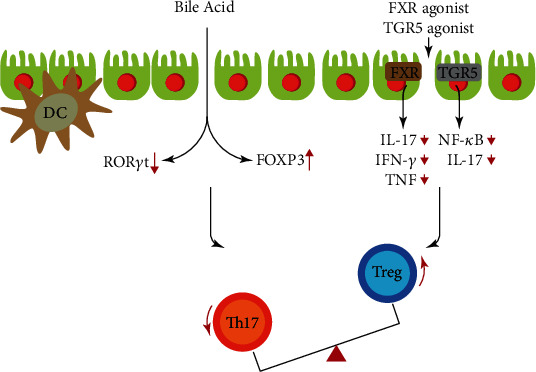
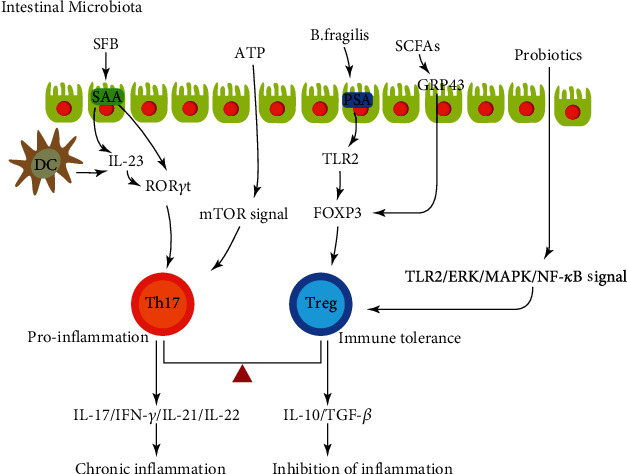
Inflammatory bowel disease (IBD) is a chronic, inflammatory, and autoimmune disorder. The pathogenesis of IBD is not yet clear. Studies have shown that the imbalance between T helper 17 (Th17) and regulatory T (Treg) cells, which differentiate from CD4 T cells, contributes to IBD. Th17 cells promote tissue inflammation, and Treg cells suppress autoimmunity in IBD. Therefore, Th17/Treg cell balance is crucial. Some regulatory factors affecting the production and maintenance of these cells are also important for the proper regulation of the Th17/Treg balance; these factors include T cell receptor (TCR) signaling, costimulatory signals, cytokine signaling, bile acid metabolites, and the intestinal microbiota. This article focuses on our understanding of the function and role of the balance between Th17/Treg cells in IBD and these regulatory factors and their clinical significance in IBD.
炎症性肠病(IBD)是一种慢性炎症性和自身免疫性疾病。IBD 的发病机制尚不清楚。研究表明,辅助性 T 细胞 17(Th17)和调节性 T(Treg)细胞之间的失衡,这些细胞从 CD4 T 细胞分化而来,与 IBD 有关。Th17 细胞促进组织炎症,而 Treg 细胞在 IBD 中抑制自身免疫。因此,Th17/Treg 细胞平衡至关重要。一些调节因子影响这些细胞的产生和维持,对于适当调节 Th17/Treg 平衡也很重要;这些因素包括 T 细胞受体(TCR)信号、共刺激信号、细胞因子信号、胆酸代谢物和肠道微生物群。本文重点介绍我们对 Th17/Treg 细胞平衡在 IBD 中的功能和作用的理解,以及这些调节因子在 IBD 中的临床意义。