
丹酚酸B通过抑制内质网应激保护免受脂肪酸诱导的肾小管损伤。
Salvianolic Acid B Protects Against Fatty Acid-Induced Renal Tubular Injury via Inhibition of Endoplasmic Reticulum Stress.
作者信息
Mai Xiaoyi, Yin Xin, Chen Peipei, Zhang Minzhou
机构信息
Department of Critical-care Medicine, Guangdong Provincial Hospital of Chinese Medicine, The 2nd Affiliated Hospital of Guangzhou University of Chinese Medicine, Guangzhou, China.
AMI Key Lab of Chinese Medicine in Guangzhou, Guangzhou, China.
出版信息
Front Pharmacol. 2020 Dec 15;11:574229. doi: 10.3389/fphar.2020.574229. eCollection 2020.
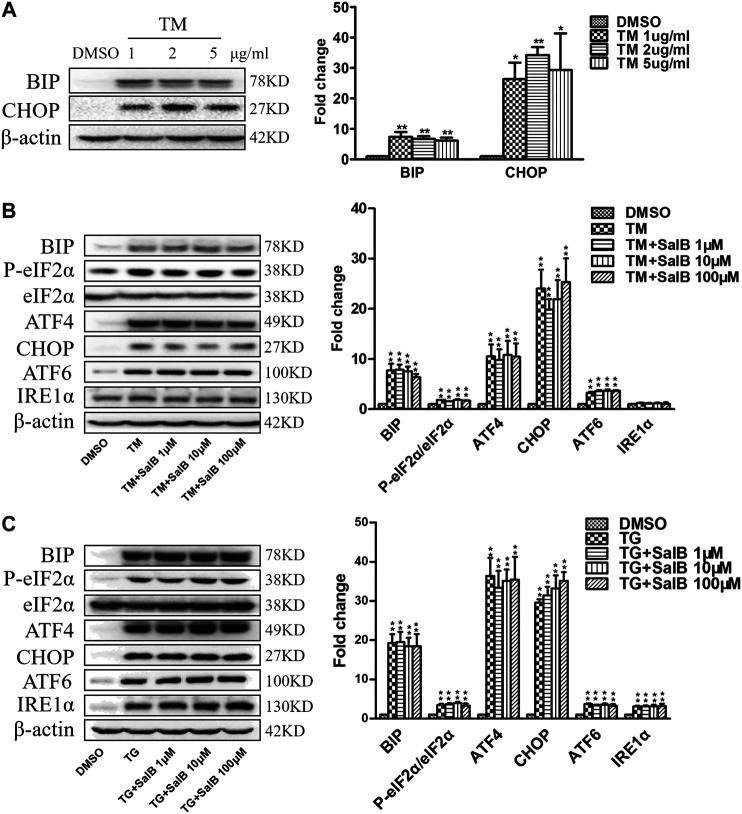
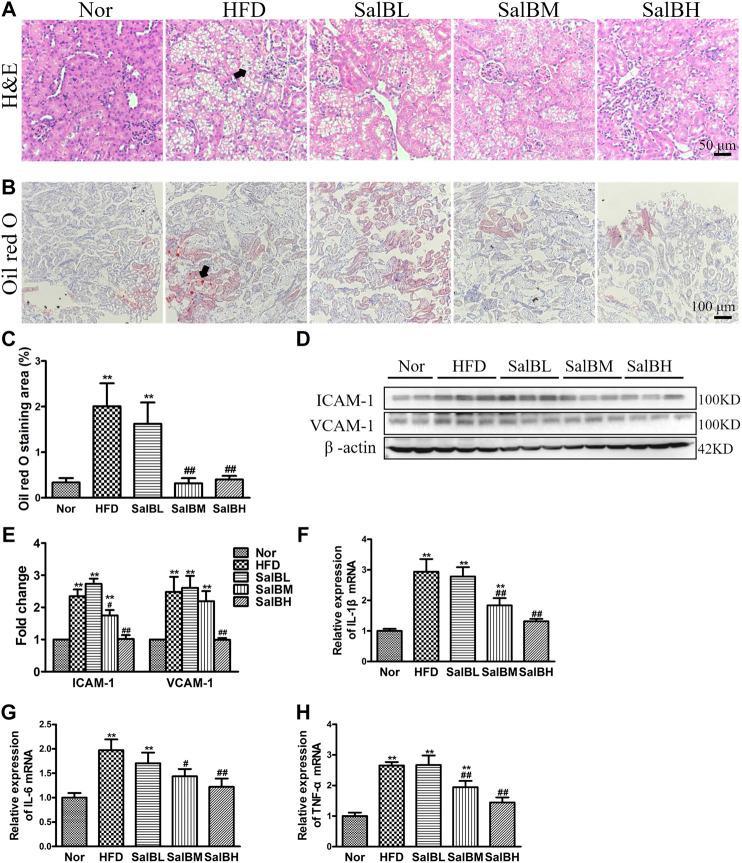
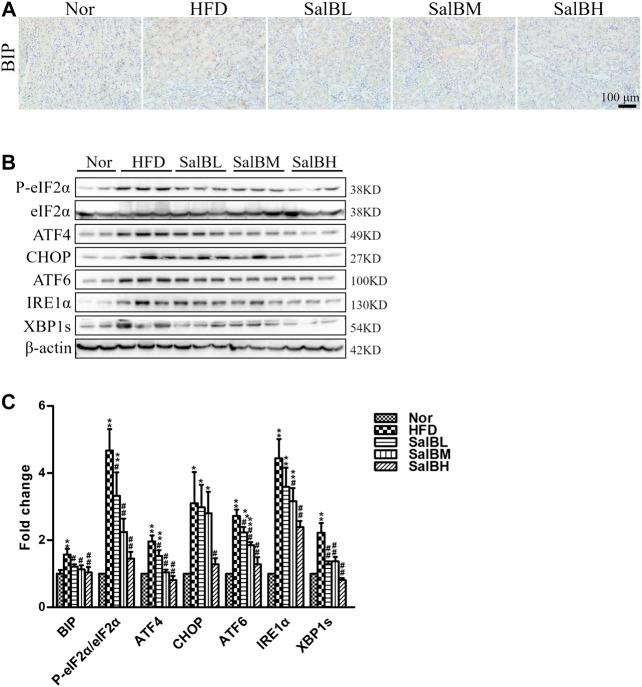
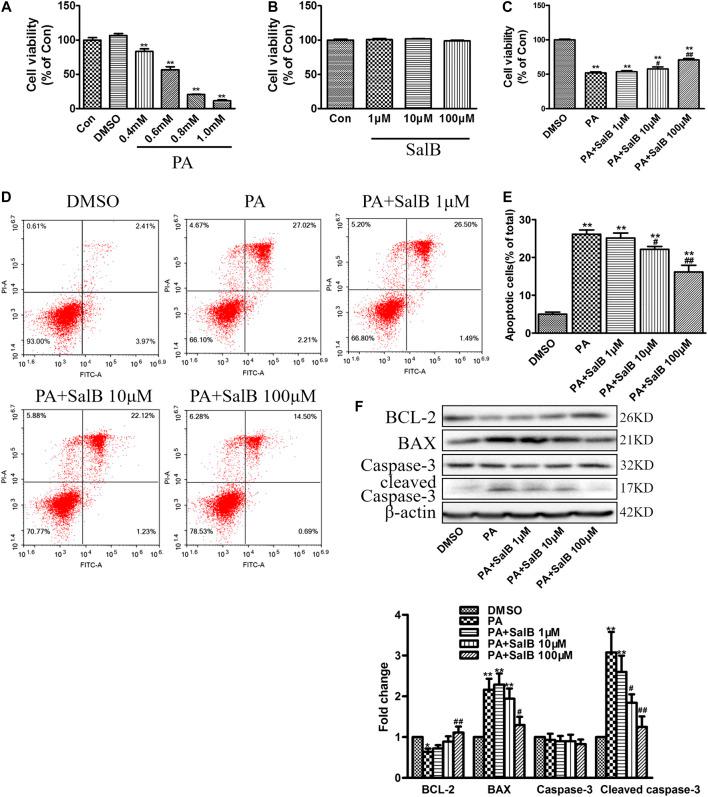
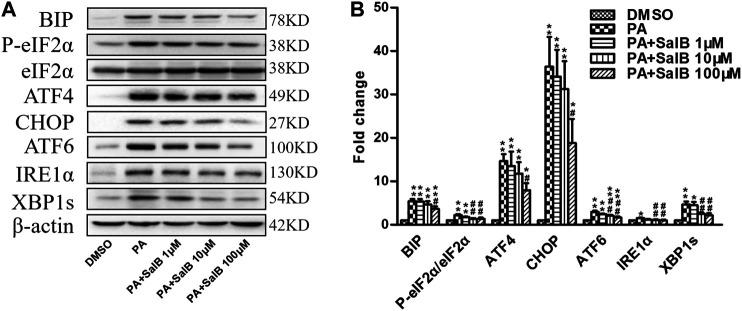
Obesity-related kidney disease is associated with elevated levels of saturated free fatty acids (SFA). SFA lipotoxicity in tubular cells contributes to significant cellular apoptosis and injury. Salvianolic acid B (SalB) is the most abundant bioactive molecule from In this study, we investigated the effect of SalB on SFA-induced renal tubular injury and endoplasmic reticulum (ER) stress, and . C57BL/6 mice were assigned to five groups: a control group with normal diet (Nor), high-fat diet group (HFD), and HFD with three different SalB treatment doses, low (SalBL; 3 mg/kg), medium (SalBM; 6.25 mg/kg), and high (SalBH; 12.5 mg/kg) doses. SalB was intraperitoneally injected daily for 4 weeks after 8 weeks of HFD. After 12 weeks, mice were sacrificed and kidneys and sera were collected. Apoptosis and ER stress were induced in human proximal tubule epitelial (HK2) cells by palmitic acid (PA, 0.6 mM), tunicamycin (TM, 1 μg/ml), or thapsigargin (TG, 200 nM) . C57BL/6 mice fed a high-fat diet (HFD) for 12 weeks exhibited increased apoptosis (Bax and cleaved caspase-3) and ER stress (BIP, P-eIF2α, ATF4, CHOP, ATF6, IRE1α, and XBP1s) markers expression in the kidney, compared with control mice, which were remarkably suppressed by SalB treatment. studies showed that PA (0.6 mM) induced apoptosis and ER stress in cultured HK2 cells. SalB treatment attenuated all the adverse effects of PA. However, SalB failed to inhibit TM or TG-induced ER stress in HK2 cells. The study indicated that SalB may play an important role in obesity-related kidney injury via mediating SFA-induced ER stress.
肥胖相关肾病与饱和游离脂肪酸(SFA)水平升高有关。肾小管细胞中的SFA脂毒性会导致显著的细胞凋亡和损伤。丹酚酸B(SalB)是[来源未完整提及]中含量最丰富的生物活性分子。在本研究中,我们研究了SalB对SFA诱导的肾小管损伤和内质网(ER)应激的影响。C57BL/6小鼠被分为五组:正常饮食对照组(Nor)、高脂饮食组(HFD)以及接受三种不同剂量SalB治疗的HFD组,低剂量(SalBL;3mg/kg)、中剂量(SalBM;6.25mg/kg)和高剂量(SalBH;12.5mg/kg)。在高脂饮食8周后,每天腹腔注射SalB,持续4周。12周后,处死小鼠并收集肾脏和血清。通过棕榈酸(PA,0.6mM)、衣霉素(TM,1μg/ml)或毒胡萝卜素(TG,200nM)诱导人近端肾小管上皮(HK2)细胞发生凋亡和内质网应激。喂食高脂饮食(HFD)12周的C57BL/6小鼠肾脏中凋亡(Bax和裂解的caspase-3)和内质网应激(BIP、磷酸化eIF2α、ATF4、CHOP、ATF6、IRE1α和XBP1s)标志物的表达增加,与对照小鼠相比,SalB治疗可显著抑制这些表达。研究表明,PA(0.6mM)在培养的HK2细胞中诱导凋亡和内质网应激。SalB治疗减轻了PA的所有不良反应。然而,SalB未能抑制HK2细胞中TM或TG诱导的内质网应激。该研究表明,SalB可能通过介导SFA诱导的内质网应激在肥胖相关肾损伤中发挥重要作用。

 Zotero 插件