Vanhaelewyn Lucas, Van Der Straeten Dominique, De Coninck Barbara, Vandenbussche Filip
Laboratory of Functional Plant Biology, Department of Biology, Ghent University, Ghent, Belgium.
Plant Health and Protection Laboratory, Division of Crop Biotechnics, Department of Biosystems, KU Leuven, Leuven, Belgium.
Front Plant Sci. 2020 Dec 15;11:597642. doi: 10.3389/fpls.2020.597642. eCollection 2020.
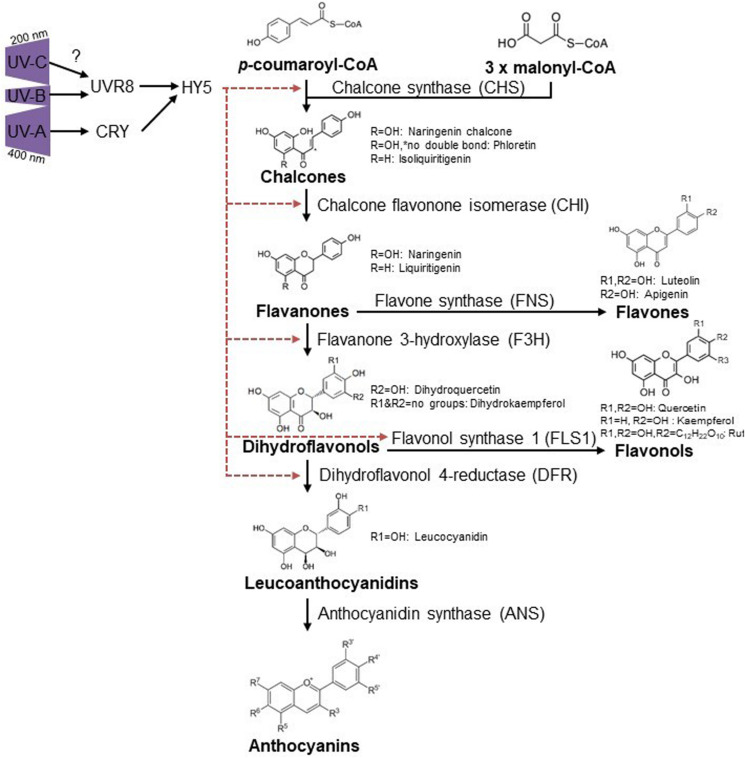
Ultraviolet (UV) radiation directly affects plants and microorganisms, but also alters the species-specific interactions between them. The distinct bands of UV radiation, UV-A, UV-B, and UV-C have different effects on plants and their associated microorganisms. While UV-A and UV-B mainly affect morphogenesis and phototropism, UV-B and UV-C strongly trigger secondary metabolite production. Short wave (<350 nm) UV radiation negatively affects plant pathogens in direct and indirect ways. Direct effects can be ascribed to DNA damage, protein polymerization, enzyme inactivation and increased cell membrane permeability. UV-C is the most energetic radiation and is thus more effective at lower doses to kill microorganisms, but by consequence also often causes plant damage. Indirect effects can be ascribed to UV-B specific pathways such as the UVR8-dependent upregulated defense responses in plants, UV-B and UV-C upregulated ROS accumulation, and secondary metabolite production such as phenolic compounds. In this review, we summarize the physiological and molecular effects of UV radiation on plants, microorganisms and their interactions. Considerations for the use of UV radiation to control microorganisms, pathogenic as well as non-pathogenic, are listed. Effects can be indirect by increasing specialized metabolites with plant pre-treatment, or by directly affecting microorganisms.
紫外线(UV)辐射不仅直接影响植物和微生物,还会改变它们之间特定物种的相互作用。紫外线辐射的不同波段,即UV-A、UV-B和UV-C,对植物及其相关微生物有不同的影响。虽然UV-A和UV-B主要影响形态发生和向光性,但UV-B和UV-C强烈触发次生代谢产物的产生。短波(<350nm)紫外线辐射以直接和间接方式对植物病原体产生负面影响。直接影响可归因于DNA损伤、蛋白质聚合、酶失活和细胞膜通透性增加。UV-C是能量最高的辐射,因此在较低剂量下更有效地杀死微生物,但结果也常常对植物造成损害。间接影响可归因于UV-B特定途径,如植物中依赖UVR8的上调防御反应、UV-B和UV-C上调的活性氧积累以及次生代谢产物的产生,如酚类化合物。在本综述中,我们总结了紫外线辐射对植物、微生物及其相互作用的生理和分子影响。列出了使用紫外线辐射控制微生物(包括致病性和非致病性微生物)的注意事项。影响可能是间接的,通过植物预处理增加特殊代谢产物,或直接影响微生物。