Serper Marina, Evon Donna M, Amador Jipcy, Stewart Paul W, Sarkar Souvik, Lok Anna S, Sterling Richard K, Reeve Bryce B, Golin Carol E, Rajender Reddy K, Lim Joseph K, Reau Nancy, Nelson David R, Di Bisceglie Adrian M, Fried Michael W
Division of Gastroenterology and Hepatology, Department of Medicine, University of Pennsylvania Perelman School of Medicine, Philadelphia, PA, USA.
Division of Gastroenterology and Hepatology, Department of Medicine, University of North Carolina, Chapel Hill, NC, USA.
Liver Int. 2021 Apr;41(4):692-704. doi: 10.1111/liv.14781. Epub 2021 Jan 22.
BACKGROUND & AIMS: The long-term impact of hepatitis C virus (HCV) therapy with all-oral direct-acting antivirals (DAAs) on patient-reported outcomes (PROs) has not been well-described. We characterized changes in PROs from pre-treatment to 12 months post-treatment in a real-world cohort.
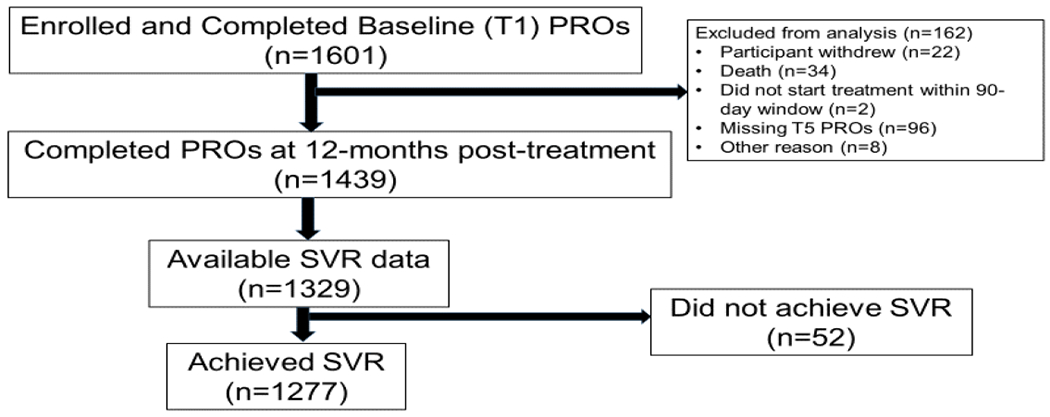
PROP UP was a multi-centre observational cohort study of 1601 patients treated with DAAs at 11 US gastroenterology/hepatology practices from 2015 to 2017. PROs were evaluated pre-treatment (T1) and 12 months post-treatment (T5). A minimally important change (MIC) threshold was prespecified as >5% change in PRO scores from T1 to T5. Multivariable analyses identified predictors of change.
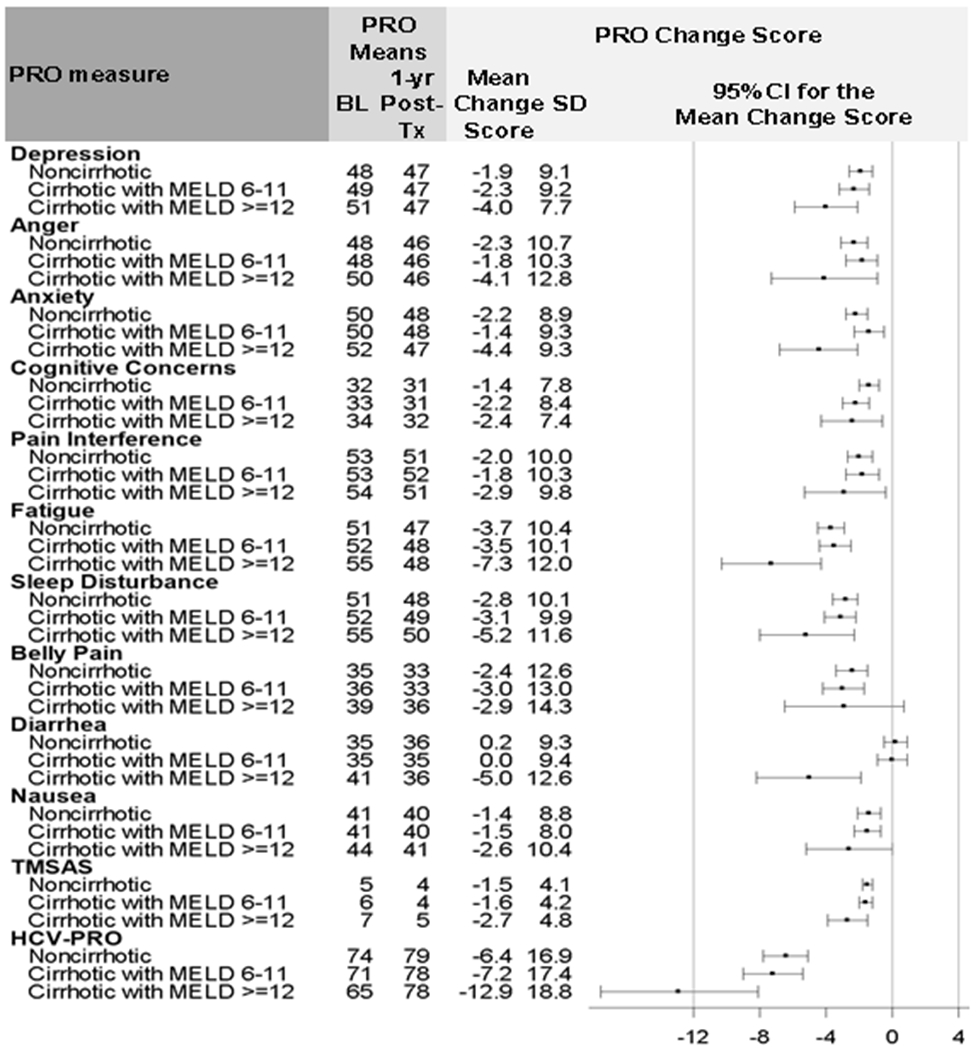
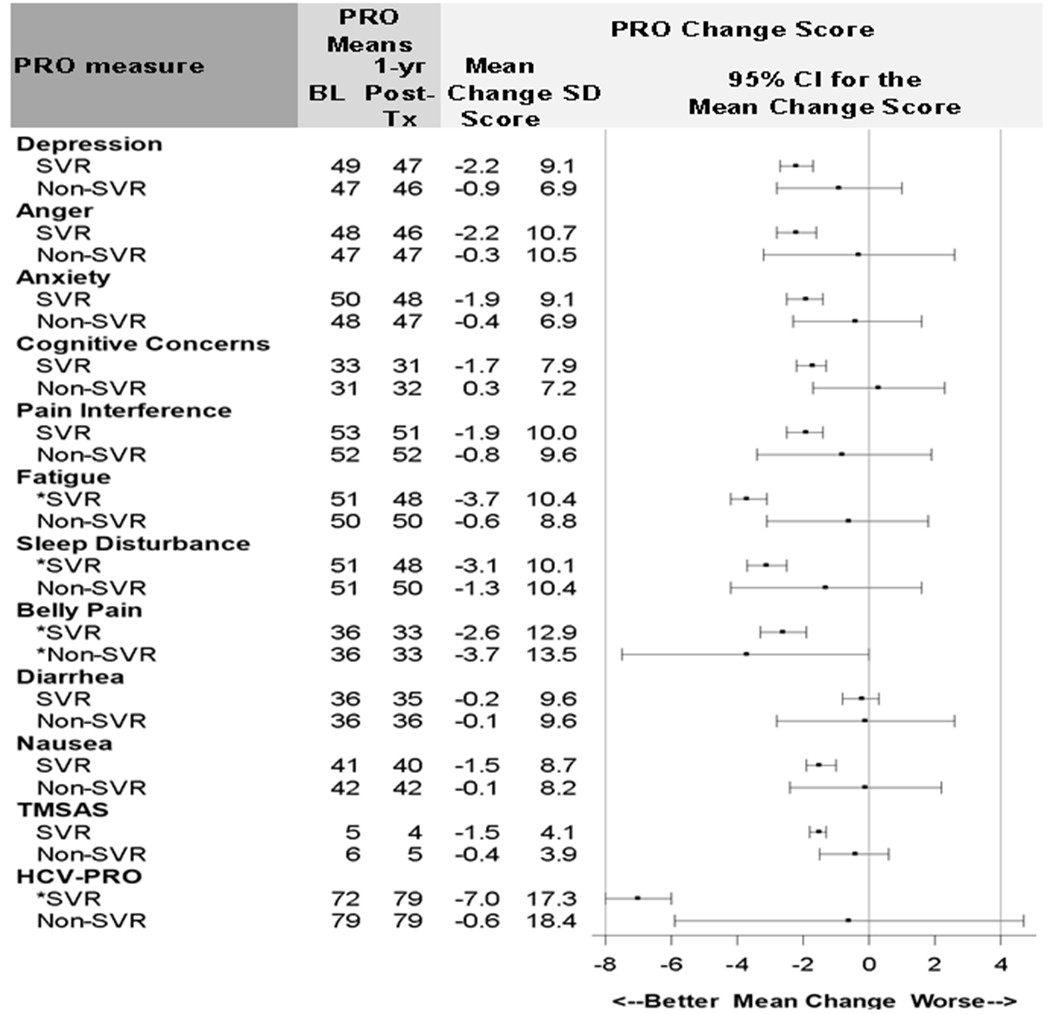
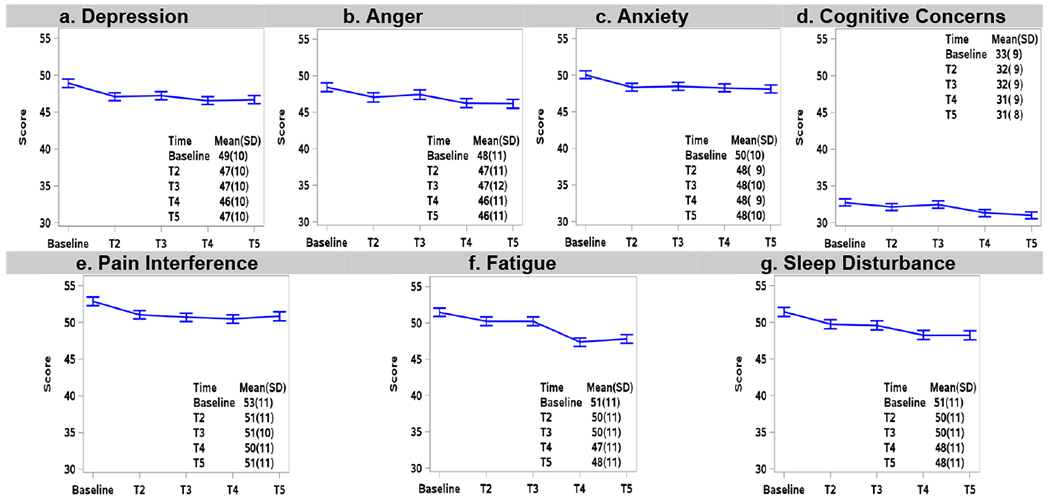
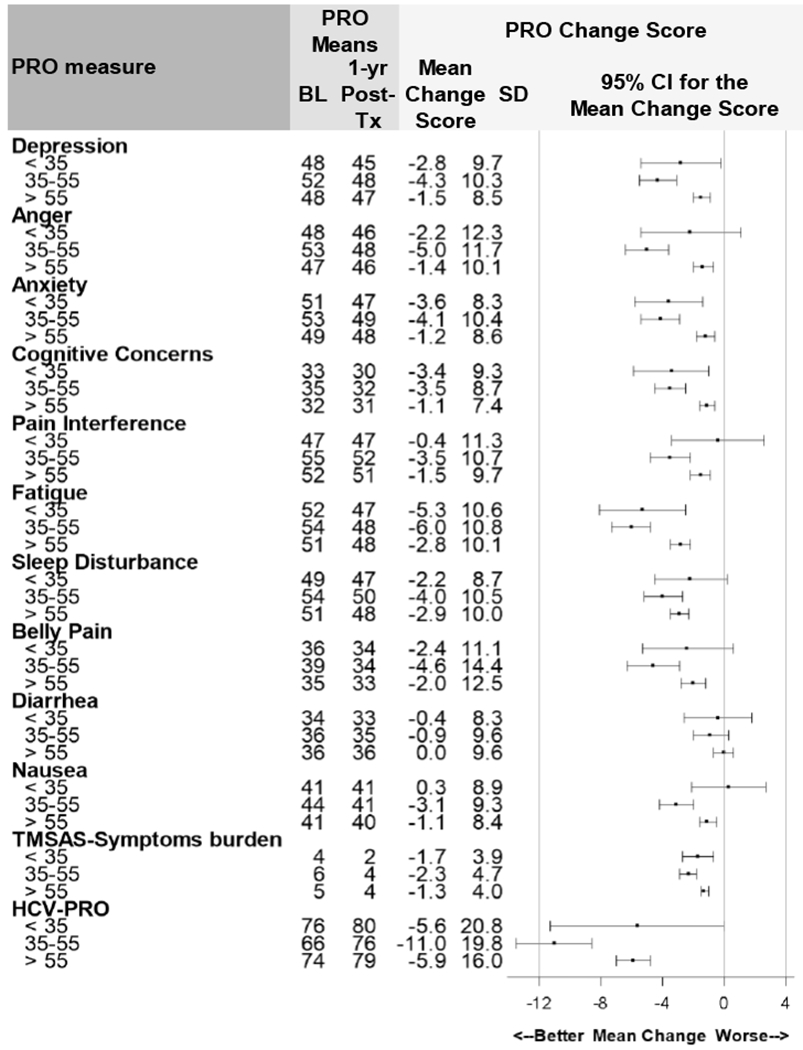
Three-quarters of patients were 55 or older; 45% were female, 60% were white, 33% were black, nearly half had cirrhosis. The most commonly-prescribed DAA regimens were sofosbuvir-based (83%) and grazoprevir/elbasvir (11%). Study retention was >95%. On average, small improvements were observed at 3 months post-treatment in all PROs and sustained at 12 months post-treatment among patients with sustained virologic response (SVR). Clinically meaningful improvements were achieved in fatigue (mean change score: -3.7 [-4.2, -3.1]), sleep (mean change score: -3.1 [-3.7, -2.5]), abdominal pain (mean change score: -2.6 [-3.3, -1.9]) and functional well-being (mean change score: -7.0 [-6.0, -8.0]). Symptom improvements were generally not sustained with no SVR (n = 52). Patients with cirrhosis and MELD ≥12 had the greatest improvements in functional well-being (-12.9 [-17.6, -8.1]).
The improvements in patient-reported outcomes reported by patients who achieved SVR following HCV DAA therapy were durable at 12 months post-treatment.
全口服直接抗病毒药物(DAA)治疗丙型肝炎病毒(HCV)对患者报告结局(PRO)的长期影响尚未得到充分描述。我们在一个真实世界队列中描述了从治疗前到治疗后12个月PRO的变化情况。
PROP UP是一项多中心观察性队列研究,纳入了2015年至2017年在美国11家胃肠病学/肝病学诊所接受DAA治疗的1601例患者。在治疗前(T1)和治疗后12个月(T5)评估PRO。预先设定最小重要变化(MIC)阈值为从T1到T5的PRO评分变化>5%。多变量分析确定变化的预测因素。
四分之三的患者年龄在55岁及以上;45%为女性,60%为白人,33%为黑人,近一半有肝硬化。最常用的DAA治疗方案是以索磷布韦为基础的(83%)和格卡瑞韦/哌仑他韦(11%)。研究保留率>95%。平均而言,所有PRO在治疗后3个月均有小幅改善,在获得持续病毒学应答(SVR)的患者中,这种改善在治疗后12个月持续存在。疲劳(平均变化评分:-3.7[-4.2,-3.1])、睡眠(平均变化评分:-3.1[-3.7,-2.5])、腹痛(平均变化评分:-2.6[-3.3,-1.9])和功能健康(平均变化评分:-7.0[-6.0,-8.0])方面取得了具有临床意义的改善。未获得SVR的患者(n = 52)症状改善通常未持续。肝硬化且终末期肝病模型(MELD)评分≥12的患者在功能健康方面改善最大(-12.9[-17.6,-8.1])。
HCV DAA治疗后获得SVR的患者报告的患者报告结局改善在治疗后12个月是持久的。