The Azrieli National Institute for Human Brain Imaging and Research, Weizmann Institute of Science, 234 Herzl Street, Rehovot 76100, Israel.
Department of Neurobiology, Weizmann Institute of Science, 234 Herzl Street, Rehovot 76100, Israel.
Chem Senses. 2021 Jan 1;46. doi: 10.1093/chemse/bjaa085.
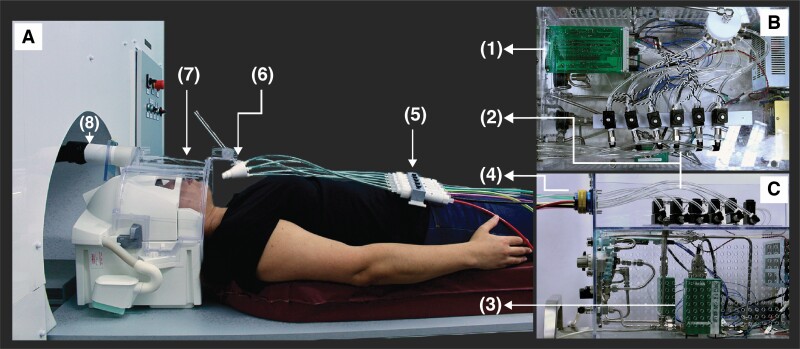
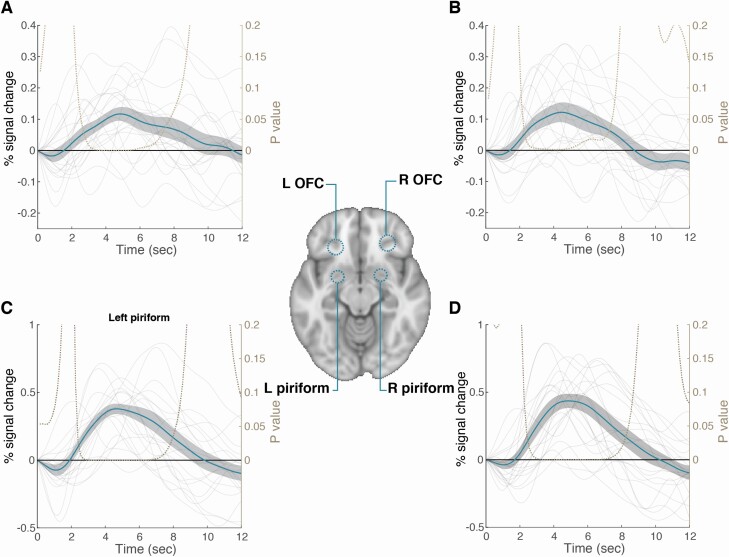
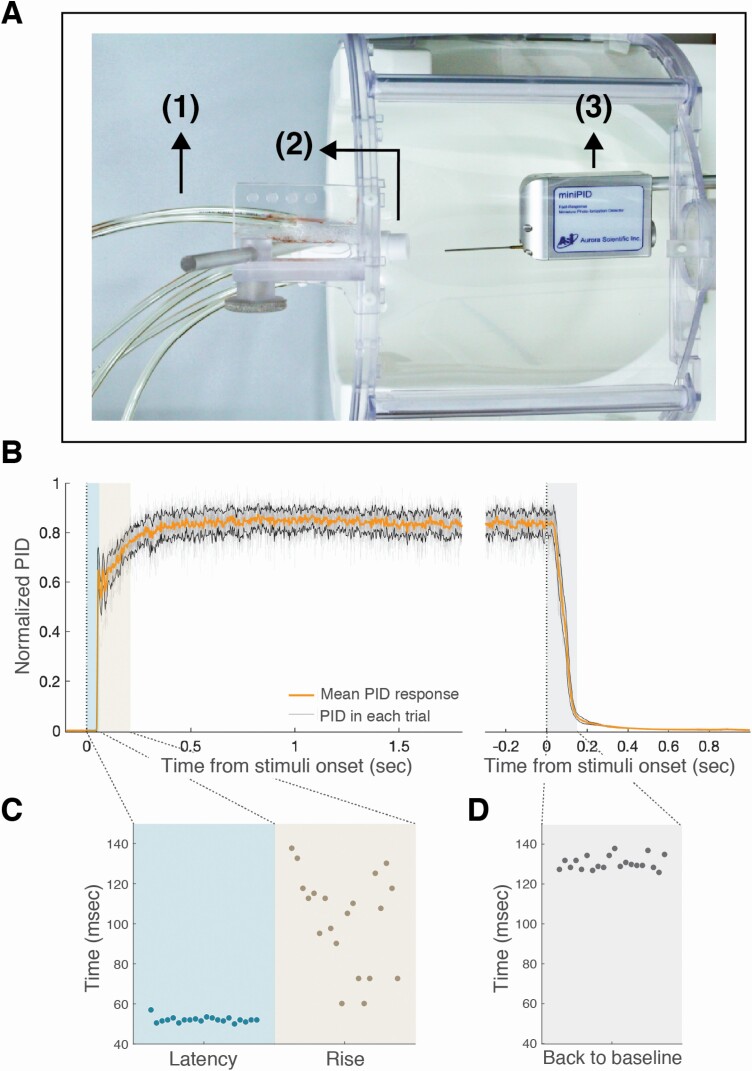
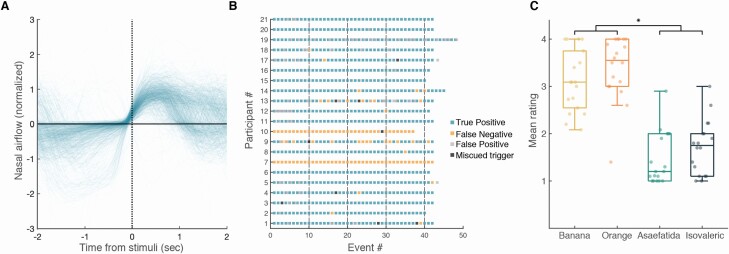
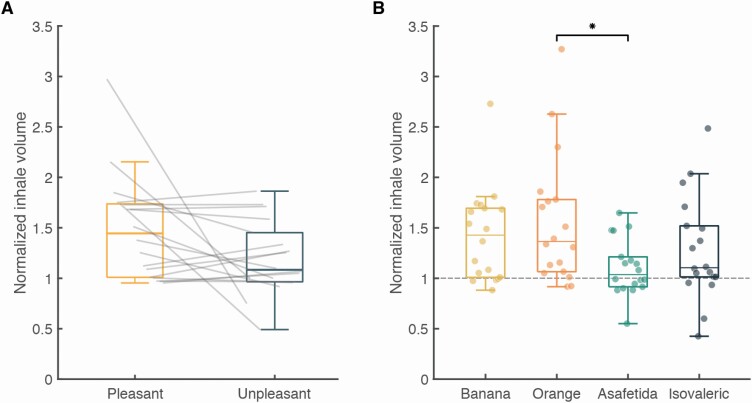
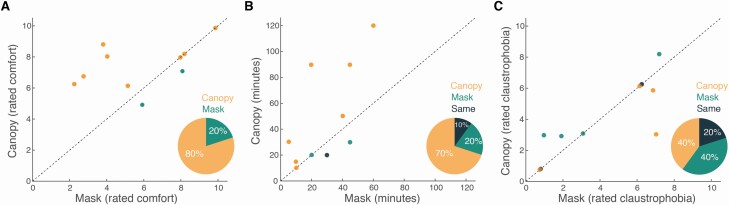
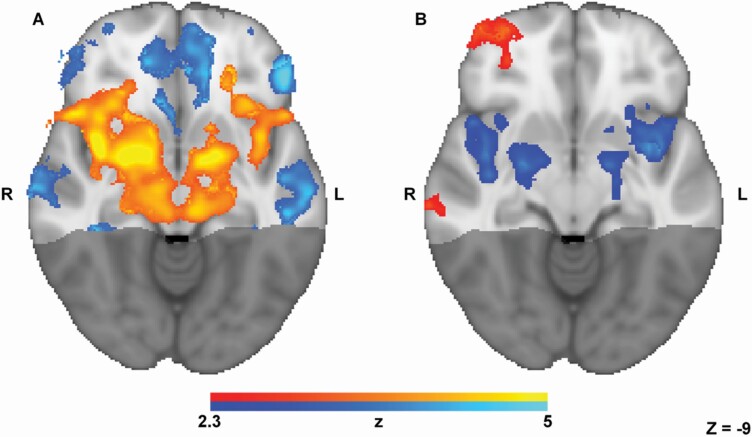
Functional magnetic resonance imaging (fMRI) has become the leading method for measuring the human brain response to sensory stimuli. However, olfaction fMRI lags behind vision and audition fMRI for 2 primary reasons: First, the olfactory brain areas are particularly susceptible to imaging artifacts, and second, the olfactory stimulus is particularly difficult to control in the fMRI environment. A component of the latter is related to the odorant delivery human-machine interface, namely the point where odorants exit the dispensing apparatus to reach at the nose. Previous approaches relied on either nasal cannulas or nasal masks, each associated with particular drawbacks and discomforts. Here, we provide detailed descriptions and instructions for transforming the MRI head-coil into an olfactory microenvironment, or odor canopy, where odorants can be switched on and off in less than 150 ms without cannula or mask. In a proof-of-concept experiment, we demonstrate that odor canopy provides for clearly dissociable odorant presence and absence, with no nonolfactory cues. Moreover, we find that odor canopy is rated more comfortable than nasal mask, and we demonstrate that using odor canopy in the fMRI generates a typical olfactory brain response. We conclude in recommending this approach for minimized discomfort in fMRI of olfaction.
功能磁共振成像(fMRI)已成为测量人类大脑对感官刺激反应的主要方法。然而,嗅觉 fMRI 落后于视觉和听觉 fMRI,主要有两个原因:第一,嗅觉脑区特别容易受到成像伪影的影响;第二,在 fMRI 环境中,嗅觉刺激特别难以控制。后者的一个组成部分与气味传递人机界面有关,即气味从分配装置到达鼻子的位置。以前的方法依赖于鼻插管或鼻罩,每种方法都有其特定的缺点和不适。在这里,我们提供了将 MRI 头线圈转换为嗅觉微环境(或气味罩)的详细描述和说明,在不到 150 毫秒的时间内可以打开和关闭气味,而无需插管或面罩。在概念验证实验中,我们证明了气味罩可以提供明显可区分的气味存在和不存在,没有非嗅觉线索。此外,我们发现气味罩比鼻罩更舒适,并且我们证明在 fMRI 中使用气味罩会产生典型的嗅觉大脑反应。我们的结论是,建议在 fMRI 嗅觉中使用这种方法以减少不适感。