Department of Forensic Medicine, Section of Forensic Pathology, University of Copenhagen, Frederik V's Vej 11, Copenhagen East, 2100, Denmark.
Trauma Centre & Department of Anaesthesia, HOC, Rigshospitalet, University of Copenhagen, Blegdamsvej 9, Copenhagen East, 2100, Denmark.
Int J Legal Med. 2021 May;135(3):871-877. doi: 10.1007/s00414-020-02499-3. Epub 2021 Jan 3.
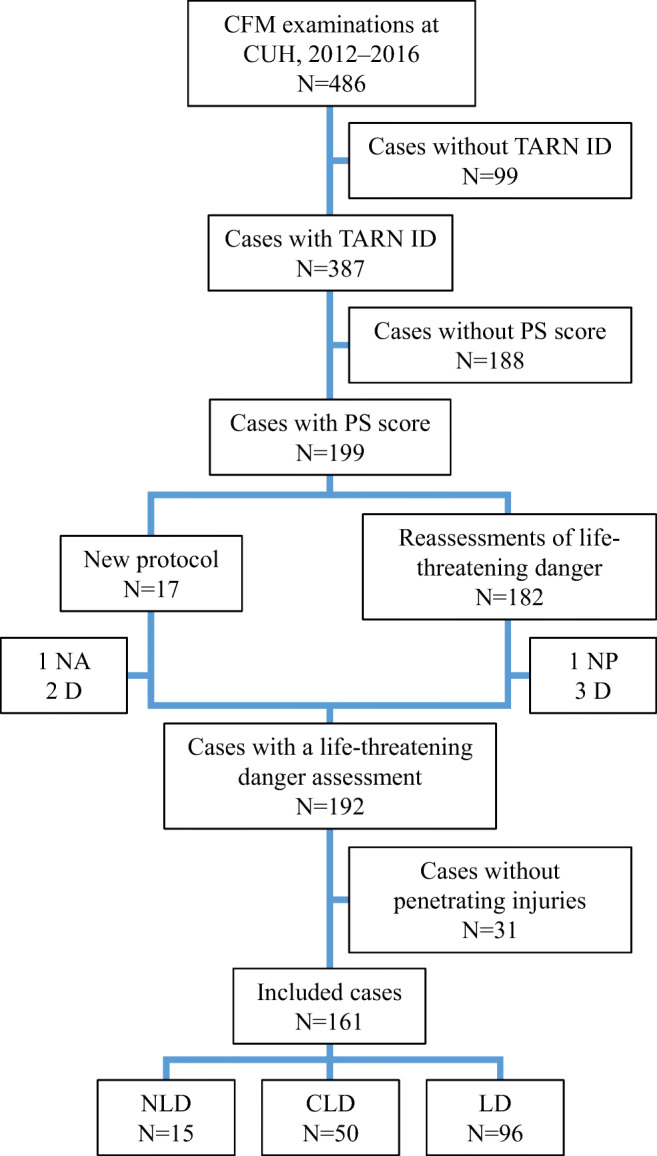
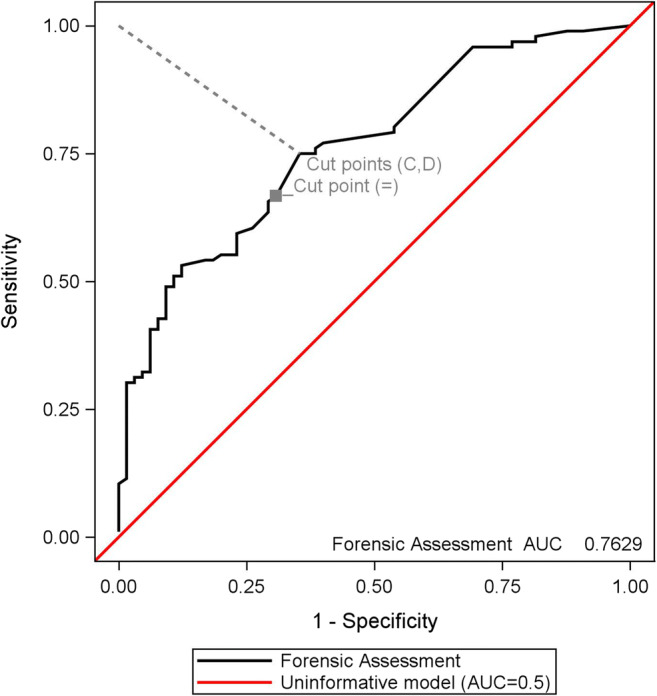
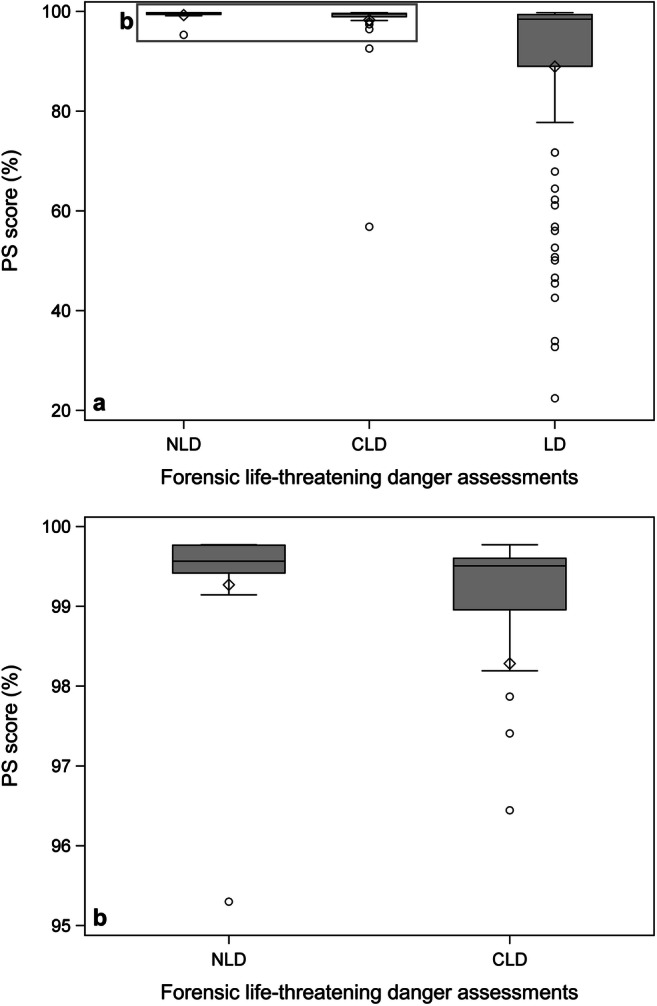
Clinical forensic medical examinations constitute an increasing proportion of our institution's tasks, and, concomitantly, the authorities are now requesting forensic life-threatening danger assessments based on our examinations. The aim of this retrospective study was to assess if a probability of survival (PS) trauma score could be useful for these forensic life-threatening danger assessments and to identify a cut-off PS score as a supporting tool for the forensic practice of assessing life-threatening danger. We compared a forensic database and a trauma database and identified 161 individuals (aged 15 years or older) who had both a forensic life-threatening danger assessment and a PS score. The life-threatening danger assessments comprised the following statements: was not in life-threatening danger (NLD); could have been in life-threatening danger (CLD); or was in life-threatening danger (LD). The inclusion period was 2012-2016. A statistically significant difference was found in the PS scores between NLD, CLD and LD (chi-square test: p < 0.0001). The usefulness of the PS score for categorizing life-threatening danger assessments was determined by a receiver-operator characteristic (ROC) curve. The area under the curve was 0.76 (95% CI, 0.69 to 0.84) and the ROC curve revealed that a cut-off PS score of 95.8 would appropriately identify LD. Therefore, a PS score below 95.8 would indicate life-threatening danger. We propose a further exploration of how the evidence-based PS score, including a cut-off value, might be implemented in clinical forensic medical statements to add to the scientific strength of these statements.
临床法医检查在我们机构的任务中所占比例越来越大,相应地,当局现在要求根据我们的检查进行法医危及生命的危险评估。本回顾性研究旨在评估创伤存活概率(PS)评分是否可用于这些法医危及生命的危险评估,并确定 PS 评分的截断值作为评估危及生命危险的法医实践的辅助工具。我们比较了法医数据库和创伤数据库,确定了 161 名(年龄在 15 岁或以上)同时进行法医危及生命的危险评估和 PS 评分的个体。危及生命的危险评估包括以下陈述:未处于危及生命的危险(NLD);可能处于危及生命的危险(CLD);或处于危及生命的危险(LD)。纳入期为 2012 年至 2016 年。NLD、CLD 和 LD 之间的 PS 评分存在统计学显著差异(卡方检验:p<0.0001)。PS 评分对分类危及生命的危险评估的有用性通过接收者操作特征(ROC)曲线确定。曲线下面积为 0.76(95%CI,0.69 至 0.84),ROC 曲线表明 PS 评分截断值为 95.8 可适当识别 LD。因此,PS 评分低于 95.8 表示有危及生命的危险。我们建议进一步探讨如何将基于证据的 PS 评分(包括截断值)应用于临床法医陈述中,以增加这些陈述的科学力度。