Jin Xianzhen, Qiao Lina, Fan Hui, Liao Chunyan, Zheng Jianbao, Wang Wei, Ma Xiuqin, Yang Min, Sun Xuejun, Zhao Wei
Department of General Surgery, The First Affiliated Hospital of Xi'an Jiaotong University, Xi'an 710061, P.R. China.
Department of Nursing, Hanzhong Central Hospital, Hanzhong 723000, P.R. China.
Int J Med Sci. 2021 Jan 1;18(2):546-554. doi: 10.7150/ijms.51947. eCollection 2021.
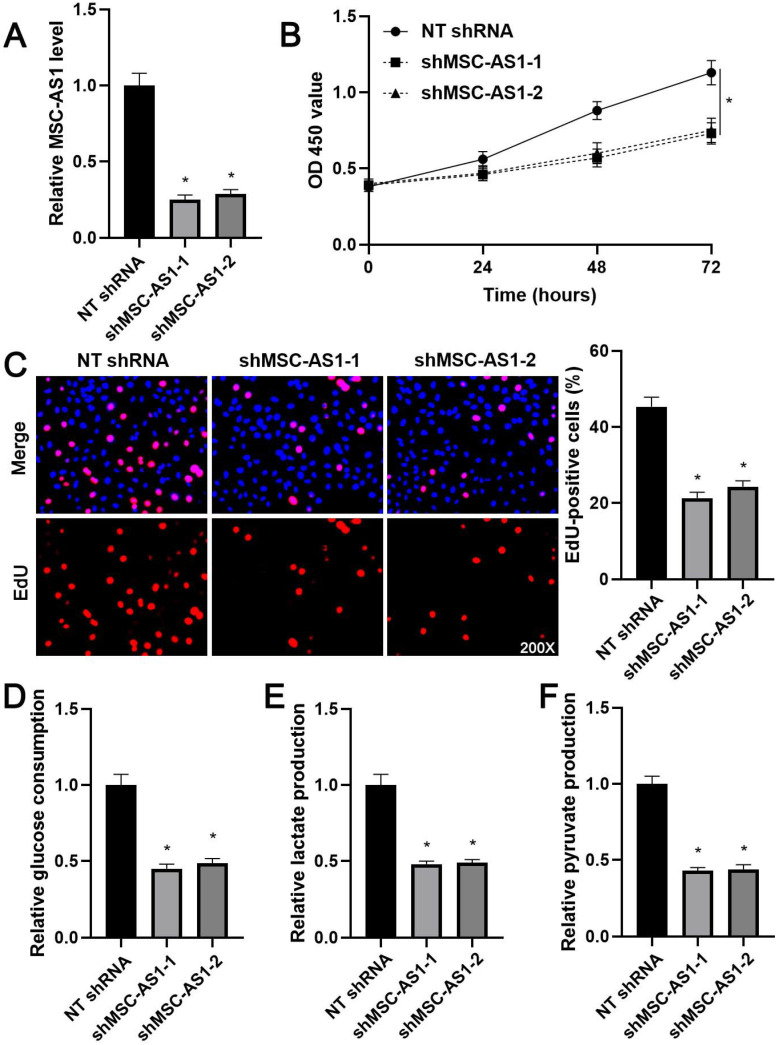
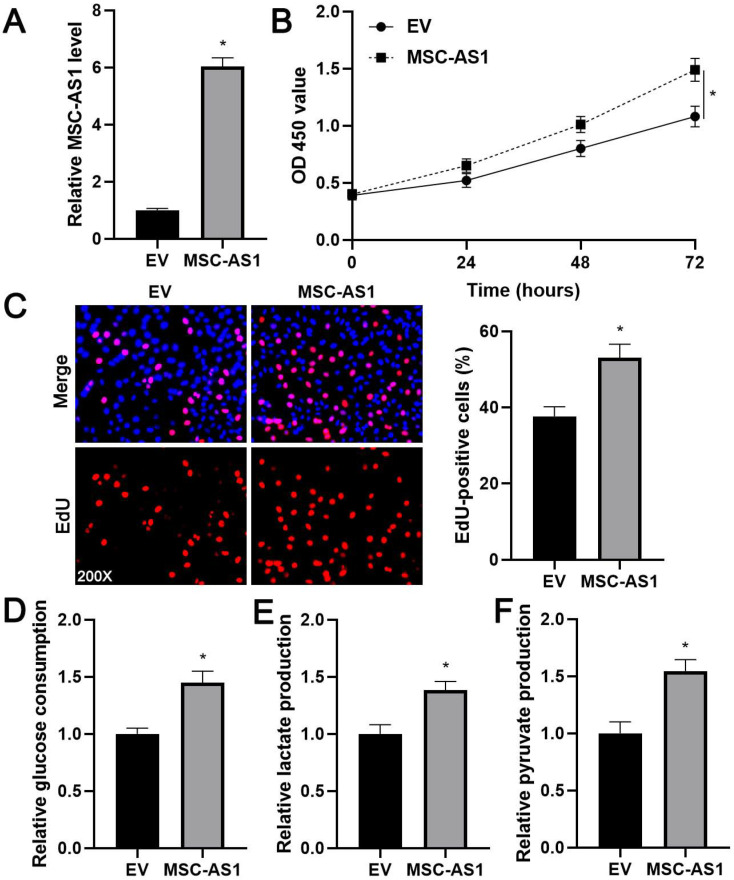
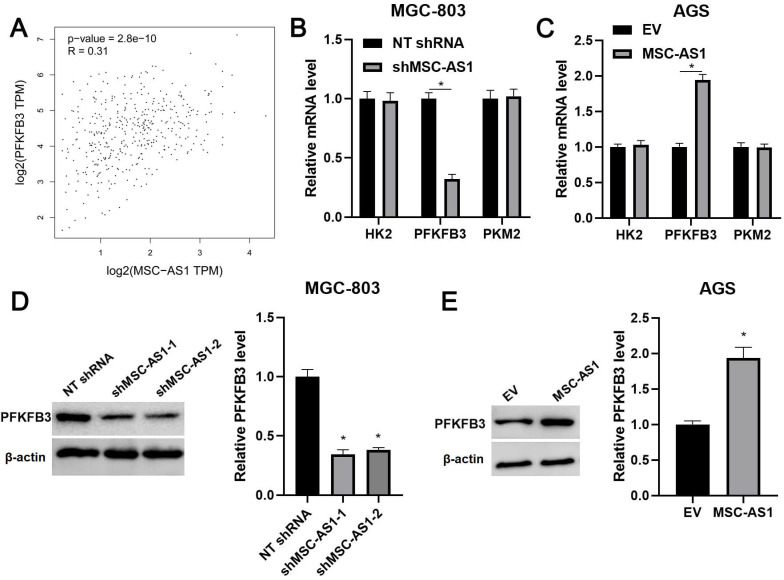
Long non-coding RNA musculin antisense RNA 1 (lncRNA MSC-AS1) has been recognized as an oncogene in pancreatic cancer, hepatocellular carcinoma, nasopharyngeal carcinoma, and renal cell carcinoma. However, the functional significance of MSC-AS1 and its underlying mechanism in gastric cancer (GC) progression remain unclear. In this study, we demonstrated that the expression of MSC-AS1 in GC tissues was significantly higher than that in non-tumor tissues. Moreover, the elevated level of MSC-AS1 was detected in GC cells (MKN-45, AGS, SGC-7901, and MGC-803) compared to normal GES-1 gastric mucosal cells. The cancer genome atlas (TCGA) data further indicated that the high level of MSC-AS1 was closely correlated with advanced tumor stage and poor prognosis of GC. Next, we revealed that MSC-AS1 knockdown inhibited the proliferation, glucose consumption, lactate production, and pyruvate production of MGC-803 cells. Conversely, MSC-AS1 overexpression enhanced the proliferation and glycolysis of AGC cells. Mechanistically, modulating MSC-AS1 level affected the expression of 6-phosphofructo-2-kinase/fructose-2,6-biphosphatase 3 (PFKFB3), but did not impact the levels of hexokinase 2 (HK2) and pyruvate kinase M2 (PKM2) in GC cells. Based on this, we reversed the MSC-AS1 knockdown-induced the inhibition of cell proliferation and glycolysis by restoring PFKFB3 expression in MGC-803 cells. In conclusion, MSC-AS1 facilitated the proliferation and glycolysis of GC cells by maintaining PFKFB3 expression.
长链非编码RNA肌肉素反义RNA 1(lncRNA MSC-AS1)已被公认为胰腺癌、肝细胞癌、鼻咽癌和肾细胞癌中的一种癌基因。然而,MSC-AS1在胃癌(GC)进展中的功能意义及其潜在机制仍不清楚。在本研究中,我们证明了GC组织中MSC-AS1的表达显著高于非肿瘤组织。此外,与正常的GES-1胃黏膜细胞相比,在GC细胞(MKN-45、AGS、SGC-7901和MGC-803)中检测到MSC-AS1水平升高。癌症基因组图谱(TCGA)数据进一步表明,MSC-AS1的高水平与GC的晚期肿瘤分期和不良预后密切相关。接下来,我们发现敲低MSC-AS1可抑制MGC-803细胞的增殖、葡萄糖消耗、乳酸产生和丙酮酸产生。相反,过表达MSC-AS1可增强AGC细胞的增殖和糖酵解。机制上,调节MSC-AS1水平会影响6-磷酸果糖-2-激酶/果糖-2,6-二磷酸酶3(PFKFB3)的表达,但不影响GC细胞中己糖激酶2(HK2)和丙酮酸激酶M2(PKM2)的水平。基于此,我们通过恢复MGC-803细胞中PFKFB3的表达,逆转了敲低MSC-AS1诱导的细胞增殖和糖酵解抑制。总之,MSC-AS1通过维持PFKFB3的表达促进了GC细胞的增殖和糖酵解。