Ding Nan, Wei Bo, Fu Xiaohui, Wang Chuan, Wu Yimou
Institute of Pathogenic Biology, Hengyang Medical College, Hunan Provincial Key Laboratory for Special Pathogens Prevention and Control, Hunan Province Cooperative Innovation Center for Molecular Target New Drug Study, University of South China, Hengyang, China.
Research lab of Translational Medicine, Hengyang Medical College, University of South China, Hengyang, China.
Front Pharmacol. 2020 Dec 17;11:591393. doi: 10.3389/fphar.2020.591393. eCollection 2020.
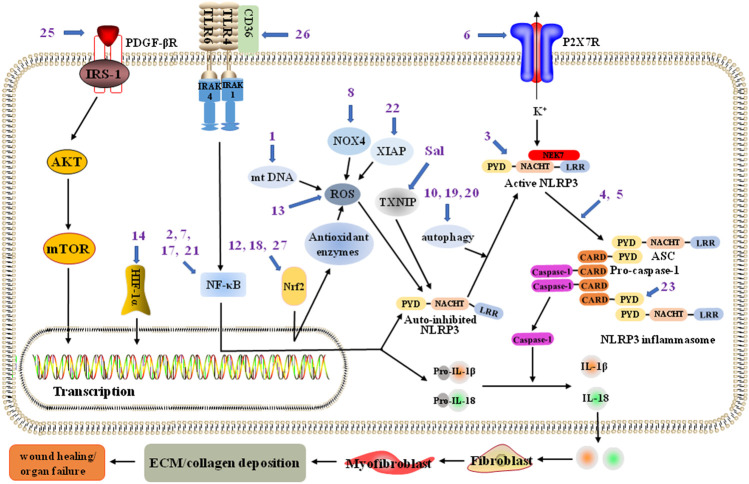
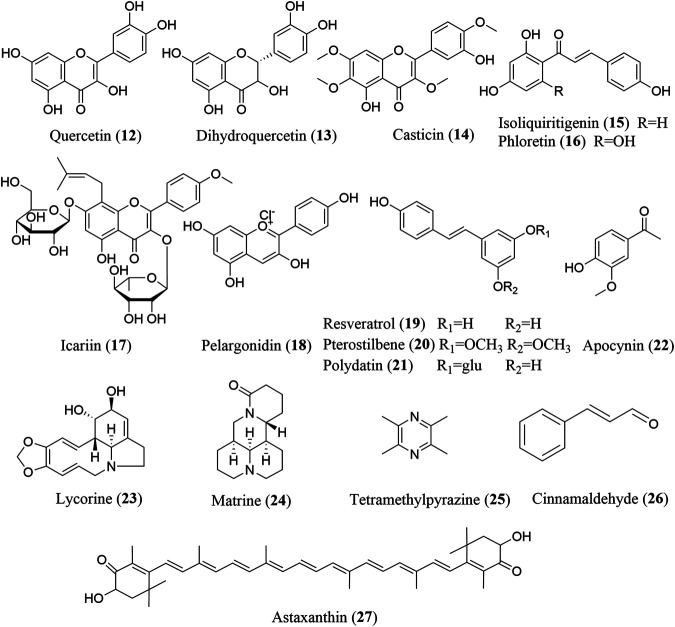
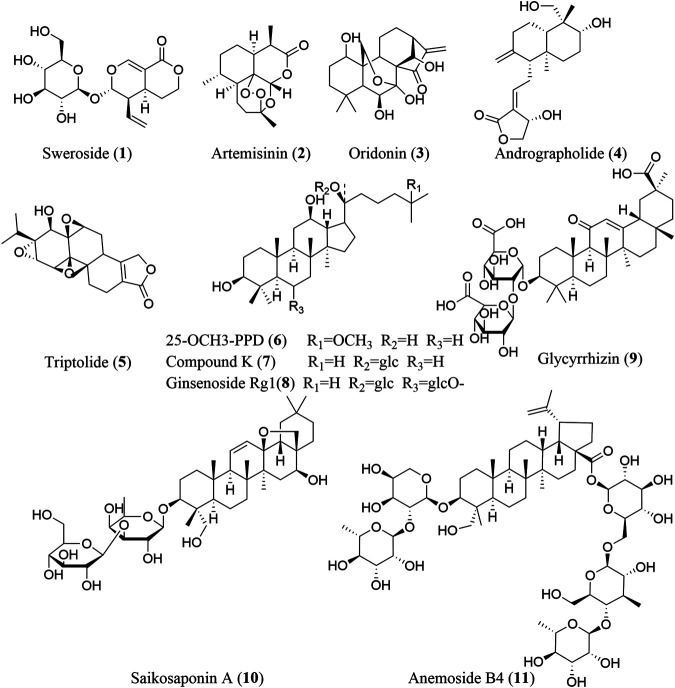
Fibrosis is a common pathway followed by different organs after injury, and it can lead to parenchymal scarring, cellular dysfunction, and even organ failure. The NLRP3 inflammasome is a multiprotein complex composed of the sensor molecule NLRP3, the adaptor apoptosis-associated speck-like protein containing a CARD (ASC), and the effector protease caspase-1. Overactivation of the NLRP3 inflammasome triggers the abundant secretion of IL-1β and IL-18, induces pyroptosis, and promotes the release of a swathe of proinflammatory proteins, all of which contribute to fibrogenic processes in multiple organs. In recent years, screening bioactive natural compounds for NLRP3 inhibitors to alleviate fibrosis has gained broad interest from the scientific community because of the associated cost-effectiveness and easy access. In this review, we systematically and comprehensively summarize the natural products, including terpenoids, phenols, and alkaloids, among others, and the plant-derived crude extracts, that have been reported to ameliorate fibrosis inhibiting NLRP3 inflammasome activation and highlight the underlying mechanisms. Among all the compounds, diterpenoids is the most promising candidates for inhibiting NLRP3 inflammasome activation and improving fibrosis, as they possess combined inhibitory effect on NLRP3 inflammasome assembly and NF-κB signaling pathway. All the information may aid in the development of therapeutic strategies for the treatment of fibrotic diseases.
纤维化是不同器官损伤后共同遵循的一种病理过程,可导致实质瘢痕形成、细胞功能障碍,甚至器官衰竭。NLRP3炎性小体是一种多蛋白复合体,由传感分子NLRP3、接头蛋白含半胱天冬酶激活和招募结构域的凋亡相关斑点样蛋白(ASC)以及效应蛋白酶半胱天冬酶-1组成。NLRP3炎性小体的过度激活会触发白细胞介素-1β(IL-1β)和白细胞介素-18(IL-18)的大量分泌,诱导细胞焦亡,并促进大量促炎蛋白的释放,所有这些都有助于多个器官的纤维化进程。近年来,由于具有成本效益和易于获取,筛选用于抑制NLRP3炎性小体以减轻纤维化的生物活性天然化合物引起了科学界的广泛关注。在本综述中,我们系统而全面地总结了已报道的通过抑制NLRP3炎性小体激活来改善纤维化的天然产物,包括萜类、酚类和生物碱等,以及植物来源的粗提物,并突出了其潜在机制。在所有化合物中,二萜类化合物是抑制NLRP3炎性小体激活和改善纤维化最有前景的候选物,因为它们对NLRP3炎性小体组装和核因子κB(NF-κB)信号通路具有联合抑制作用。所有这些信息可能有助于开发治疗纤维化疾病的策略。