Gashu Kelem, Sikron Persi Noga, Drori Elyashiv, Harcavi Eran, Agam Nurit, Bustan Amnon, Fait Aaron
French Associates Institute for Agriculture and Biotechnology of Drylands, The Jacob Blaustein Institutes for Desert Research, Ben-Gurion University of the Negev, Beersheba, Israel.
Department of Chemical Engineering, Ariel University, Ariel, Israel.
Front Plant Sci. 2020 Dec 17;11:588739. doi: 10.3389/fpls.2020.588739. eCollection 2020.
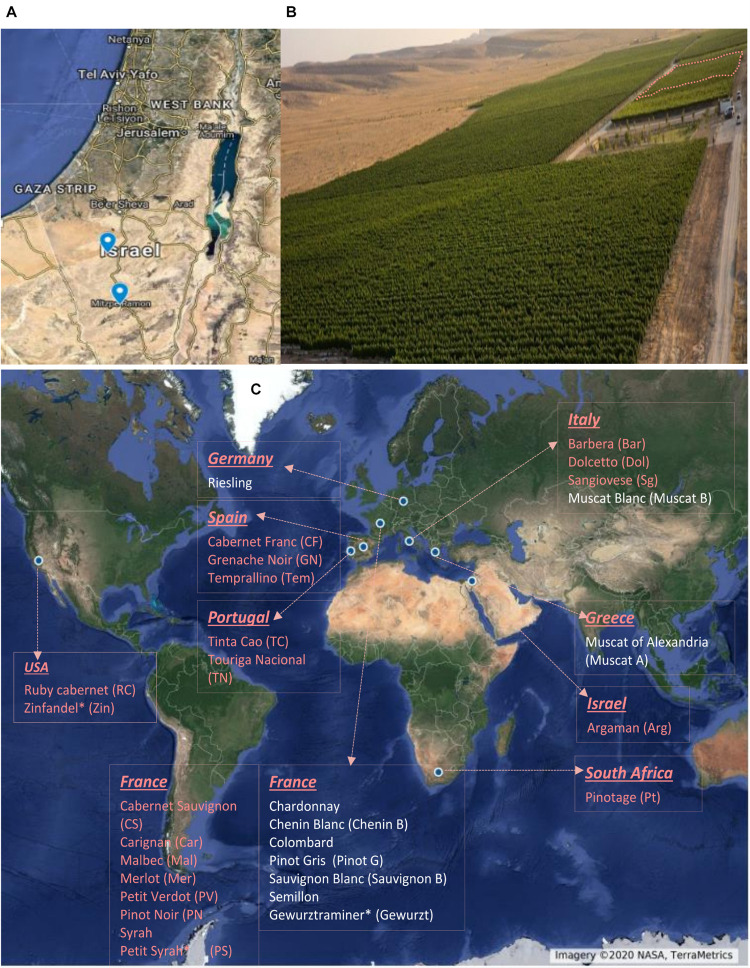
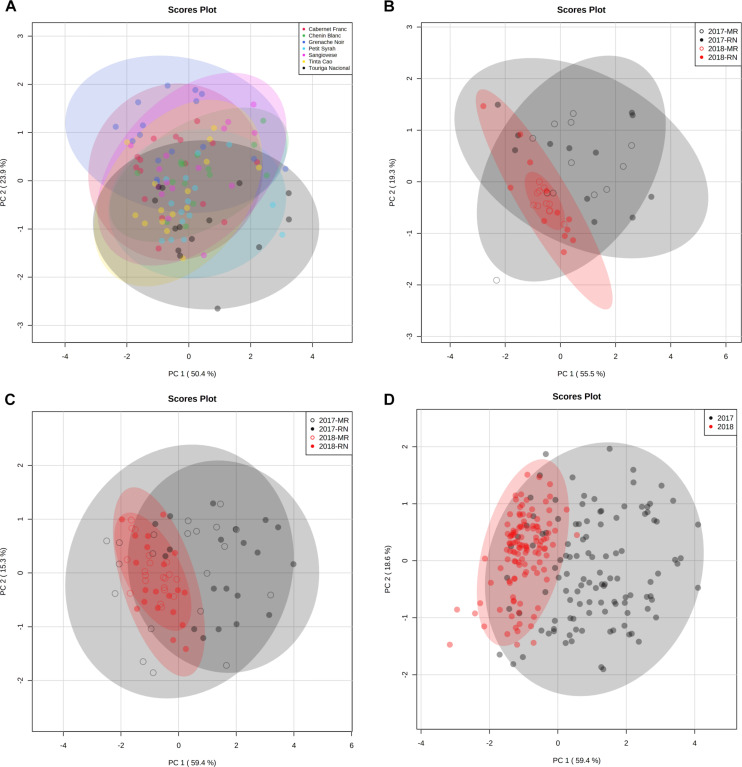
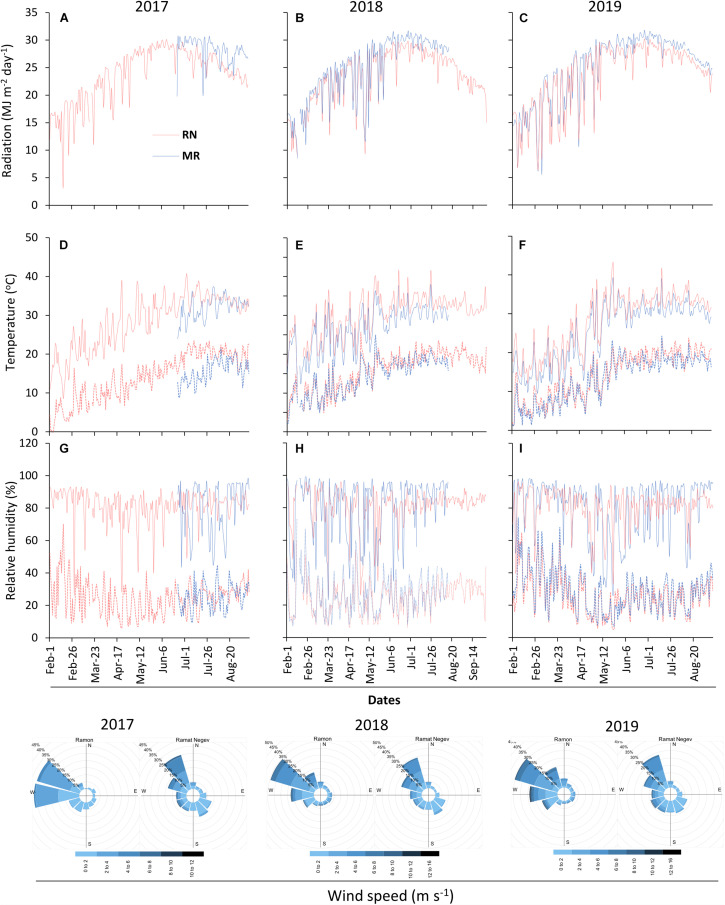
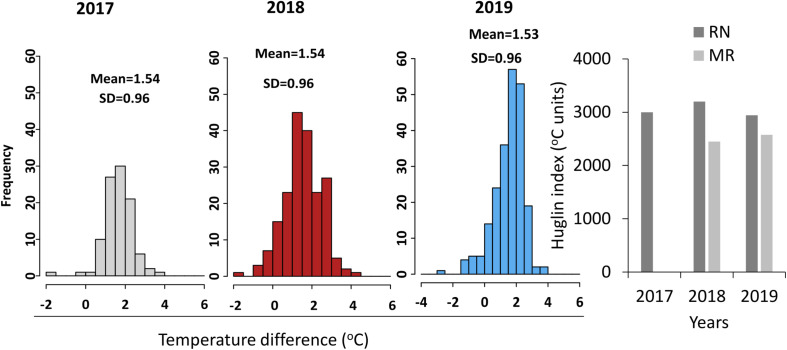
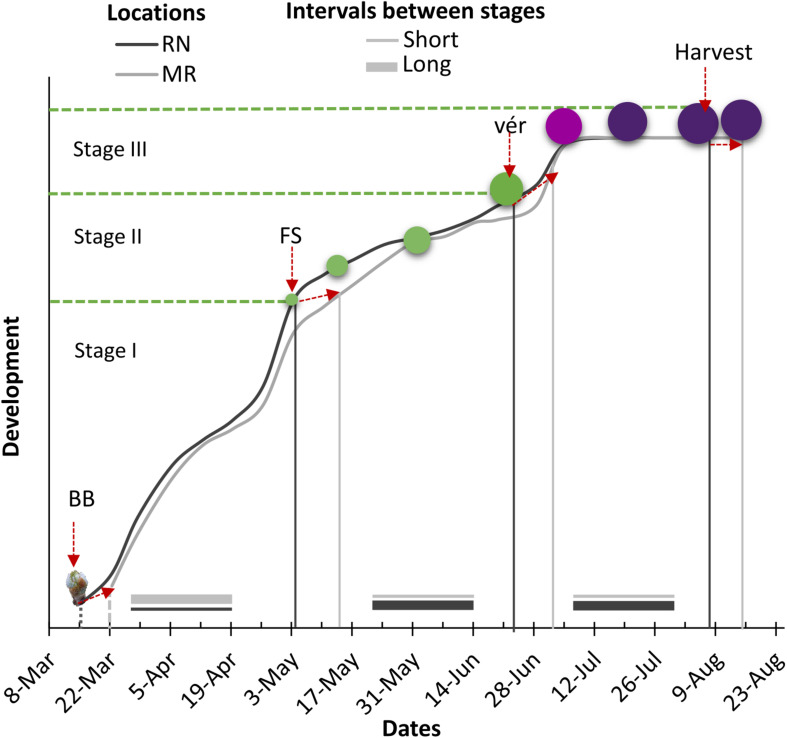
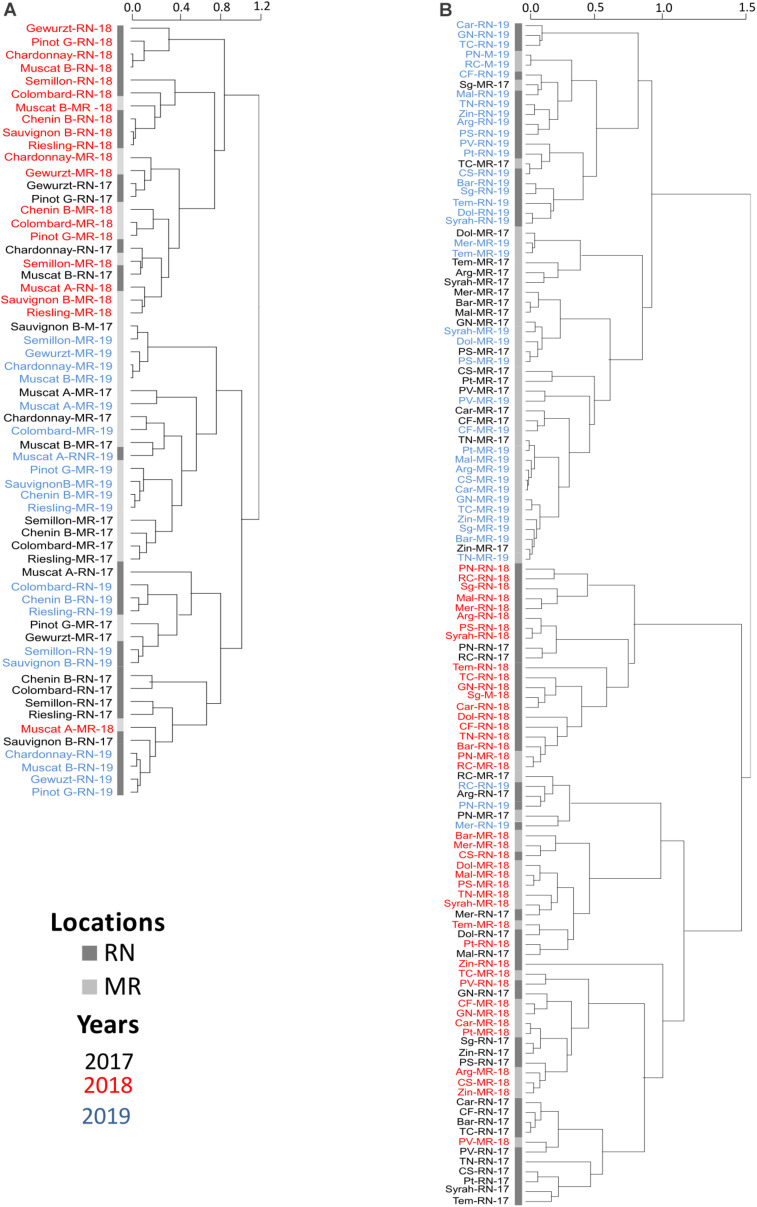
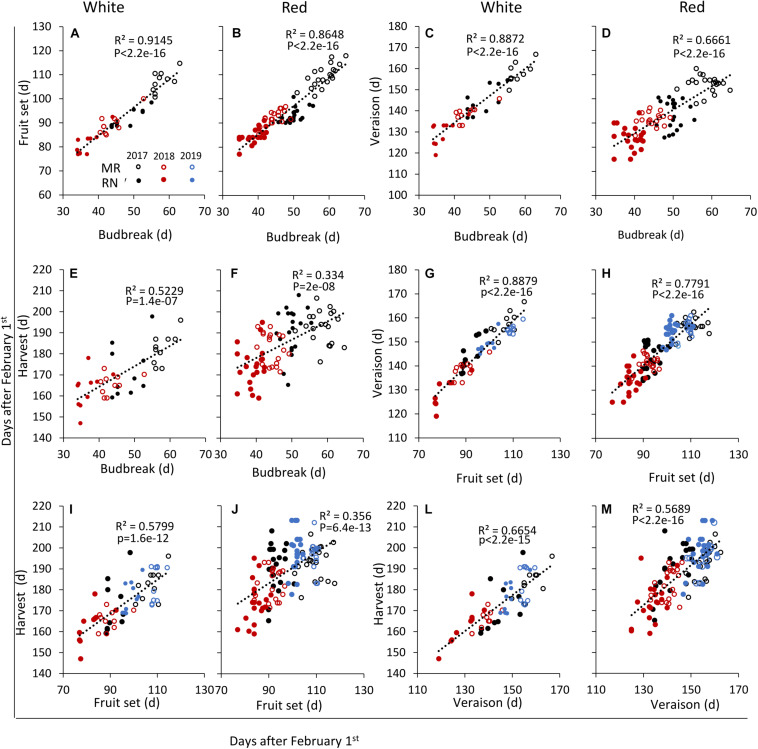
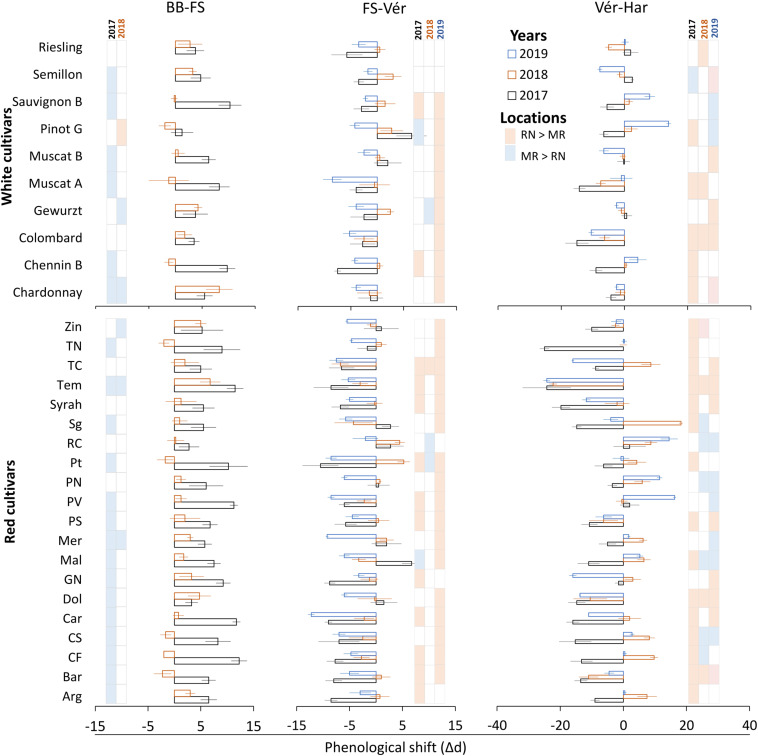
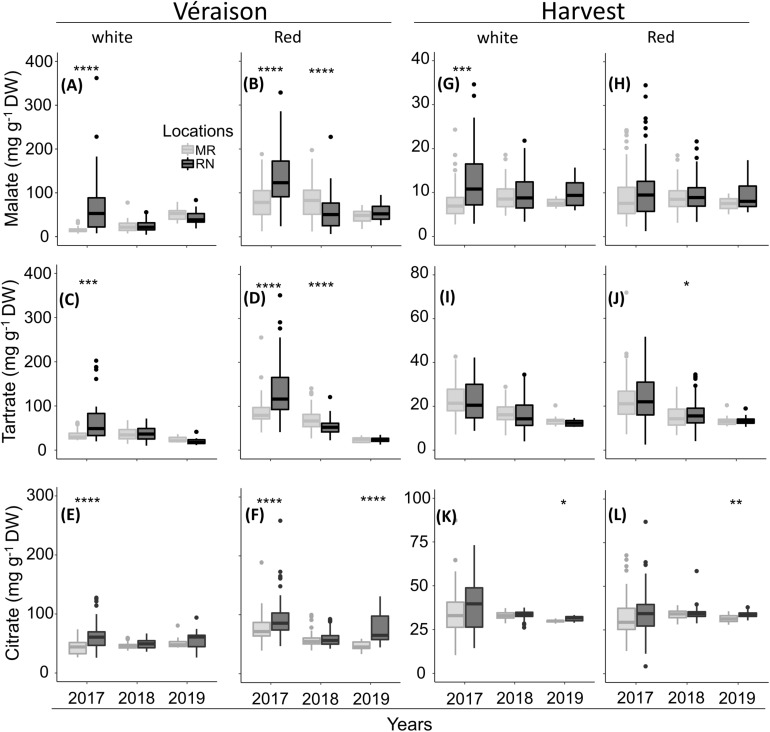
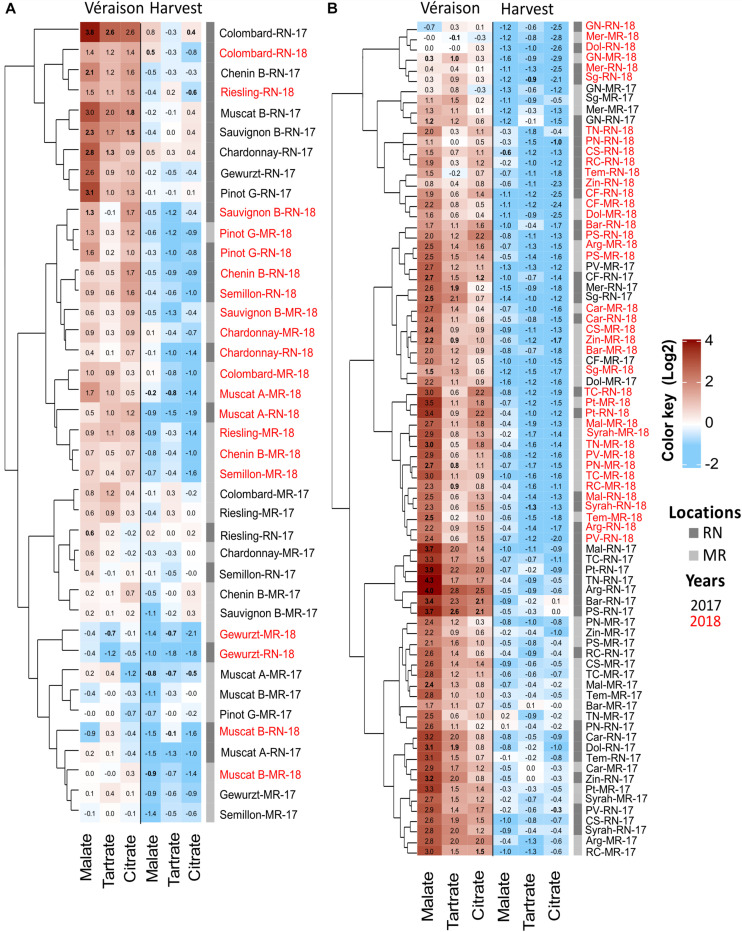
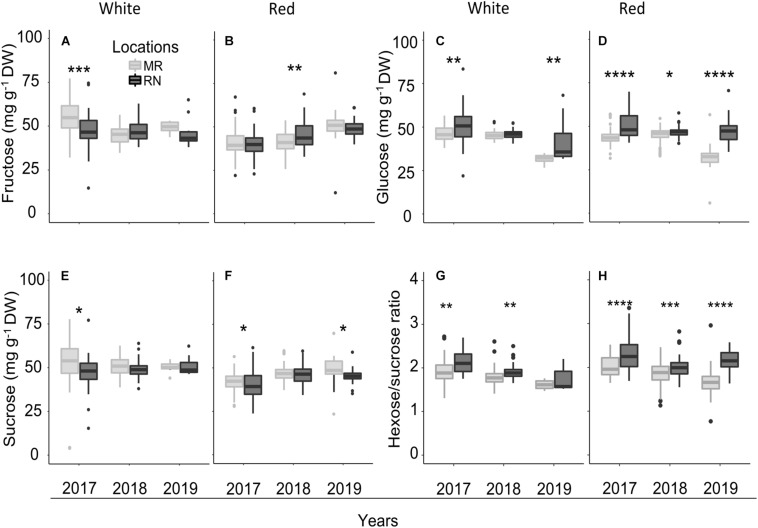
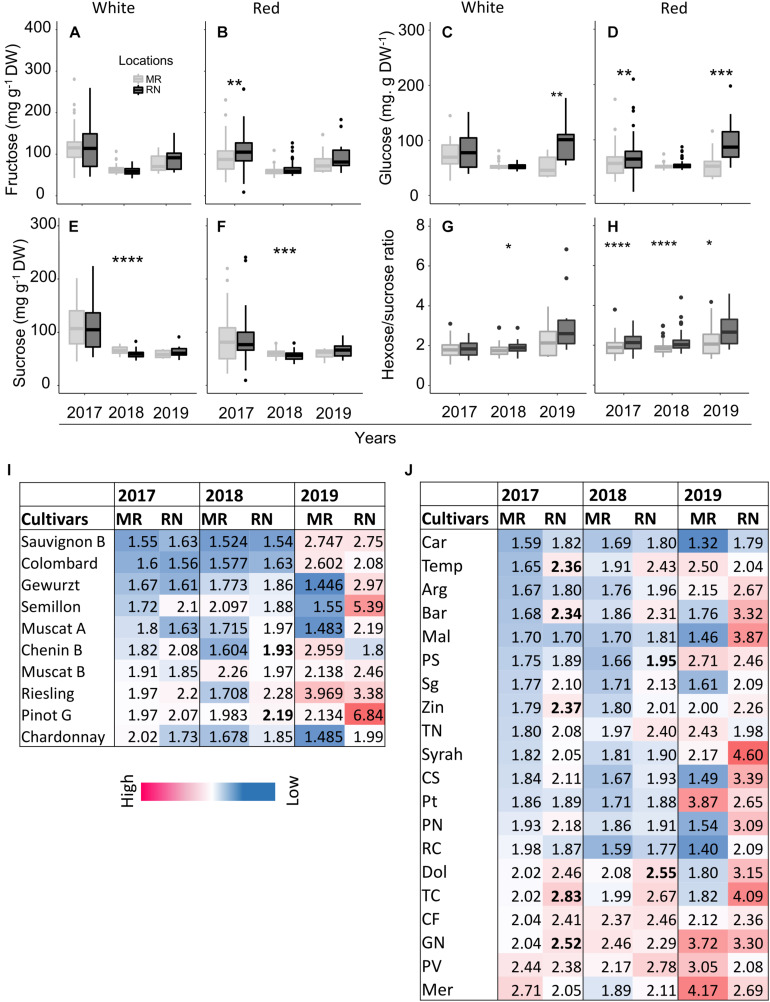
Global climate change and the expected increase in temperature are altering the relationship between geography and grapevine () varietal performance, and the implications of which are yet to be fully understood. We investigated berry phenology and biochemistry of 30 cultivars, 20 red and 10 white, across three seasons (2017-2019) in response to a consistent average temperature difference of 1.5°C during the growing season between two experimental sites. The experiments were conducted at Ramat Negev (RN) and Ramon (MR) vineyards, located in the Negev desert, Israel. A significant interaction between vineyard location, season, and variety affected phenology and berry indices. The warmer RN site was generally associated with an advanced phenological course for the white cultivars, which reached harvest up to 2 weeks earlier than at the MR site. The white cultivars also showed stronger correlation between non-consecutive phenological stages than did the red ones. In contrast, harvest time of red cultivars considerably varied according to seasons and sites. Warmer conditions extended fruit developmental phases, causing berry shriveling and cluster collapse in a few cultivars such as Pinot Noir, Ruby Cabernet, and Tempranillo. Analyses of organic acid content suggested differences between red and white cultivars in the content of malate, tartrate, and citrate in response to the temperature difference between sites. However, generally, cultivars at lower temperatures exhibited lower concentrations of pulp organic acids at véraison, but acid degradation until harvest was reduced, compared to the significant pace of acid decline at the warmer site. Sugars showed the greatest differences between sites in both white and red berries at véraison, but differences were seasonal dependent. At harvest, cultivars of both groups exhibited significant variation in hexose/sucrose ratio, and the averages of which varied from 1.6 to 2.9. Hexose/sucrose ratio was significantly higher among the red cultivars at the warmer RN, while this tendency was very slight among white cultivars. White cultivars seem to harbor a considerable degree of resilience due to a combination of earlier and shorter ripening phase, which avoids most of the summer heat. Taken together, our study demonstrates that the extensive genetic capacity of bears significant potential and plasticity to withstand the temperature increase associated with climate change.
全球气候变化以及预期的气温上升正在改变地理环境与葡萄品种表现之间的关系,而其影响尚未得到充分理解。我们调查了30个品种(20个红葡萄品种和10个白葡萄品种)在三个季节(2017 - 2019年)的浆果物候期和生化特性,以研究两个实验地点在生长季节期间1.5°C的恒定平均温差的影响。实验在以色列内盖夫沙漠的拉马特内盖夫(RN)葡萄园和拉蒙(MR)葡萄园进行。葡萄园位置、季节和品种之间的显著相互作用影响了物候期和浆果指标。温度较高的RN地点通常与白葡萄品种较早的物候进程相关,其收获时间比MR地点早两周。白葡萄品种在非连续物候阶段之间也表现出比红葡萄品种更强的相关性。相比之下,红葡萄品种的收获时间因季节和地点而有很大差异。温暖的条件延长了果实发育阶段,导致一些品种如黑皮诺、宝石卡本内和丹魄出现浆果皱缩和果穗萎蔫。有机酸含量分析表明,红葡萄品种和白葡萄品种在苹果酸、酒石酸和柠檬酸含量上因地点间的温差而存在差异。然而,总体而言,温度较低地点的品种在转色期时果肉有机酸浓度较低,但与温暖地点显著的酸下降速度相比,收获前的酸降解减少。在转色期,糖在白葡萄和红葡萄浆果的不同地点间差异最大,但差异因季节而异。收获时,两组品种的己糖/蔗糖比率均表现出显著变化,其平均值在1.6至2.9之间。在温度较高的RN地点,红葡萄品种的己糖/蔗糖比率显著更高,而白葡萄品种中的这种趋势非常轻微。由于早熟和较短的成熟阶段相结合,白葡萄品种似乎具有相当程度的适应能力,这避免了大部分夏季高温。综上所述,我们的研究表明,葡萄品种具有广泛的遗传能力,在应对与气候变化相关的温度升高方面具有巨大潜力和可塑性。