Division of Human Biology, Fred Hutchinson Cancer Research Center, Seattle, United States.
Molecular and Cellular Biology Graduate Program, University of Washington, Seattle, United States.
Elife. 2021 Jan 4;10:e54618. doi: 10.7554/eLife.54618.
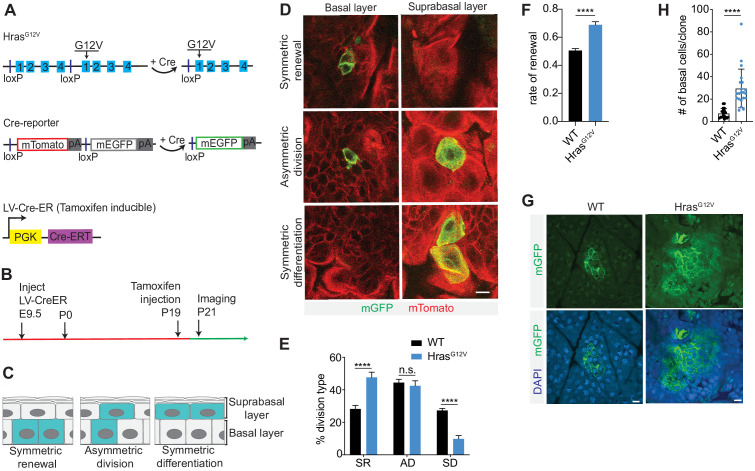
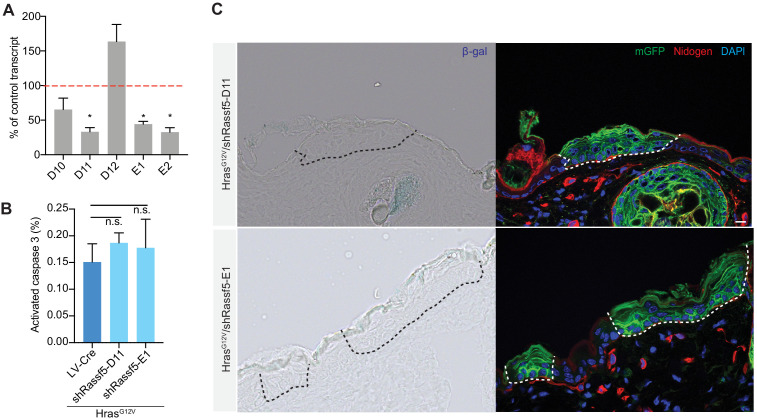
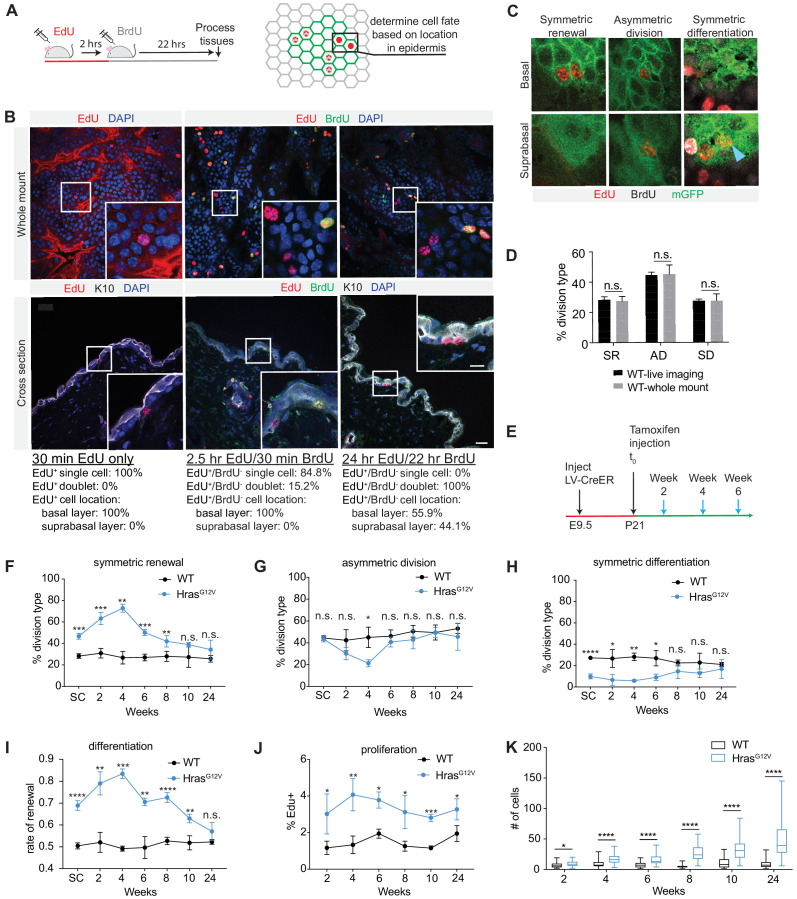
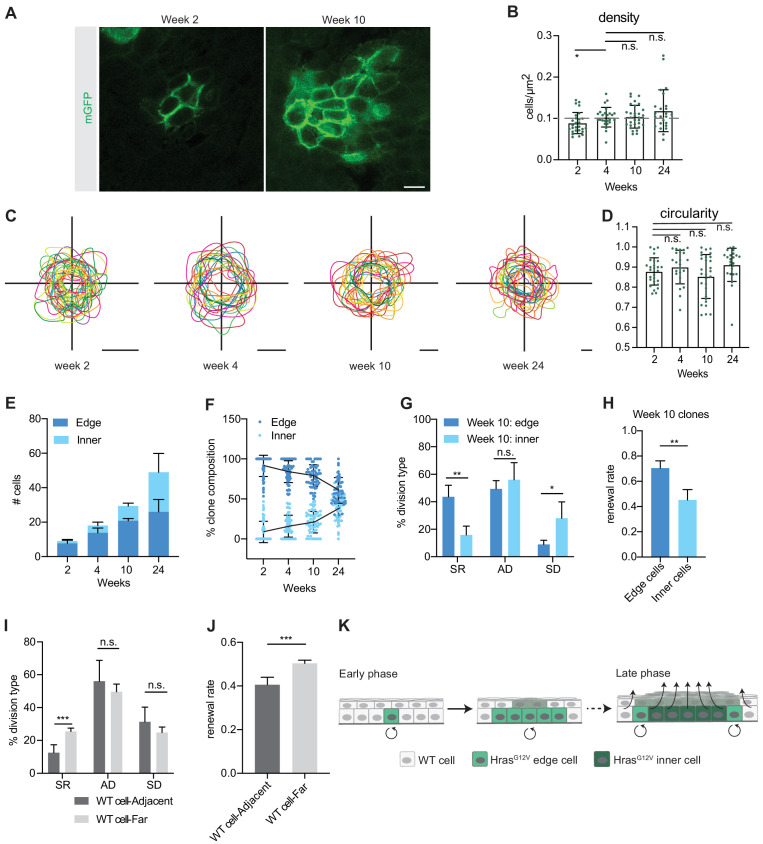
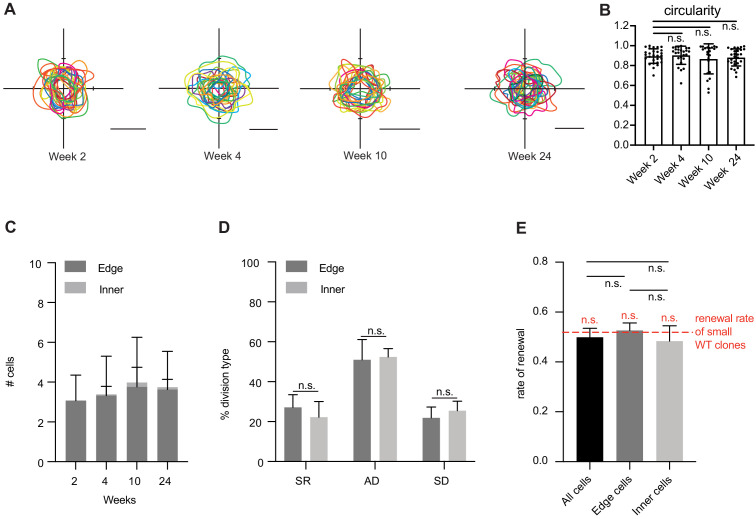
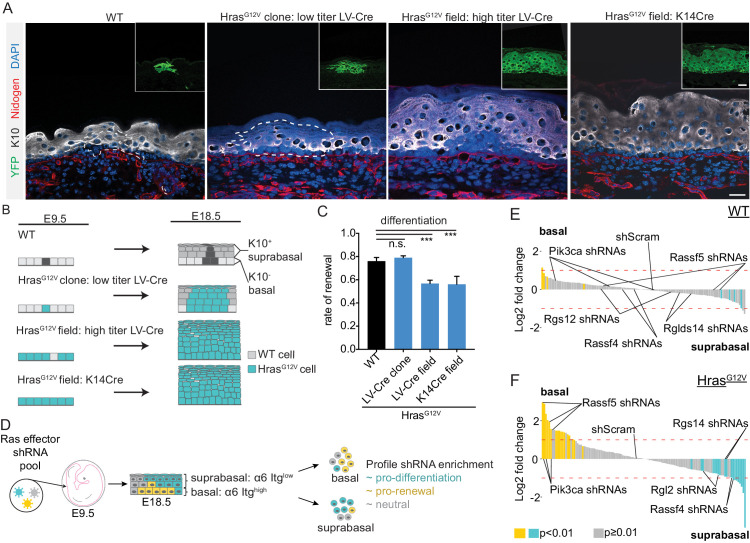
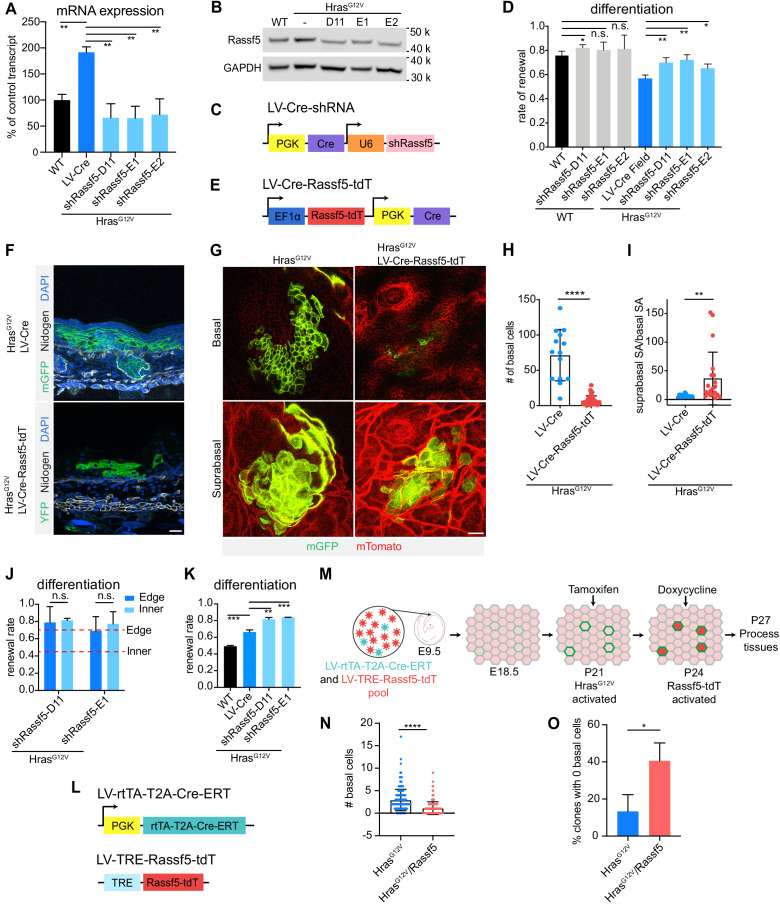
Skin epithelium can accumulate a high burden of oncogenic mutations without morphological or functional consequences. To investigate the mechanism of oncogenic tolerance, we induced Hras in single murine epidermal cells and followed them long term. We observed that Hras promotes an early and transient clonal expansion driven by increased progenitor renewal that is replaced with an increase in progenitor differentiation leading to reduced growth. We attribute this dynamic effect to emergence of two populations within oncogenic clones: renewing progenitors along the edge and differentiating ones within the central core. As clone expansion is accompanied by progressive enlargement of the core and diminishment of the edge compartment, the intraclonal competition between the two populations results in stabilized oncogenic growth. To identify the molecular mechanism of Hras-driven differentiation, we screened known Ras-effector in vivo and identified Rassf5 as a novel regulator of progenitor fate choice that is necessary and sufficient for oncogene-specific differentiation.
皮肤上皮细胞可以积累大量致癌突变而不产生形态或功能上的后果。为了研究致癌耐受的机制,我们在单个小鼠表皮细胞中诱导 Hras,并对其进行长期跟踪观察。我们发现,Hras 通过增加祖细胞更新来促进早期和短暂的克隆扩张,随后祖细胞分化增加,导致生长减少。我们将这种动态效应归因于致癌克隆内出现了两个群体:沿着边缘更新的祖细胞和位于中央核心的分化细胞。随着克隆的扩张,核心逐渐增大,边缘区域逐渐缩小,两个群体之间的克隆内竞争导致了稳定的致癌生长。为了确定 Hras 驱动分化的分子机制,我们在体内筛选了已知的 Ras 效应因子,发现 Rassf5 是一种新的祖细胞命运选择的调节因子,它是致癌基因特异性分化所必需的和充分的。