Department of Genetics, Yale School of Medicine, New Haven, CT, USA.
Department of Cell and Molecular Biology, Karolinska Institutet, Stockholm, Sweden.
Nature. 2023 Jul;619(7968):167-175. doi: 10.1038/s41586-023-06198-y. Epub 2023 Jun 21.
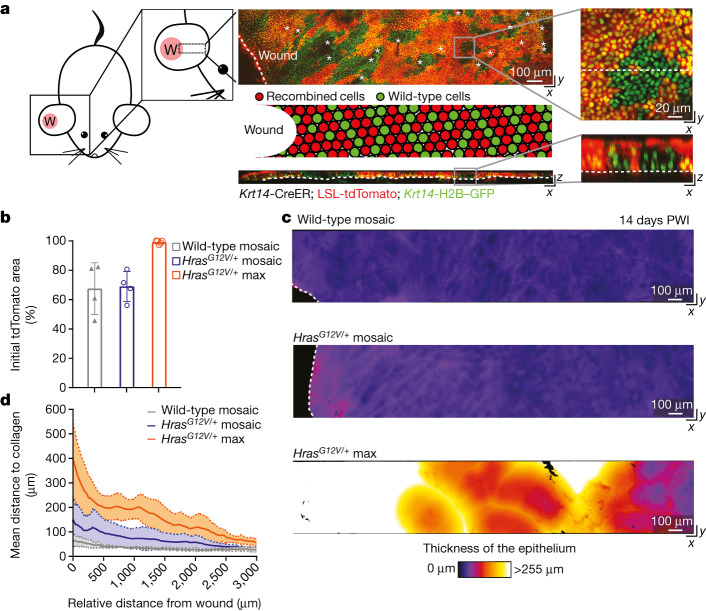
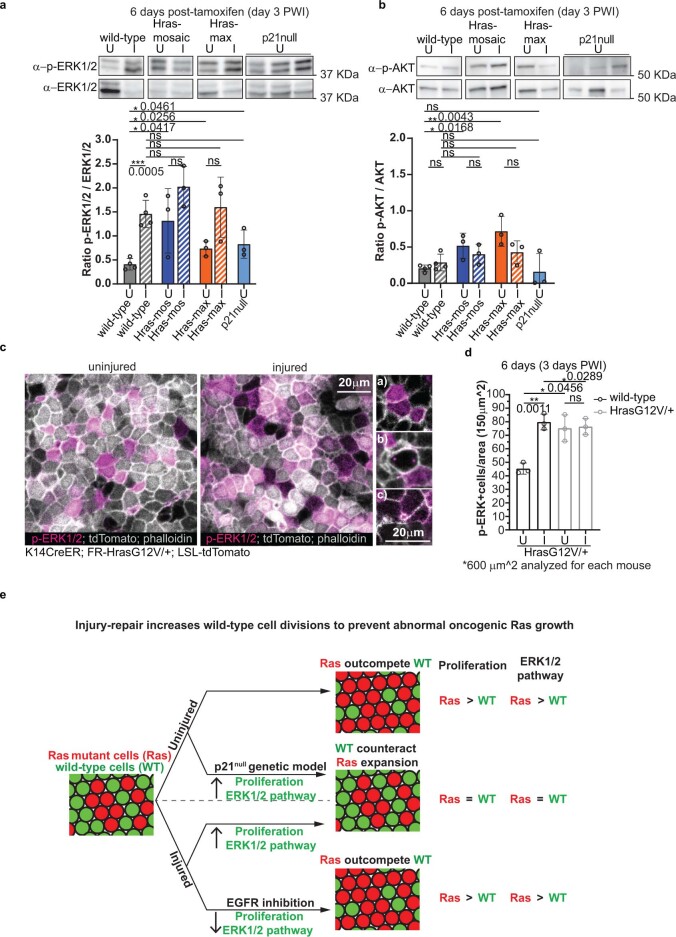
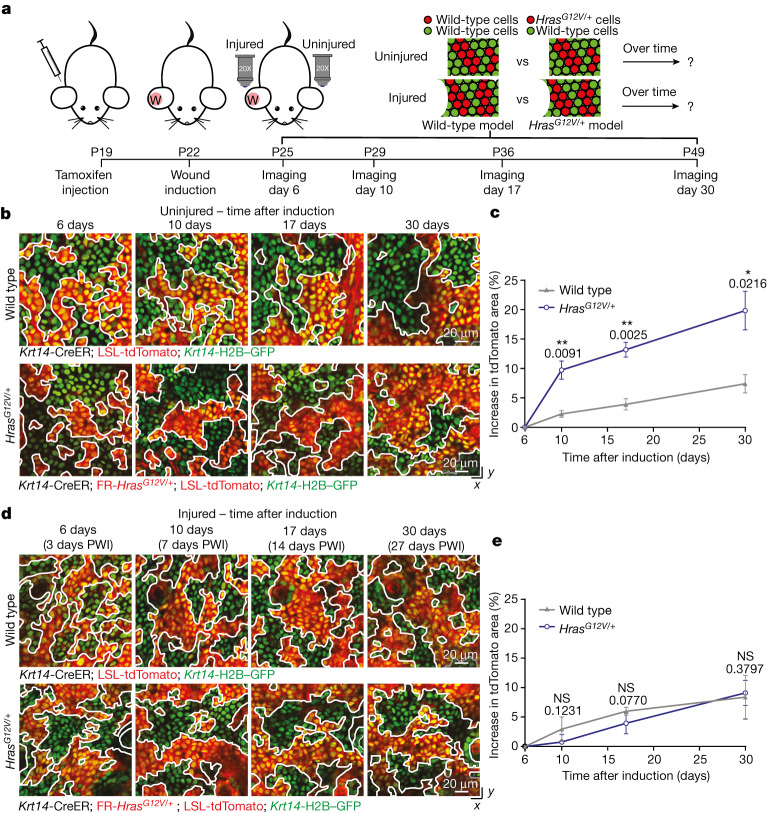
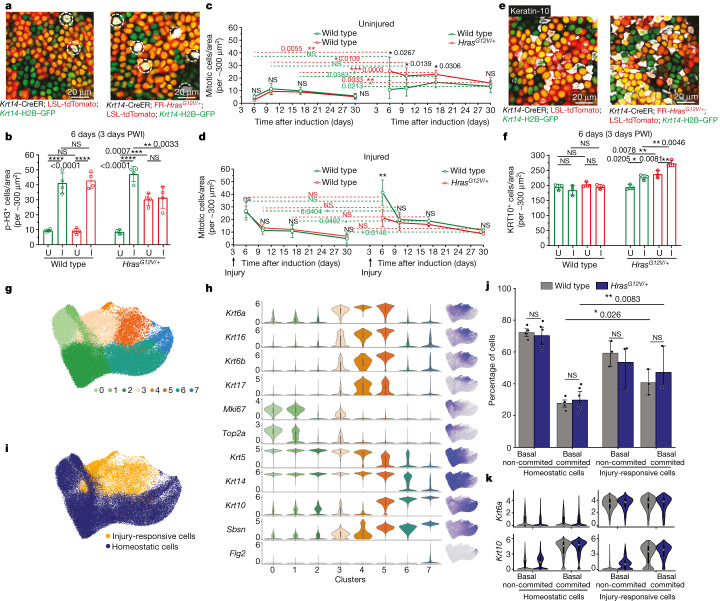
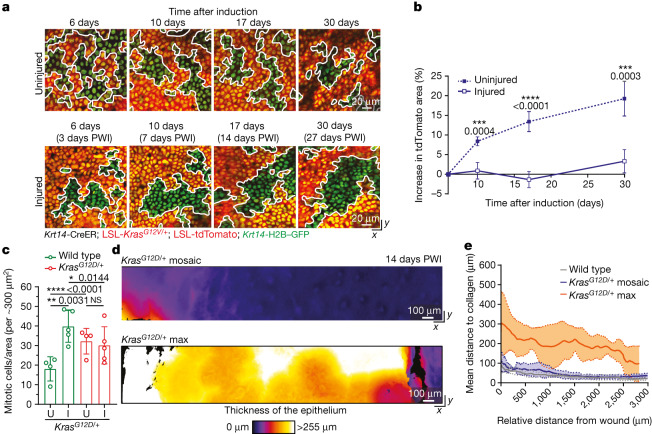
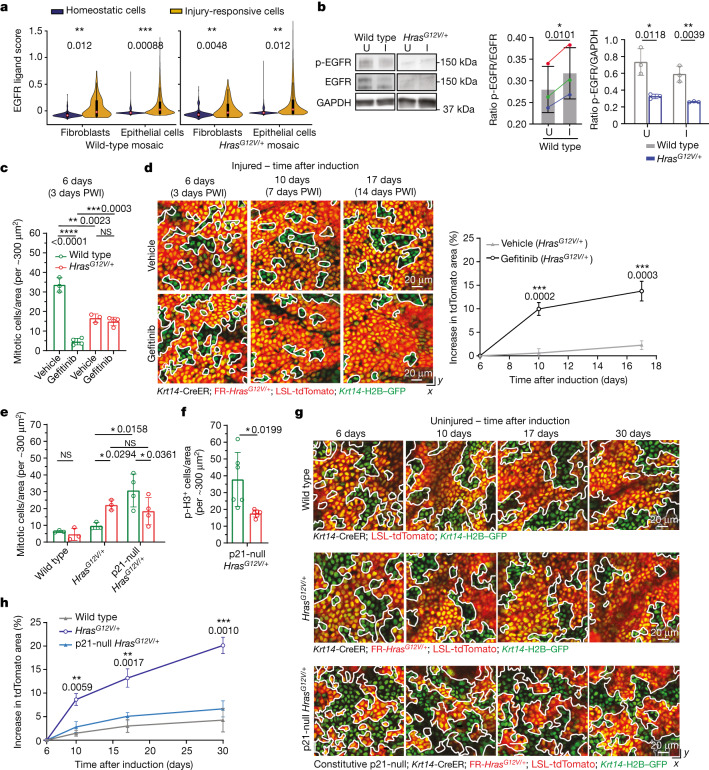
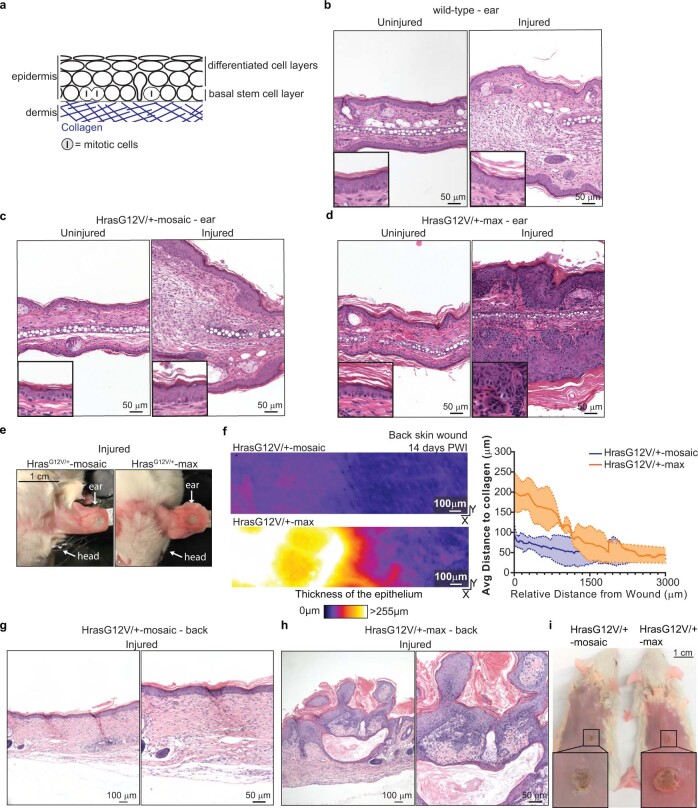
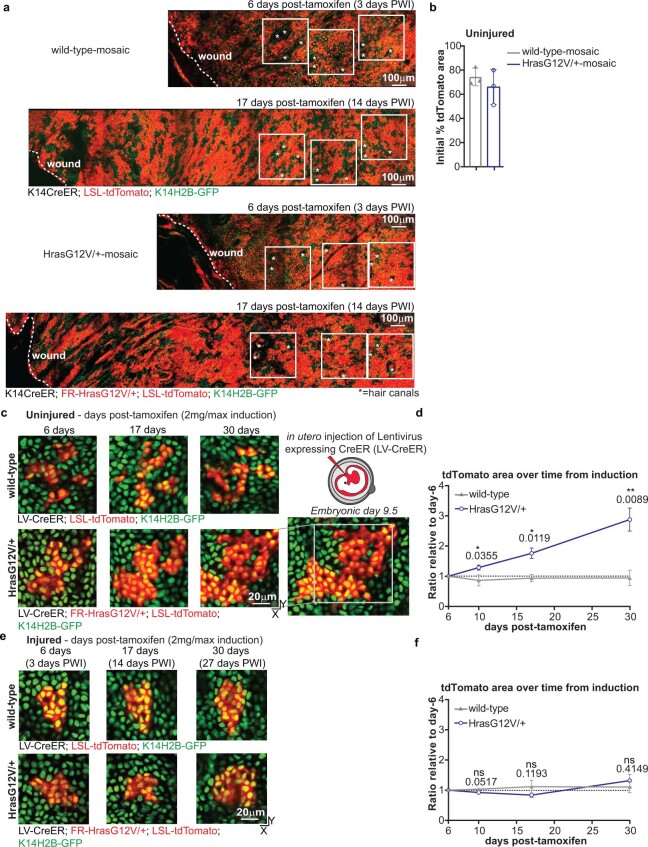
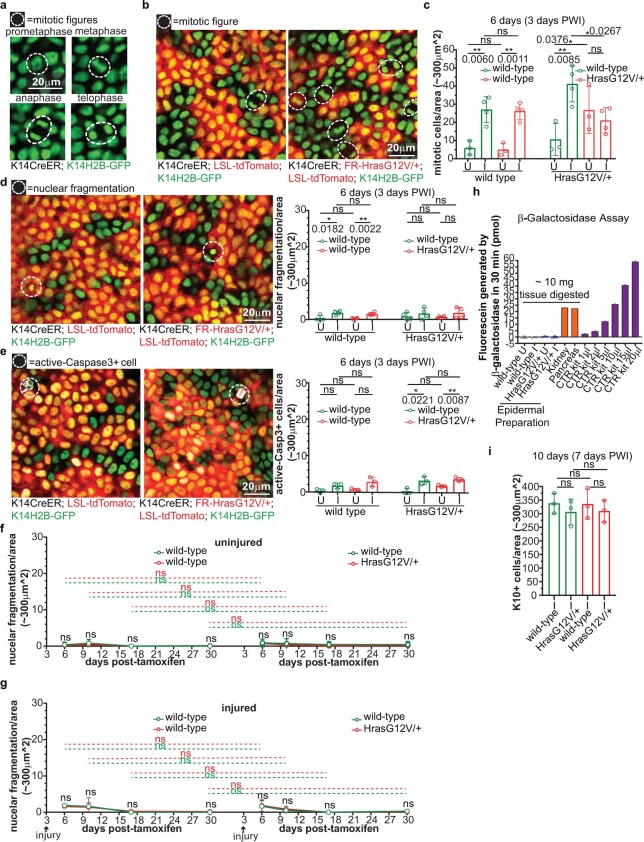
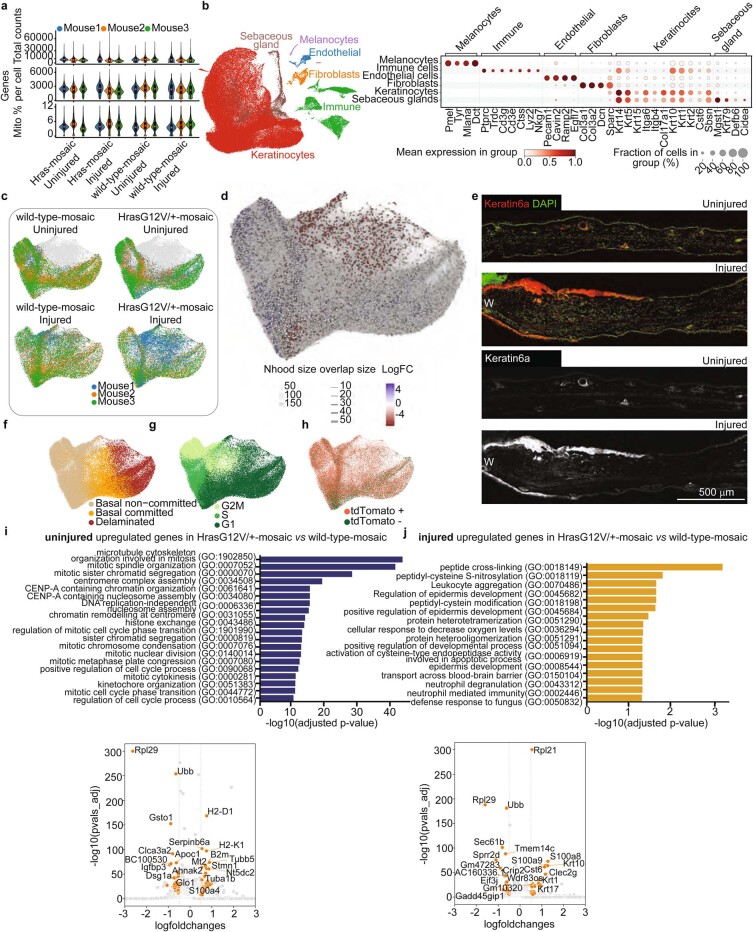
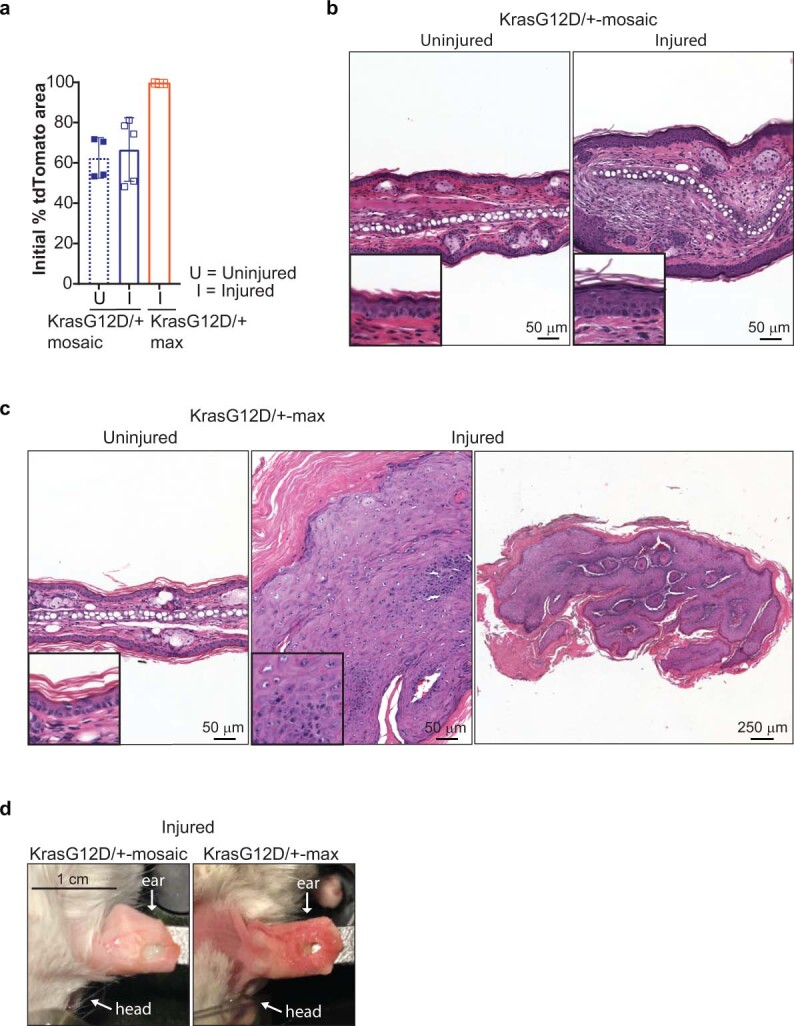
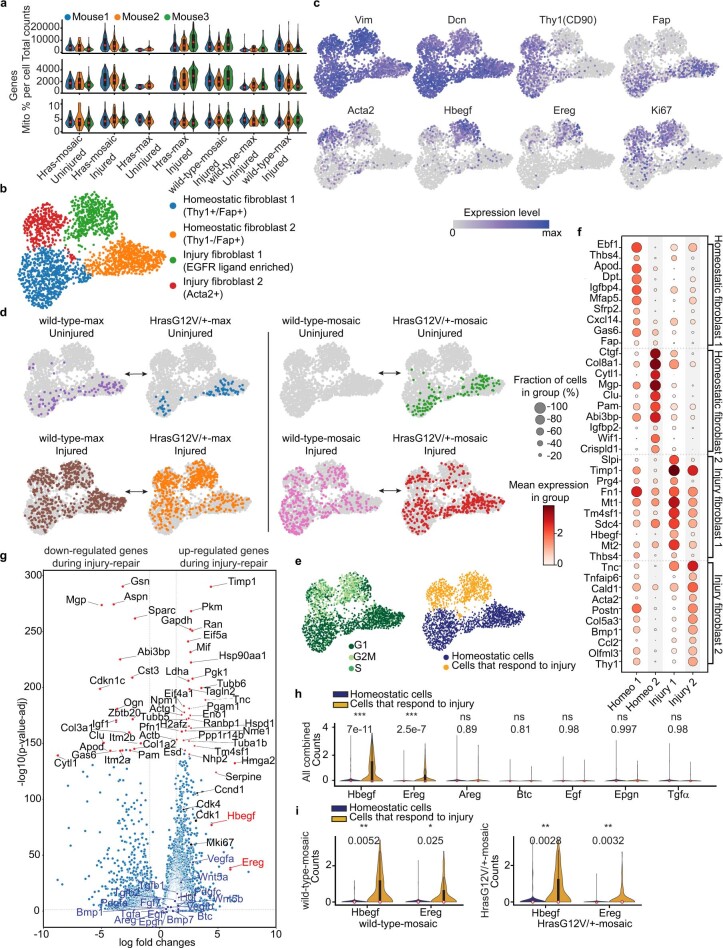
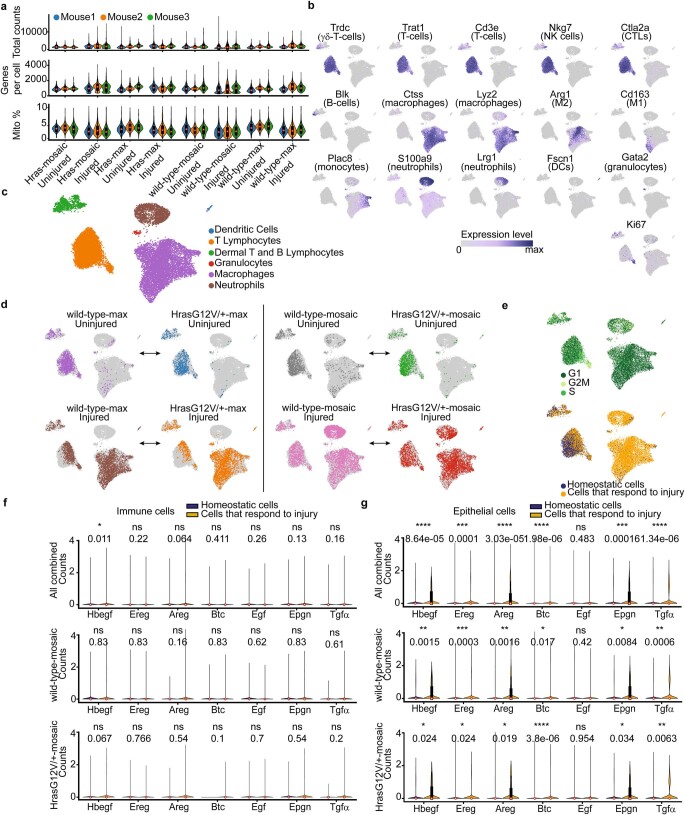
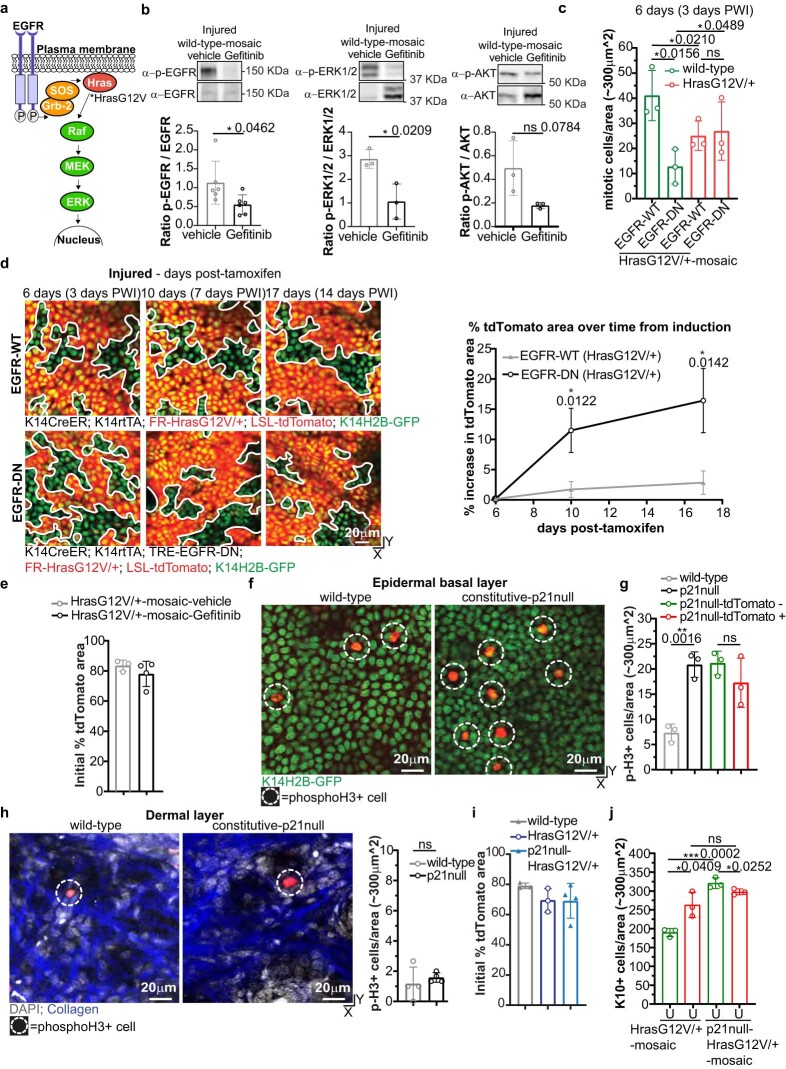
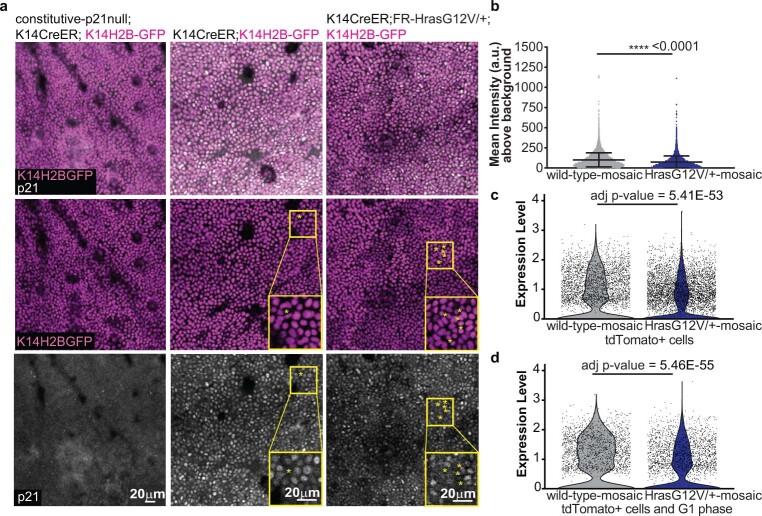
Healthy skin is a mosaic of wild-type and mutant clones. Although injury can cooperate with mutated Ras family proteins to promote tumorigenesis, the consequences in genetically mosaic skin are unknown. Here we show that after injury, wild-type cells suppress aberrant growth induced by oncogenic Ras. Hras and Kras cells outcompete wild-type cells in uninjured, mosaic tissue but their expansion is prevented after injury owing to an increase in the fraction of proliferating wild-type cells. Mechanistically, we show that, unlike Hras cells, wild-type cells respond to autocrine and paracrine secretion of EGFR ligands, and this differential activation of the EGFR pathway explains the competitive switch during injury repair. Inhibition of EGFR signalling via drug or genetic approaches diminishes the proportion of dividing wild-type cells after injury, leading to the expansion of Hras cells. Increased proliferation of wild-type cells via constitutive loss of the cell cycle inhibitor p21 counteracts the expansion of Hras cells even in the absence of injury. Thus, injury has a role in switching the competitive balance between oncogenic and wild-type cells in genetically mosaic skin.
健康的皮肤是由野生型和突变型克隆组成的马赛克。尽管损伤可以与突变的 Ras 家族蛋白协同作用促进肿瘤发生,但遗传镶嵌皮肤中的后果尚不清楚。在这里,我们表明,损伤后,野生型细胞抑制致癌 Ras 诱导的异常生长。Hras 和 Kras 细胞在未受伤的镶嵌组织中胜过野生型细胞,但由于增殖野生型细胞的比例增加,它们的扩增在受伤后受到抑制。从机制上讲,我们表明,与 Hras 细胞不同,野生型细胞对 EGFR 配体的自分泌和旁分泌有反应,这种 EGFR 途径的差异激活解释了损伤修复过程中的竞争转变。通过药物或遗传方法抑制 EGFR 信号会减少损伤后分裂的野生型细胞的比例,导致 Hras 细胞的扩增。通过组成性丧失细胞周期抑制剂 p21 增加野生型细胞的增殖,即使在没有损伤的情况下,也会对抗 Hras 细胞的扩增。因此,损伤在遗传镶嵌皮肤中致癌和野生型细胞之间的竞争平衡中起作用。