Department of Food Science, University of Massachusetts, Amherst, MA, 01003, USA.
Appl Microbiol Biotechnol. 2021 Jan;105(2):539-549. doi: 10.1007/s00253-020-11042-8. Epub 2021 Jan 4.
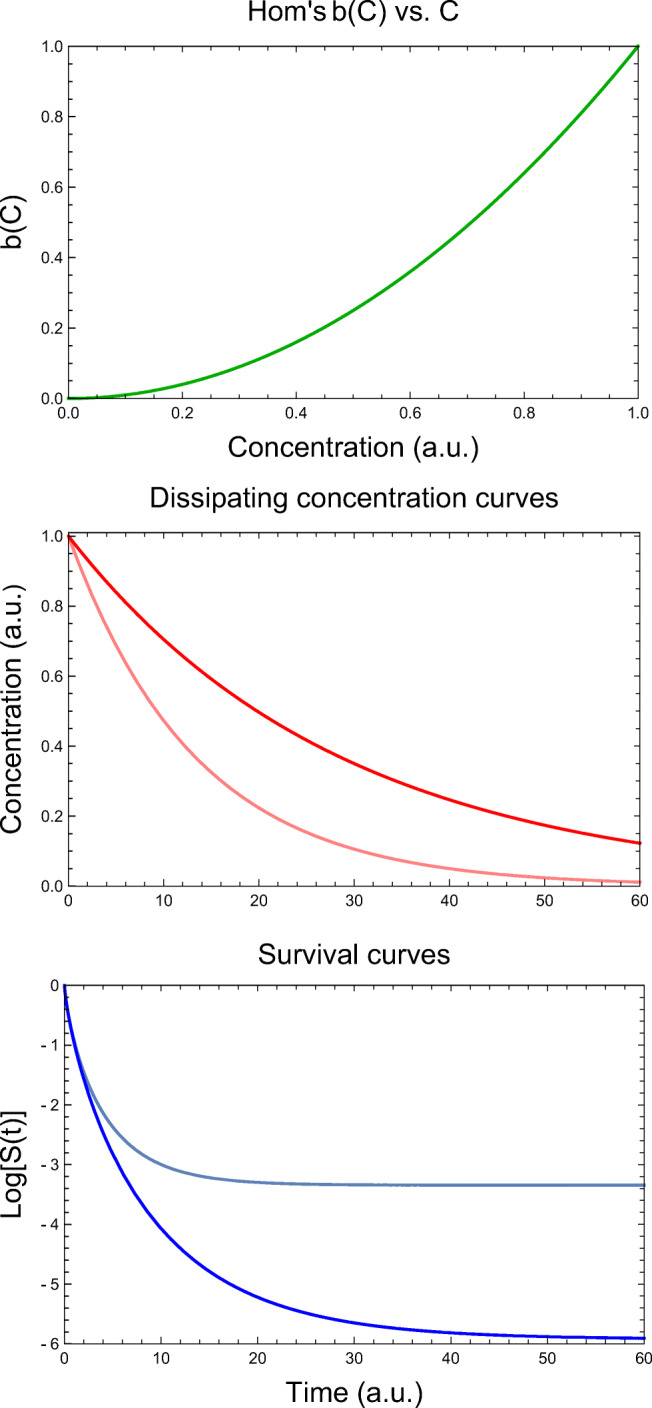
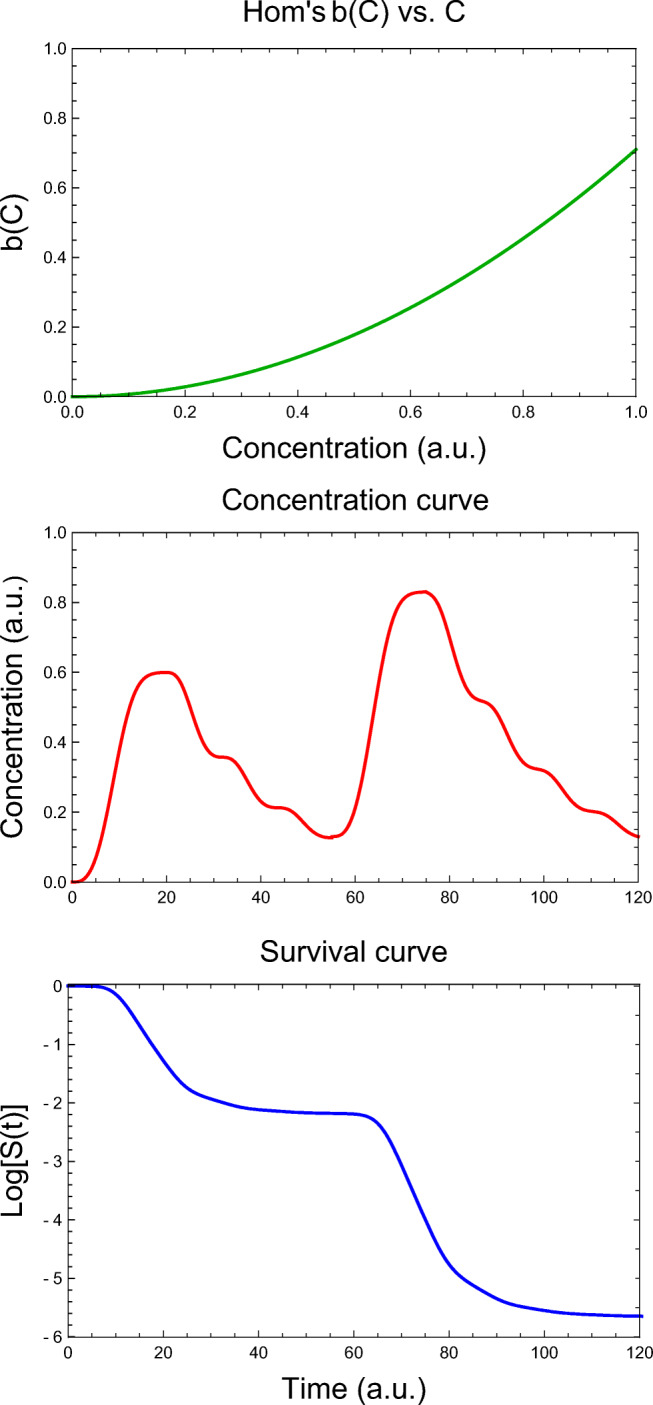
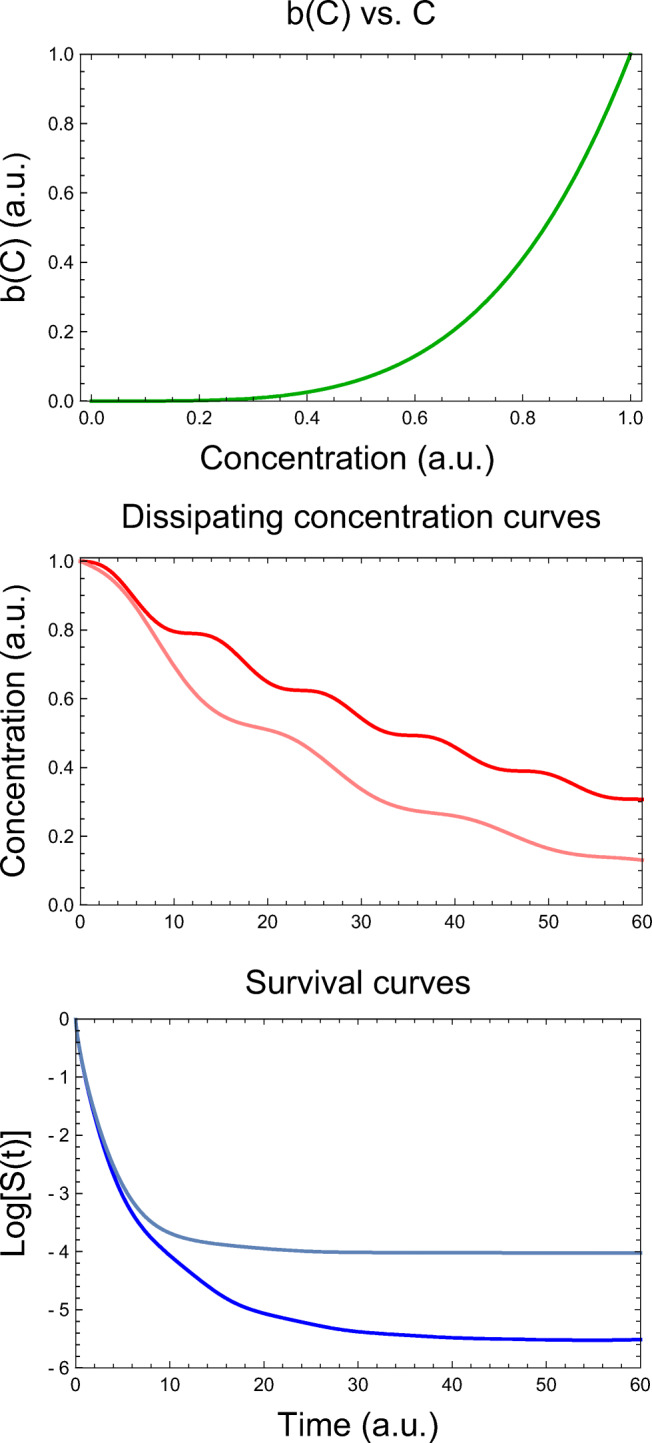
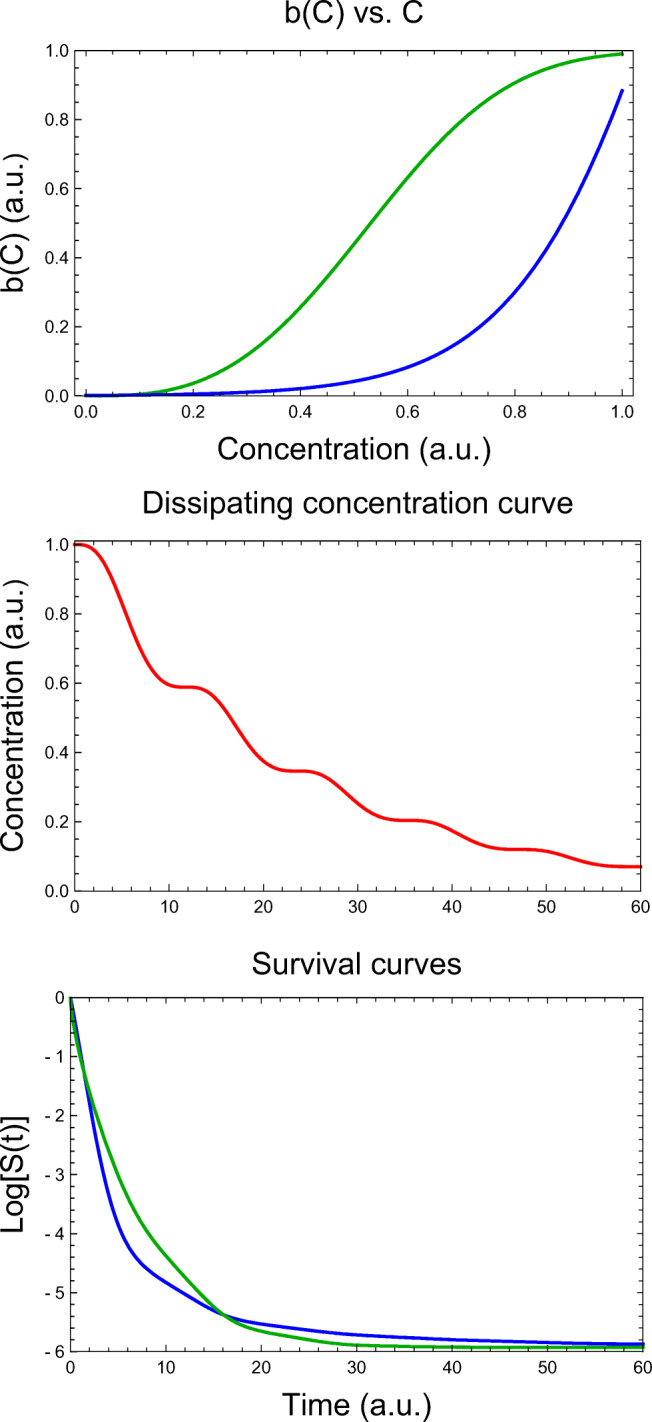
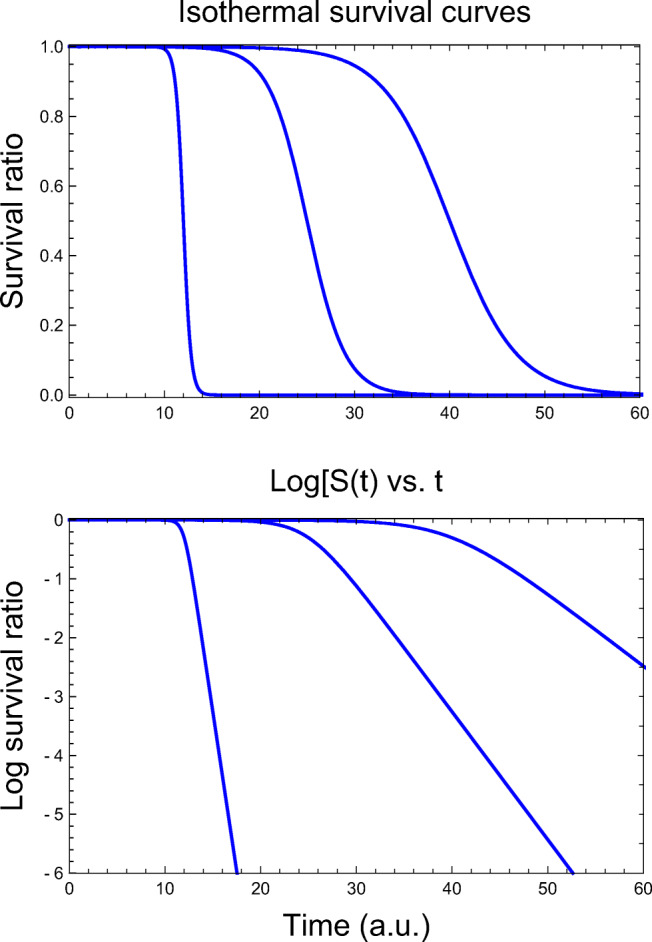
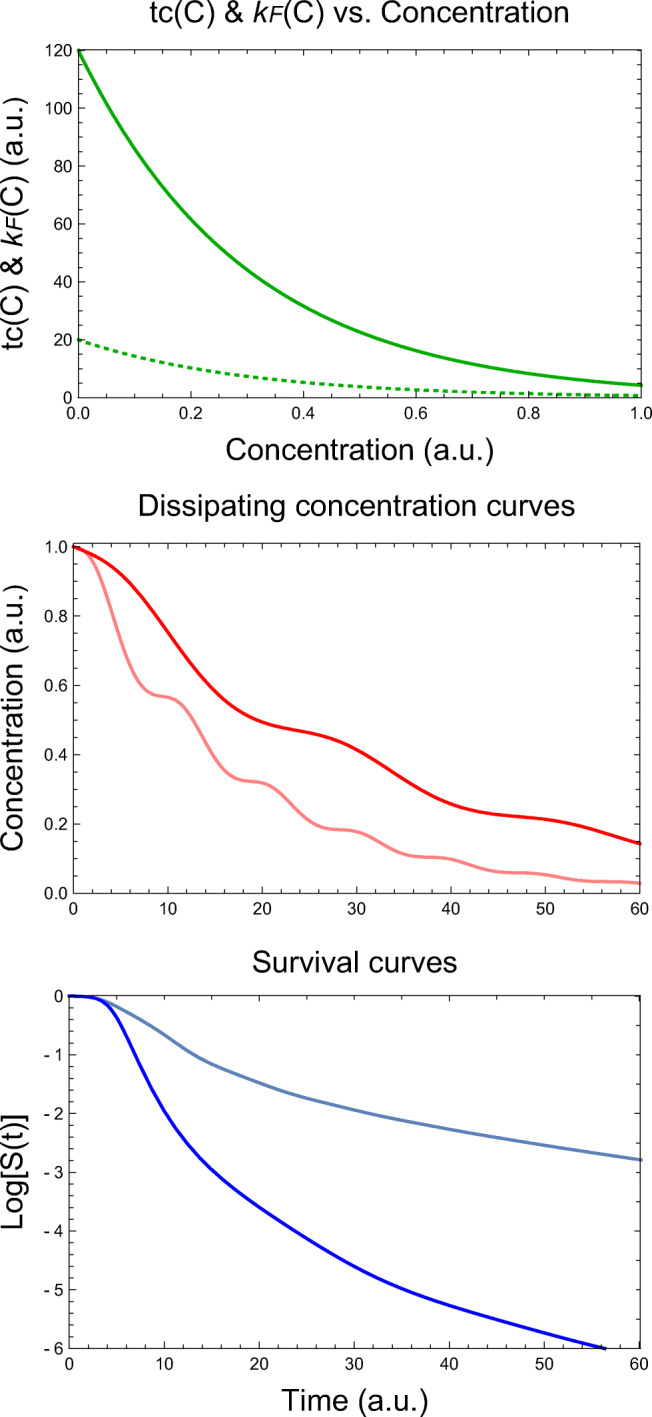
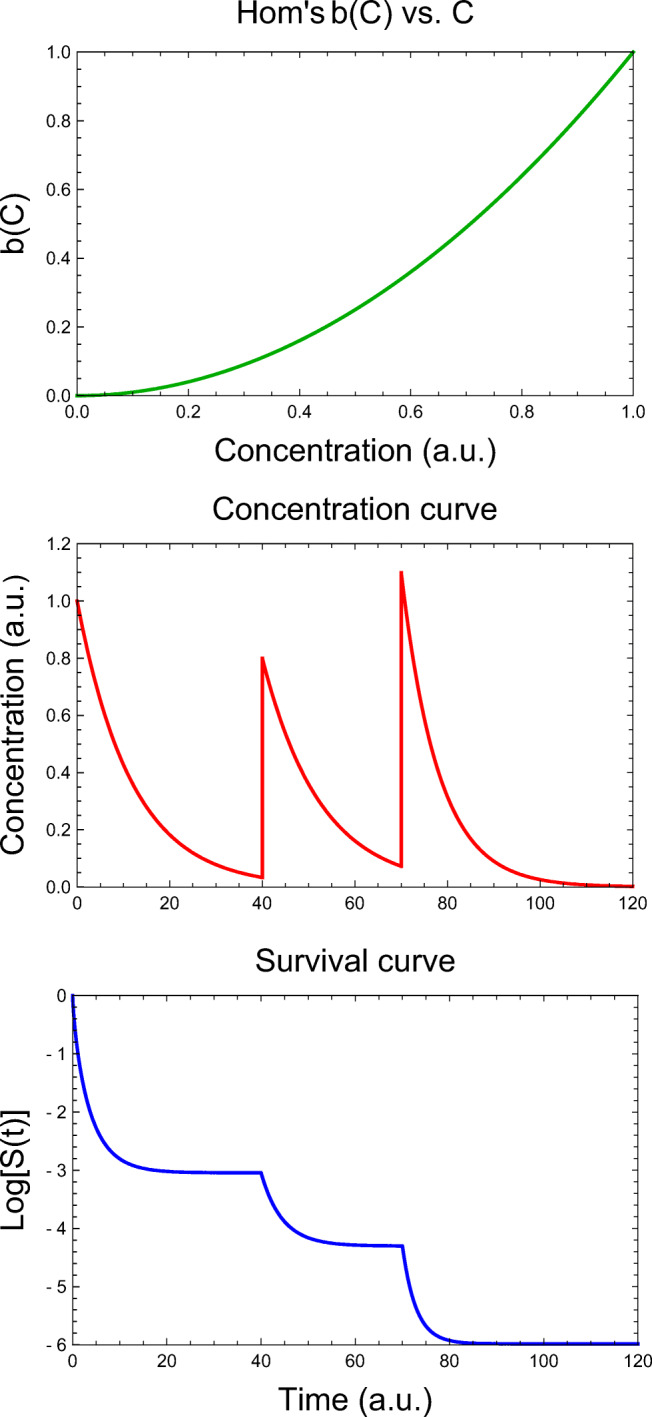
The most notable microbial survival models of disinfection kinetics are the original and modified versions of the static Chick-Watson-Hom's (CWH) initially developed for water chlorination. They can all be viewed as special cases of the Weibull survival model, where the observed static curve is the cumulative form (CDF) of the times at which the individual targeted microbes succumb to the treatment. The CWH model time's exponent is the distribution's shape factor, and its concentration-dependent rate parameter represents the distribution's scale factor's reciprocal. Theoretically, the concentration- dependence of the Weibull model's rate parameter need not to be always in a form of a power-law relationship as the CWH model requires, and two possible alternatives are presented. Apart from being chemically reactive, most chemical disinfectants are also volatile, and their effective concentration rarely remains constant. However, the published dynamic versions of the original CWH model are mathematically incongruent with their static versions. The issue is nonexistent in the dynamic version of the Weibull or other distribution-based models, provided that the momentary inactivation rate is expressed as the static rate at the momentary concentration, at the time that corresponds to the momentary survival ratio. The resulting model is an ordinary differential equation (ODE) whose numerical solution can describe survival curves under realistic regular and irregular disinfectant dissipation patterns, as well as during the disinfectant dispersion and/or its replenishment. KEY POINTS: • The Chick-Watson-Home models are treated as special cases of the Weibull distribution. • Dynamic microbial survival curve described as ordinary differential equation solution. • Survival rate models of disinfectant dissipation and replenishment patterns presented.
最著名的微生物消毒动力学存活模型是最初为水氯化开发的静态 Chick-Watson-Hom(CWH)的原始和修正版本。它们都可以被视为 Weibull 存活模型的特殊情况,其中观察到的静态曲线是个体目标微生物屈服于处理的时间的累积形式(CDF)。CWH 模型时间的指数是分布的形状因子,其与浓度相关的速率参数表示分布的比例因子的倒数。从理论上讲,Weibull 模型的速率参数的浓度依赖性不必总是像 CWH 模型那样以幂律关系的形式存在,并且提出了两种可能的替代方案。除了具有化学反应性外,大多数化学消毒剂也是挥发性的,它们的有效浓度很少保持不变。然而,原始 CWH 模型的已发表动态版本在数学上与其静态版本不一致。在 Weibull 或其他基于分布的模型的动态版本中不存在该问题,前提是瞬时失活率表示瞬时浓度下的静态速率,在对应于瞬时存活比的时间。得到的模型是一个常微分方程(ODE),其数值解可以描述在实际的规则和不规则消毒剂耗散模式下以及在消毒剂分散和/或其补充期间的存活曲线。要点:• Chick-Watson-Home 模型被视为 Weibull 分布的特殊情况。• 描述为常微分方程解的动态微生物存活曲线。• 提出了消毒剂耗散和补充模式的存活率模型。