Choi Young Hee, Chin Young-Won
College of Pharmacy and Integrated Research Institute for Drug Development, Dongguk University_Seoul, 32 Dongguk-lo, Ilsandong-gu, Goyang-si, Gyeonggi-do 10326, Korea.
College of Pharmacy and Research Institute of Pharmaceutical Sciences, Seoul National University, Seoul 08826, Korea.
Pharmaceutics. 2020 Dec 30;13(1):43. doi: 10.3390/pharmaceutics13010043.
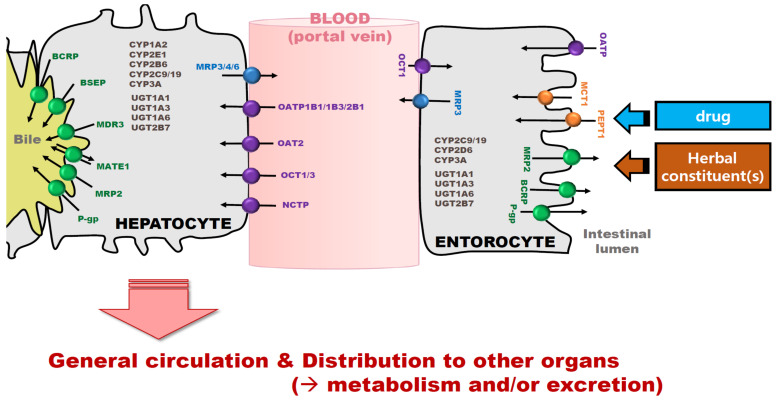
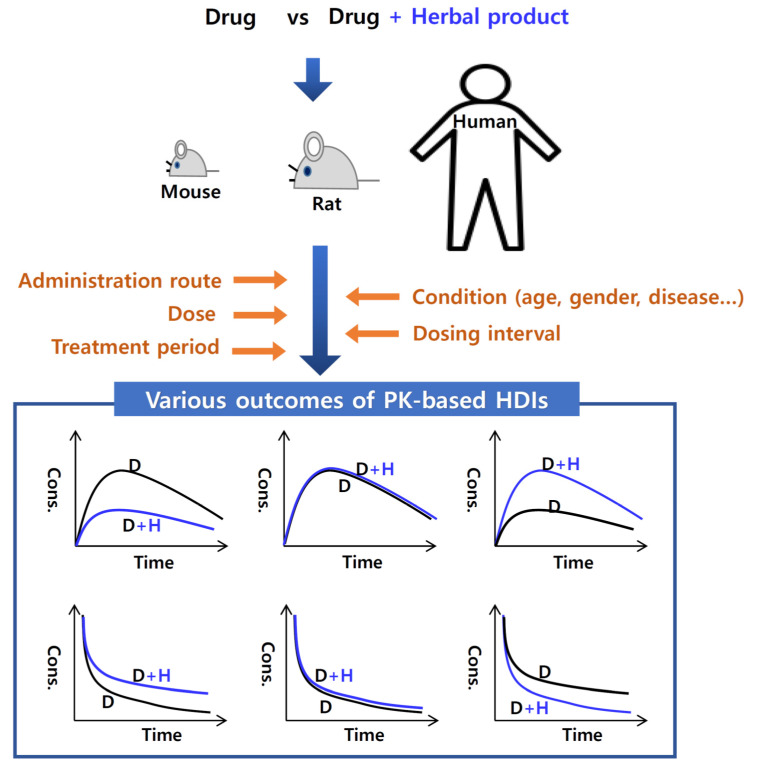
Metabolic enzyme and/or transporter-mediated pharmacokinetic (PK) changes in a drug caused by concomitant herbal products have been a primary issue of herb and drug interactions (HDIs), because PK changes of a drug may result in the alternation of efficacy and toxicity. Studies on HDIs have been carried out by predictive in vitro and in vivo preclinical studies, and clinical trials. Nevertheless, the discrepancies between predictive data and the clinical significance on HDIs still exist, and different reports of HDIs add to rather than clarify the confusion regarding the use of herbal products and drug combinations. Here, we briefly review the underlying mechanisms causing PK-based HDIs, and more importantly summarize challenging issues, such as dose and treatment period effects, to be considered in study designs and interpretations of HDI evaluations.
由同时使用的草药产品引起的药物代谢酶和/或转运体介导的药代动力学(PK)变化一直是草药与药物相互作用(HDI)的主要问题,因为药物的PK变化可能导致疗效和毒性的改变。关于HDI的研究已通过预测性体外和体内临床前研究以及临床试验开展。然而,预测数据与HDI临床意义之间的差异仍然存在,而且关于HDI的不同报告加剧而非澄清了关于草药产品和药物组合使用的困惑。在此,我们简要回顾引起基于PK的HDI的潜在机制,更重要的是总结在HDI评估的研究设计和解释中需要考虑的具有挑战性的问题,如剂量和治疗期效应。