Neurochemistry Laboratory, Department of Psychiatry, Massachusetts General Hospital and Harvard Medical School, Charlestown, MA 02129, USA.
Int J Mol Sci. 2020 Dec 30;22(1):338. doi: 10.3390/ijms22010338.
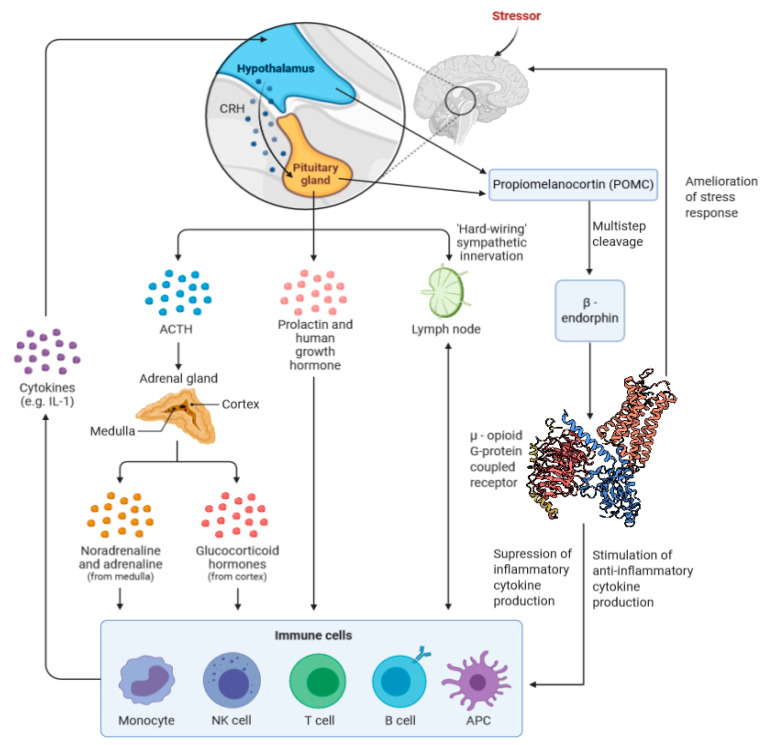
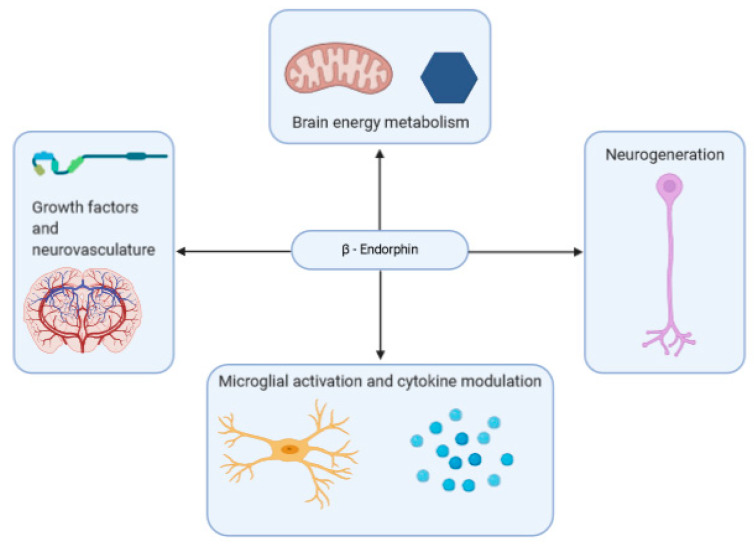
β-Endorphins are peptides that exert a wide variety of effects throughout the body. Produced through the cleavage pro-opiomelanocortin (POMC), β-endorphins are the primarily agonist of mu opioid receptors, which can be found throughout the body, brain, and cells of the immune system that regulate a diverse set of systems. As an agonist of the body's opioid receptors, β-endorphins are most noted for their potent analgesic effects, but they also have their involvement in reward-centric and homeostasis-restoring behaviors, among other effects. These effects have implicated the peptide in psychiatric and neurodegenerative disorders, making it a research target of interest. This review briefly summarizes the basics of endorphin function, goes over the behaviors and regulatory pathways it governs, and examines the variability of β-endorphin levels observed between normal and disease/disorder affected individuals.
β-内啡肽是一种在全身发挥广泛作用的肽。通过切割 pro-opiomelanocortin(POMC)产生,β-内啡肽是 μ 阿片受体的主要激动剂,可在全身、大脑和免疫系统的细胞中找到,调节着一系列不同的系统。作为身体阿片受体的激动剂,β-内啡肽以其强大的镇痛作用而闻名,但它也参与了以奖励为中心和维持体内平衡的行为等作用。这些作用使该肽与精神疾病和神经退行性疾病有关,使其成为一个有趣的研究目标。这篇综述简要总结了内啡肽功能的基础知识,概述了它控制的行为和调节途径,并研究了正常和受疾病/障碍影响的个体之间观察到的 β-内啡肽水平的变化。