Curriculum in Toxicology & Environmental Medicine, The University of North Carolina at Chapel Hill, Chapel Hill, NC, 27599, USA.
UNC Neuroscience Center, The University of North Carolina at Chapel Hill, Chapel Hill, NC, 27599, USA.
J Neurodev Disord. 2021 Jan 4;13(1):2. doi: 10.1186/s11689-020-09353-y.
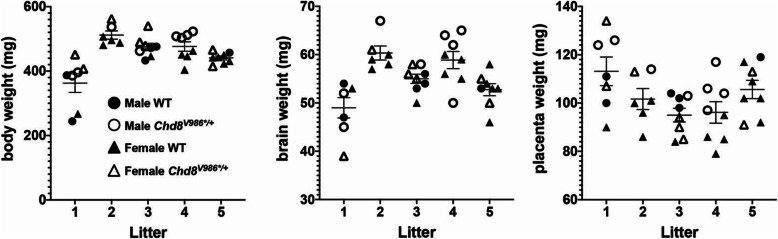
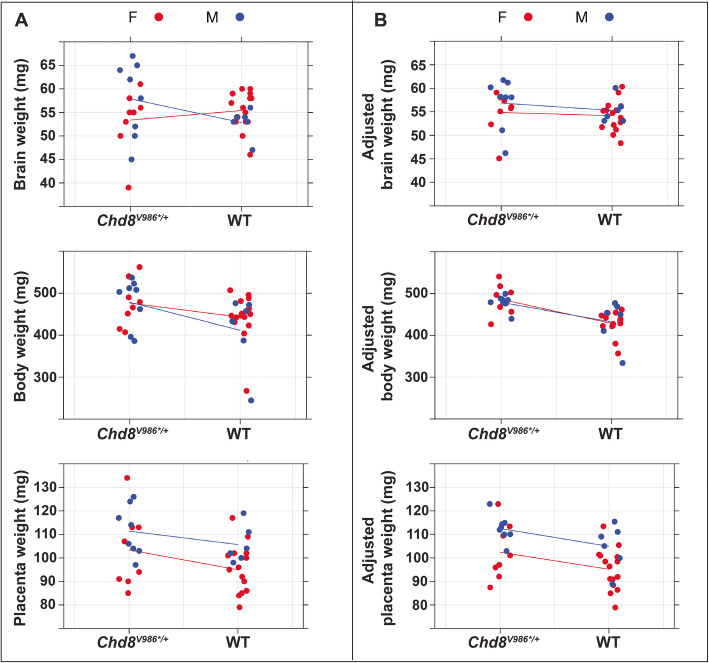
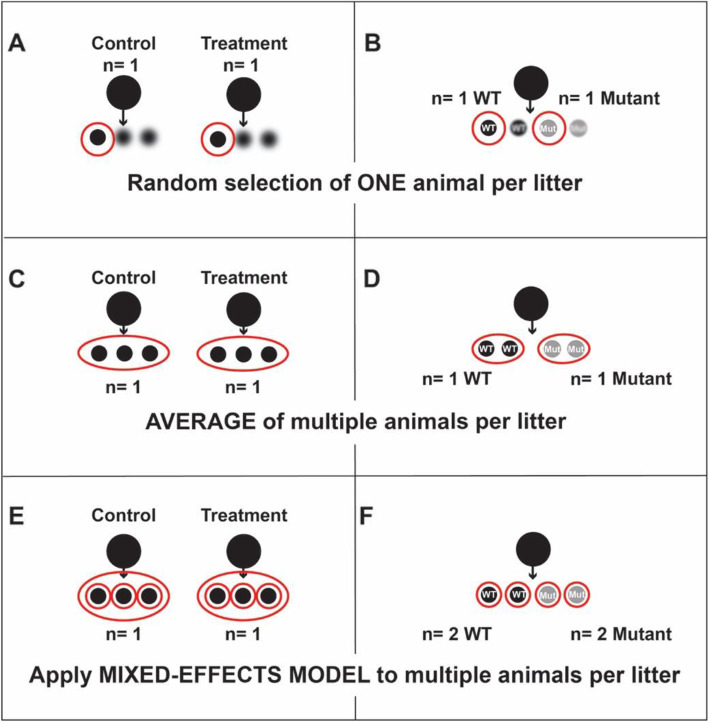
Research with rodents is crucial for expanding our understanding of genetic and environmental risk factors for neurodevelopmental disorders (NDD). However, there is growing concern about the number of animal studies that are difficult to replicate, potentially undermining the validity of results. These concerns have prompted funding agencies and academic journals to implement more rigorous standards in an effort to increase reproducibility in research. However, these standards fail to address a major source of variability in rodent research brought on by the "litter effect," the fact that rodents from the same litter are phenotypically more similar to one other than rodents from different litters of the same strain. We show that the litter effect accounts for 30-60% of the variability associated with commonly studied phenotypes, including brain, placenta, and body weight. Moreover, we show how failure to control for litter-to-litter variation can mask a phenotype in Chd8 mice that model haploinsufficiency of CHD8, a high-confidence autism gene. Thus, if not properly controlled, the litter effect has the potential to negatively influence rigor and reproducibility of NDD research. While efforts have been made to educate scientists on the importance of controlling for litter effects in previous publications, our analysis of the recent literature (2015-2020) shows that the vast majority of NDD studies focused on genetic risks, including mutant mouse studies, and environmental risks, such as air pollution and valproic acid exposure, do not correct for litter effects or report information on the number of litters used. We outline best practices to help scientists minimize the impact of litter-to-litter variability and to enhance rigor and reproducibility in future NDD studies using rodent models.
研究啮齿动物对于拓展我们对神经发育障碍(NDD)的遗传和环境风险因素的理解至关重要。然而,人们越来越关注那些难以复制的动物研究数量,这些研究可能会破坏结果的有效性。这些担忧促使资助机构和学术期刊实施更严格的标准,以努力提高研究的可重复性。然而,这些标准未能解决啮齿动物研究中一个主要的变异性来源,即“窝效应”,即同一窝的啮齿动物在表型上比同一品系不同窝的啮齿动物更相似。我们表明,窝效应解释了 30-60%与常见研究表型相关的变异性,包括大脑、胎盘和体重。此外,我们展示了未能控制窝间变异如何掩盖了 Chd8 小鼠模型中 CHD8 单倍不足的表型,CHD8 是一个高可信度的自闭症基因。因此,如果不加以适当控制,窝效应有可能对 NDD 研究的严谨性和可重复性产生负面影响。尽管在之前的出版物中已经努力教育科学家控制窝效应的重要性,但我们对最近文献(2015-2020 年)的分析表明,绝大多数关注遗传风险的 NDD 研究,包括突变小鼠研究,以及环境风险,如空气污染和丙戊酸暴露,都没有纠正窝效应或报告使用窝数的信息。我们概述了最佳实践,以帮助科学家最大限度地减少窝间变异性的影响,并在未来使用啮齿动物模型的 NDD 研究中提高严谨性和可重复性。