Curriculum in Toxicology & Environmental Medicine, The University of North Carolina at Chapel Hill, Chapel Hill, NC, 27599, USA.
UNC Neuroscience Center, The University of North Carolina at Chapel Hill, Chapel Hill, NC, 27599, USA.
Mol Autism. 2020 Oct 5;11(1):74. doi: 10.1186/s13229-020-00369-8.
Chromodomain helicase DNA-binding protein 8 (Chd8) is a high-confidence risk gene for autism spectrum disorder (ASD). However, how Chd8 haploinsufficiency impairs gene expression in the brain and impacts behavior at different stages of life is unknown.
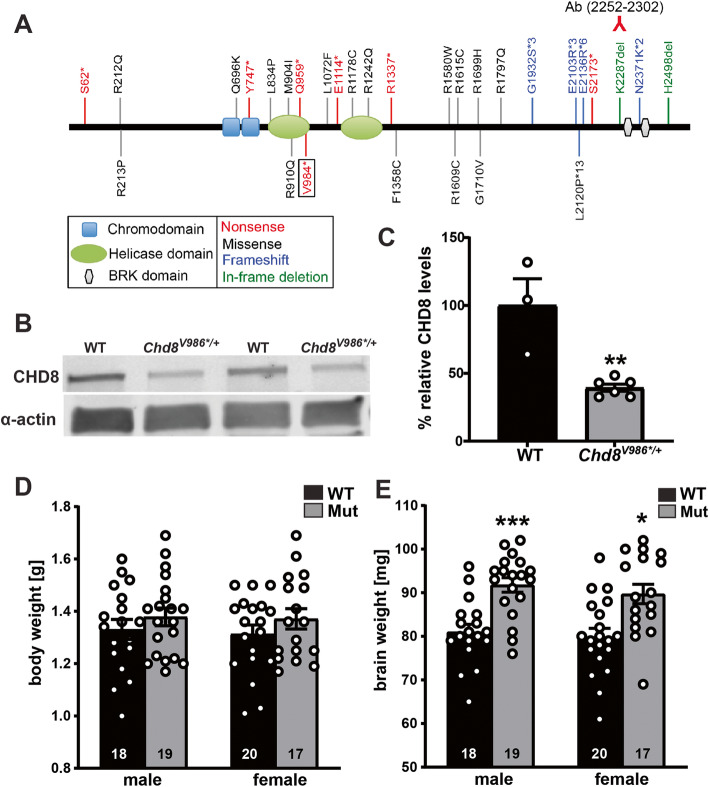
We generated a mutant mouse line with an ASD-linked loss-of-function mutation in Chd8 (V986*; stop codon mutation). We examined the behavior of Chd8 mutant mice along with transcriptional changes in the cerebral cortex as a function of age, with a focus on one embryonic (E14.5) and three postnatal ages (1, 6, and 12 months).
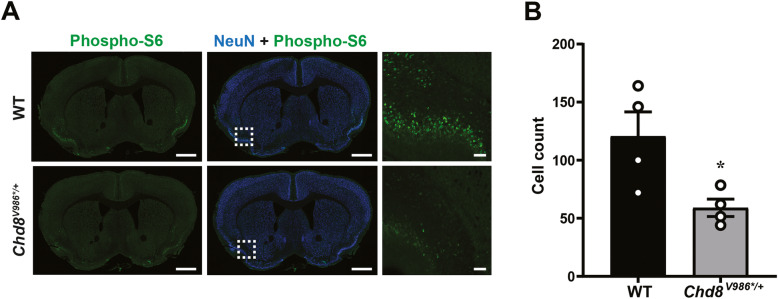
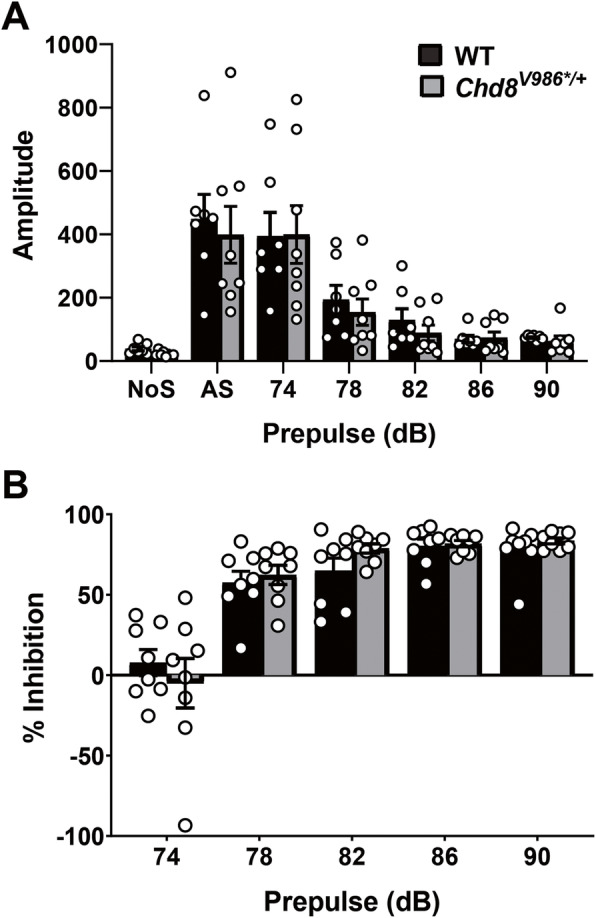
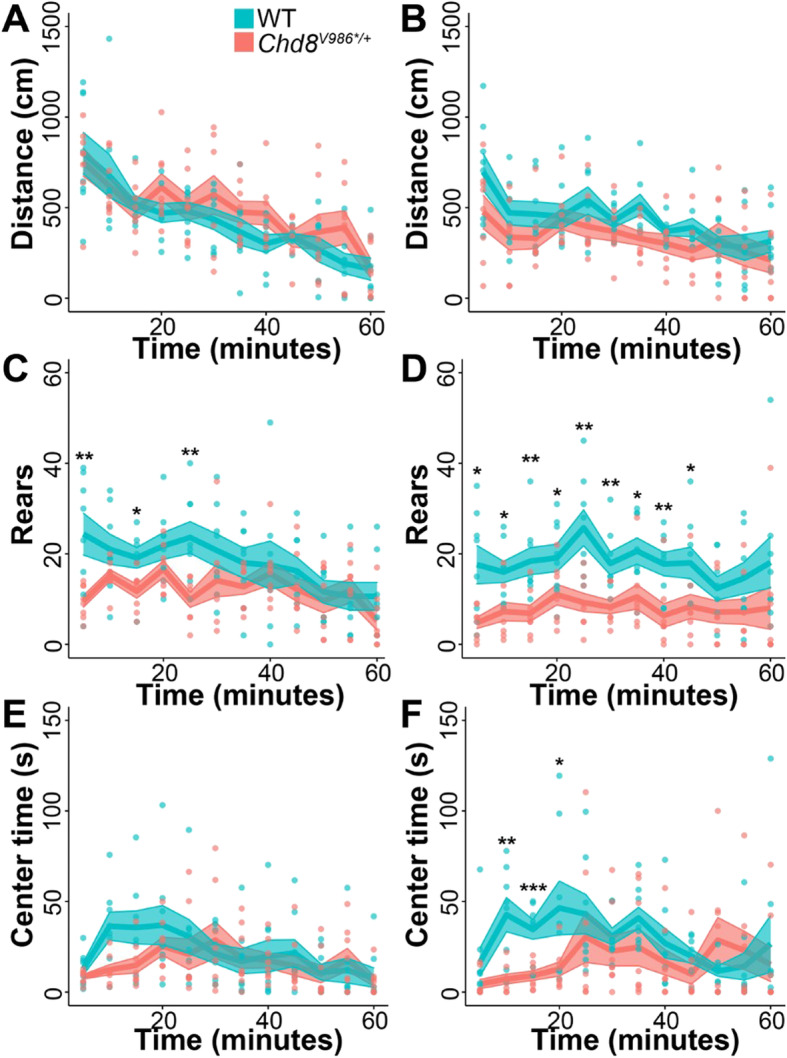
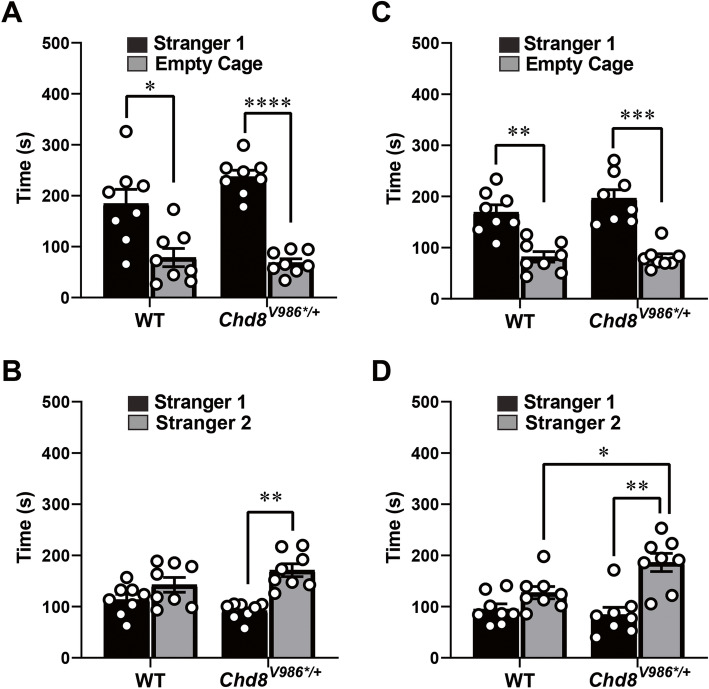
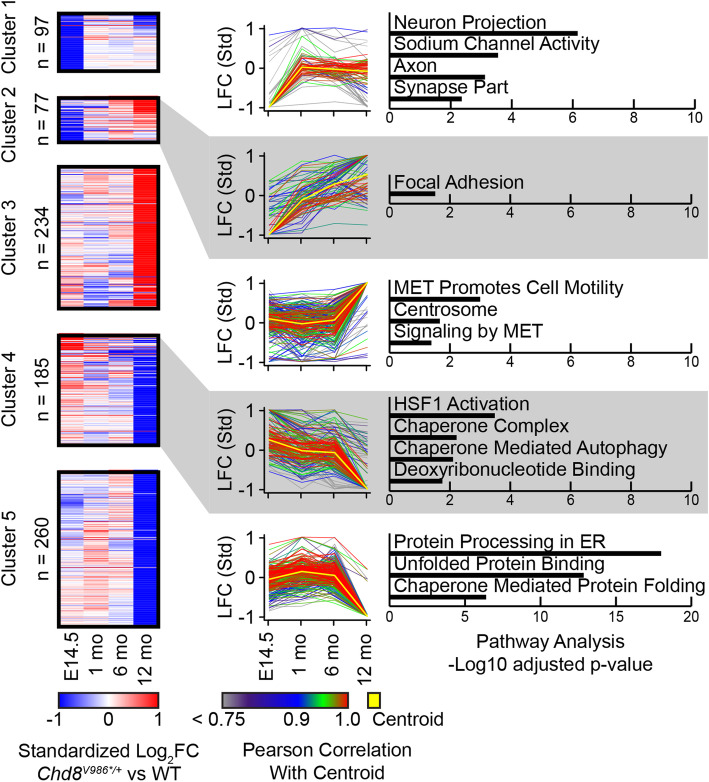
Chd8 mutant mice displayed macrocephaly, reduced rearing responses and reduced center time in the open field, and enhanced social novelty preference. Behavioral phenotypes were more evident in Chd8 mutant mice at 1 year of age. Pup survival was reduced in wild-type x Chd8 crosses when the mutant parent was female. Transcriptomic analyses indicated that pathways associated with synaptic and neuronal projections and sodium channel activity were reduced in the cortex of embryonic Chd8 mice and then equalized relative to wild-type mice in the postnatal period. At 12 months of age, expression of genes associated with endoplasmic reticulum (ER) stress, chaperone-mediated protein folding, and the unfolded protein response (UPR) were reduced in Chd8 mice, whereas genes associated with the c-MET signaling pathway were increased in expression.
It is unclear whether the transcriptional changes observed with age in Chd8 mice reflect a direct effect of CHD8-regulated gene expression, or if CHD8 indirectly affects the expression of UPR/ER stress genes in adult mice as a consequence of neurodevelopmental abnormalities.
Collectively, these data suggest that UPR/ER stress pathways are reduced in the cerebral cortex of aged Chd8 mice. Our study uncovers neurodevelopmental and age-related phenotypes in Chd8 mice and highlights the importance of controlling for age when studying Chd8 haploinsufficient mice.
染色质解旋酶 DNA 结合蛋白 8(Chd8)是自闭症谱系障碍(ASD)的高可信度风险基因。然而,Chd8 杂合功能缺失如何损害大脑中的基因表达以及在生命的不同阶段影响行为尚不清楚。
我们构建了一种携带 ASD 相关功能丧失突变的 Chd8 突变小鼠系(V986*;终止密码突变)。我们检查了 Chd8 突变小鼠的行为以及随着年龄的变化大脑皮层的转录变化,重点关注一个胚胎(E14.5)和三个新生年龄(1、6 和 12 个月)。
Chd8 突变小鼠表现出大头畸形、减少饲养反应和减少开放场中的中心时间、增强社交新颖性偏好。在 1 岁时,Chd8 突变小鼠的行为表型更为明显。当突变亲本为雌性时,野生型 x Chd8 杂交的幼鼠存活率降低。转录组分析表明,在胚胎 Chd8 小鼠的皮层中,与突触和神经元投射以及钠通道活性相关的途径减少,然后在出生后时期与野生型小鼠相平衡。在 12 个月时,Chd8 小鼠中与内质网(ER)应激、伴侣介导的蛋白质折叠和未折叠蛋白反应(UPR)相关的基因表达减少,而与 c-MET 信号通路相关的基因表达增加。
尚不清楚在 Chd8 小鼠中随年龄观察到的转录变化是否反映了 CHD8 调节的基因表达的直接影响,或者 CHD8 是否作为神经发育异常的后果间接影响成年小鼠 UPR/ER 应激基因的表达。
总的来说,这些数据表明 UPR/ER 应激途径在老年 Chd8 小鼠的大脑皮层中减少。我们的研究揭示了 Chd8 小鼠的神经发育和年龄相关表型,并强调了在研究 Chd8 杂合不足小鼠时控制年龄的重要性。