Center for Medical Genetics and Hunan Key Laboratory of Medical Genetics, School of Life Sciences, Central South University, Changsha, 410078, Hunan, China.
Human Genetics Program, Department of Zoology, Faculty of Biological Sciences, Quaid-I-Azam University, Islamabad, Pakistan.
BMC Med Genomics. 2021 Jan 4;14(1):2. doi: 10.1186/s12920-020-00859-x.
Hearing loss/deafness is a common otological disorder found in the Pakistani population due to the high prevalence of consanguineous unions, but the full range of genetic causes is still unknown.
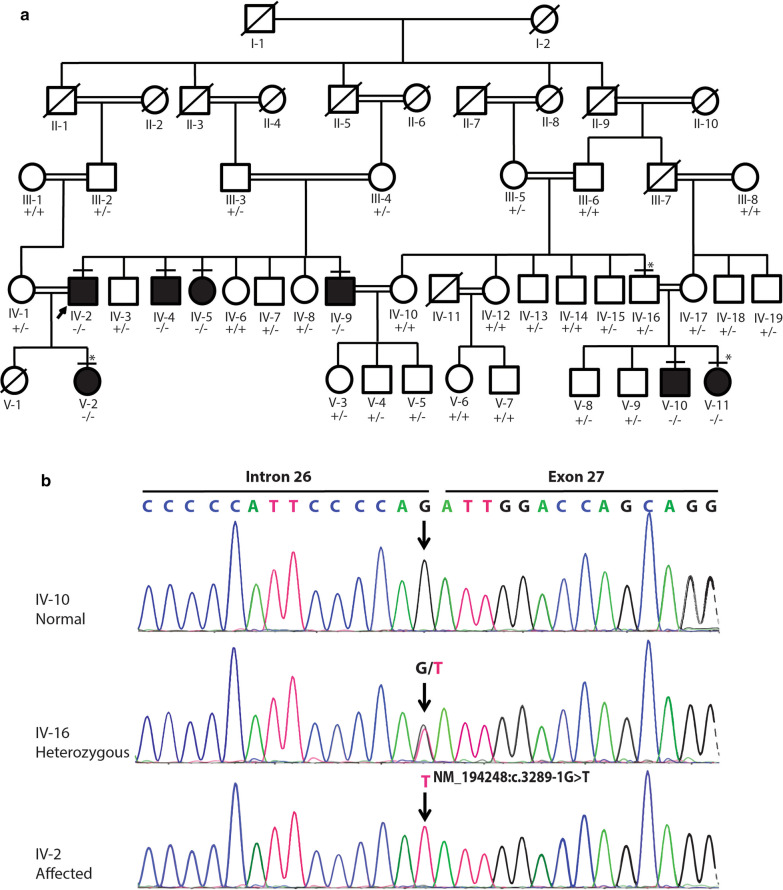
A large consanguineous Pakistani kindred with hearing loss was studied. Whole-exome sequencing and Sanger sequencing were performed to search for the candidate gene underlying the disease phenotype. A minigene assay and reverse transcription polymerase chain reaction was used to assess the effect of splicing variants.
The splicing variants of OTOF (NM_194248, c.3289-1G>T) cosegregated with the disease phenotype in this Pakistani family. The substitution of a single base pair causes the deletion of 10 bp (splicing variant 1) or 13 bp (splicing variant 2) from exon 27, which results in truncated proteins of 1141 and 1140 amino acids, respectively.
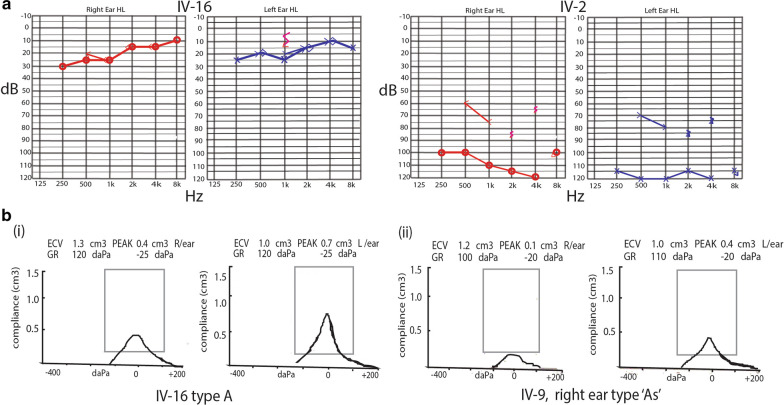
Our findings reveal an OTOF splice-site variant as pathogenic for profound hearing loss in this family.
由于近亲结婚的高发率,听力损失/耳聋是巴基斯坦人群中一种常见的耳科疾病,但遗传病因的全貌仍不清楚。
对一个有听力损失的大型巴基斯坦近亲家族进行了研究。进行全外显子组测序和 Sanger 测序,以寻找导致疾病表型的候选基因。使用微基因检测和反转录聚合酶链反应来评估剪接变异的影响。
OTOF(NM_194248,c.3289-1G>T)的剪接变异与这个巴基斯坦家族的疾病表型共分离。单个碱基的替换导致从外显子 27 缺失 10 个碱基(剪接变异 1)或 13 个碱基(剪接变异 2),分别导致 1141 和 1140 个氨基酸的截断蛋白。
我们的研究结果揭示了 OTOF 剪接位点变异是该家族重度听力损失的致病原因。