Obuobi Shirlene, Chua Rhys F M, Besser Stephanie A, Tabit Corey E
Department of Medicine, University of Chicago, Chicago, IL, USA.
Section of Cardiology, Department of Medicine, Chicago, IL, USA.
BMC Health Serv Res. 2021 Jan 4;21(1):5. doi: 10.1186/s12913-020-05989-7.
The HOSPITAL Risk Score (HRS) predicts 30-day hospital readmissions and is internationally validated. Social determinants of health (SDOH) such as low socioeconomic status (SES) affect health outcomes and have been postulated to affect readmission rates. We hypothesized that adding SDOH to the HRS could improve its predictive accuracy.
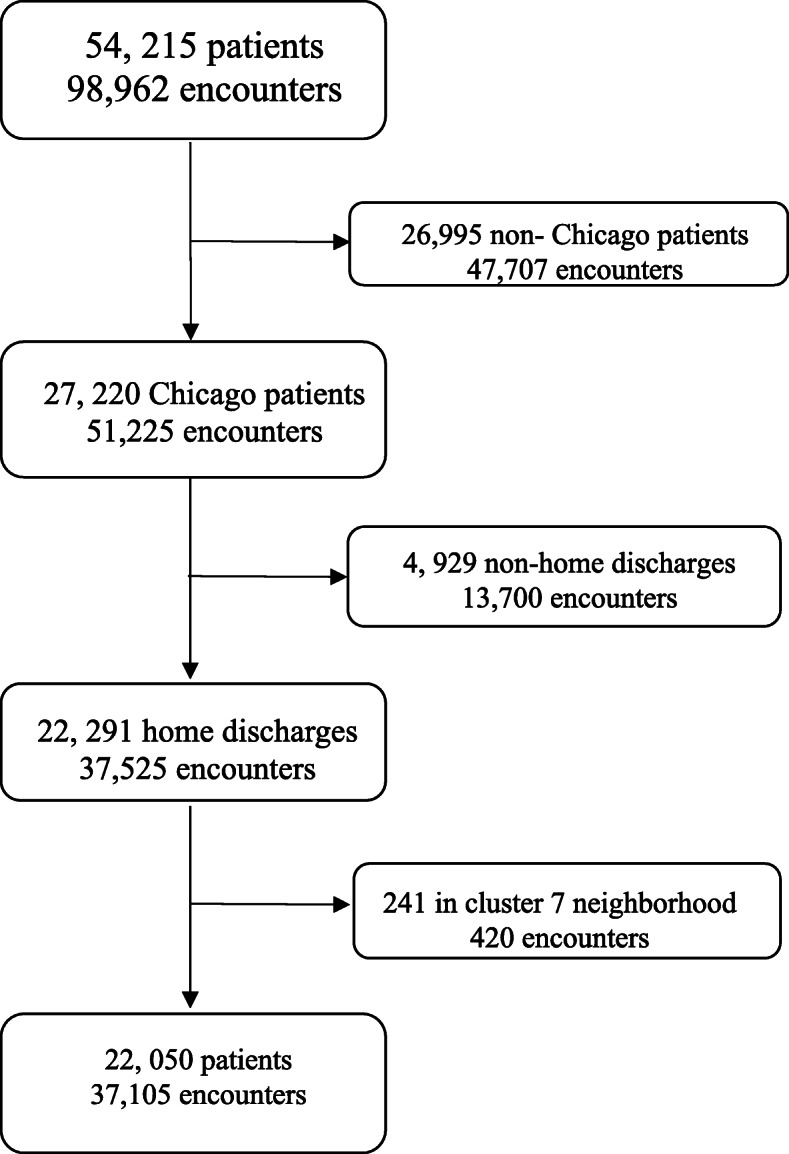
Records of 37,105 inpatient admissions at the University of Chicago Medical Center were reviewed. HRS was calculated for each patient. Census tract-level SDOH then were combined with the HRS and the performance of the resultant "Social HRS" was compared against the HRS. Patients then were assigned to 1 of 7 typologies defined by their SDOH and a balanced dataset of 14,235 admissions was sampled from the larger dataset to avoid over-representation by any 1 sociodemographic group. Principal component analysis and multivariable linear regression then were performed to determine the effect of SDOH on the HRS.
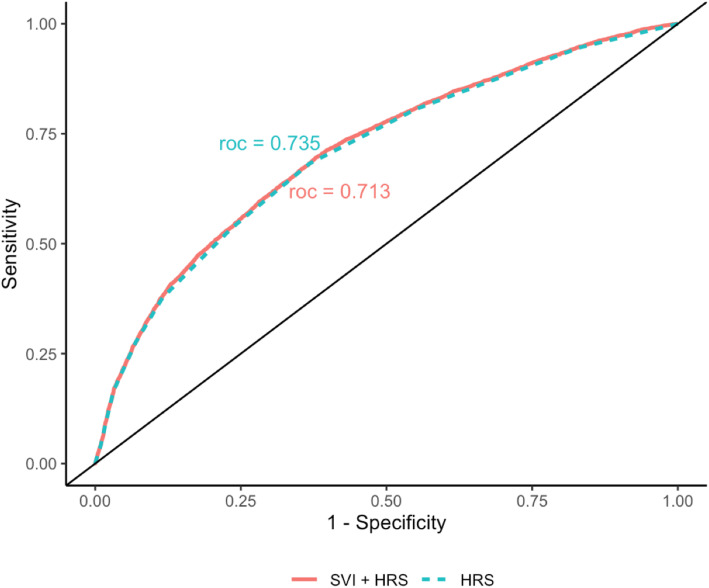
The c-statistic for the HRS predicting 30-day readmission was 0.74, consistent with published values. However, the addition of SDOH to the HRS did not improve the c-statistic (0.71). Patients with unfavorable SDOH (no high-school, limited English, crowded housing, disabilities, and age > 65 yrs) had significantly higher HRS (p < 0.05 for all). Overall, SDOH explained 0.2% of the HRS.
At an urban tertiary care center, the addition of census tract-level SDOH to the HRS did not improve its predictive power. Rather, the effects of SDOH are already reflected in the HRS.
医院风险评分(HRS)可预测30天内的医院再入院情况,且已在国际上得到验证。社会经济地位低下等健康的社会决定因素(SDOH)会影响健康结果,并被推测会影响再入院率。我们假设在HRS中加入SDOH可以提高其预测准确性。
回顾了芝加哥大学医学中心37105例住院患者的记录。计算了每位患者的HRS。然后将普查区层面的SDOH与HRS相结合,并将所得“社会HRS”的表现与HRS进行比较。然后根据患者的SDOH将其分为7种类型中的1种,并从更大的数据集中抽取了一个包含14235例入院病例的平衡数据集,以避免任何一个社会人口群体的过度代表性。随后进行主成分分析和多变量线性回归,以确定SDOH对HRS的影响。
HRS预测30天再入院的c统计量为0.74,与已发表的值一致。然而,在HRS中加入SDOH并没有提高c统计量(0.71)。SDOH不利的患者(没有高中学历、英语能力有限、住房拥挤、残疾以及年龄>65岁)的HRS显著更高(所有p<0.05)。总体而言,SDOH解释了HRS的0.2%。
在城市三级医疗中心,在HRS中加入普查区层面的SDOH并没有提高其预测能力。相反,SDOH的影响已经反映在HRS中。