Department of Psychiatry, Multi-Centre, The Chinese University of Hong Kong, Tai Po Hospital, Hong Kong SAR, G/F, China.
The Affiliated Brain Hospital of Guangzhou Medical University, Guangzhou, China.
J Neuroeng Rehabil. 2021 Jan 4;18(1):2. doi: 10.1186/s12984-020-00764-5.
Transcranial current stimulation in rehabilitation is a fast-growing field featured with computational and biophysical modeling. Cortical features and scalp-to-cortex distance (SCD) are key variables for determining the strength and distribution of the electric field, yet longitudinal studies able to capture these dynamic changes are missing. We sought to investigate and quantify the ageing effect on the morphometry and SCD of left primary motor cortex (M1) and dorsolateral prefrontal cortex (DLPFC) in normal ageing adults and mild cognitive impairment (MCI) converters.
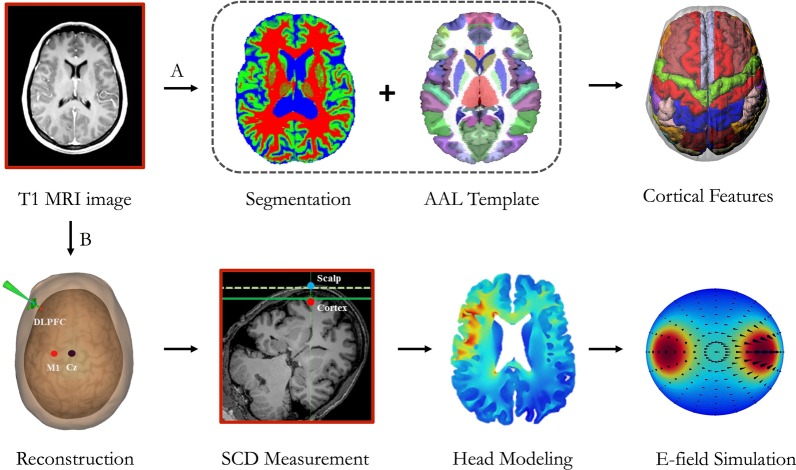
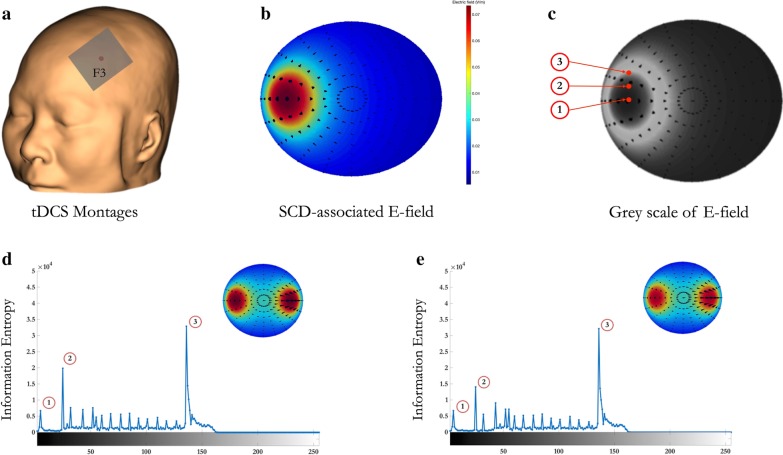
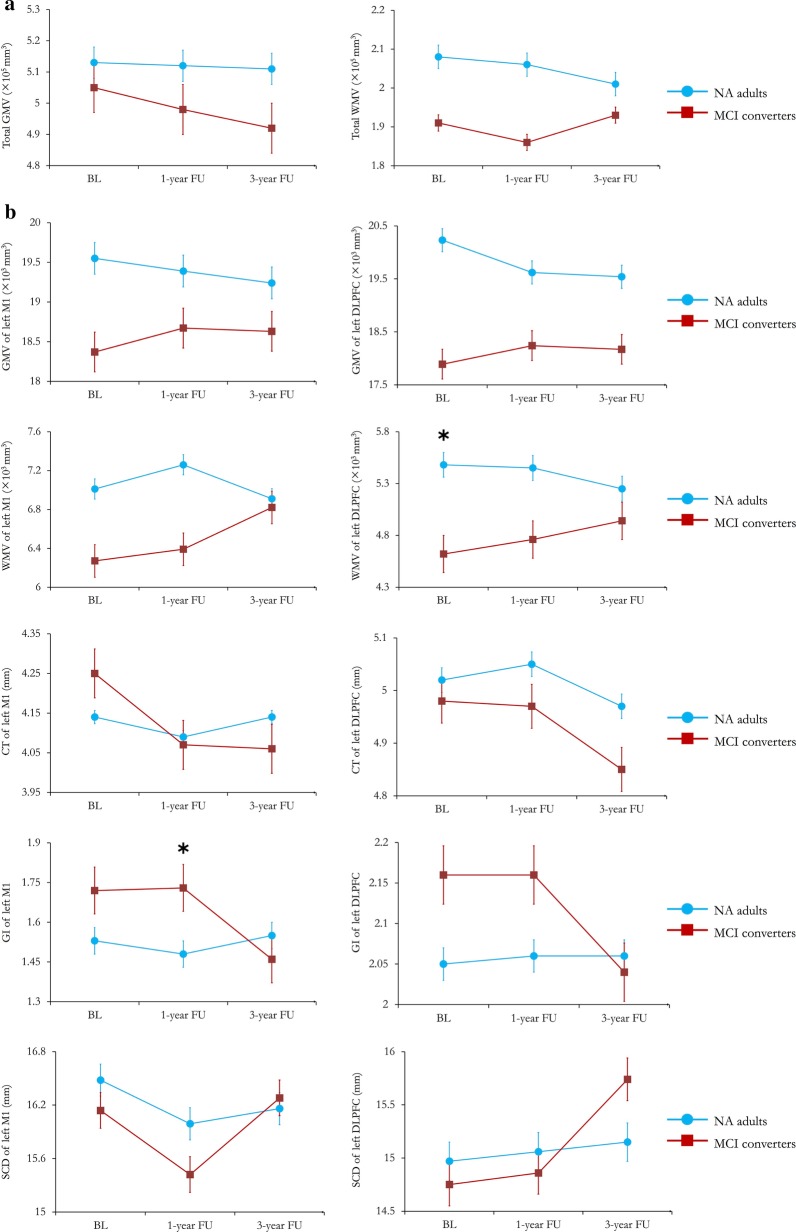
Baseline, 1-year and 3-year follow-up structural magnetic resonance imaging scans from normal ageing adults (n = 32), and MCI converters (n = 22) were drawn from the Open Access Series of Imaging Studies. We quantified the changes of the cortical features and SCDs of left M1 and DLPFC, including grey matter volume, white matter volume, cortical thickness, and folding. Head model was developed to simulate the impact of SCD on the electric field induced by transcranial current stimulation.
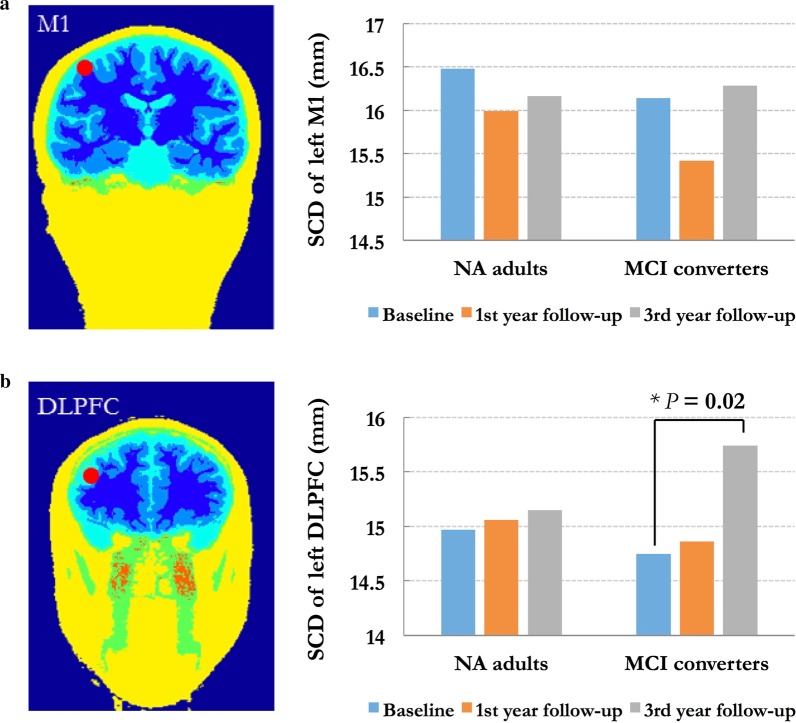
Pronounced ageing effect was found on the SCD of left DLPFC in MCI converters. The SCD change of left DLPFC from baseline to 3-year follow-up demonstrated better performance to discriminate MCI converters from normal ageing adults than the other morphometric measures. The strength of electric field was consequently decreased with SCD in MCI converters.
Ageing has a prominent, but differential effect on the region-specific SCD and cortical features in older adults with cognitive impairments. Our findings suggest that SCD, cortical thickness, and folding of the targeted regions could be used as valuable imaging markers when conducting transcranial brain stimulation in individuals with brain atrophy.
经颅电流刺激在康复领域是一个快速发展的领域,其特点是计算和生物物理建模。皮质特征和头皮到皮质距离(SCD)是确定电场强度和分布的关键变量,但能够捕捉这些动态变化的纵向研究还很缺乏。我们旨在研究和量化正常衰老和轻度认知障碍(MCI)转化者左初级运动皮层(M1)和背外侧前额叶皮层(DLPFC)的形态和 SCD 的老化效应。
从正常衰老成年人(n=32)和 MCI 转化者(n=22)的开放获取成像研究系列中提取基线、1 年和 3 年的随访结构磁共振成像扫描。我们量化了左 M1 和 DLPFC 的皮质特征和 SCD 的变化,包括灰质体积、白质体积、皮质厚度和折叠。开发了头部模型来模拟 SCD 对经颅电流刺激引起的电场的影响。
在 MCI 转化者中,左 DLPFC 的 SCD 出现明显的老化效应。从基线到 3 年随访,左 DLPFC 的 SCD 变化在区分 MCI 转化者和正常衰老成年人方面的表现优于其他形态测量指标。MCI 转化者的 SCD 变化与电场强度呈负相关。
衰老对认知障碍老年人特定区域的 SCD 和皮质特征有明显但不同的影响。我们的发现表明,当对脑萎缩个体进行经颅脑刺激时,靶向区域的 SCD、皮质厚度和折叠可以作为有价值的成像标志物。