Department of Physiology and Pathophysiology, School of Basic Medical Sciences, Fudan University, Shanghai, China.
Shanghai Key Laboratory of Birth Defects, Children's Hospital of Fudan University, Shanghai, China.
Nat Commun. 2021 Jan 4;12(1):89. doi: 10.1038/s41467-020-20327-5.
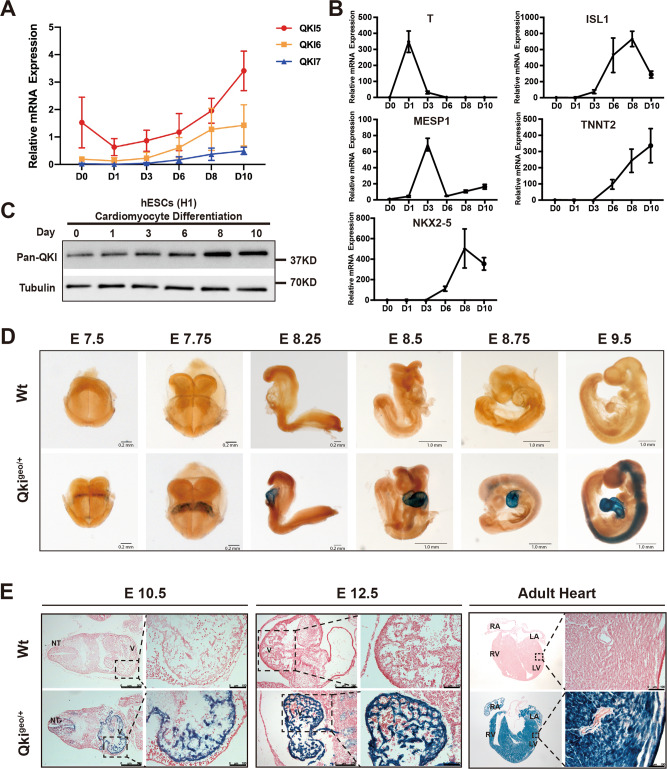
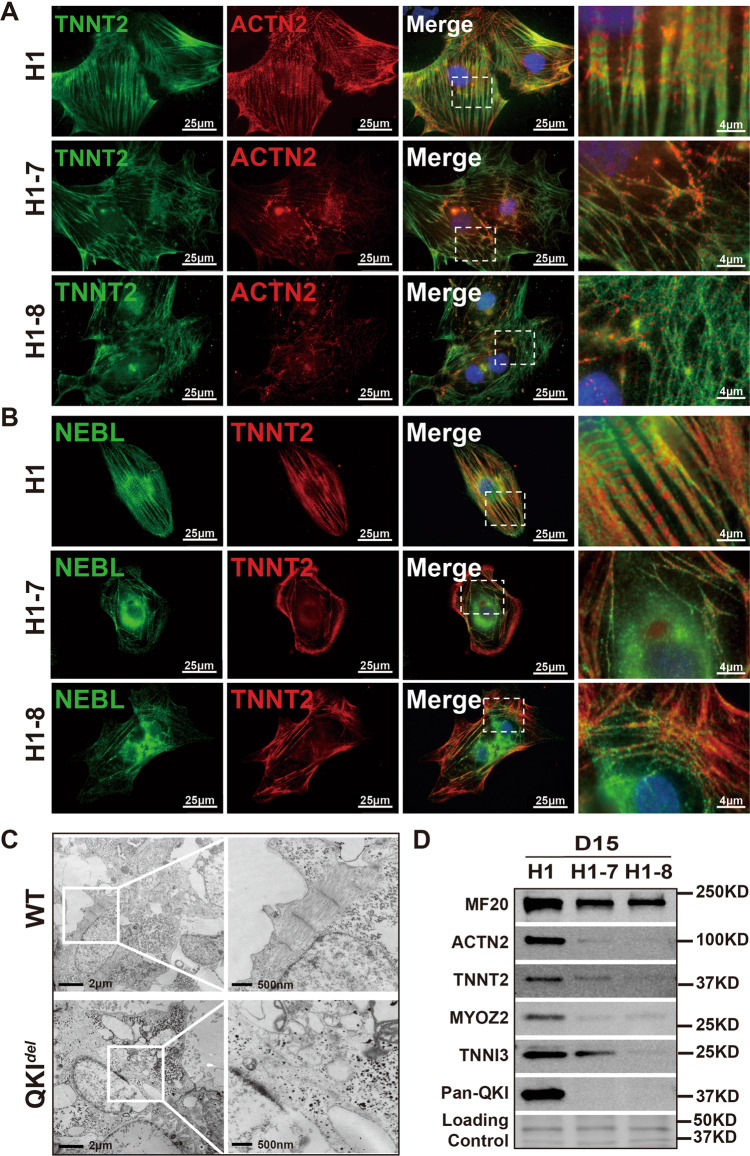
The RNA-binding protein QKI belongs to the hnRNP K-homology domain protein family, a well-known regulator of pre-mRNA alternative splicing and is associated with several neurodevelopmental disorders. Qki is found highly expressed in developing and adult hearts. By employing the human embryonic stem cell (hESC) to cardiomyocyte differentiation system and generating QKI-deficient hESCs (hESCs-QKI) using CRISPR/Cas9 gene editing technology, we analyze the physiological role of QKI in cardiomyocyte differentiation, maturation, and contractile function. hESCs-QKI largely maintain normal pluripotency and normal differentiation potential for the generation of early cardiogenic progenitors, but they fail to transition into functional cardiomyocytes. In this work, by using a series of transcriptomic, cell and biochemical analyses, and the Qki-deficient mouse model, we demonstrate that QKI is indispensable to cardiac sarcomerogenesis and cardiac function through its regulation of alternative splicing in genes involved in Z-disc formation and contractile physiology, suggesting that QKI is associated with the pathogenesis of certain forms of cardiomyopathies.
RNA 结合蛋白 QKI 属于 hnRNP K 同源结构域蛋白家族,是一种众所周知的前体 mRNA 可变剪接调节剂,与几种神经发育障碍有关。Qki 在发育中和成年的心脏中表达水平较高。通过采用人胚胎干细胞(hESC)向心肌细胞分化系统,并利用 CRISPR/Cas9 基因编辑技术生成 QKI 缺失的 hESC(hESCs-QKI),我们分析了 QKI 在心肌细胞分化、成熟和收缩功能中的生理作用。hESCs-QKI 很大程度上保持了正常的多能性和生成早期心源性祖细胞的正常分化潜能,但它们无法转化为功能性心肌细胞。在这项工作中,我们通过一系列转录组、细胞和生化分析以及 Qki 缺失的小鼠模型,证明 QKI 通过调节参与 Z 盘形成和收缩生理的基因的可变剪接,对于心脏肌节发生和心脏功能是不可或缺的,这表明 QKI 与某些形式的心肌病的发病机制有关。