Institute for Genetics and Cologne Excellence Cluster on Cellular Stress Responses in Aging-Associated Diseases (CECAD), University of Cologne, Cologne, Germany.
Center for Molecular Medicine Cologne (CMMC), University of Cologne, Cologne, Germany.
Cell Death Differ. 2021 Feb;28(2):505-521. doi: 10.1038/s41418-020-00682-y. Epub 2021 Jan 4.
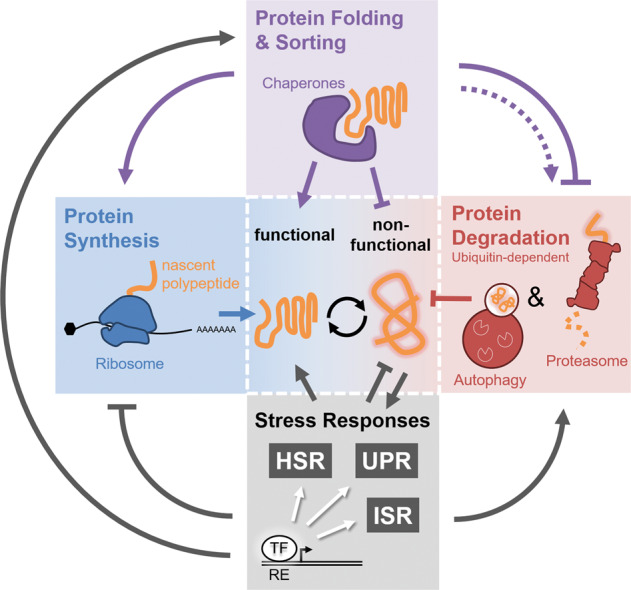
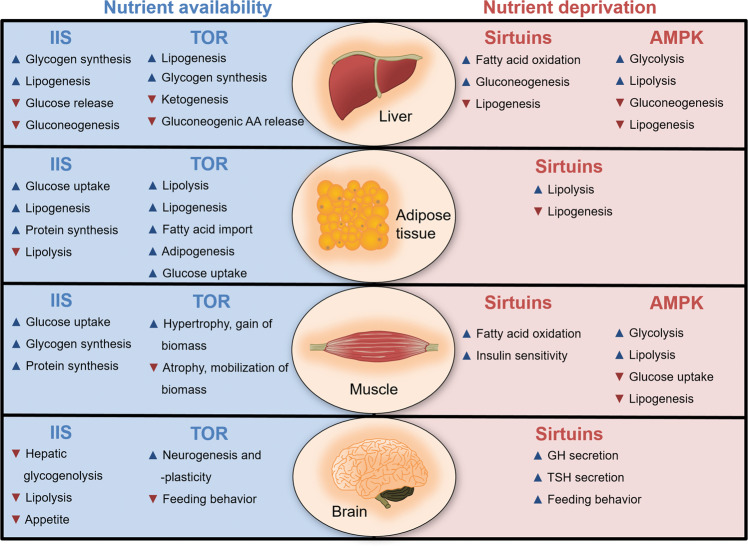
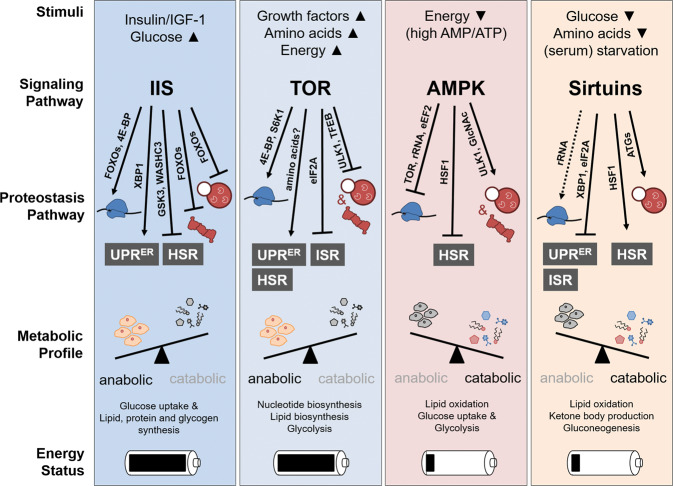
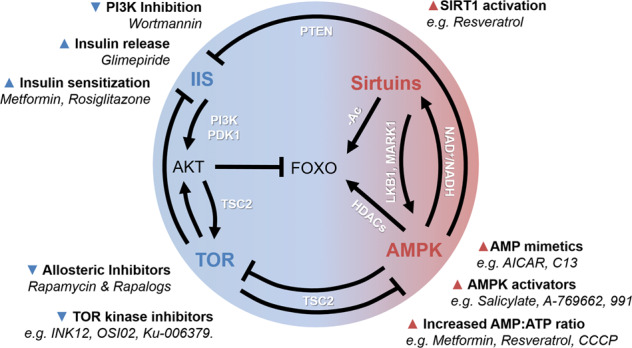
Perturbation of metabolism elicits cellular stress which profoundly modulates the cellular proteome and thus protein homeostasis (proteostasis). Consequently, changes in the cellular proteome due to metabolic shift require adaptive mechanisms by molecular protein quality control. The mechanisms vitally controlling proteostasis embrace the entire life cycle of a protein involving translational control at the ribosome, chaperone-assisted native folding, and subcellular sorting as well as proteolysis by the proteasome or autophagy. While metabolic imbalance and proteostasis decline have been recognized as hallmarks of aging and age-associated diseases, both processes are largely considered independently. Here, we delineate how proteome stability is governed by insulin/IGF1 signaling (IIS), mechanistic target of Rapamycin (TOR), 5' adenosine monophosphate-activated protein kinase (AMPK), and NAD-dependent deacetylases (Sir2-like proteins known as sirtuins). This comprehensive overview is emphasizing the regulatory interconnection between central metabolic pathways and proteostasis, indicating the relevance of shared signaling nodes as targets for future therapeutic interventions.
代谢紊乱会引发细胞应激,从而深刻地调节细胞蛋白质组,进而影响蛋白质的动态平衡(蛋白质稳态)。因此,由于代谢转变而导致的细胞蛋白质组的变化需要通过分子蛋白质质量控制的适应性机制。控制蛋白质动态平衡的机制包括蛋白质的整个生命周期,涉及核糖体上的翻译控制、伴侣蛋白辅助的天然折叠、亚细胞分拣以及蛋白酶体或自噬介导的蛋白水解。虽然代谢失衡和蛋白质稳态下降已被认为是衰老和与年龄相关疾病的特征,但这两个过程在很大程度上被认为是相互独立的。在这里,我们描述了蛋白质组的稳定性是如何受到胰岛素/IGF1 信号(IIS)、雷帕霉素机制靶标(TOR)、5' 腺苷一磷酸激活蛋白激酶(AMPK)和 NAD 依赖性去乙酰化酶(称为沉默信息调节因子 2 样蛋白的 sirtuins)的调控。这一全面的综述强调了中央代谢途径和蛋白质稳态之间的调节联系,表明了共享信号节点作为未来治疗干预靶点的重要性。