Ram-Mohan Nikhil, Kim David, Zudock Elizabeth J, Hashemi Marjan M, Tjandra Kristel C, Rogers Angela J, Blish Catherine A, Nadeau Kari C, Newberry Jennifer A, Quinn James V, O'Hara Ruth, Ashley Euan, Nguyen Hien, Jiang Lingxia, Hung Paul, Blomkalns Andra L, Yang Samuel
Department of Emergency Medicine, Stanford University School of Medicine, Palo Alto CA 94305.
Department of Medicine - Pulmonary, Allergy & Critical Care Medicine, Stanford University School of Medicine, Palo Alto CA 94305.
medRxiv. 2020 Dec 22:2020.12.19.20248561. doi: 10.1101/2020.12.19.20248561.
The determinants of COVID-19 disease severity and extrapulmonary complications (EPCs) are poorly understood. We characterise the relationships between SARS-CoV-2 RNAaemia and disease severity, clinical deterioration, and specific EPCs.
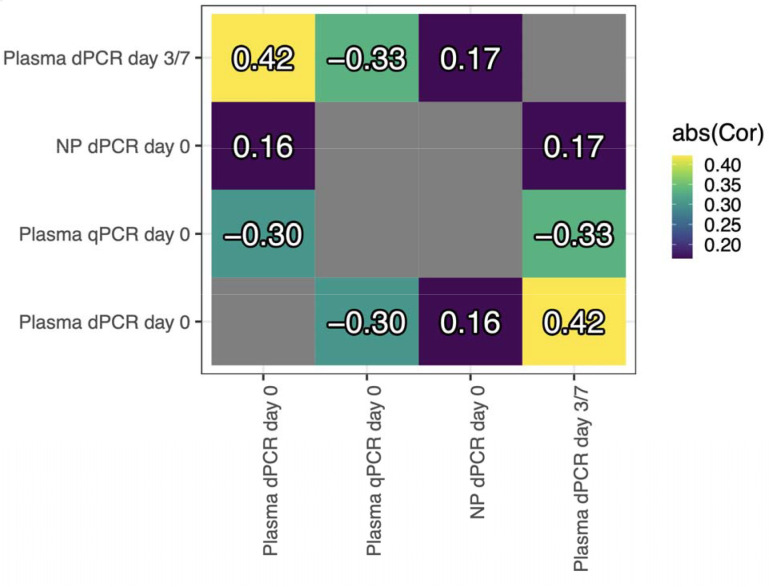
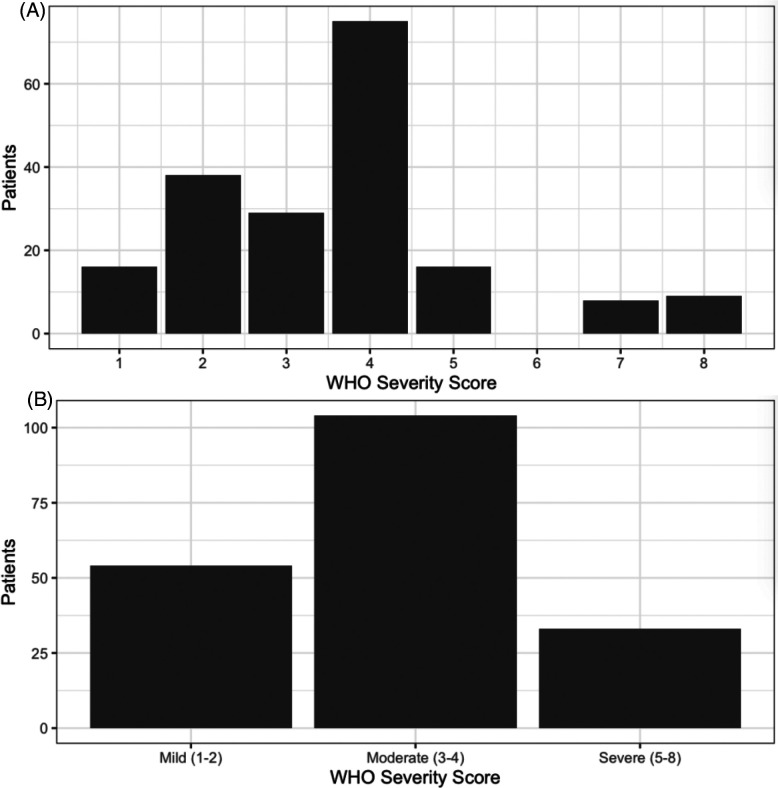
We used quantitative (qPCR) and digital (dPCR) PCR to quantify SARS-CoV-2 RNA from nasopharyngeal swabs and plasma in 191 patients presenting to the Emergency Department (ED) with COVID-19. We recorded patient symptoms, laboratory markers, and clinical outcomes, with a focus on oxygen requirements over time. We collected longitudinal plasma samples from a subset of patients. We characterised the role of RNAaemia in predicting clinical severity and EPCs using elastic net regression.
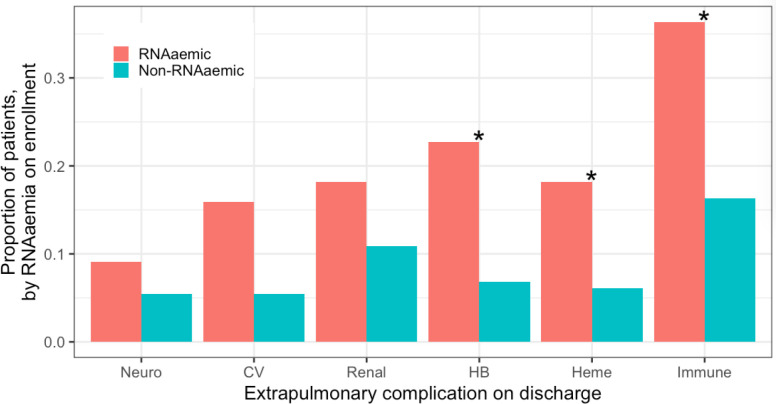
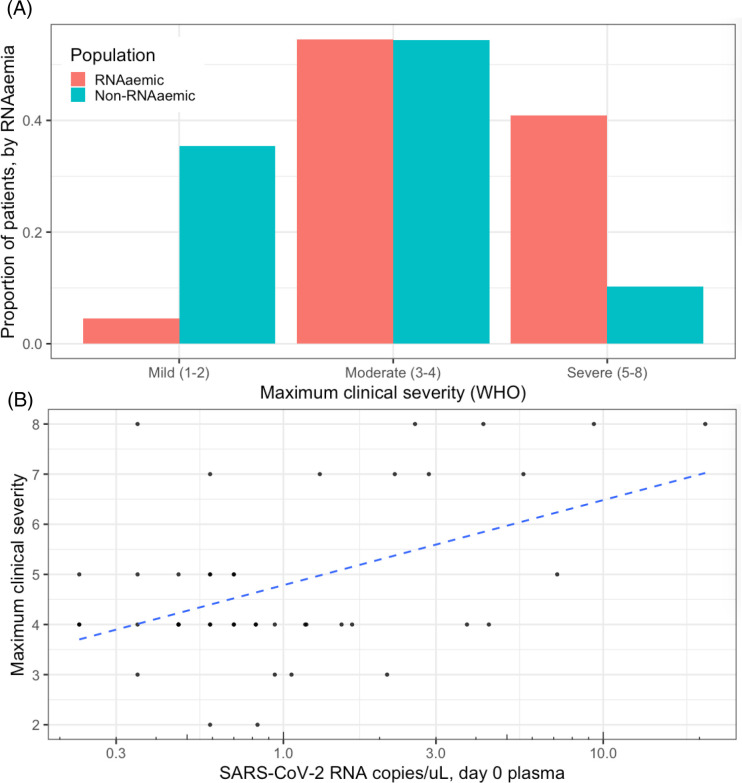
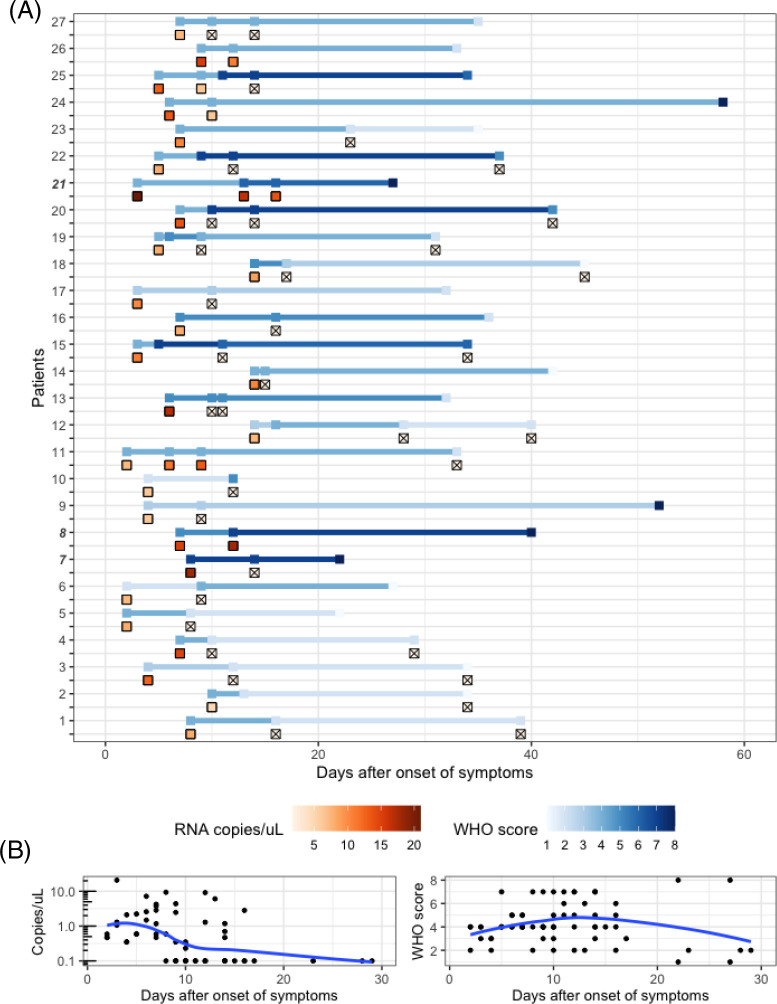
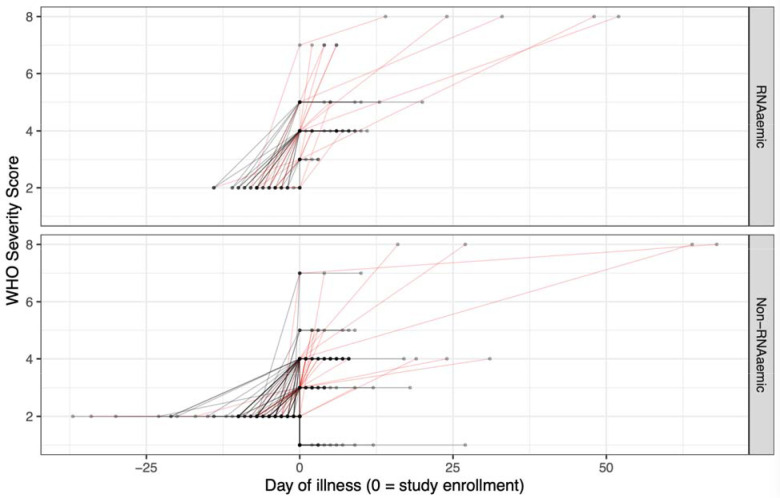
23·0% (44/191) of SARS-CoV-2 positive patients had viral RNA detected in plasma by dPCR, compared to 1·4% (2/147) by qPCR. Most patients with serial measurements had undetectable RNAaemia 10 days after onset of symptoms, but took 16 days to reach maximum severity, and 33 days for symptoms to resolve. Initially RNAaemic patients were more likely to manifest severe disease (OR 6·72 [95% CI, 2·45 - 19·79]), worsening of disease severity (OR 2·43 [95% CI, 1·07 - 5·38]), and EPCs (OR 2·81 [95% CI, 1·26 - 6·36]). RNA load correlated with maximum severity ( = 0·47 [95% CI, 0·20 - 0·67]).
dPCR is more sensitive than qPCR for the detection of SARS-CoV-2 RNAaemia, which is a robust predictor of eventual COVID-19 severity and oxygen requirements, as well as EPCs. Since many COVID-19 therapies are initiated on the basis of oxygen requirements, RNAaemia on presentation might serve to direct early initiation of appropriate therapies for the patients most likely to deteriorate.
对新冠病毒疾病严重程度和肺外并发症(EPCs)的决定因素了解甚少。我们对严重急性呼吸综合征冠状病毒2(SARS-CoV-2)病毒血症与疾病严重程度、临床恶化及特定EPCs之间的关系进行了特征描述。
我们使用定量(qPCR)和数字(dPCR)聚合酶链反应(PCR)对191名因新冠病毒病就诊于急诊科(ED)的患者的鼻咽拭子和血浆中的SARS-CoV-2核糖核酸进行定量。我们记录了患者症状、实验室指标及临床结局,重点关注随时间变化的氧气需求情况。我们从部分患者中采集了纵向血浆样本。我们使用弹性网络回归分析了病毒血症在预测临床严重程度和EPCs方面的作用。
23.0%(44/191)的SARS-CoV-2阳性患者通过dPCR在血浆中检测到病毒核糖核酸,相比之下,qPCR的检测率为1.4%(2/147)。大多数进行系列检测的患者在症状出现10天后病毒血症检测不到,但达到最大严重程度需要16天,症状缓解需要33天。最初有病毒血症的患者更有可能表现为严重疾病(比值比[OR]6.72[95%置信区间(CI),2.45 - 19.79])、疾病严重程度恶化(OR 2.43[95%CI,1.07 - 5.38])及EPCs(OR 2.81[95%CI,1.26 - 6.36])。病毒载量与最大严重程度相关(r = 0.47[95%CI,0.20 - 0.67])。
dPCR在检测SARS-CoV-2病毒血症方面比qPCR更敏感,病毒血症是最终新冠病毒病严重程度、氧气需求以及EPCs的有力预测指标。由于许多新冠病毒病治疗是根据氧气需求启动的,就诊时的病毒血症可能有助于指导对最有可能病情恶化的患者尽早开始适当治疗。