Pacylex Pharmaceuticals, Inc., Edmonton, AB, T5J 4P6, Canada.
Department of Oncology, Faculty of Medicine and Dentistry, University of Alberta, Edmonton, AB, T6G 2H7, Canada.
Breast Cancer Res Treat. 2021 Feb;186(1):79-87. doi: 10.1007/s10549-020-06037-y. Epub 2021 Jan 4.
N-myristoyltransferases 1 and 2 (NMT1 and NMT2) catalyze the addition of 14-carbon fatty acids to the N-terminus of proteins. Myristoylation regulates numerous membrane-bound signal transduction pathways important in cancer biology and the pan-NMT inhibitor PCLX-001 is approaching clinical development as a cancer therapy. The tissue distribution, relative abundances, and prognostic value of the two human NMTs remain poorly understood.
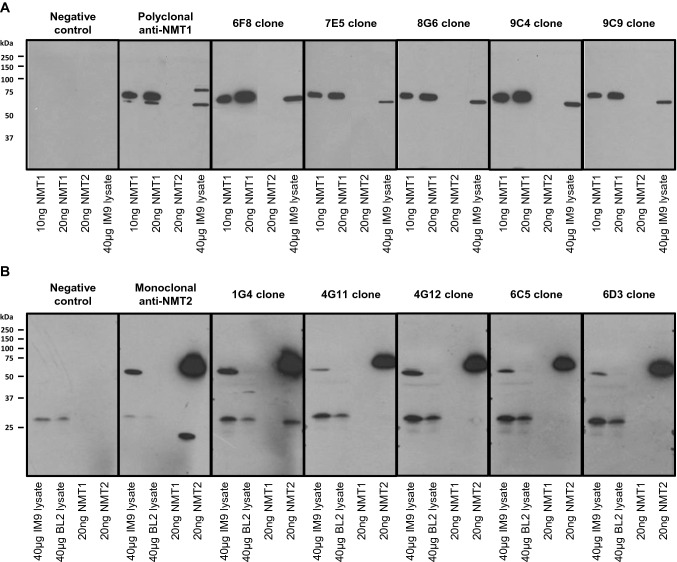
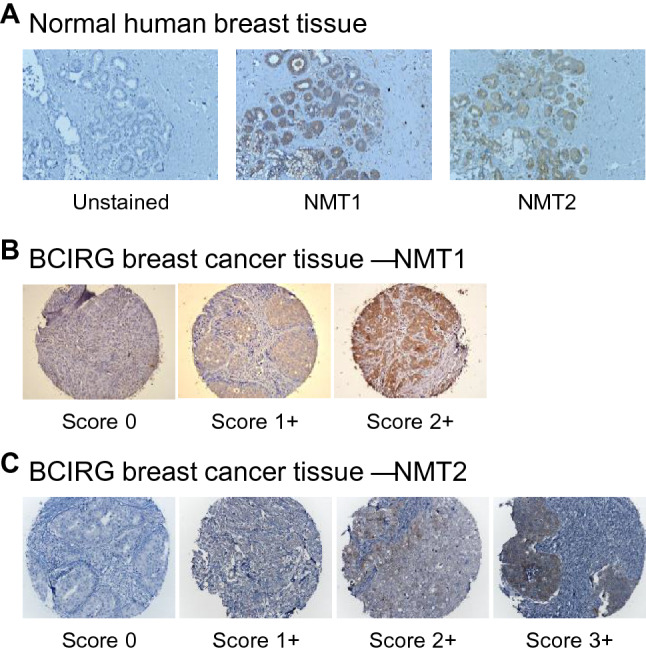
We generated and validated mutually exclusive monoclonal antibodies (mAbs) specific to human NMT1 and NMT2. These mAbs were used to perform immunohistochemical analysis of the abundance and distribution of NMT1 and NMT2 in normal breast epithelial samples and a large cohort of primary breast adenocarcinomas from the BCIRG001 clinical trial (n = 706).
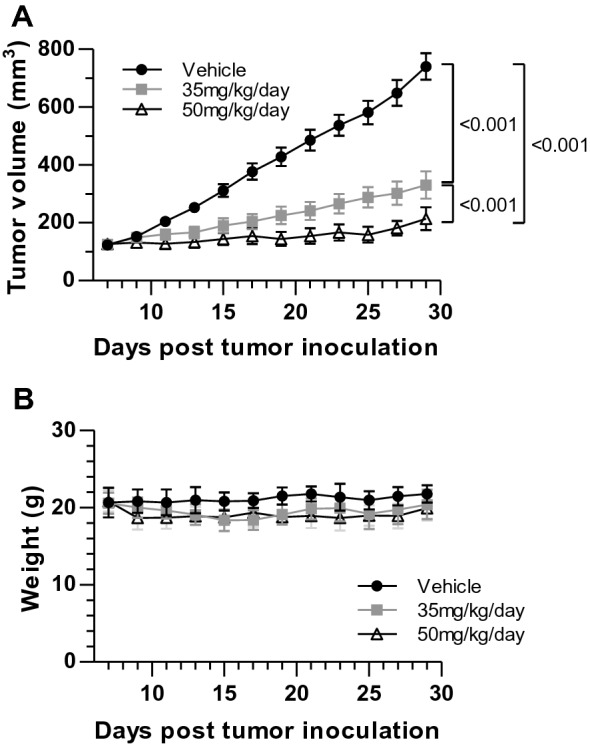
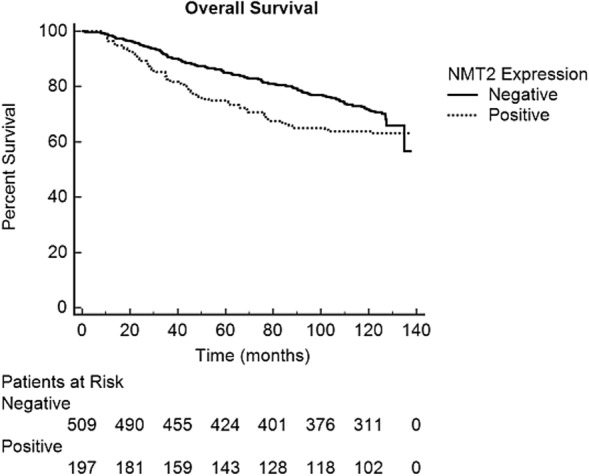
NMT1 protein was readily quantified in normal and most transformed breast epithelial tissue and was associated with higher overall histologic grade, higher Ki67, and lower hormone receptor expression. While NMT2 protein was readily detected in normal breast epithelial tissue, it was undetectable in the majority of breast cancers. Detectable NMT2 protein correlated with significantly poorer overall survival (hazard ratio 1.36; P = 0.029) and worse biological features including younger age, higher histologic grade, lower hormone receptor expression, higher Ki67, and p53 positivity. Treatment of cultured breast cancer cells with PCLX-001 reduced cell viability in vitro. Daily oral administration of PCLX-001 to immunodeficient mice bearing human MDA-MB-231 breast cancer xenografts produced significant dose-dependent tumor growth inhibition in vivo.
These results support further evaluation of NMT immunohistochemistry for patient selection and clinical trials of NMT inhibition in breast cancer patients.
N-豆蔻酰转移酶 1 和 2(NMT1 和 NMT2)催化将 14 碳脂肪酸添加到蛋白质的 N 末端。豆蔻酰化调节许多在癌症生物学中重要的膜结合信号转导途径,泛 NMT 抑制剂 PCLX-001 作为癌症治疗方法正在接近临床开发。两种人类 NMT 的组织分布、相对丰度和预后价值仍知之甚少。
我们生成并验证了与人 NMT1 和 NMT2 特异性的互斥单克隆抗体(mAb)。这些 mAb 用于对正常乳腺上皮样本和 BCIRG001 临床试验(n=706)中大量原发性乳腺癌腺癌的 NMT1 和 NMT2 的丰度和分布进行免疫组织化学分析。
NMT1 蛋白在正常和大多数转化的乳腺上皮组织中很容易被定量,并与更高的整体组织学分级、更高的 Ki67 和更低的激素受体表达相关。虽然 NMT2 蛋白在正常乳腺上皮组织中很容易被检测到,但在大多数乳腺癌中却无法检测到。可检测到的 NMT2 蛋白与总生存率显著降低(风险比 1.36;P=0.029)和更差的生物学特征相关,包括更年轻的年龄、更高的组织学分级、更低的激素受体表达、更高的 Ki67 和 p53 阳性。用 PCLX-001 处理培养的乳腺癌细胞可降低细胞活力。每天口服 PCLX-001 可显著抑制免疫缺陷小鼠体内携带的人 MDA-MB-231 乳腺癌异种移植物的肿瘤生长。
这些结果支持进一步评估 NMT 免疫组织化学在乳腺癌患者中的患者选择和 NMT 抑制临床试验中的应用。