Zhao Cai-Chou, Guo Hao, Wang Ying, Li Jiu-Hong
Department of Dermatology, No. 1 Hospital of China Medical University, 155 North Nanjing Street, Heping Distinct, Shenyang, 110001, Liaoning, China.
Department of Dermatology, Shengjing Hospital of China Medical University, Heping District, Shenyang, 110004, Liaoning, China.
Hum Cell. 2021 Mar;34(2):654-666. doi: 10.1007/s13577-020-00473-0. Epub 2021 Jan 5.
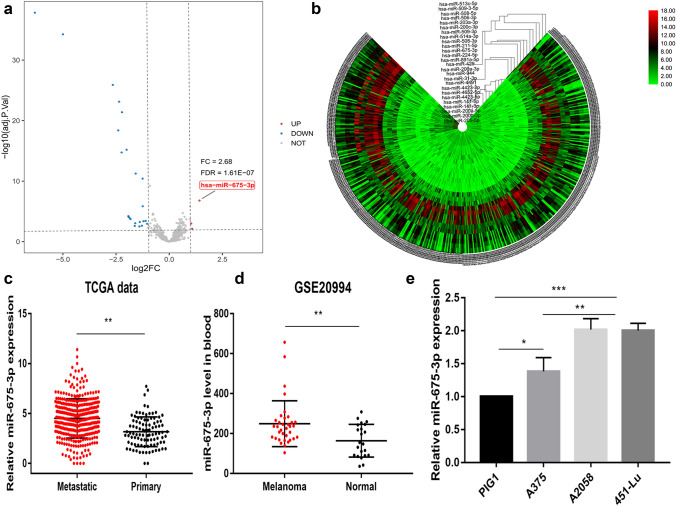
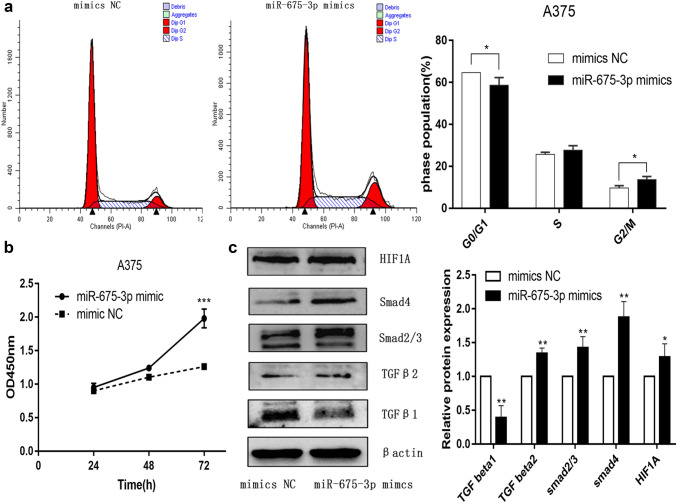
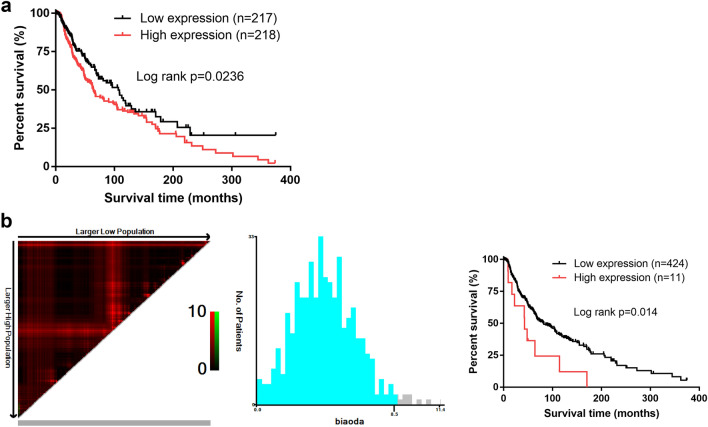
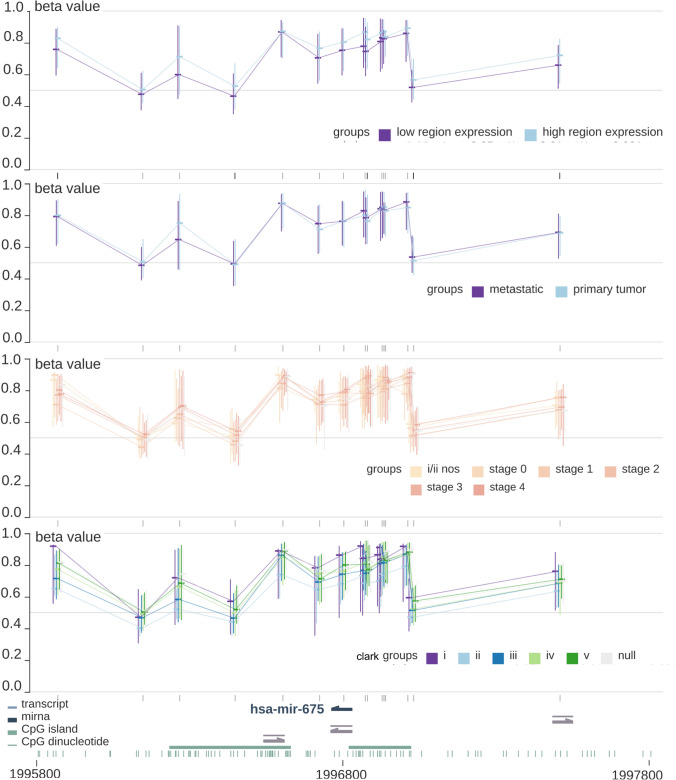
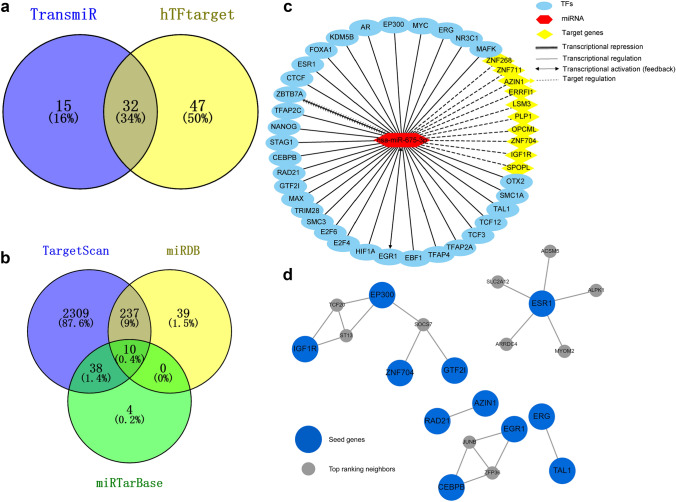
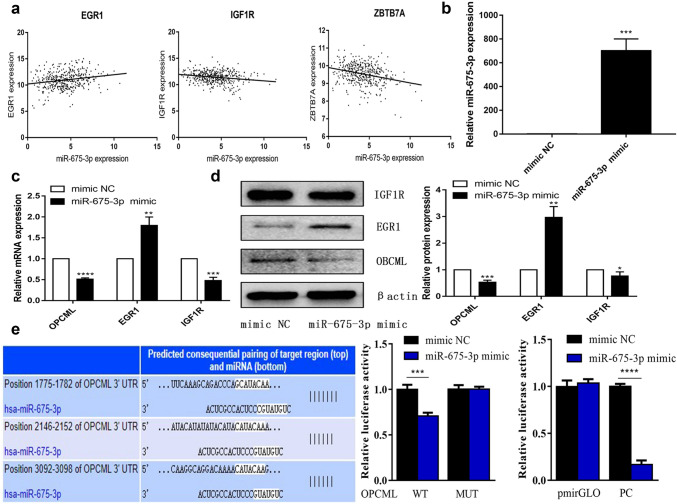
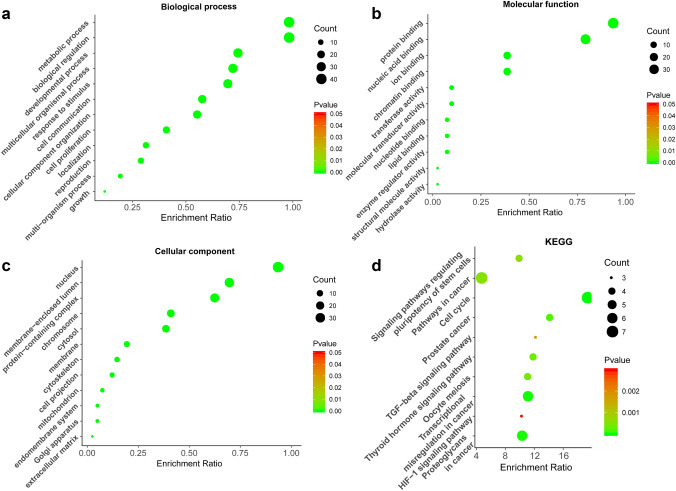
This study assessed miR-675-3p-related regulatory mechanisms in melanoma and the clinical relevance of such regulatory activities. We downloaded miRNA mature strand expression RNA-Seq, phenotypic, and DNA methylation data pertaining to the TCGA Melanoma cohort. Differentially expressed miRNAs (DEMs) between metastatic and primary melanoma patient tissues were then identified, and miR-675-3p expression in melanoma patient peripheral blood was confirmed using the GSE20994 GEO dataset, while its expression in melanoma cell lines was evaluated via qRT-RCR. The clinical and prognostic implications of miR-675-3p in melanoma were assessed, and miR-675-3p target genes were identified using bioinformatics tools. Functional roles of this miRNA were explored via Gene Ontology (GO) and Kyoto Encyclopedia of Genes and Genomes (KEGG) analyses. We identified 3 and 22 miRNAs that were up- and downregulated, respectively, in metastatic melanoma samples relative to primary melanoma samples. Upregulation of miR-675-3p was associated with poorer overall patient survival, tumor histologic grade, and Clark's level. Consistently, miR-675-3p was also overexpressed in the peripheral blood of melanoma patients relative to healthy controls, and in melanoma cell lines relative to control cells. Gene regulatory networks indicated that 32 transcription factors control miR-675-3p expression, and that it, in turn, regulates 10 target genes. KEGG analyses indicated that these genes were associated with cell cycle, transcriptional misregulation in cancer, TGF-beta signaling, and HIF-1 signaling pathways. Gain-of-function assays revealed that miR-675-3p could promote cell proliferation via accelerating cell cycle progression. Western blotting results indicated that miR-675-3p could active TGF-beta and HIF-1 signaling. Through upstream and downstream analyses of miR-675-3p-related regulatory activity, we confirmed that this miRNA participates in key melanoma-related processes and offers value as a prognostic biomarker in melanoma patients.
本研究评估了miR-675-3p在黑色素瘤中的相关调控机制以及此类调控活性的临床相关性。我们下载了与TCGA黑色素瘤队列相关的miRNA成熟链表达RNA测序、表型和DNA甲基化数据。然后鉴定了转移性和原发性黑色素瘤患者组织之间差异表达的miRNA(DEM),使用GSE20994 GEO数据集确认了黑色素瘤患者外周血中miR-675-3p的表达,同时通过qRT-RCR评估了其在黑色素瘤细胞系中的表达。评估了miR-675-3p在黑色素瘤中的临床和预后意义,并使用生物信息学工具鉴定了miR-675-3p的靶基因。通过基因本体论(GO)和京都基因与基因组百科全书(KEGG)分析探索了该miRNA的功能作用。我们鉴定出相对于原发性黑色素瘤样本,在转移性黑色素瘤样本中分别上调和下调的3个和22个miRNA。miR-675-3p的上调与患者总体生存率较低、肿瘤组织学分级和克拉克分级相关。同样,相对于健康对照,miR-675-3p在黑色素瘤患者外周血中也过表达,相对于对照细胞,在黑色素瘤细胞系中也过表达。基因调控网络表明32个转录因子控制miR-675-3p的表达,而它反过来调节10个靶基因。KEGG分析表明这些基因与细胞周期、癌症中的转录失调、TGF-β信号传导和HIF-1信号通路相关。功能获得实验表明miR-675-3p可通过加速细胞周期进程促进细胞增殖。蛋白质印迹结果表明miR-675-3p可激活TGF-β和HIF-1信号传导。通过对miR-675-3p相关调控活性的上下游分析,我们证实该miRNA参与了黑色素瘤相关的关键过程,并作为黑色素瘤患者的预后生物标志物具有价值。