Prakash Om, Solanki Bhavin, Sheth Jay K, Joshi Bhavin, Kadam Mina, Vyas Sheetal, Shukla Aparajita, Tiwari Hemant, Rathod Sanjay, Rajput Anil, Trivedi Toral, Ramanuj Vaibhav, Solanki Anand
Ahmedabad Municipal Corporation, Ahmedabad, Gujarat, India.
Health Department, Ahmedabad Municipal Corporation, Ahmedabad, Gujarat, India.
BMJ Open. 2021 Jan 5;11(1):e044101. doi: 10.1136/bmjopen-2020-044101.
To study the percentage seropositivity for SARS-CoV-2 to understand the pandemic status and predict the future situations in Ahmedabad.
Cross-sectional study.
Field area of Ahmedabad Municipal Corporation.
More than 30 000 individuals irrespective of their age, sex, acute/past COVID-19 infection participated in the serosurvey which covered all the 75 Urban Primary Health Centres (UPHCs) across 48 wards and 7 zones of the city. Study also involved healthcare workers (HCWs) from COVID-19/non-COVID-19 hospitals.
Seropositivity of IgG antibodies against SARS-CoV-2 was measured as a mark of COVID-19 infection.
Seropositivity was used to calculate cumulative incidence. Correlation of seropositivity with available demographic detail was used for valid and precise assessment of the pandemic situation.
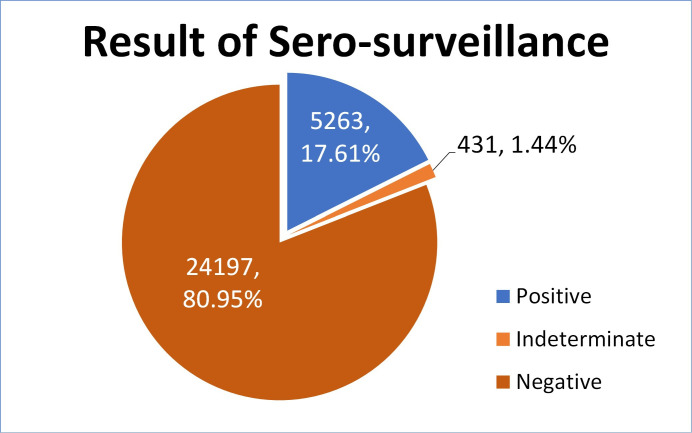
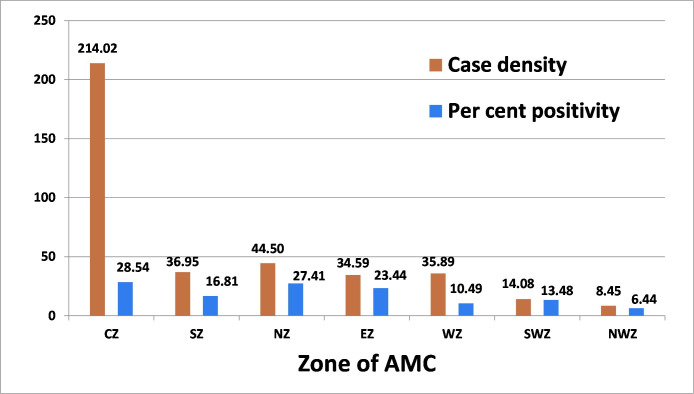
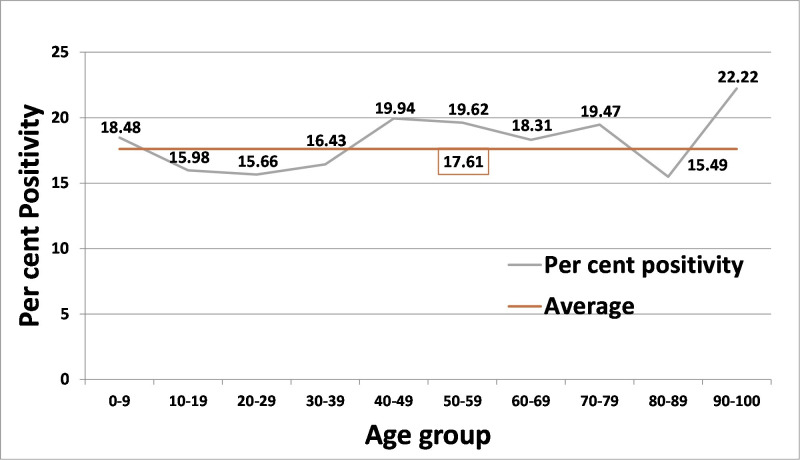
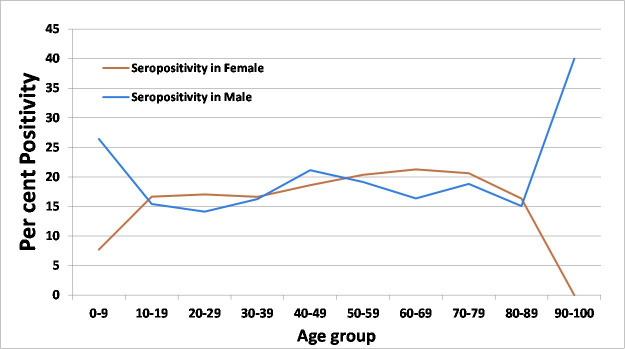
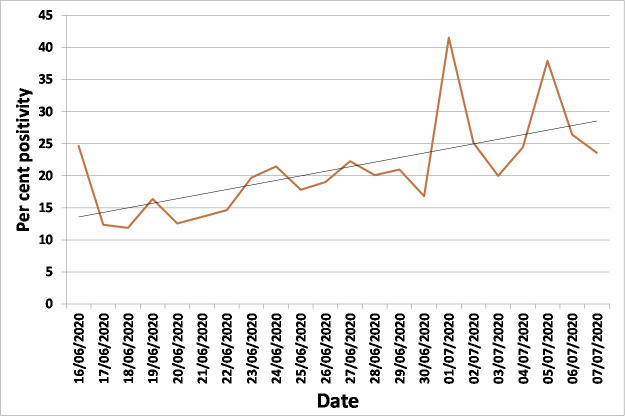
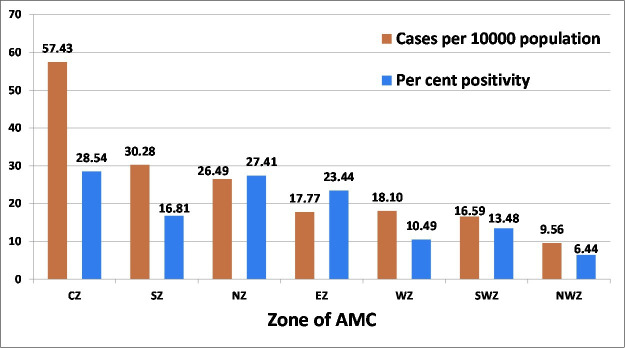
From 30 054 samples, the results were available for 29 891 samples and the crude seropositivity is 17.61%. For all the various age groups, the seropositivity calculated between 15% and 20%. The difference in seropositivity for both the sex group is statistically not significant. The seropositivity is significantly lower (13.64%) for HCWs as compared with non-HCWs (18.71%). Seropositivity shows increasing trend with time. Zone with maximum initial cases has high positivity as compared with other zones. UPHCs with recent rise in cases are leading in seropositivity as compared with earlier and widely affected UPHCs.
The results of serosurveillance suggest that the population of Ahmedabad is still largely susceptible. People still need to follow preventive measures to protect themselves till an effective vaccine is available to the people at large. The data indicate the possibility of vanishing immunity over time and need further research to cross verify with scientific evidences.
研究新冠病毒血清阳性率,以了解艾哈迈达巴德的疫情状况并预测未来形势。
横断面研究。
艾哈迈达巴德市政公司辖区。
超过30000人,不分年龄、性别,无论是否有急性/既往新冠病毒感染史,均参与了血清学调查,该调查覆盖了该市48个 wards 和7个区域的所有75个城市初级卫生中心(UPHC)。研究还涉及来自新冠病毒/非新冠病毒医院的医护人员(HCW)。
检测针对新冠病毒的IgG抗体血清阳性率,作为新冠病毒感染的标志。
血清阳性率用于计算累积发病率。血清阳性率与可用人口统计学细节的相关性用于有效和精确评估疫情形势。
从30054份样本中,获得了29891份样本的结果,粗血清阳性率为17.61%。在所有不同年龄组中,血清阳性率在15%至20%之间。两个性别组的血清阳性率差异在统计学上不显著。与非医护人员(18.71%)相比,医护人员的血清阳性率显著较低(13.64%)。血清阳性率随时间呈上升趋势。初始病例最多的区域与其他区域相比阳性率较高。与早期受广泛影响的城市初级卫生中心相比,近期病例增加的城市初级卫生中心血清阳性率领先。
血清学监测结果表明,艾哈迈达巴德的人群仍大多易感。在广大民众获得有效疫苗之前,人们仍需采取预防措施保护自己。数据表明随着时间推移免疫力可能消失,需要进一步研究以与科学证据进行交叉验证。