Department of Experimental Medicine, University of Rome Tor Vergata, Roma, Lazio, Italy.
Barts Liver Cente, Immunobiology, Blizard Institute, Barts and The London School of Medicine & Dentistry, Queen Mary University of London, London, UK.
Gut. 2021 Dec;70(12):2337-2348. doi: 10.1136/gutjnl-2020-323300. Epub 2020 Dec 21.
The involvement of HBV DNA integration in promoting hepatocarcinogenesis and the extent to which the intrahepatic HBV reservoir modulates liver disease progression remains poorly understood. We examined the intrahepatic HBV reservoir, the occurrence of HBV DNA integration and its impact on the hepatocyte transcriptome in hepatitis B 'e' antigen (HBeAg)-negative chronic hepatitis B (CHB).
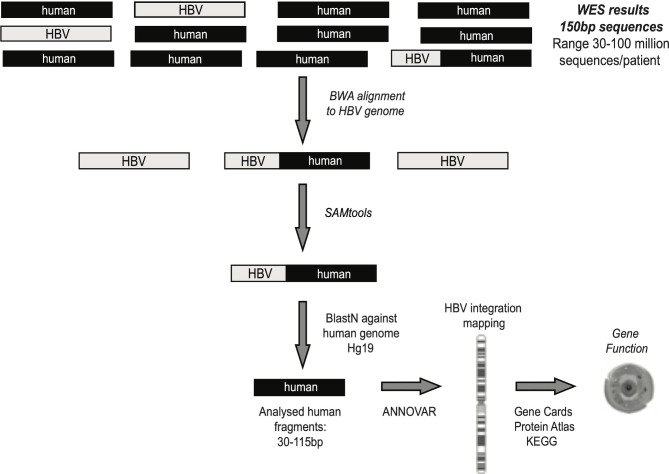
Liver tissue from 84 HBeAg-negative patients with CHB with low (n=12), moderate (n=25) and high (n=47) serum HBV DNA was analysed. Covalently closed circular DNA (cccDNA), pregenomic RNA (pgRNA) were evaluated by quantitative PCR, whole exome and transcriptome sequencing was performed by Illumina, and the burden of HBV DNA integrations was evaluated by digital droplet PCR.
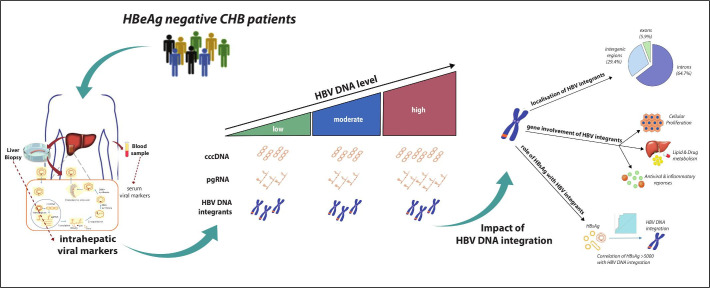
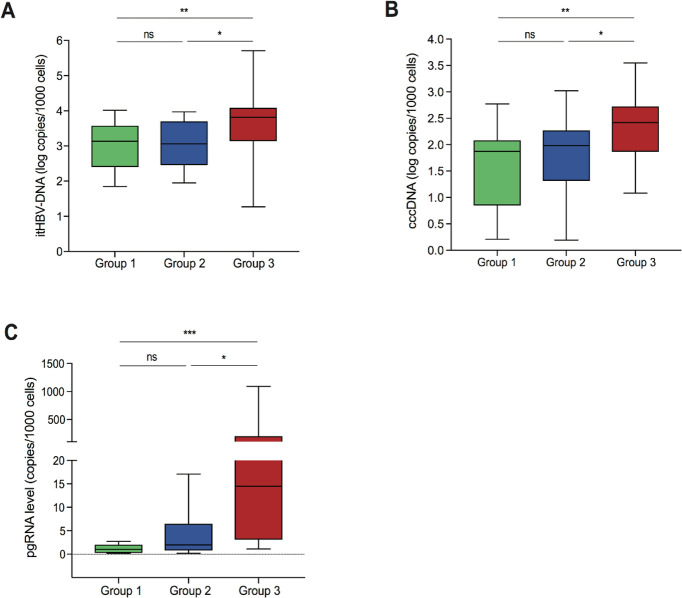
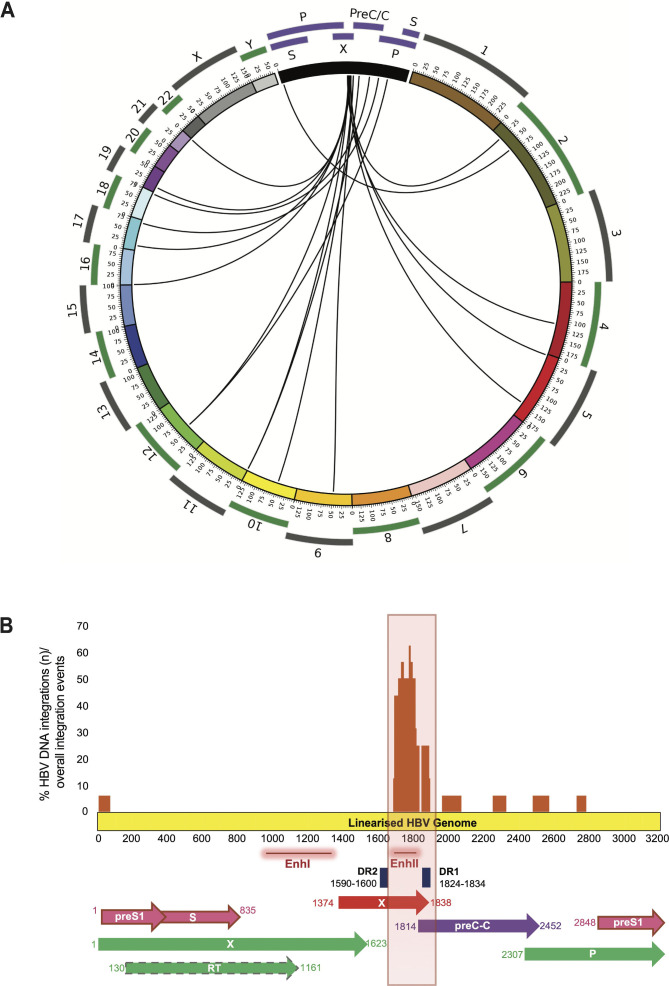
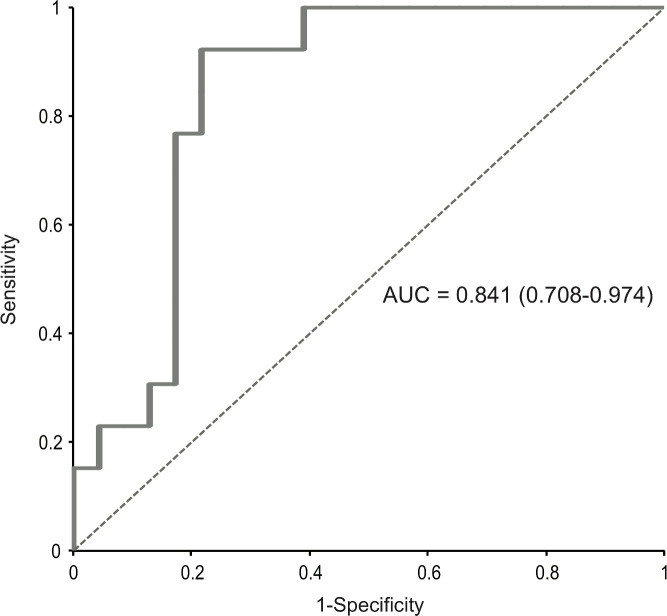
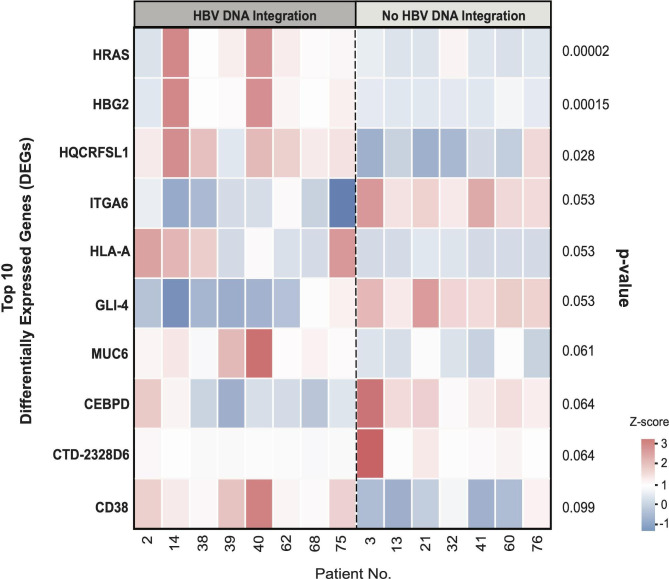
Patients with low and moderate serum HBV DNA displayed comparable intrahepatic cccDNA and pgRNA, significantly lower than in patients with high HBV DNA, while hepatitis B core-related antigen correlated strongly with the intrahepatic HBV reservoir, reflecting cccDNA quantity. Whole exome integration was detected in a significant number of patients (55.6%, 14.3% and 25% in high, moderate and low viraemic patients, respectively), at a frequency ranging from 0.5 to 157 integrations/1000 hepatocytes. Hepatitis B surface antigen >5000 IU/mL predicted integration within the exome and these integrations localised in genes involved in hepatocarcinogenesis, regulation of lipid/drug metabolism and antiviral/inflammatory responses. Transcript levels of specific genes, including the proto-oncogene hRAS, were higher in patients with HBV DNA integration, supporting an underlying oncogenic risk in patients with low-level to moderate-level viraemia.
HBV DNA integration occurs across all HBeAg-negative patients with CHB, including those with a limited HBV reservoir; localising in genes involved in carcinogenesis and altering the hepatocyte transcriptome.
HBV DNA 整合在促进肝癌发生中的作用以及肝内 HBV 储存库对肝病进展的调节程度仍知之甚少。我们研究了乙型肝炎 e 抗原(HBeAg)阴性慢性乙型肝炎(CHB)患者肝内 HBV 储存库、HBV DNA 整合的发生及其对肝细胞转录组的影响。
分析了 84 例 HBeAg 阴性、血清 HBV DNA 低(n=12)、中(n=25)和高(n=47)的 CHB 患者的肝组织。通过定量 PCR 评估共价闭合环状 DNA(cccDNA)和前基因组 RNA(pgRNA),通过 Illumina 进行全外显子和转录组测序,通过数字液滴 PCR 评估 HBV DNA 整合的负担。
低和中血清 HBV DNA 的患者显示出相似的肝内 cccDNA 和 pgRNA,显著低于高 HBV DNA 的患者,而乙型肝炎核心相关抗原与肝内 HBV 储存库密切相关,反映了 cccDNA 的数量。大量患者(高病毒血症患者中分别为 55.6%、14.3%和 25%,中病毒血症和低病毒血症患者中分别为 55.6%、14.3%和 25%)检测到全外显子整合,频率范围为 0.5 至 157 个整合/1000 个肝细胞。乙型肝炎表面抗原>5000 IU/mL 预测外显子内的整合,这些整合定位于参与肝癌发生、脂质/药物代谢和抗病毒/炎症反应调节的基因中。HBV DNA 整合患者特定基因(包括原癌基因 hRAS)的转录水平较高,支持低水平至中水平病毒血症患者存在潜在的致癌风险。
HBV DNA 整合发生在所有 HBeAg 阴性 CHB 患者中,包括那些 HBV 储存库有限的患者;定位于参与致癌的基因中,并改变肝细胞转录组。