Department of Microbiology and Immunology, Weill Bugando School of Medicine, Catholic University of Health and Allied Sciences, Bugando. P. O. Box 1464 Mwanza, Tanzania.
Department of Urology, Weill Bugando School of Medicine, Catholic University of Health and Allied Sciences, Bugando. P. O. Box 1464 Mwanza, Tanzania.
Afr Health Sci. 2020 Mar;20(1):4-13. doi: 10.4314/ahs.v20i1.4.
Infections caused by Extended spectrum beta lactamase (ESBL) producing bacterial are global challenge. There is limited information on the magnitude of bacteriospermia, ESBL producing Gram-negative bacteria (GNB) causing bacteriospermia and factors associated with male infertility. This study determined magnitude of bacteriospermia, ESBL-GNB and other factors association with infertility among presumptive infertile men in Mwanza, Tanzania.
A cross-sectional hospital-based study was conducted between May 2017 and July 2018 among 137 presumptive infertile men. Semen specimens were self-collected by masturbation into clean, sterile and none-spermicidal containers and processed following laboratory standard operating procedures (SOPs). Data analysis was done using STATA 13.0.
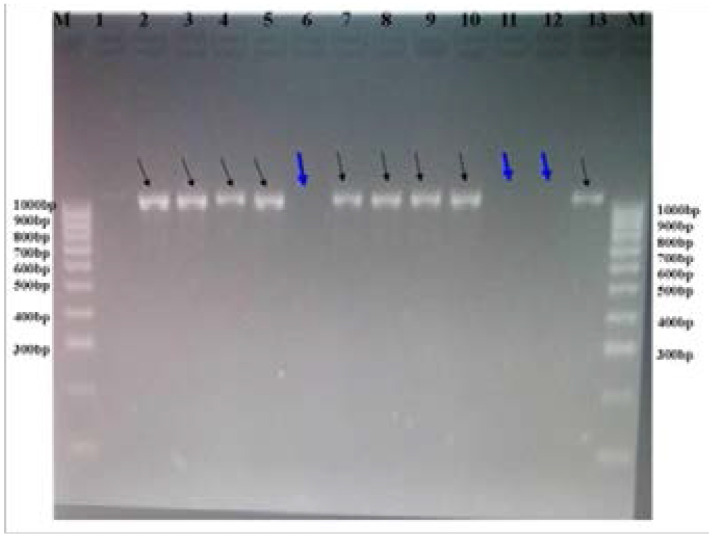
Gram-negative bacteria were predominantly isolated (86.4%), of which 31.6% were ESBL producers. In a total 44 bacteria were isolated from semen culture. The CTX-M gene was detected in 75% of phenotypically confirmed ESBL producers. Infertility was independently found to be associated with abnormal spermatozoa morphology (OR (95%CI): 14.48(3.17-66.05)) and abnormal spermatozoa motility (OR (95%CI): 0.05(0.01-0.24)). However, neither bacteriospermia (OR (95%CI): 0.86(0.29-2.59)) nor ESBL bacteriospermia (OR (95%CI): 0.13(0.01-1.22)) was found to be associated with infertility.
One third of bacteriospermia is due to ESBL-producers with history of antibiotic use being protective factor for infertility. Abnormal spermatozoa morphology and poor spermatozoa forward motility independently predicted infertility.
产超广谱β-内酰胺酶(ESBL)的细菌感染是全球性挑战。关于菌血症的严重程度、引起菌血症的产 ESBL 革兰氏阴性菌(GNB)以及与男性不育相关的因素,信息有限。本研究旨在确定坦桑尼亚姆万扎地区疑似不育男性中菌血症的严重程度、产 ESBL-GNB 以及与不育相关的其他因素。
2017 年 5 月至 2018 年 7 月,在姆万扎的一家医院进行了一项横断面研究,共纳入 137 名疑似不育男性。精液标本由男性通过自慰采集于清洁、无菌且不含杀精剂的容器中,并按照实验室标准操作程序(SOP)进行处理。采用 STATA 13.0 进行数据分析。
革兰氏阴性菌占主导地位(86.4%),其中 31.6%为产 ESBL 菌。总共从精液培养中分离出 44 株细菌。在表型确认的产 ESBL 菌中,检测到 CTX-M 基因的占 75%。研究发现,畸形精子形态(OR(95%CI):14.48(3.17-66.05))和精子活动力异常(OR(95%CI):0.05(0.01-0.24))与不育独立相关。然而,菌血症(OR(95%CI):0.86(0.29-2.59))和产 ESBL 菌血症(OR(95%CI):0.13(0.01-1.22))与不育均无关联。
三分之一的菌血症是由使用过抗生素的产 ESBL 菌引起的,这是不育的保护因素。畸形精子形态和精子前向运动能力差独立预测不育。