Asghar Muhammad Sohaib, Ahsan Muhammad Nadeem, Jawed Rumael, Rasheed Uzma, Ali Naqvi Syed Anosh, Hassan Maira, Yaseen Rabail, Mallick Najia, Zehra Mahrukh, Saleem Muhammad
Internal Medicine, Dow University of Health Sciences, Karachi, PAK.
Nephrology, Dow University of Health Sciences, Karachi, PAK.
Cureus. 2020 Nov 28;12(11):e11754. doi: 10.7759/cureus.11754.
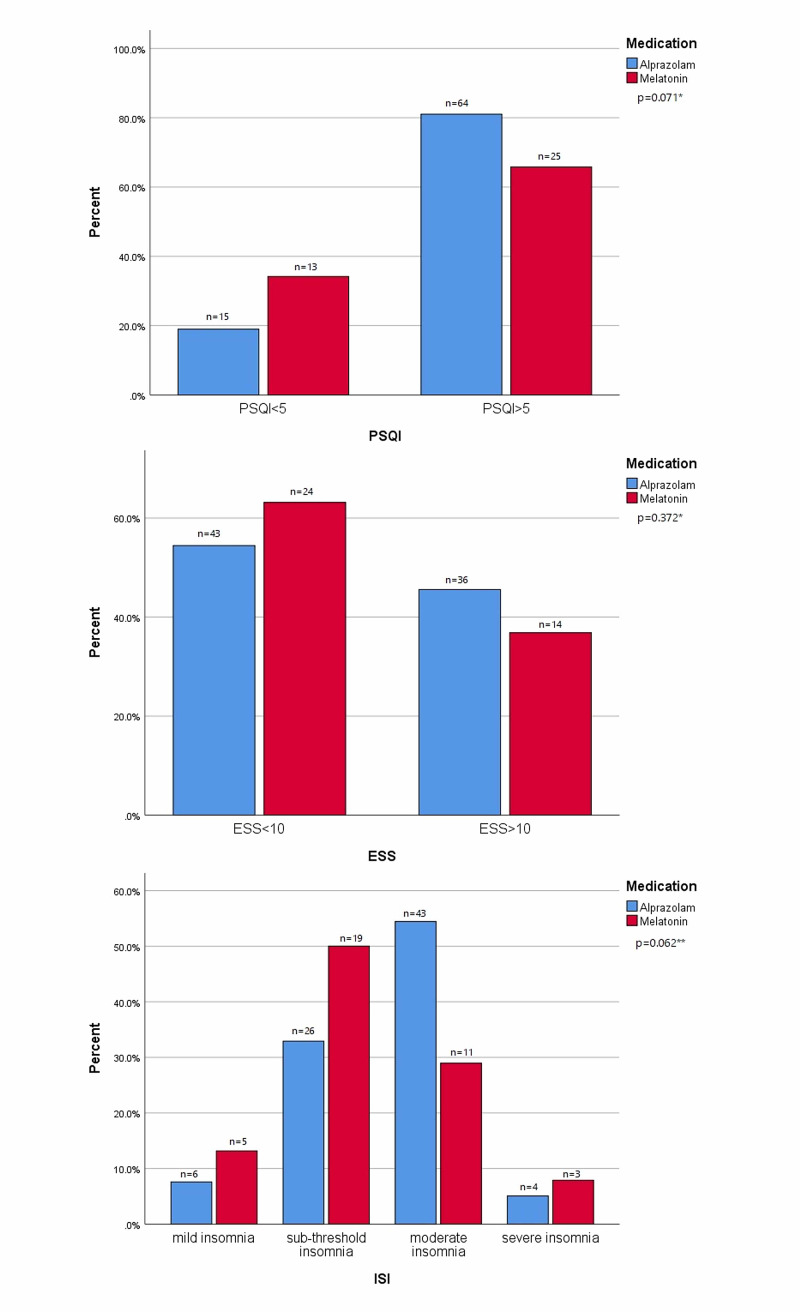
Background and objectives Sleep disorders are prevalent in end-stage renal disease (ESRD) involving the majority of patients undergoing hemodialysis. The main objective of treating sleep disorders in patients of ESRD is to correct subjective and objective sleep quality, decrease fatigue and daytime sleepiness, and enhance daytime functioning. Irrespective of the adverse effects reported, benzodiazepines are widely utilized among patients with sleep disorders in end-stage renal disease. Melatonin is a newer agent being studied for use in hemodialysis patients for improvement of sleep quality. The aim of our observational study is to witness the effectiveness of both benzodiazepine and exogenous melatonin as a treatment of sleep disorders in patients undergoing hemodialysis. Materials and methods We conducted a comparative, observational study in ESRD patients who are on hemodialysis. These patients were selected from attendees of the hemodialysis unit, nephrology department of a tertiary care hospital, including those who were on regular hemodialysis, thrice-weekly in frequency for at least once per year, and taking regular sleep medications for at least three months with frequently reported drug dosages of alprazolam 0.5 mg once daily or melatonin 3 mg once daily (before bedtime). The subjective sleep assessment was done by utilizing four scales, including the Pittsburgh Sleep Quality Index (PSQI), Epworth Sleepiness Scale (ESS), Insomnia Severity Index (ISI), and Stanford Sleepiness Scale (SSS). Results A total of 117 hemodialysis-dependent patients met the inclusion criteria, among whom 79 patients were using alprazolam while 38 were using melatonin for their disturbed sleep. The mean age of the study participants was 49.12 ± 12.75, comprising 72 males (61.53%) and 45 females (38.46%). The duration of the diagnosis of chronic kidney disease (CKD), duration of onset of hemodialysis, and estimated glomerular filtration rate (eGFR) was comparable in both groups. Both groups had similar laboratory markers except for higher hemoglobin in the melatonin group (p=0.028) and high parathyroid hormone (PTH) levels in the alprazolam group (p=0.001). PSQI scores were 8.76 ± 3.09 in the alprazolam group and 7.32 ± 2.65 in the melatonin group (p=0.015). In the sub-scores, there were no differences in sleep latency (p=0.481) and daytime dysfunction (p=0.662) while sleep efficiency (p=0.167) and subjective sleep quality (p=0.132) were not statistically significant. The significant differences were lower scores of sleep duration (p=0.040) and sleep disturbance (p=0.003) in the melatonin group. The ESS scores revealed no significant difference in either group (p=0.074). With respect to the ISI and SSS, higher scores were obtained in the alprazolam group. Overall, 89 study participants had reported poor sleep quality, out of which 81% were using alprazolam, and 65% were using melatonin (p=0.071). A total of 50 study participants exhibited excessive daytime sleepiness with 45% of them were using alprazolam and 36% were using melatonin. About 54% of the alprazolam using hemodialysis patients had moderate insomnia while 50% of the melatonin using patients had sub-threshold insomnia (p=0.062). Conclusion As melatonin use has shown better sleep quality and less insomnia severity as compared to alprazolam use in our study, it is postulated that the sleep-wake cycle should be commonly targeted by pharmacological therapy in ESRD.
睡眠障碍在终末期肾病(ESRD)中普遍存在,涉及大多数接受血液透析的患者。治疗ESRD患者睡眠障碍的主要目标是纠正主观和客观睡眠质量,减轻疲劳和日间嗜睡,并改善日间功能。尽管有不良反应报道,但苯二氮䓬类药物在终末期肾病睡眠障碍患者中仍被广泛使用。褪黑素是一种正在研究用于血液透析患者以改善睡眠质量的新型药物。我们的观察性研究旨在观察苯二氮䓬类药物和外源性褪黑素治疗血液透析患者睡眠障碍的有效性。
我们对接受血液透析的ESRD患者进行了一项对比观察性研究。这些患者选自一家三级护理医院肾病科血液透析单元的就诊者,包括那些定期进行血液透析、频率为每周三次且至少每年一次,并且规律服用睡眠药物至少三个月,常用药物剂量为阿普唑仑每日0.5毫克或褪黑素每日3毫克(睡前服用)的患者。主观睡眠评估采用四个量表进行,包括匹兹堡睡眠质量指数(PSQI)、爱泼华嗜睡量表(ESS)、失眠严重程度指数(ISI)和斯坦福嗜睡量表(SSS)。
共有117名依赖血液透析的患者符合纳入标准,其中79名患者使用阿普唑仑,38名患者使用褪黑素治疗睡眠障碍。研究参与者的平均年龄为49.12±12.75岁,包括72名男性(61.53%)和45名女性(38.46%)。两组慢性肾脏病(CKD)的诊断时长、血液透析开始时长以及估计肾小球滤过率(eGFR)相当。除褪黑素组血红蛋白较高(p=0.028)和阿普唑仑组甲状旁腺激素(PTH)水平较高(p=0.001)外,两组的实验室指标相似。阿普唑仑组PSQI评分为8.76±3.09,褪黑素组为7.32±2.65(p=0.015)。在子评分中,睡眠潜伏期(p=0.481)和日间功能障碍(p=0.662)无差异,而睡眠效率(p=0.167)和主观睡眠质量(p=0.132)无统计学意义。褪黑素组睡眠时长(p=0.040)和睡眠干扰(p=0.003)得分较低,差异有统计学意义。ESS评分在两组中均无显著差异(p=0.074)。关于ISI和SSS,阿普唑仑组得分较高。总体而言,89名研究参与者报告睡眠质量差,其中81%使用阿普唑仑,65%使用褪黑素(p=0.071)。共有50名研究参与者表现出日间过度嗜睡,其中45%使用阿普唑仑,36%使用褪黑素。约54%使用阿普唑仑的血液透析患者有中度失眠,而50%使用褪黑素的患者有亚阈值失眠(p=0.062)。
在我们的研究中,与使用阿普唑仑相比,使用褪黑素显示出更好的睡眠质量和更低的失眠严重程度,因此推测在ESRD中,睡眠 - 觉醒周期应是药物治疗的常见靶点。
