Tamura Norihisa, Sasai-Sakuma Taeko, Morita Yuko, Okawa Masako, Inoue Shigeru, Inoue Yuichi
Department of Psychology, Graduate School of Humanities and Social Sciences, Hiroshima University, Hiroshima, Japan.
Department of Somnology, Tokyo Medical University, Tokyo, Japan.
BMC Public Health. 2021 Jan 6;21(1):31. doi: 10.1186/s12889-020-09993-8.
Although earlier studies have demonstrated that circadian rhythm sleep-wake disorders (CRSWD) are more prevalent in visually impaired individuals, the actual prevalence of CRSWD and insomnia among the visually impaired Japanese population remains unclear. The aim of this cross-sectional, telephone-based study was to estimate the prevalence of CRSWD and insomnia, and explore factors associated with CRSWD and insomnia among visually impaired Japanese individuals.
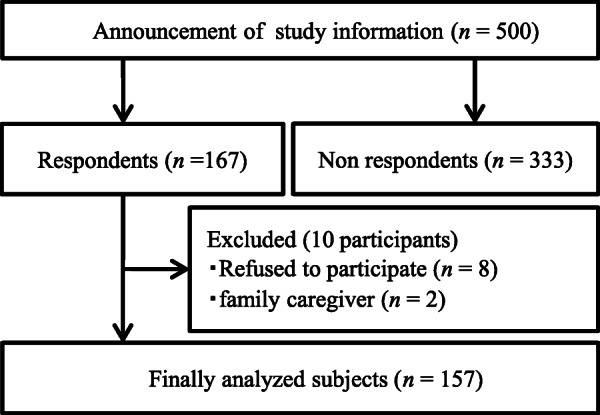
A nationwide telephone survey was conducted among visually-impaired individuals through local branches of the Japan Federation of the Blind. In total, 157 visually impaired individuals were eligible for this study. Demographic information and information about visual impairments, lifestyle, and sleep patterns were assessed using questionnaires and subsequent telephone interviews. CRSWD and insomnia were defined according to the International Classification of Sleep Disorders-Third Edition criteria.
The prevalence of CRSWD in visually impaired individuals was 33.1%. Among those with CRSWD, a non-24-h/irregular sleep-wake rhythm type was the most frequently observed (26.8%), followed by an advanced sleep-wake phase type and a delayed sleep-wake phase type (3.8 and 2.5%, respectively). Furthermore, 28.7% of the visually impaired individuals were found to have insomnia. In the visually impaired individuals, the absence of light perception, unemployment, living alone, and use of hypnotics were significantly associated with CRSWD, whereas only the use of hypnotics was extracted as a marginally associated factor of insomnia.
CRSWD and insomnia were highly prevalent in visually impaired Japanese individuals. The presence of CRSWD among the visually impaired individuals was associated with a lack of light perception and/or social zeitgebers.
尽管早期研究表明昼夜节律性睡眠-觉醒障碍(CRSWD)在视力障碍者中更为普遍,但日本视力障碍人群中CRSWD和失眠的实际患病率仍不清楚。这项基于电话的横断面研究的目的是估计CRSWD和失眠的患病率,并探讨日本视力障碍者中与CRSWD和失眠相关的因素。
通过日本盲人联合会的地方分支机构对视力障碍者进行了全国性电话调查。共有157名视力障碍者符合本研究的条件。使用问卷和随后的电话访谈评估人口统计学信息以及有关视力障碍、生活方式和睡眠模式的信息。CRSWD和失眠根据《国际睡眠障碍分类第三版》标准进行定义。
视力障碍者中CRSWD的患病率为33.1%。在患有CRSWD的人群中,最常观察到的是非24小时/不规则睡眠-觉醒节律类型(26.8%),其次是早睡早起型和晚睡晚起型(分别为3.8%和2.5%)。此外,发现28.7%的视力障碍者患有失眠。在视力障碍者中,无光感、失业、独居和使用催眠药与CRSWD显著相关,而只有使用催眠药被确定为失眠的边缘相关因素。
CRSWD和失眠在日本视力障碍者中非常普遍。视力障碍者中CRSWD的存在与缺乏光感和/或社会时间线索有关。