Zhu Ce, He Miaomiao, Mao Lili, Li Tao, Zhang Li, Liu Limin, Feng Ganjun, Song Yueming
Department of Orthopedics Surgery and Orthopedics Research Institute, West China Hospital, Sichuan University, No. 37 Guoxue Road, Chengdu, 610041, Sichuan, China.
Department of Spine Surgery, The Affiliated Hospital of Southwest Medical University, Luzhou, China.
J Transl Med. 2021 Jan 6;19(1):14. doi: 10.1186/s12967-020-02688-z.
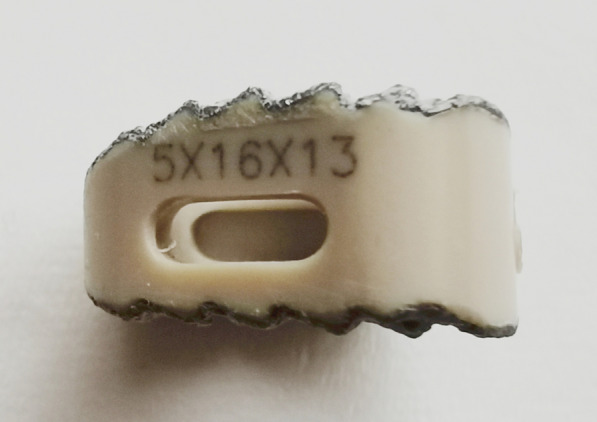
Currently, there are limited reports regarding investigation of the biological properties of polyetheretherketone (PEEK) coated with titanium (Ti) and hydroxyapatite (HA) in human. The objective of this study is to evaluate the in vivo response of the PEEK cages coated with Ti and HA versus uncoated PEEK cages after anterior cervical discectomy and fusion (ACDF) in patients with single-level cervical degenerative disc disease (CDDD).
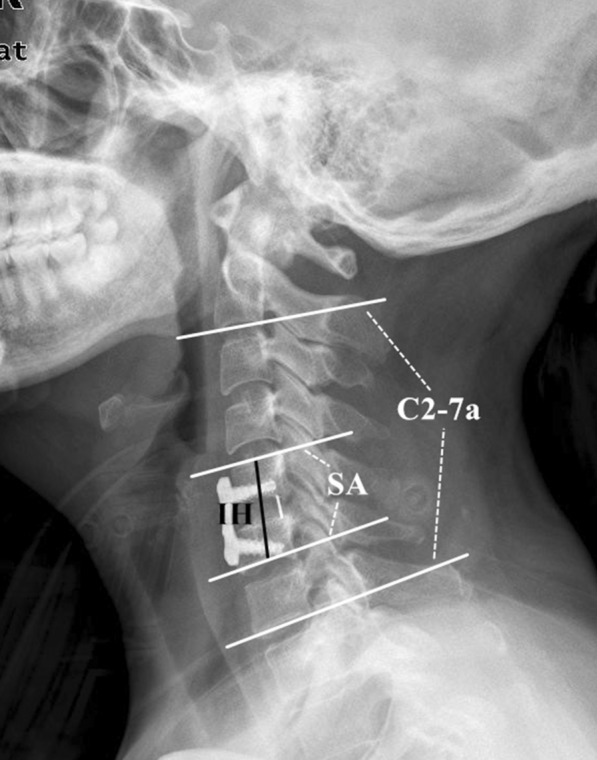
Twenty-four patients with PEEK cages coated with Ti and HA (PEEK/Ti/HA group) were matched one-to-one with patients with uncoated PEEK cages (PEEK group) based on age, gender, and operative segment. All patients had been followed up for more than 2 years. Radiological assessments included intervertebral height (IH), C2-7 angle (C2-7a), segmental alignment (SA), and fusion rate. Clinical parameters included Visual Analogue Scale (VAS) and Japanese Orthopedic Association (JOA) scores.
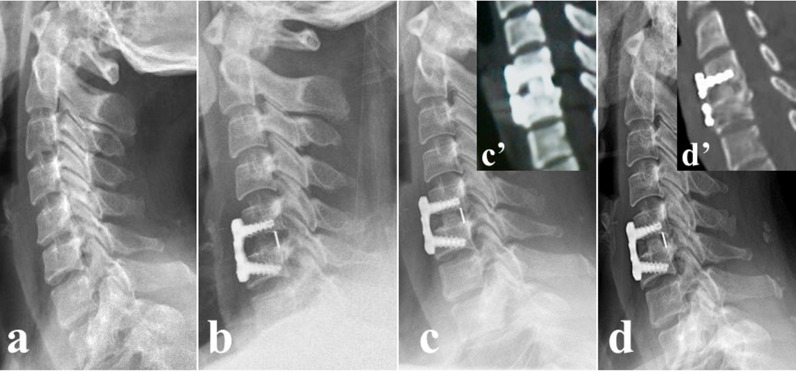
There was no statistical difference in SA, IH, and C2-7a between the two groups before and after surgery and all these parameters were restored postoperatively. The fusion rate of PEEK/Ti/HA group was significantly higher than PEEK group at 3-month post-operation (87.5% vs. 62.5%). At the last follow-up, the fusion rate of the both groups achieved 100%. The VAS and JOA scores were comparable between two groups and improved postoperatively.
In patients with single-level ACDF, PEEK cage coated with Ti and HA provided a higher fusion rate than uncoated PEEK cage at 3-month post-operation, while both two cages could achieve solid osseous fusion at the last follow up. Compared with the uncoated PEEK cage, PEEK/Ti/HA cage yielded similar favorable segmental and overall cervical lordosis, IH, and clinical outcomes after the surgery.
目前,关于钛(Ti)和羟基磷灰石(HA)涂层聚醚醚酮(PEEK)在人体中的生物学特性研究报道有限。本研究的目的是评估在单节段颈椎退行性椎间盘疾病(CDDD)患者行前路颈椎间盘切除融合术(ACDF)后,Ti和HA涂层PEEK椎间融合器与未涂层PEEK椎间融合器的体内反应。
将24例使用Ti和HA涂层PEEK椎间融合器的患者(PEEK/Ti/HA组)与使用未涂层PEEK椎间融合器的患者(PEEK组)根据年龄、性别和手术节段进行一对一匹配。所有患者均随访超过2年。影像学评估包括椎间高度(IH)、C2-7角(C2-7a)、节段对线(SA)和融合率。临床参数包括视觉模拟评分(VAS)和日本矫形外科学会(JOA)评分。
两组手术前后SA、IH和C2-7a均无统计学差异,且所有这些参数术后均恢复。术后3个月,PEEK/Ti/HA组的融合率显著高于PEEK组(87.5%对62.5%)。在最后一次随访时,两组的融合率均达到100%。两组VAS和JOA评分相当,且术后均有所改善。
在单节段ACDF患者中,Ti和HA涂层PEEK椎间融合器在术后3个月时的融合率高于未涂层PEEK椎间融合器,而在最后一次随访时两种椎间融合器均能实现牢固的骨融合。与未涂层PEEK椎间融合器相比,PEEK/Ti/HA椎间融合器术后在节段和整体颈椎前凸、IH及临床结果方面产生了相似的良好效果。