Department of Orthopedics Surgery and Orthopedics Research Institute, West China Hospital, Sichuan University, No. 37 Guoxue Road, Chengdu, 610041, Sichuan, China.
Department of Spine Surgery, The Affiliated Hospital of Southwest Medical University, Luzhou, China.
BMC Musculoskelet Disord. 2021 Nov 1;22(1):918. doi: 10.1186/s12891-021-04803-7.
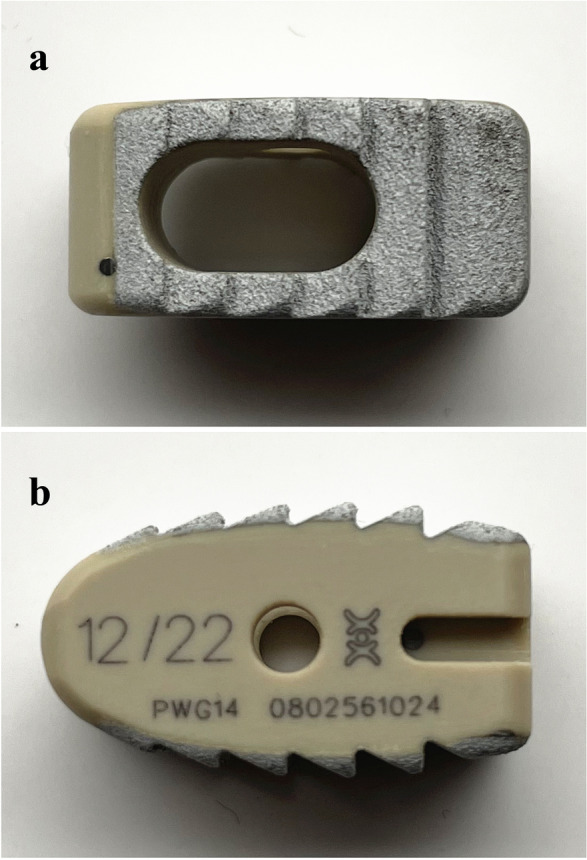
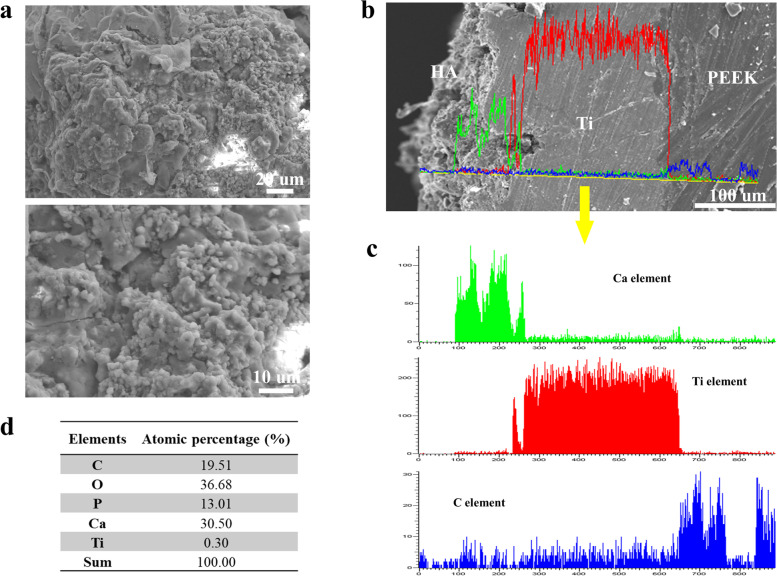
The variance in clinical responses to polyetheretherketone (PEEK) cages with titanium (Ti) and hydroxyapatite (HA) coatings (PEEK-Ti-HA cages) is still not clear. In this study, we aimed to evaluate the radiographic and clinical outcomes of patients undergoing TLIF using PEEK-Ti-HA cages with a particular focus on fusion rate.
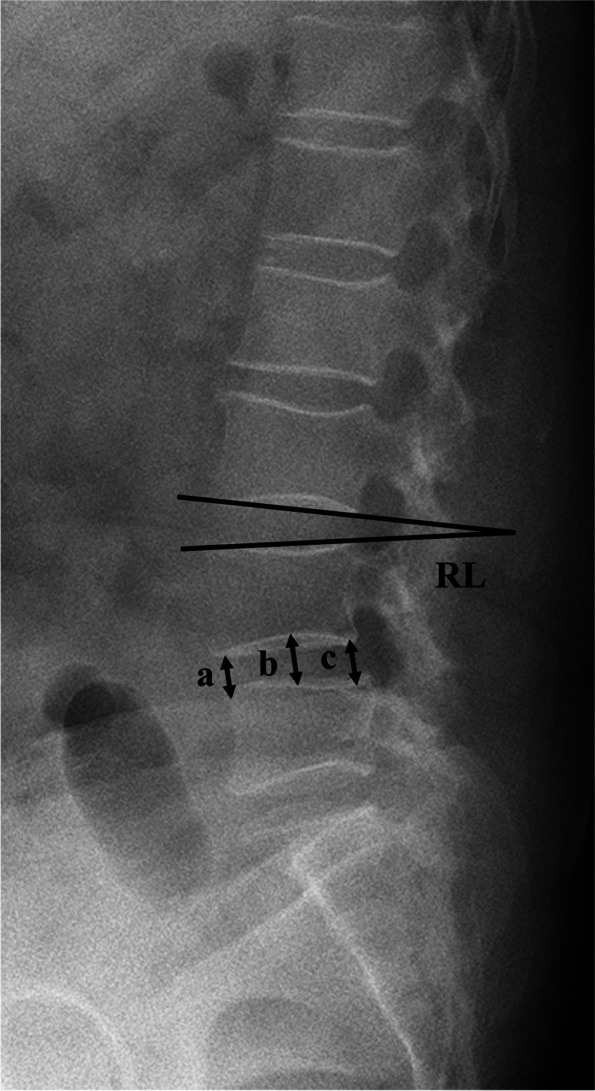
A prospective and nonrandomized study was conducted to compare the outcomes of PEEK-Ti-HA cages (group A, n = 32) and uncoated PEEK cages (group B, n = 32). The follow up time was at least 2 years. The radiographic assessments included the regional lordosis (RL), disc height (DH), and fusion rate. The clinical indexes included the Japanese Orthopedic Association (JOA) scores and visual analog scale (VAS) scores (back and leg).
No significant differences were found in the pre- and postoperative RL and DH between Group A and Group B. And RL and DH, even if there were any variance initially, were restored not long after surgery in both groups. Though Group A had a significantly higher fusion rate than group B at 3 months post-surgery (93.7% vs. 75.0%), the fusion rates for the two groups reached the same level (100%) when it comes to the final follow-up. Additionally, differences of VAS and JOA scores for the two groups in general approximate.
PEEK-Ti-HA cages, in contrast with uncoated PEEK cages, produced a better fusion rate at 3 months after single-level TLIF. The fusion rates of both groups could get 100% at the final follow-up. PEEK-Ti-HA cages could achieve similar RL, DH, JOA scores and VAS scores in comparison with uncoated PEEK cages post-surgery.
聚醚醚酮(PEEK)钛(Ti)和羟基磷灰石(HA)涂层(PEEK-Ti-HA 笼)的临床反应存在差异仍不清楚。本研究旨在评估使用 PEEK-Ti-HA 笼行 TLIF 的患者的影像学和临床结果,重点关注融合率。
前瞻性、非随机研究比较了 PEEK-Ti-HA 笼(A 组,n=32)和未涂层 PEEK 笼(B 组,n=32)的结果。随访时间至少为 2 年。影像学评估包括局部后凸角(RL)、椎间盘高度(DH)和融合率。临床指标包括日本骨科协会(JOA)评分和视觉模拟评分(VAS)(背部和腿部)。
A 组和 B 组在术前和术后 RL 和 DH 之间没有显著差异。而且,在两组中,RL 和 DH 即使最初有任何差异,在手术后不久也得到了恢复。尽管 A 组在术后 3 个月的融合率(93.7%比 75.0%)明显高于 B 组,但两组的融合率在最终随访时达到相同水平(100%)。此外,两组的 VAS 和 JOA 评分差异一般相近。
与未涂层 PEEK 笼相比,PEEK-Ti-HA 笼在单节段 TLIF 后 3 个月产生了更好的融合率。两组的融合率在最终随访时均可达 100%。PEEK-Ti-HA 笼与未涂层 PEEK 笼相比,术后可获得相似的 RL、DH、JOA 评分和 VAS 评分。