State Key Laboratory of Oncology in Southern China and Department of Experimental Research, Collaborative Innovation Center for Cancer Medicine, Sun Yat-sen University Cancer Center, Guangzhou, 510060, China.
State Key Laboratory of Ophthalmology, Zhongshan Ophthalmic Center, Sun Yat-sen University, Guangzhou, 510060, China.
J Hematol Oncol. 2021 Jan 6;14(1):6. doi: 10.1186/s13045-020-01021-x.
HOMER family scaffolding proteins (HOMER1-3) play critical roles in the development and progression of human disease by regulating the assembly of signal transduction complexes in response to extrinsic stimuli. However, the role of HOMER protein in breast cancer remains unclear.
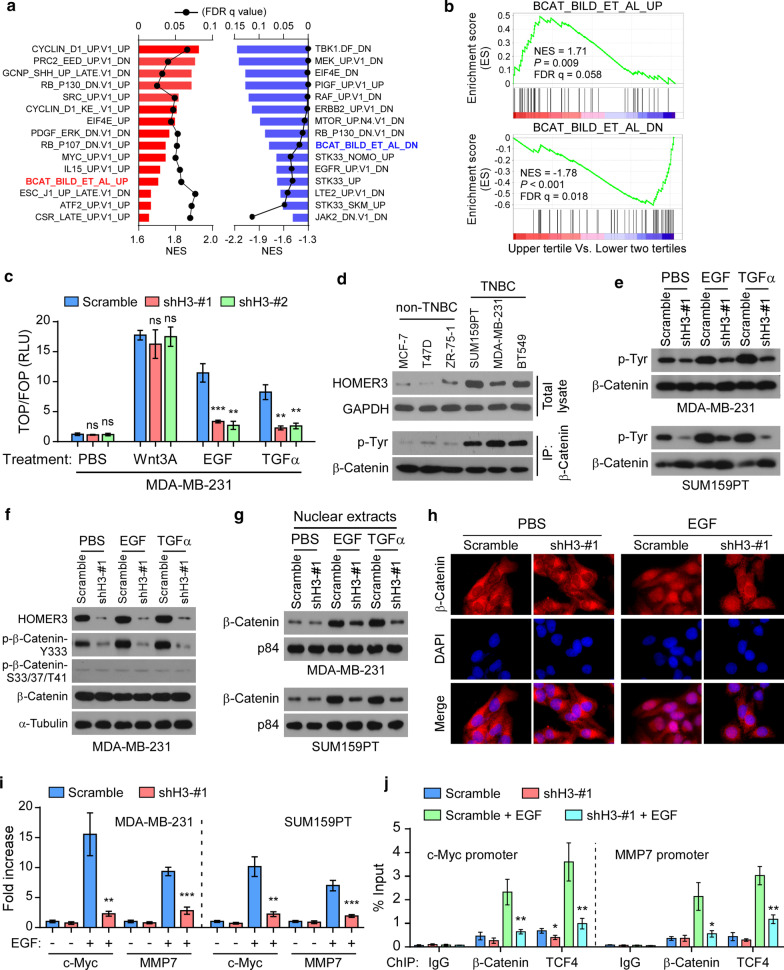
HOMER3 expression was examined by immunohistochemistry in breast cancer patient specimens, and its significance in prognosis was assessed by Kaplan-Meier survival analysis. The effects of HOMER3 in growth factor-induced β-Catenin activation were analyzed by assays such as TOP/FOP flash reporter, tyrosine phosphorylation assay and reciprocal immunoprecipitation (IP) assay. Role of HOMER3 in breast cancer metastasis was determined by cell function assays and mice tumor models.
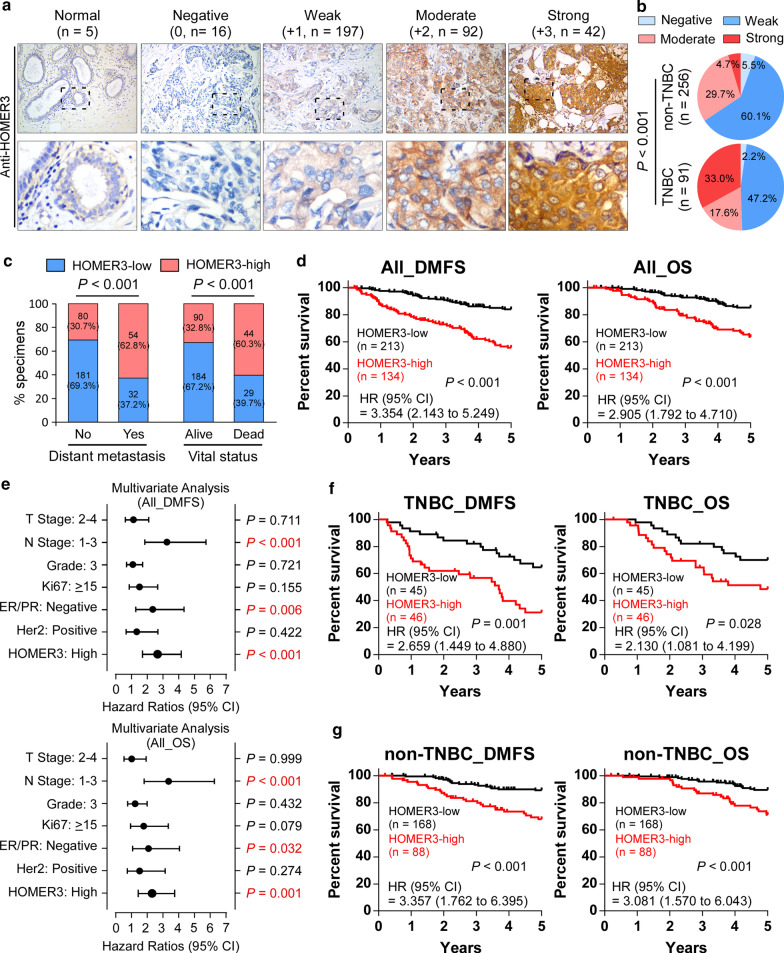
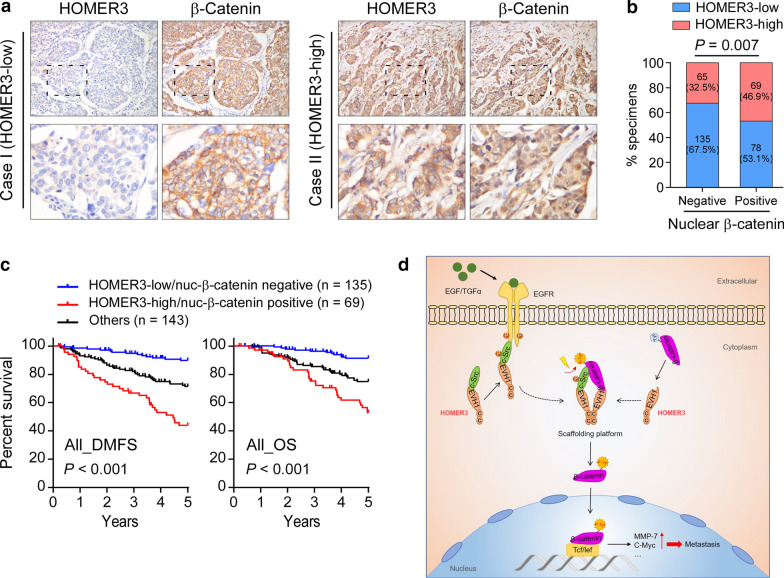
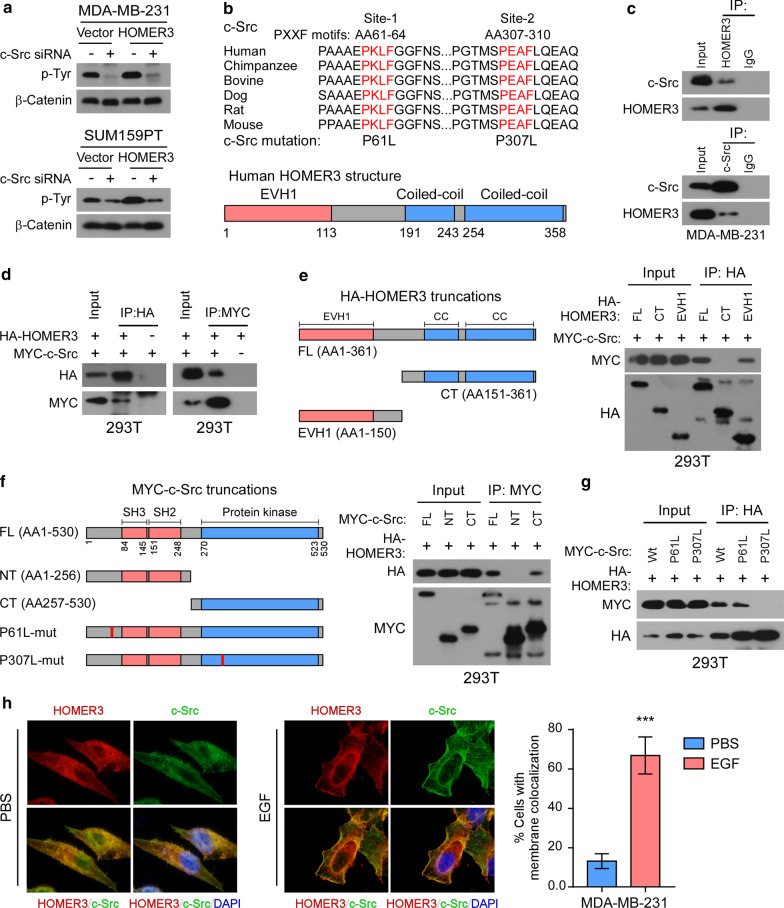
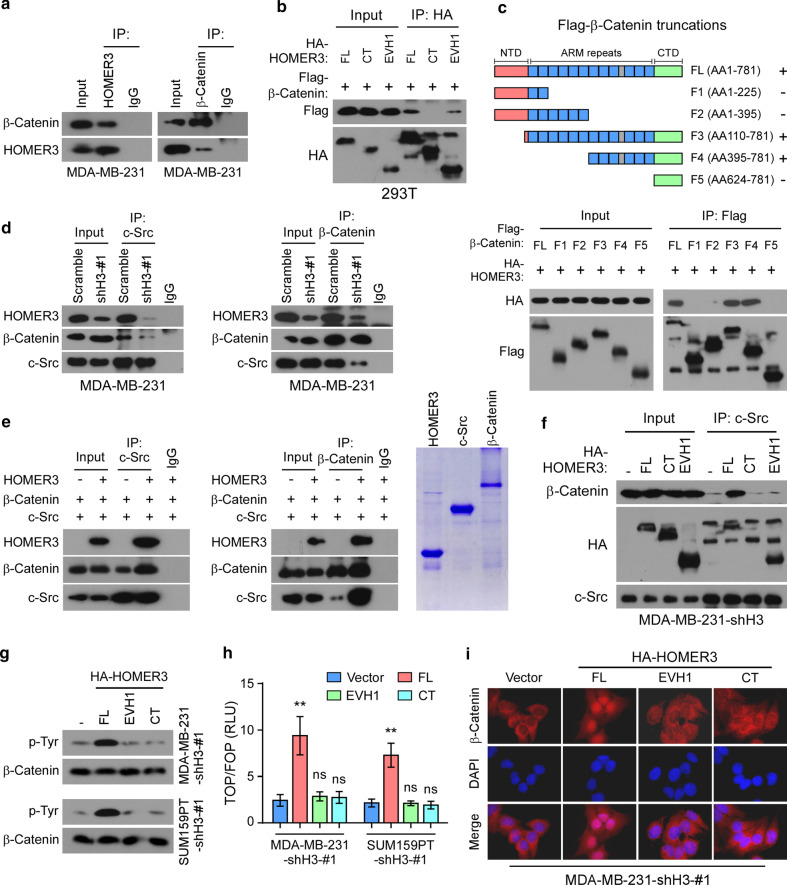
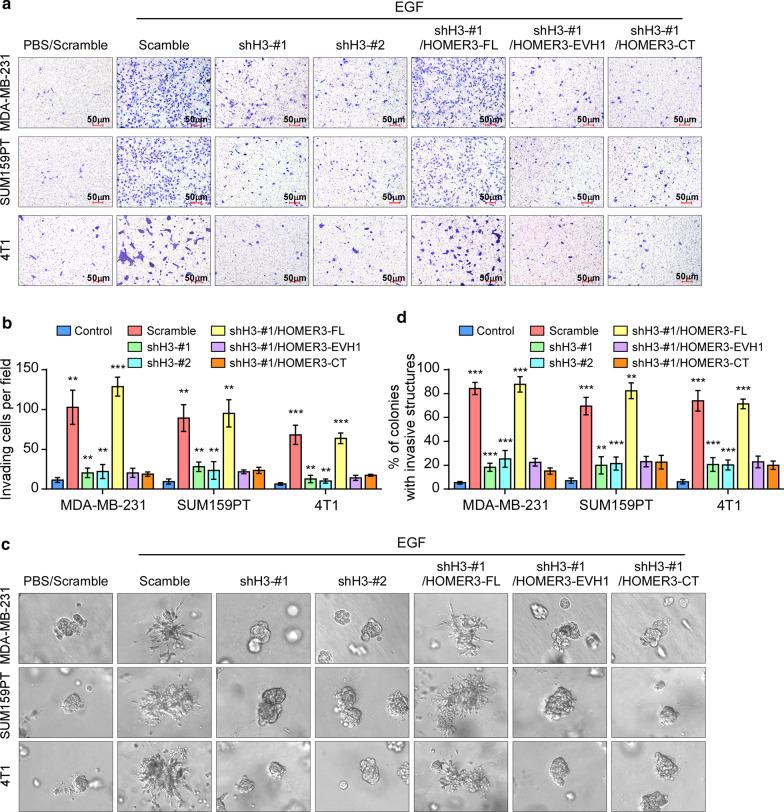
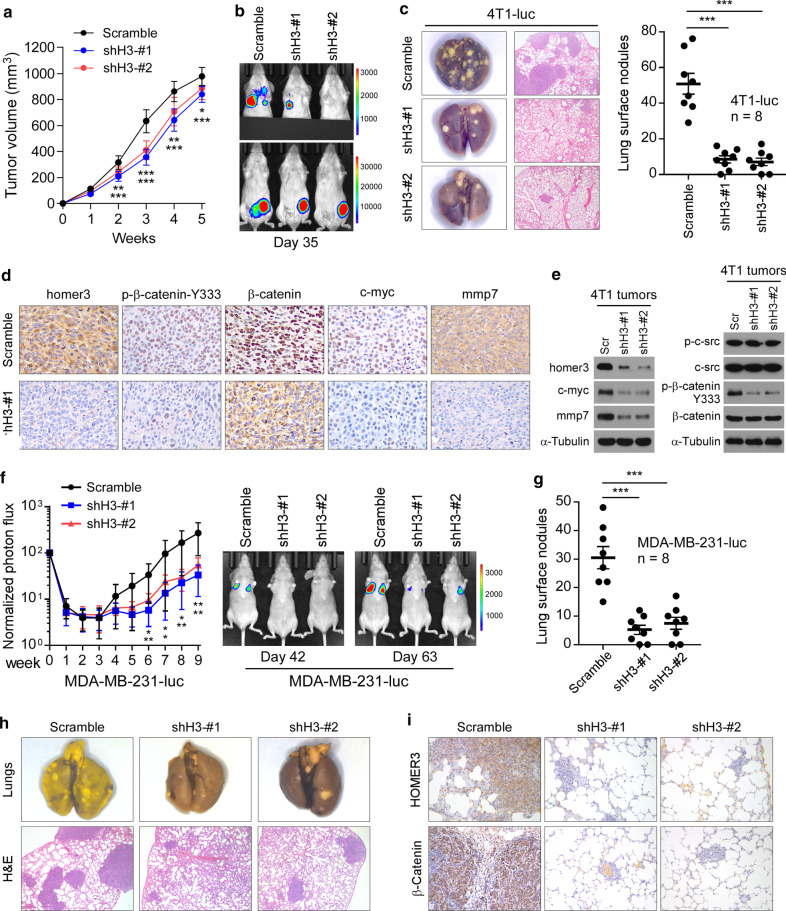
Herein, we find that, among the three HOMER proteins, HOMER3 is selectively overexpressed in the most aggressive triple negative breast cancer (TNBC) subtype, and significantly correlates with earlier tumor metastasis and shorter patient survival. Mechanismly, HOMER3 interacts with both c-Src and β-Catenin, thus providing a scaffolding platform to facilitate c-Src-induced β-Catenin tyrosine phosphorylation under growth factor stimulation. HOMER3 promotes β-Catenin nuclear translocation and activation, and this axis is clinically relevant. HOMER3 promotes and is essential for EGF-induced aggressiveness and metastasis of TNBC cells both in vitro and in vivo.
These findings identify a novel role of HOMER3 in the transduction of growth factor-mediated β-Catenin activation and suggest that HOMER3 might be a targetable vulnerability of TNBC.
Homer 家族衔接蛋白(Homer1-3)通过调节信号转导复合物的组装来响应外在刺激,在人类疾病的发生和发展中发挥着关键作用。然而,Homer 蛋白在乳腺癌中的作用尚不清楚。
通过免疫组织化学检测乳腺癌患者标本中 Homer3 的表达,并通过 Kaplan-Meier 生存分析评估其在预后中的意义。通过 TOP/FOP flash 报告基因检测、酪氨酸磷酸化检测和相互免疫沉淀(IP)检测等实验分析 Homer3 在生长因子诱导的β-Catenin 激活中的作用。通过细胞功能实验和小鼠肿瘤模型确定 Homer3 在乳腺癌转移中的作用。
本研究发现,在 Homer 家族的三种蛋白中,Homer3 在最具侵袭性的三阴性乳腺癌(TNBC)亚型中选择性过表达,与肿瘤早期转移和患者生存时间缩短显著相关。机制上,Homer3 与 c-Src 和β-Catenin 相互作用,从而提供一个支架平台,促进生长因子刺激下 c-Src 诱导的β-Catenin 酪氨酸磷酸化。Homer3 促进β-Catenin 核转位和激活,并且这一轴具有临床相关性。Homer3 促进并在体外和体内均促进 EGF 诱导的 TNBC 细胞侵袭和转移中是必需的。
这些发现确定了 Homer3 在生长因子介导的β-Catenin 激活转导中的新作用,并表明 Homer3 可能是 TNBC 的一个可靶向的弱点。