Ling Lowell, Ho Chun Ming, Ng Pauline Yeung, Chan King Chung Kenny, Shum Hoi Ping, Chan Cheuk Yan, Yeung Alwin Wai Tak, Wong Wai Tat, Au Shek Yin, Leung Kit Hung Anne, Chan Jacky Ka Hing, Ching Chi Keung, Tam Oi Yan, Tsang Hin Hung, Liong Ting, Law Kin Ip, Dharmangadan Manimala, So Dominic, Chow Fu Loi, Chan Wai Ming, Lam Koon Ngai, Chan Kai Man, Mok Oi Fung, To Man Yee, Yau Sze Yuen, Chan Carmen, Lei Ella, Joynt Gavin Matthew
Department of Anaesthesia and Intensive Care, The Chinese University of Hong Kong, 4/F Main Clinical Block and Trauma Centre, Prince of Wales Hospital, Shatin, Hong Kong, China.
Department of Anaesthesia and Intensive Care, Tuen Mun Hospital, Hong Kong, China.
J Intensive Care. 2021 Jan 6;9(1):2. doi: 10.1186/s40560-020-00513-9.
Globally, mortality rates of patients admitted to the intensive care unit (ICU) have decreased over the last two decades. However, evaluations of the temporal trends in the characteristics and outcomes of ICU patients in Asia are limited. The objective of this study was to describe the characteristics and risk adjusted outcomes of all patients admitted to publicly funded ICUs in Hong Kong over a 11-year period. The secondary objective was to validate the predictive performance of Acute Physiology And Chronic Health Evaluation (APACHE) IV for ICU patients in Hong Kong.
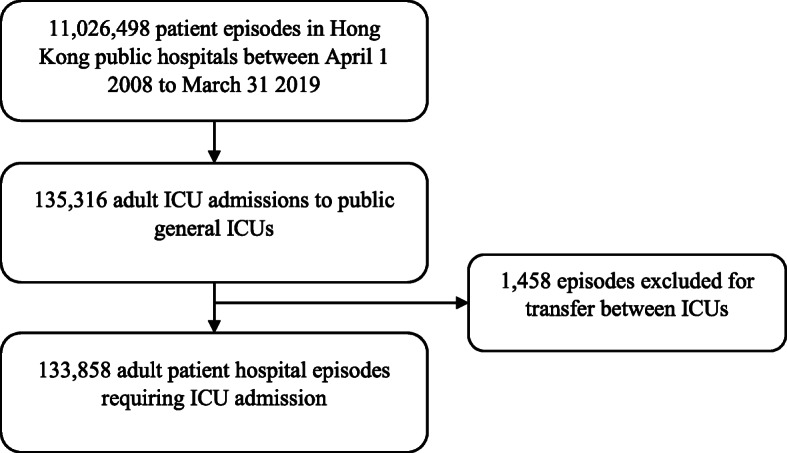
This was an 11-year population-based retrospective study of all patients admitted to adult general (mixed medical-surgical) intensive care units in Hong Kong public hospitals. ICU patients were identified from a population electronic health record database. Prospectively collected APACHE IV data and clinical outcomes were analysed.
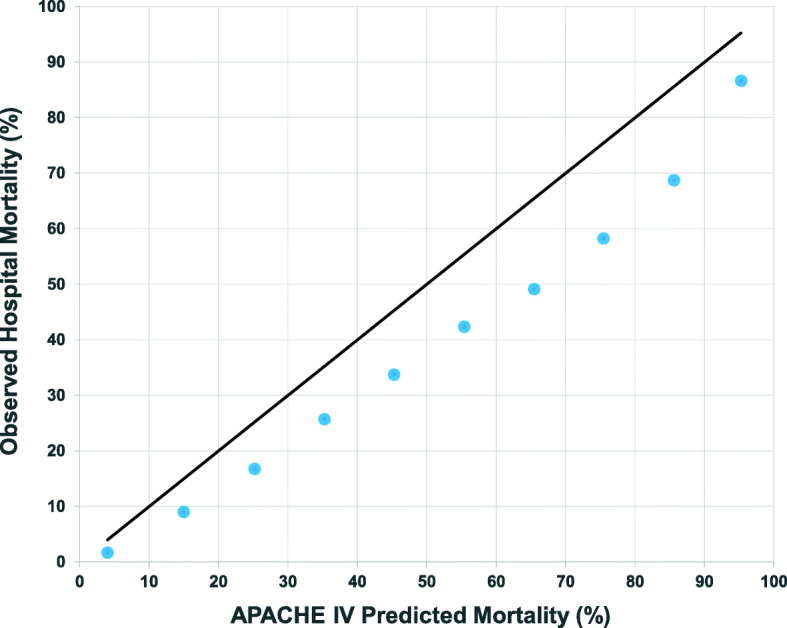
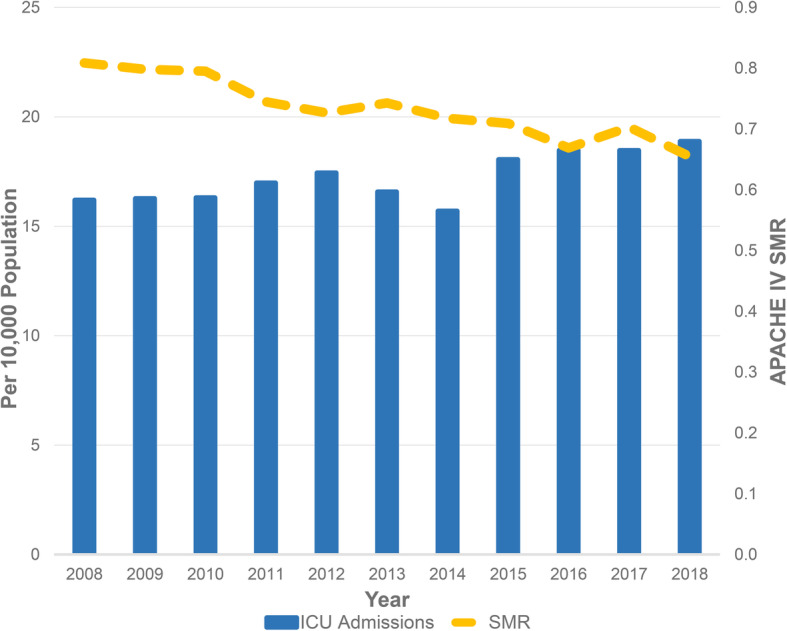
From 1 April 2008 to 31 March 2019, there were a total of 133,858 adult ICU admissions in Hong Kong public hospitals. During this time, annual ICU admissions increased from 11,267 to 14,068, whilst hospital mortality decreased from 19.7 to 14.3%. The APACHE IV standard mortality ratio (SMR) decreased from 0.81 to 0.65 during the same period. Linear regression demonstrated that APACHE IV SMR changed by - 0.15 (95% CI - 0.18 to - 0.11) per year (Pearson's R = - 0.951, p < 0.001). Observed median ICU length of stay was shorter than that predicted by APACHE IV (1.98 vs. 4.77, p < 0.001). C-statistic for APACHE IV to predict hospital mortality was 0.889 (95% CI 0.887 to 0.891) whilst calibration was limited (Hosmer-Lemeshow test p < 0.001).
Despite relatively modest per capita health expenditure, and a small number of ICU beds per population, Hong Kong consistently provides a high-quality and efficient ICU service. Number of adult ICU admissions has increased, whilst adjusted mortality has decreased over the last decade. Although APACHE IV had good discrimination for hospital mortality, it overestimated hospital mortality of critically ill patients in Hong Kong.
在全球范围内,重症监护病房(ICU)患者的死亡率在过去二十年中有所下降。然而,对亚洲ICU患者特征和结局的时间趋势评估有限。本研究的目的是描述香港公立ICU在11年期间收治的所有患者的特征和风险调整后的结局。次要目的是验证急性生理与慢性健康状况评估(APACHE)IV对香港ICU患者的预测性能。
这是一项基于人群的11年回顾性研究,研究对象为香港公立医院成人综合(内科-外科混合)重症监护病房收治的所有患者。通过人群电子健康记录数据库识别ICU患者。对前瞻性收集的APACHE IV数据和临床结局进行分析。
2008年4月1日至2019年3月31日,香港公立医院共有133858例成人ICU入院病例。在此期间,每年的ICU入院人数从11267例增加到14068例,而医院死亡率从19.7%降至14.3%。同期APACHE IV标准死亡率(SMR)从0.81降至0.65。线性回归显示,APACHE IV SMR每年变化-0.15(95%CI -0.18至-0.11)(Pearson's R = -0.951,p < 0.001)。观察到的ICU中位住院时间短于APACHE IV预测的时间(1.98天对4.77天,p < 0.001)。APACHE IV预测医院死亡率的C统计量为0.889(95%CI 0.887至0.891),而校准效果有限(Hosmer-Lemeshow检验p < 0.001)。
尽管人均医疗支出相对适度,且每人口的ICU床位数量较少,但香港始终提供高质量、高效的ICU服务。过去十年中,成人ICU入院人数增加,而调整后的死亡率下降。尽管APACHE IV对医院死亡率有良好的区分度,但它高估了香港重症患者的医院死亡率。