Microbial Ecology, Department of Biology, Lund University, Ecology Building, SE-223 62, Lund, Sweden.
Department of Biology, University of Copenhagen, Universitetsparken 15, 2100, Copenhagen, Denmark.
ISME J. 2021 Apr;15(4):1207-1221. doi: 10.1038/s41396-020-00844-3. Epub 2021 Jan 6.
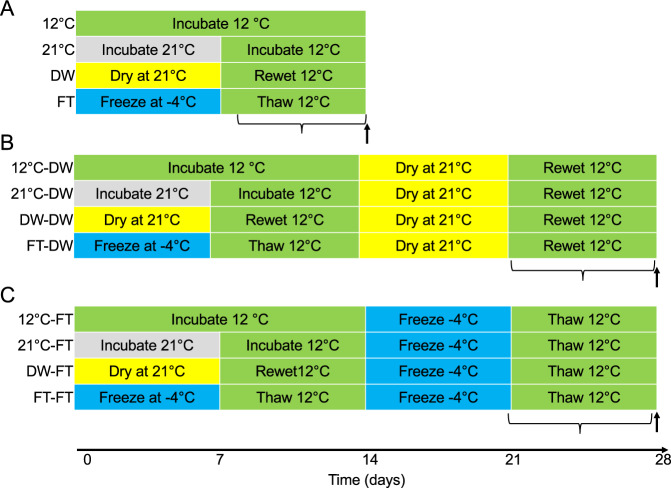
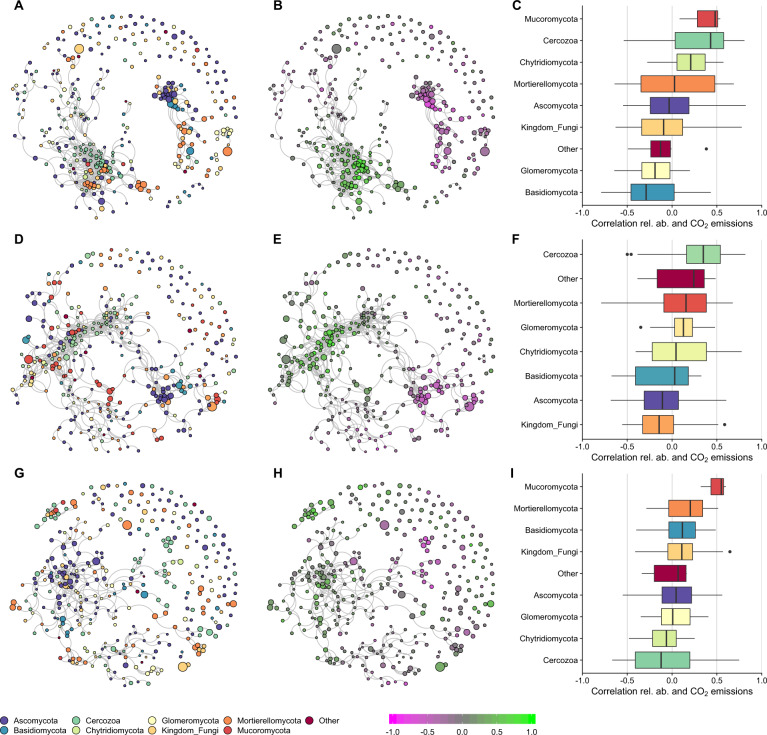
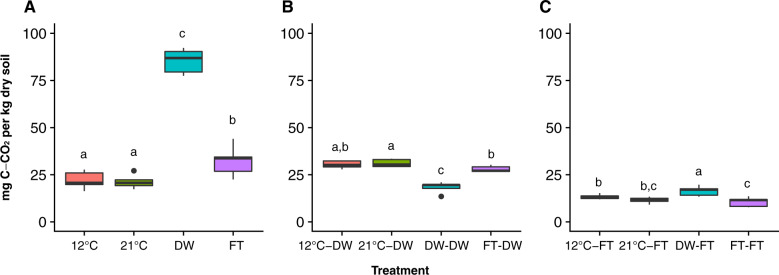
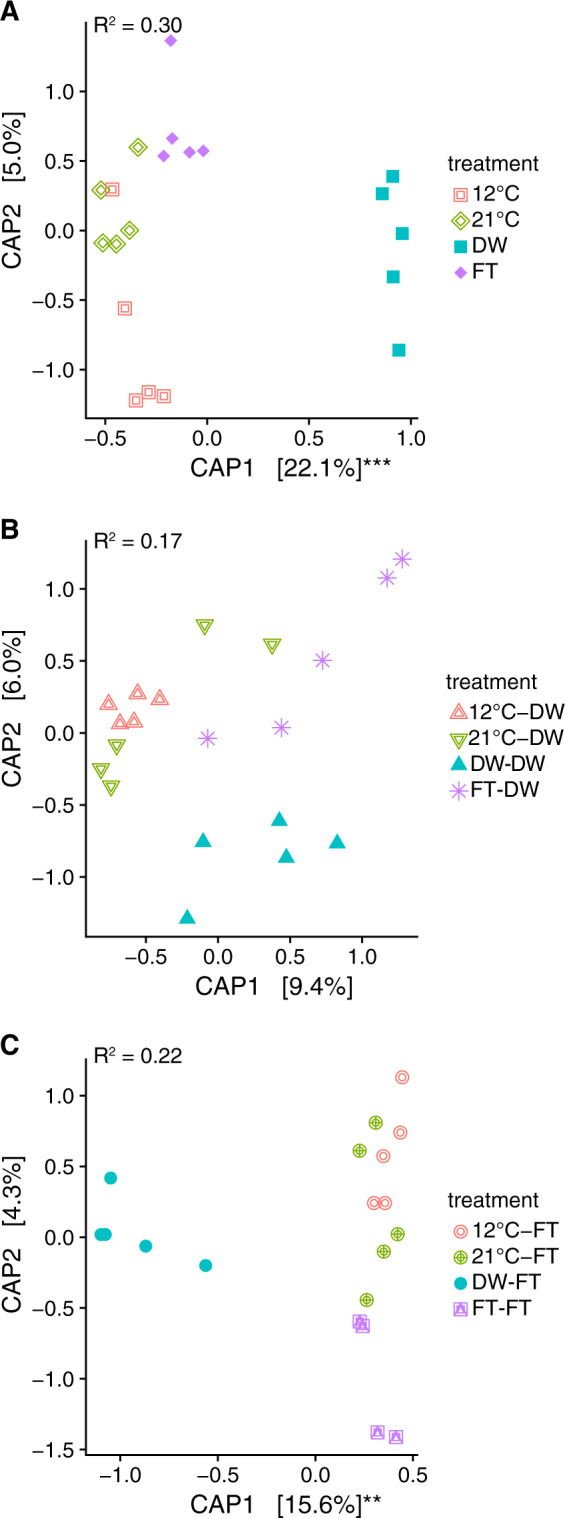
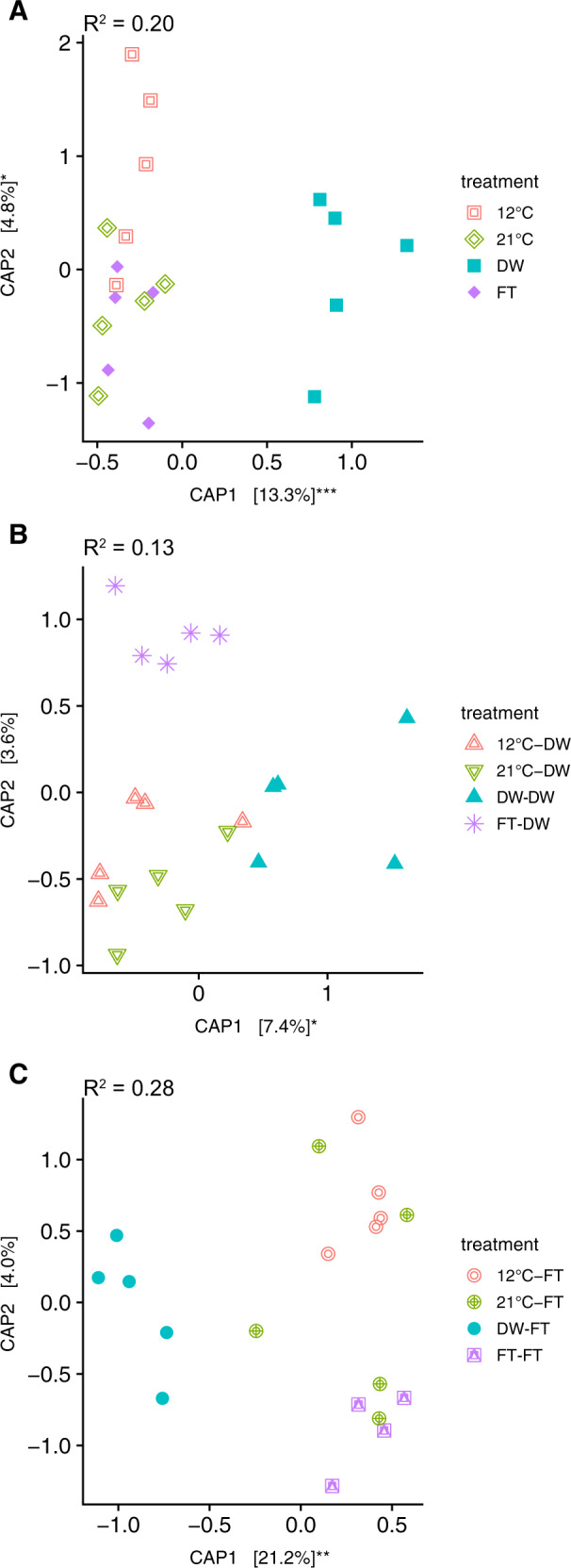
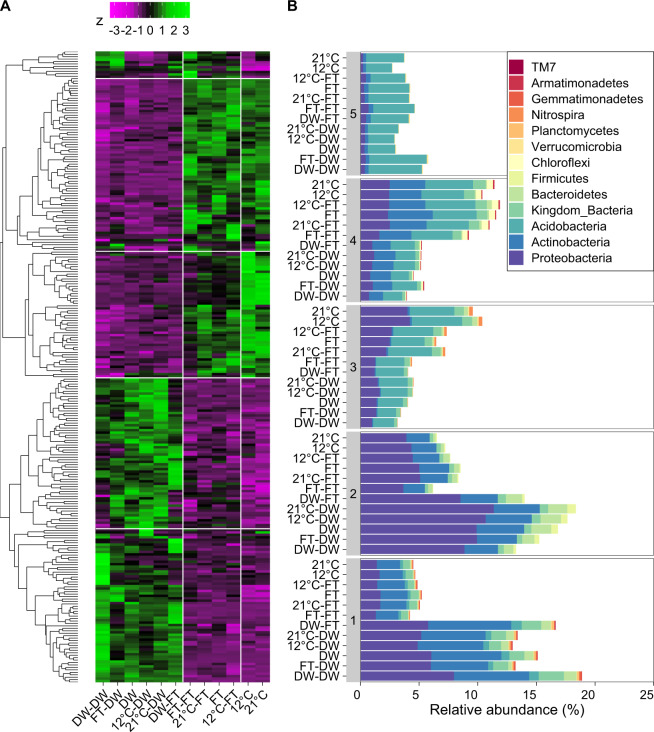
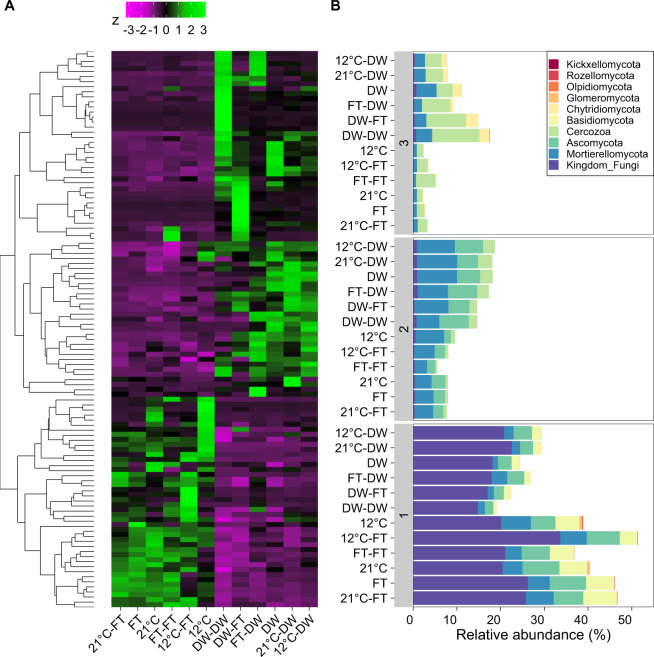
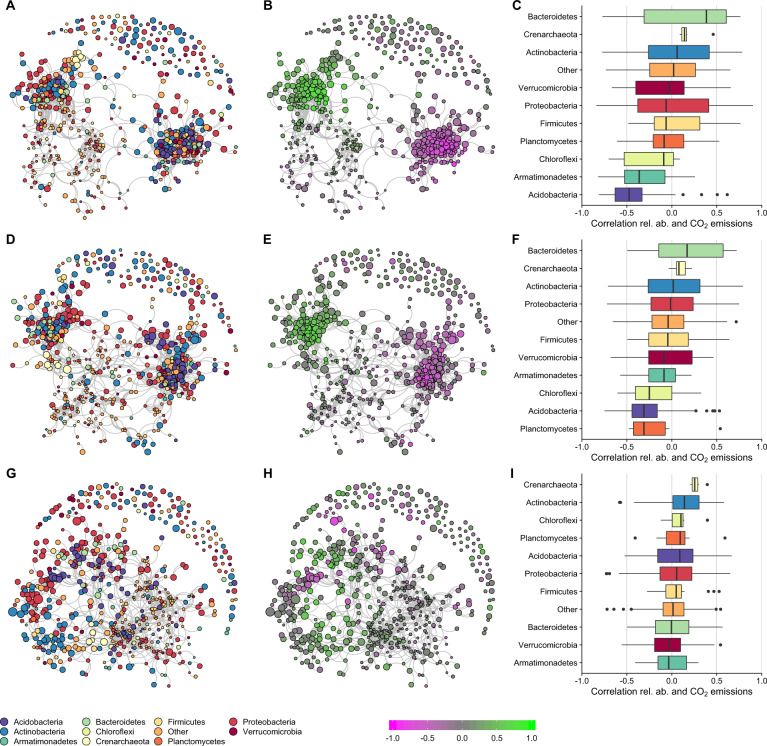
Climate change alters frequencies and intensities of soil drying-rewetting and freezing-thawing cycles. These fluctuations affect soil water availability, a crucial driver of soil microbial activity. While these fluctuations are leaving imprints on soil microbiome structures, the question remains if the legacy of one type of weather fluctuation (e.g., drying-rewetting) affects the community response to the other (e.g., freezing-thawing). As both phenomenons give similar water availability fluctuations, we hypothesized that freezing-thawing and drying-rewetting cycles have similar effects on the soil microbiome. We tested this hypothesis by establishing targeted microcosm experiments. We created a legacy by exposing soil samples to a freezing-thawing or drying-rewetting cycle (phase 1), followed by an additional drying-rewetting or freezing-thawing cycle (phase 2). We measured soil respiration and analyzed soil microbiome structures. Across experiments, larger CO pulses and changes in microbiome structures were observed after rewetting than thawing. Drying-rewetting legacy affected the microbiome and CO emissions upon the following freezing-thawing cycle. Conversely, freezing-thawing legacy did not affect the microbial response to the drying-rewetting cycle. Our results suggest that drying-rewetting cycles have stronger effects on soil microbial communities and CO production than freezing-thawing cycles and that this pattern is mediated by sustained changes in soil microbiome structures.
气候变化改变了土壤干湿和冻融循环的频率和强度。这些波动影响了土壤水分的可利用性,这是土壤微生物活动的关键驱动因素。虽然这些波动正在对土壤微生物组结构留下印记,但问题仍然是一种天气波动(例如干湿)的遗留物是否会影响到另一种天气波动(例如冻融)的群落响应。由于这两种现象都会产生相似的水分可利用性波动,我们假设冻融和干湿循环对土壤微生物组有相似的影响。我们通过建立有针对性的微宇宙实验来检验这一假设。我们通过让土壤样本经历冻融或干湿循环(第 1 阶段)来创造一个遗留物,然后再经历另一个干湿或冻融循环(第 2 阶段)。我们测量了土壤呼吸并分析了土壤微生物组结构。在整个实验中,与解冻相比,再湿润后观察到更大的 CO 脉冲和微生物组结构的变化。干湿循环的遗留物影响了随后的冻融循环中的微生物组和 CO 排放。相反,冻融循环的遗留物对干湿循环中的微生物响应没有影响。我们的结果表明,干湿循环对土壤微生物群落和 CO 产生的影响大于冻融循环,这种模式是由土壤微生物组结构的持续变化介导的。