Knight Christopher G, Nicolitch Océane, Griffiths Rob I, Goodall Tim, Jones Briony, Weser Carolin, Langridge Holly, Davison John, Dellavalle Ariane, Eisenhauer Nico, Gongalsky Konstantin B, Hector Andrew, Jardine Emma, Kardol Paul, Maestre Fernando T, Schädler Martin, Semchenko Marina, Stevens Carly, Tsiafouli Maria Α, Vilhelmsson Oddur, Wanek Wolfgang, de Vries Franciska T
Faculty of Science and Engineering, University of Manchester, Manchester, UK.
School of Natural Sciences, Bangor University, Bangor, UK.
Nature. 2024 Dec;636(8043):690-696. doi: 10.1038/s41586-024-08185-3. Epub 2024 Nov 27.
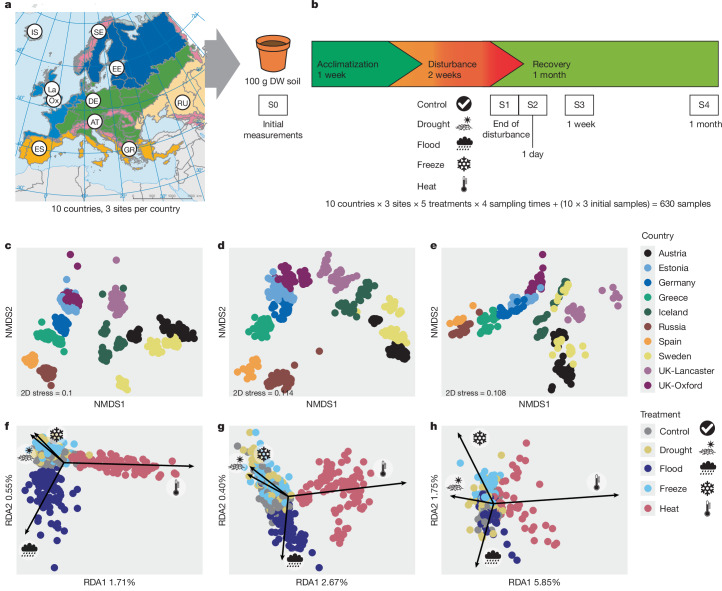
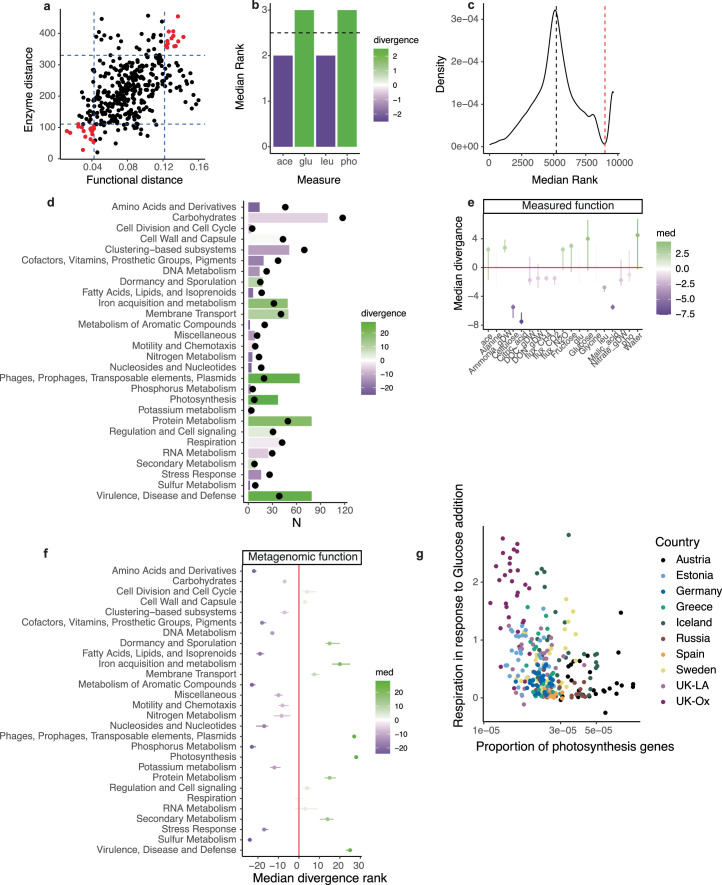
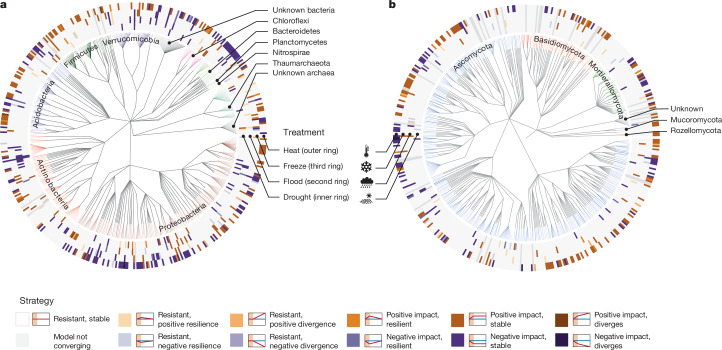
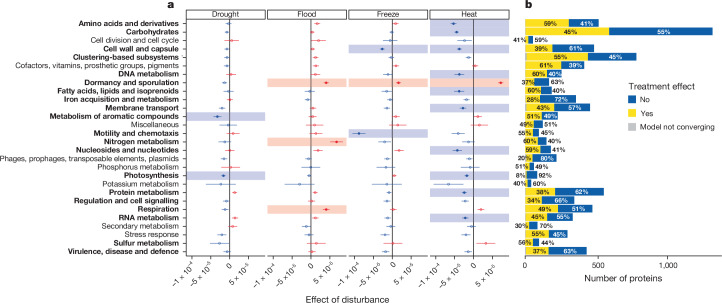
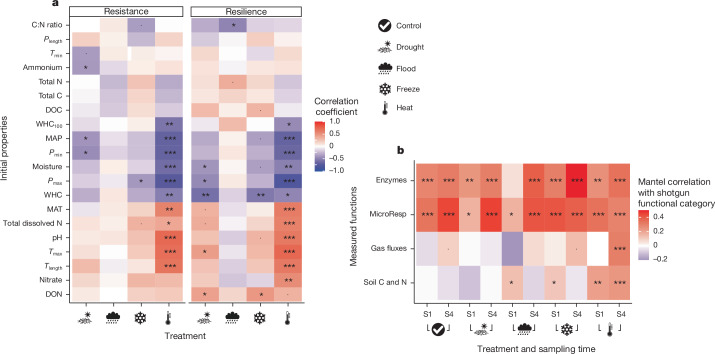
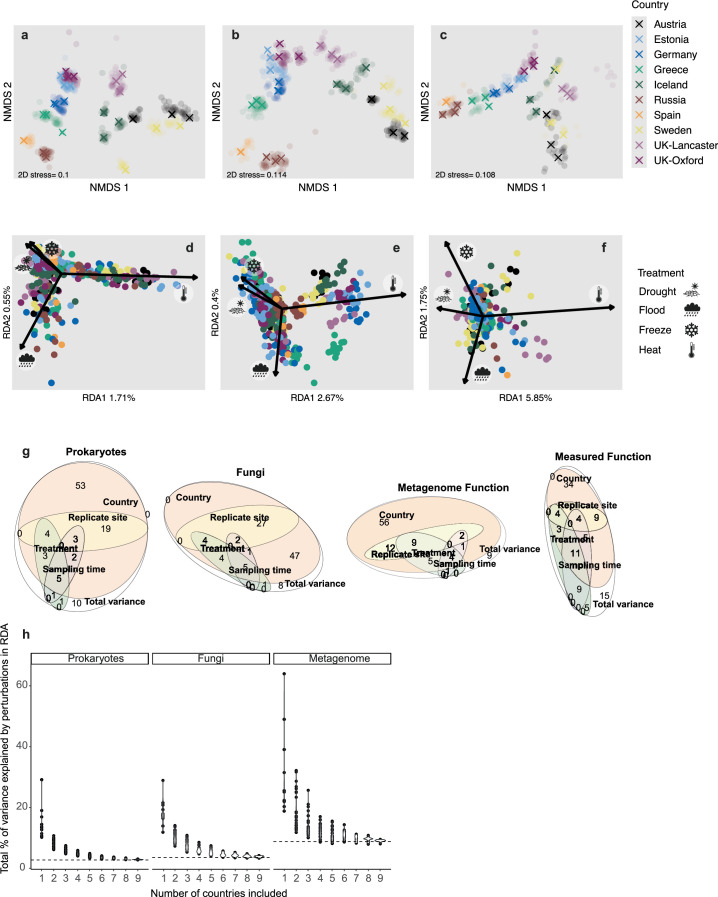
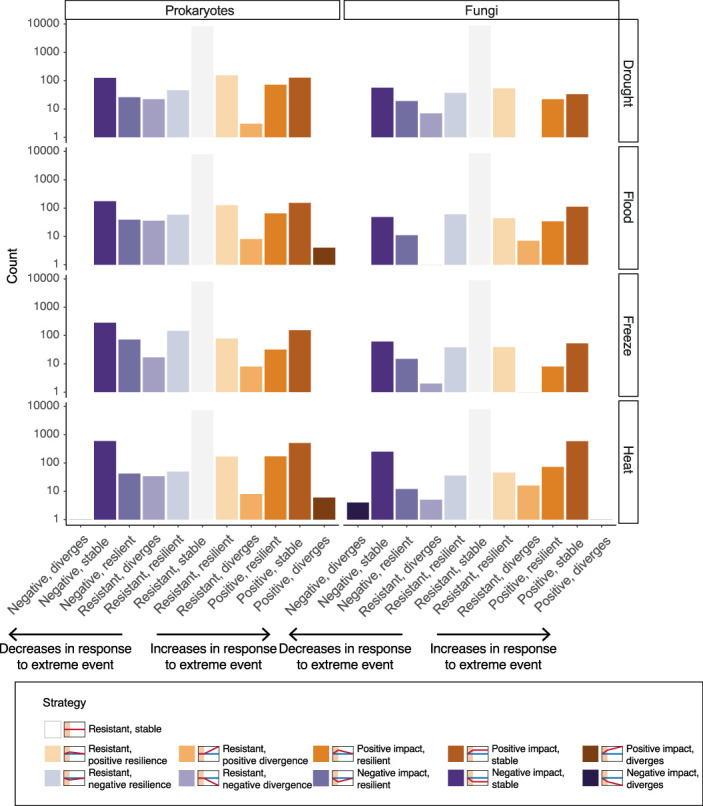
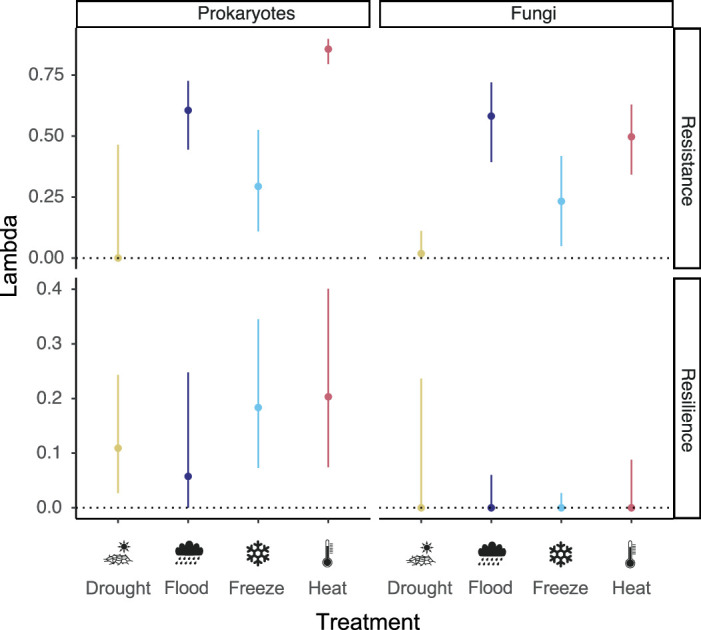
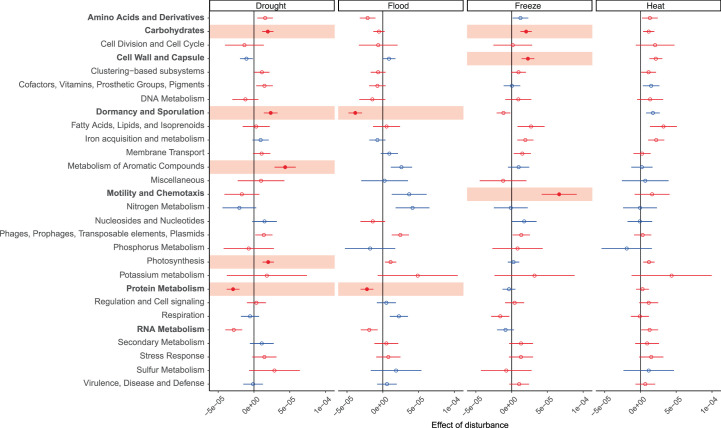
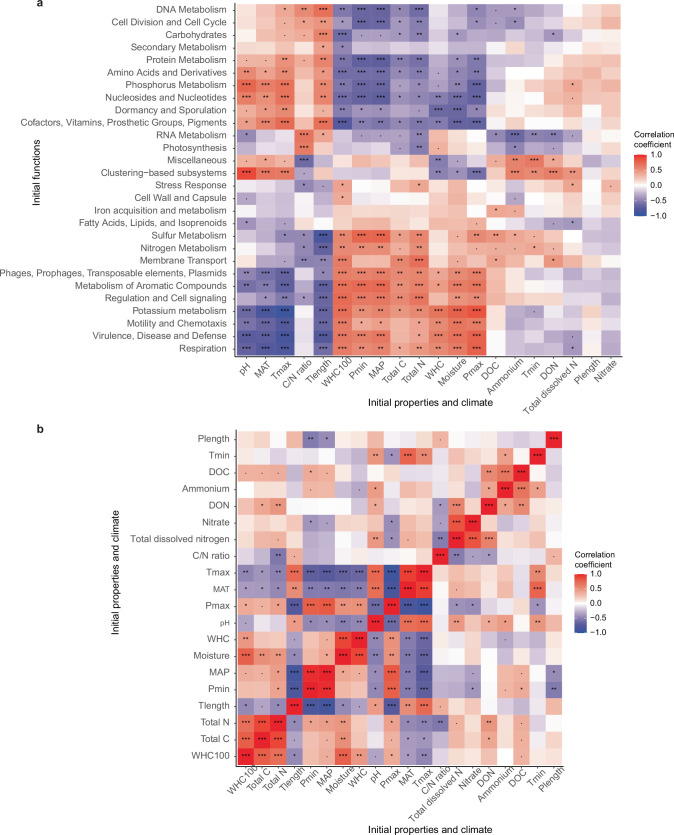
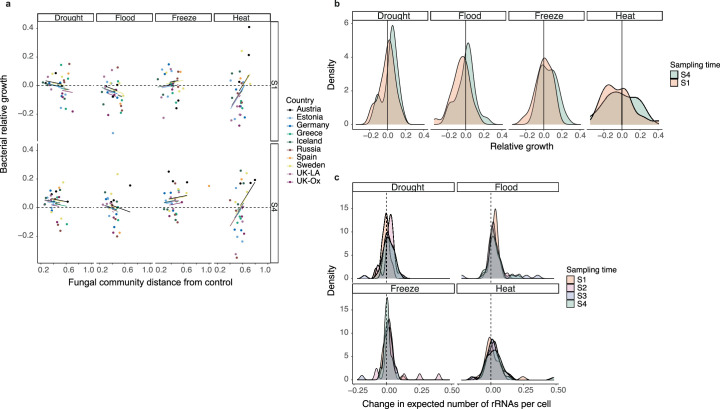
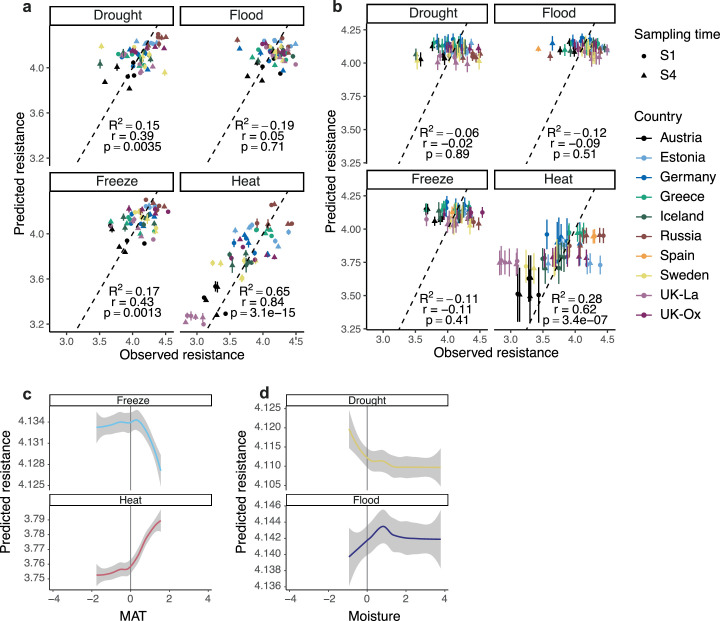
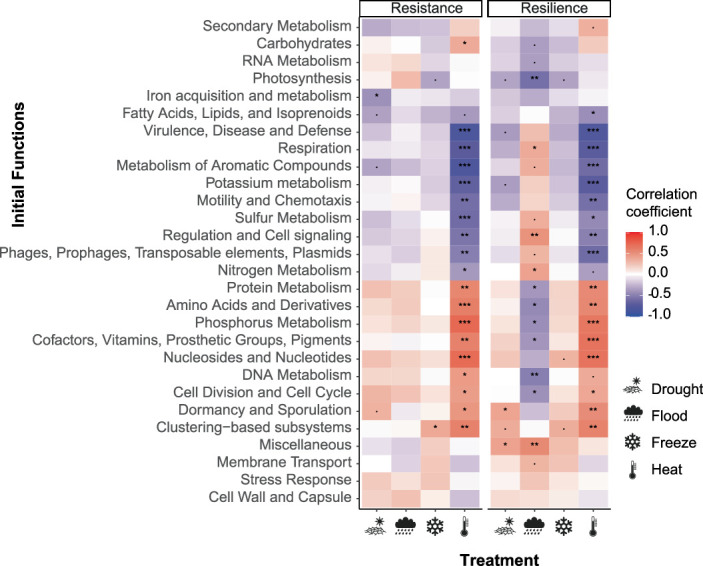
Increasing extreme climatic events threaten the functioning of terrestrial ecosystems. Because soil microbes govern key biogeochemical processes, understanding their response to climate extremes is crucial in predicting the consequences for ecosystem functioning. Here we subjected soils from 30 grasslands across Europe to four contrasting extreme climatic events under common controlled conditions (drought, flood, freezing and heat), and compared the response of soil microbial communities and their functioning with those of undisturbed soils. Soil microbiomes exhibited a small, but highly consistent and phylogenetically conserved, response under the imposed extreme events. Heat treatment most strongly impacted soil microbiomes, enhancing dormancy and sporulation genes and decreasing metabolic versatility. Microbiome response to heat in particular could be predicted by local climatic conditions and soil properties, with soils that do not normally experience the extreme conditions being imposed being most vulnerable. Our results suggest that soil microbiomes from different climates share unified responses to extreme climatic events, but that predicting the extent of community change may require knowledge of the local microbiome. These findings advance our understanding of soil microbial responses to extreme events, and provide a first step for making general predictions about the impact of extreme climatic events on soil functioning.
日益增加的极端气候事件威胁着陆地生态系统的功能。由于土壤微生物控制着关键的生物地球化学过程,了解它们对极端气候的反应对于预测生态系统功能的后果至关重要。在这里,我们在共同控制的条件下(干旱、洪水、冰冻和高温),对来自欧洲30个草原的土壤施加了四种不同的极端气候事件,并将土壤微生物群落及其功能的反应与未受干扰的土壤进行了比较。在施加的极端事件下,土壤微生物群落表现出微小但高度一致且系统发育保守的反应。热处理对土壤微生物群落影响最大,增强了休眠和孢子形成基因,并降低了代谢多样性。特别是微生物群落对高温的反应可以通过当地气候条件和土壤性质来预测,那些通常不会经历所施加极端条件的土壤最为脆弱。我们的结果表明,来自不同气候的土壤微生物群落对极端气候事件有统一的反应,但预测群落变化的程度可能需要了解当地的微生物群落。这些发现推进了我们对土壤微生物对极端事件反应的理解,并为对极端气候事件对土壤功能的影响做出一般预测提供了第一步。