Lazarini-Lopes Willian, da Silva-Júnior Rui M P, Servilha-Menezes Gabriel, Do Val-da Silva Raquel A, Garcia-Cairasco Norberto
Neuroscience and Behavioral Sciences Department, Ribeirão Preto School of Medicine, University of São Paulo, Ribeirão Preto, Brazil.
Neurophysiology and Experimental Neuroethology Laboratory, Physiology Department, Ribeirão Preto School of Medicine, University of São Paulo, Ribeirão Preto, Brazil.
Front Behav Neurosci. 2020 Dec 21;14:602258. doi: 10.3389/fnbeh.2020.602258. eCollection 2020.
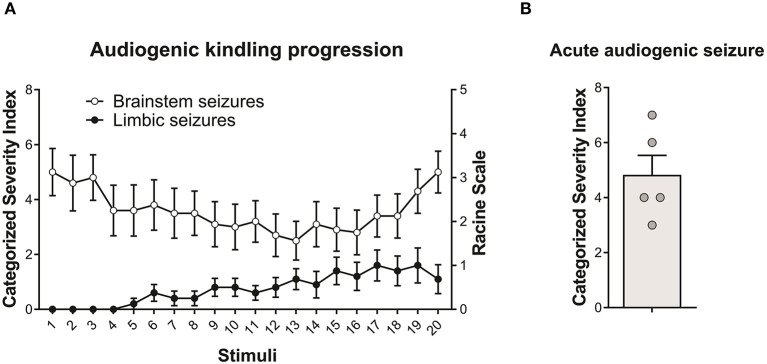
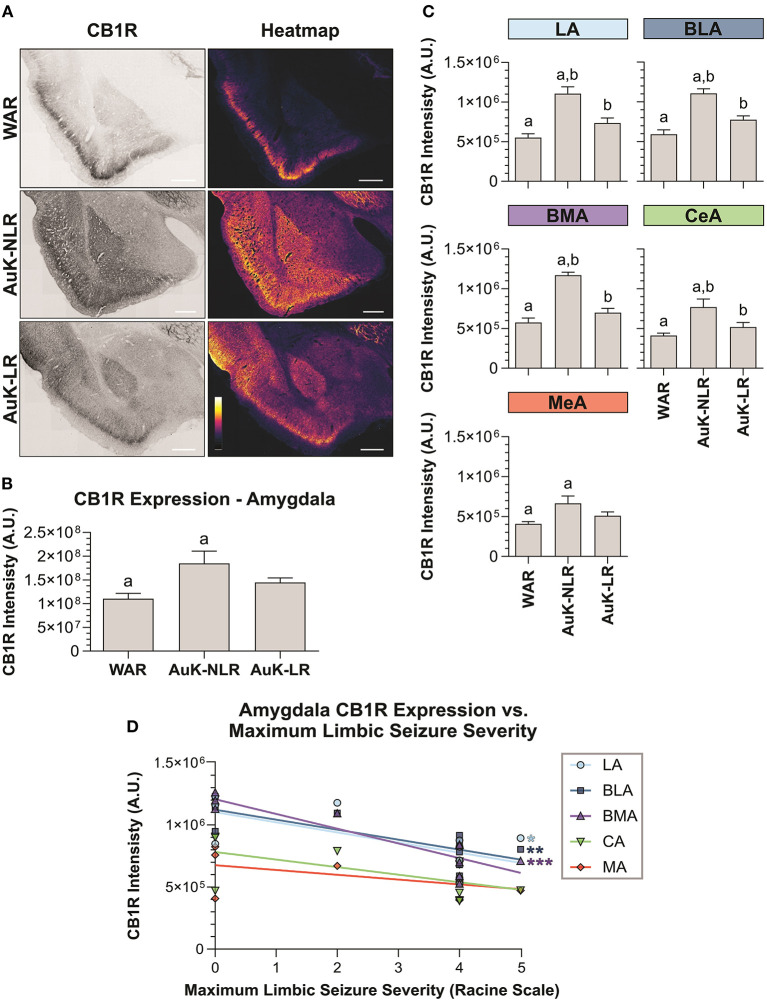
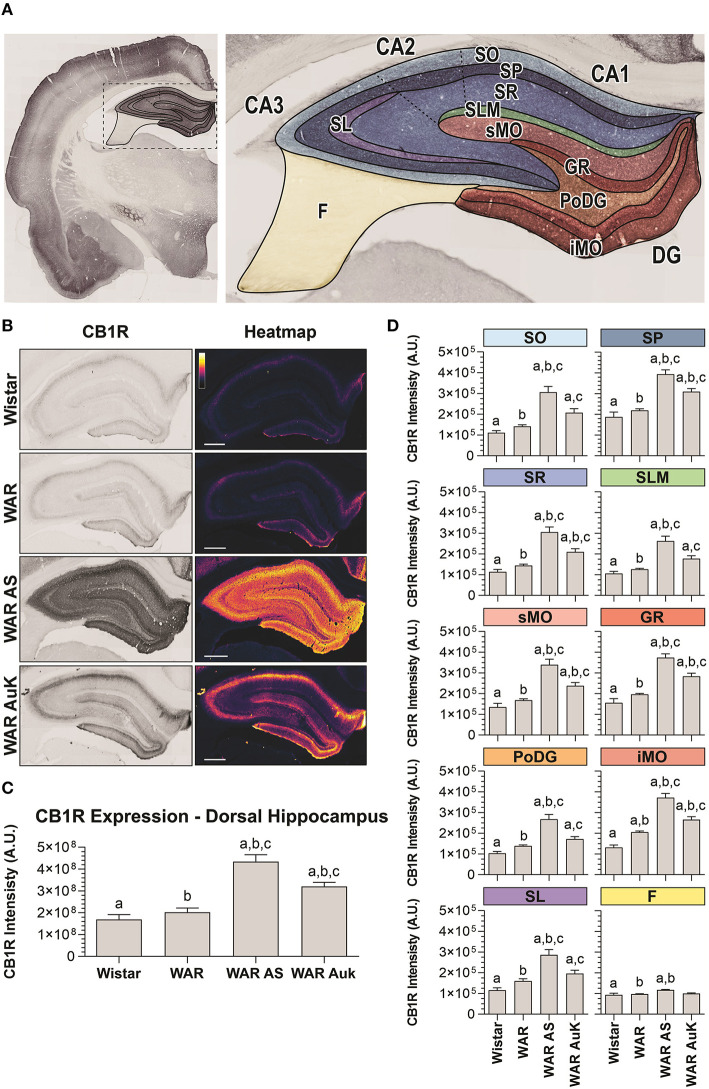
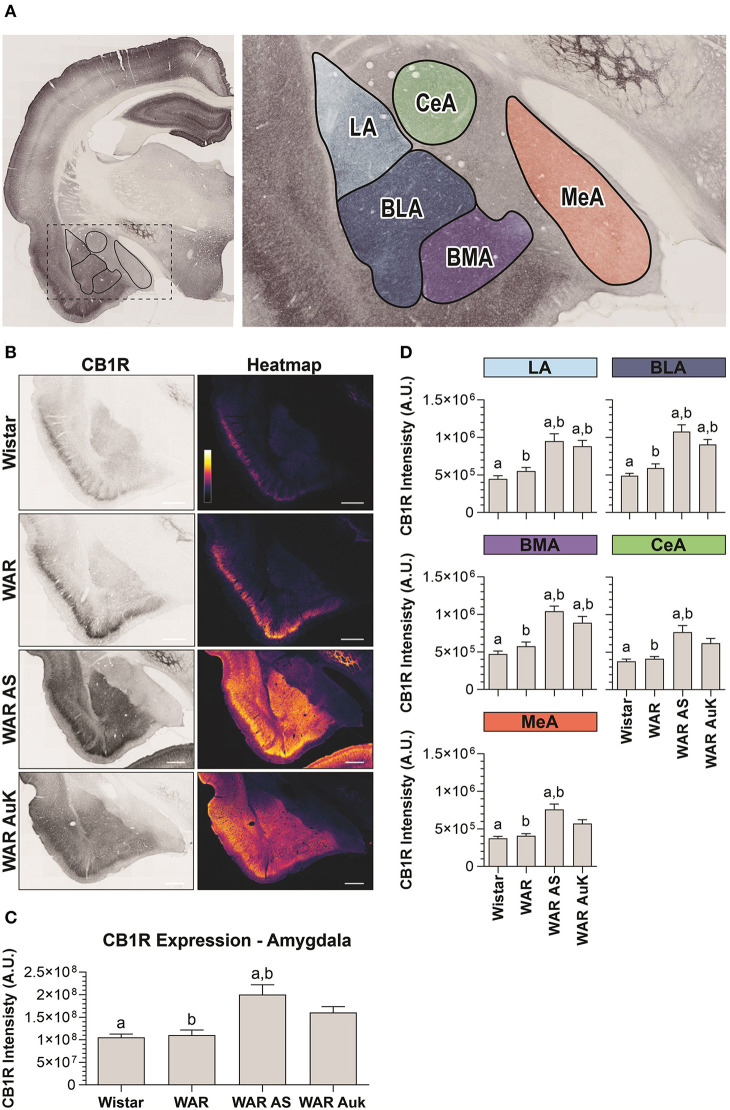
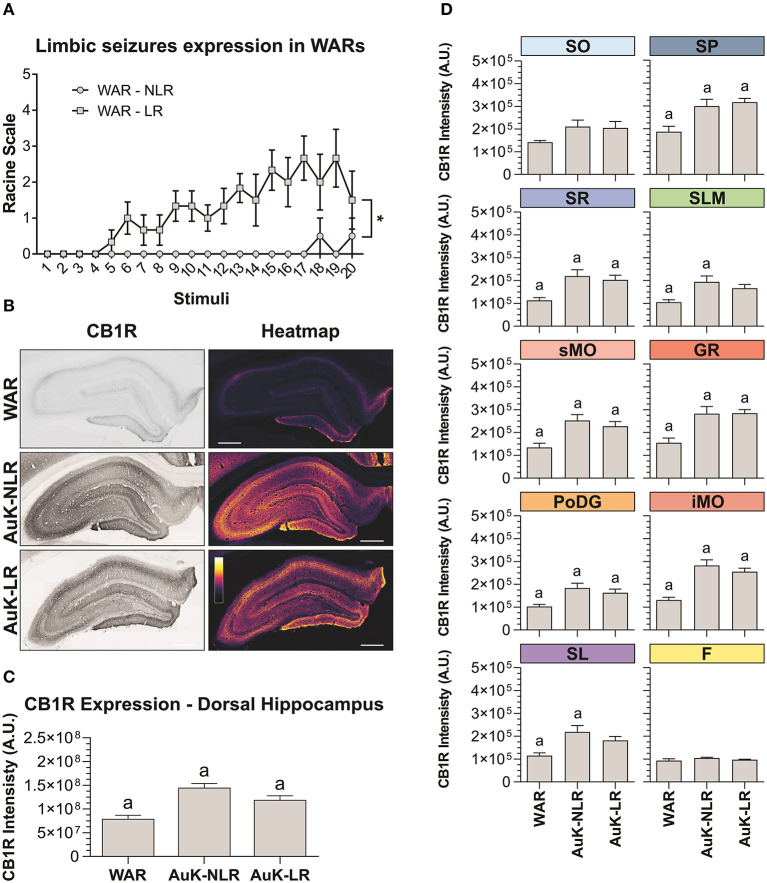
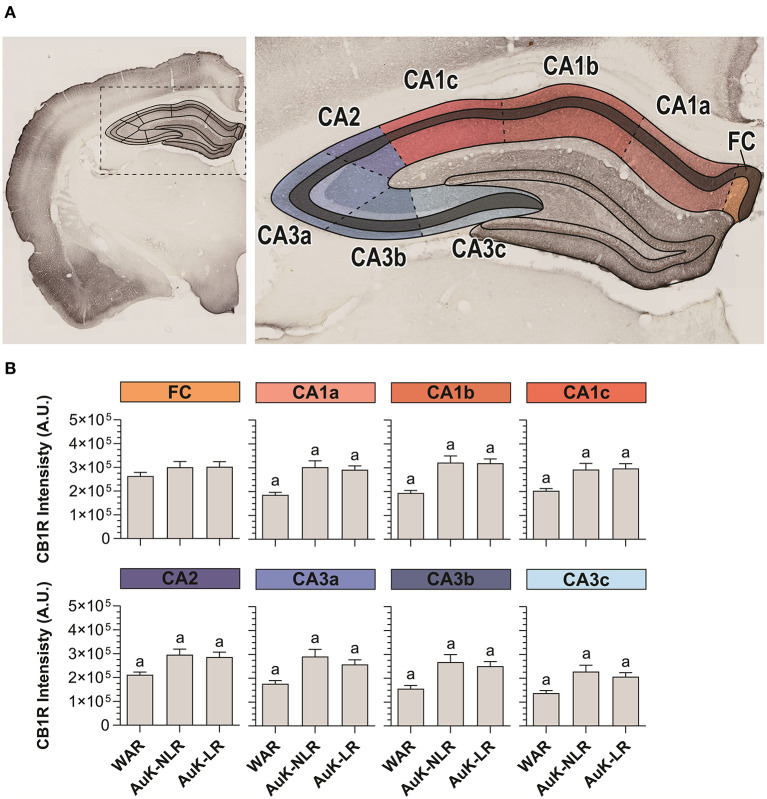
The endocannabinoid system (ECS) is related to several physiological processes, associated to the modulation of brain excitability, with impact in the expression of susceptibility and control of epileptic seizures. The cannabinoid receptor type 1 (CB1R) is widely expressed in the brain, especially in forebrain limbic structures. Changes in CB1R expression are associated with epileptic seizures in animal models and humans. The Wistar Audiogenic Rat (WAR) strain is a genetic model of epilepsy capable of mimicking tonic-clonic and limbic seizures in response to intense sound stimulation. The WAR strain presents several behavioral and physiological alterations associated with seizure susceptibility, but the ECS has never been explored in this strain. Therefore, the aim of the present study was to characterize CB1R expression in forebrain limbic structures important to limbic seizure expression in WARs. We used a detailed anatomical analysis to assess the effects of acute and chronic audiogenic seizures on CB1R expression in several layers and regions of hippocampus and amygdala. WARs showed increased CB1R immunostaining in the inner molecular layer of the hippocampus, when compared to control Wistar rats. Acute and chronic audiogenic seizures increased CB1R immunostaining in several regions of the dorsal hippocampus and amygdala of WARs. Also, changes in CB1R expression in the amygdala, but not in the hippocampus, were associated with limbic recruitment and limbic seizure severity in WARs. Our results suggest that endogenous alterations in CB1R immunostaining in WARs could be associated with genetic susceptibility to audiogenic seizures. We also demonstrated CB1R neuroplastic changes associated with acute and chronic seizures in the amygdala and hippocampus. Moreover, the present study brings important information regarding CB1R and seizure susceptibility in a genetic model of seizures and supports the relationship between ECS and epilepsy.
内源性大麻素系统(ECS)与多种生理过程相关,这些生理过程与大脑兴奋性的调节有关,对癫痫发作易感性的表达和控制有影响。1型大麻素受体(CB1R)在大脑中广泛表达,尤其是在前脑边缘结构中。CB1R表达的变化与动物模型和人类的癫痫发作有关。威斯塔听源性大鼠(WAR)品系是一种癫痫遗传模型,能够在受到强烈声音刺激时模拟强直阵挛性发作和边缘性发作。WAR品系呈现出与癫痫发作易感性相关的多种行为和生理改变,但该品系从未对内源性大麻素系统进行过研究。因此,本研究的目的是表征WAR品系中对边缘性发作表达至关重要的前脑边缘结构中的CB1R表达。我们使用详细的解剖学分析来评估急性和慢性听源性发作对海马体和杏仁核多个层和区域中CB1R表达的影响。与对照威斯塔大鼠相比,WAR品系在海马体的内分子层中CB1R免疫染色增加。急性和慢性听源性发作增加了WAR品系背侧海马体和杏仁核多个区域的CB1R免疫染色。此外,杏仁核而非海马体中CB1R表达的变化与WAR品系的边缘性募集和边缘性发作严重程度相关。我们的结果表明,WAR品系中CB1R免疫染色的内源性改变可能与听源性发作的遗传易感性有关。我们还证明了杏仁核和海马体中与急性和慢性发作相关的CB1R神经可塑性变化。此外,本研究提供了关于癫痫遗传模型中CB1R和癫痫发作易感性的重要信息,并支持内源性大麻素系统与癫痫之间的关系。