Department of Microbiology, Qom Branch, Islamic Azad University, P.O. Box: 374911319, Qom, Iran.
Nuclear Agriculture research school, Nuclear Science and Technology Research Institute, Atomic Energy Organization of Iran, Karaj, Iran.
Arch Virol. 2021 Feb;166(2):545-557. doi: 10.1007/s00705-020-04900-3. Epub 2021 Jan 6.
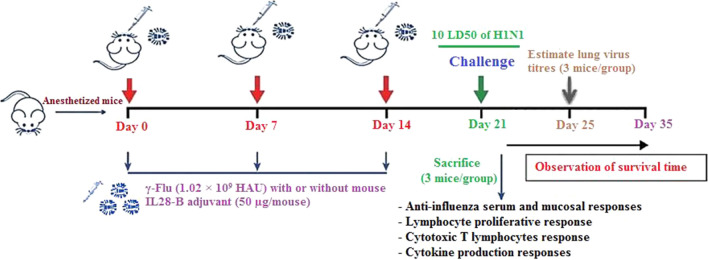
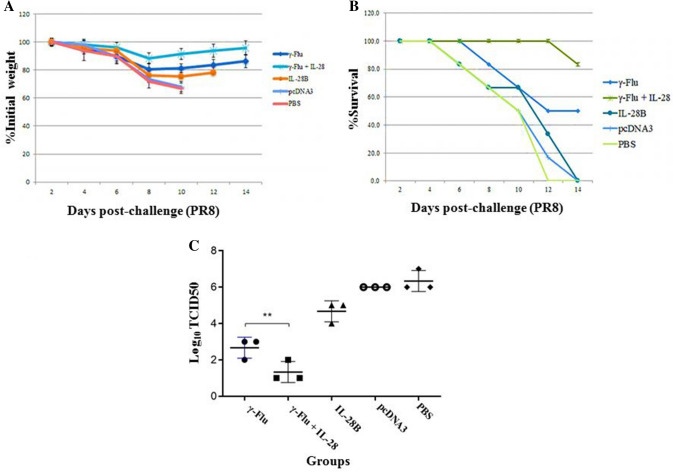
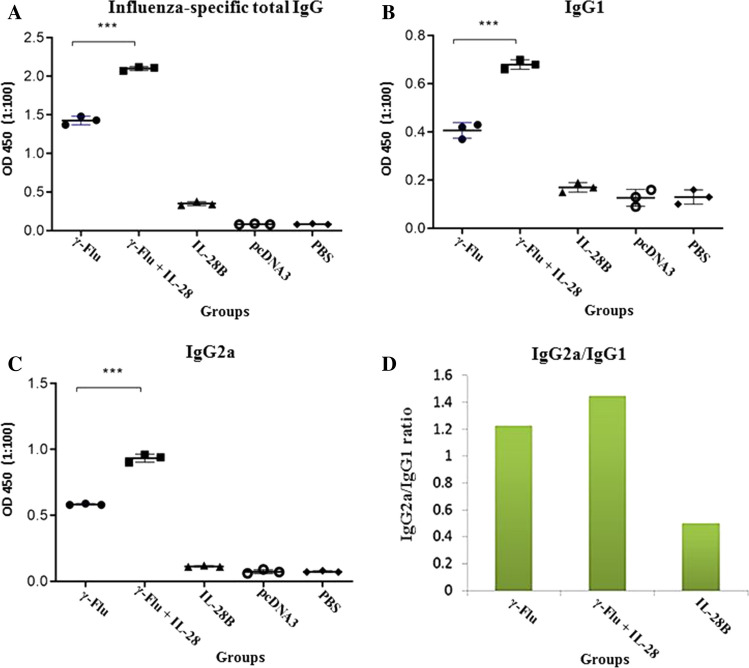
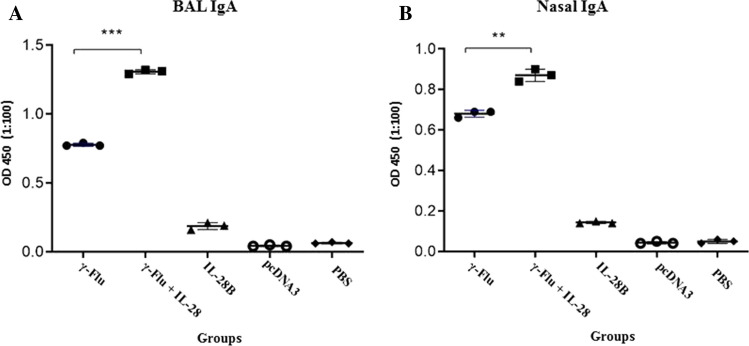
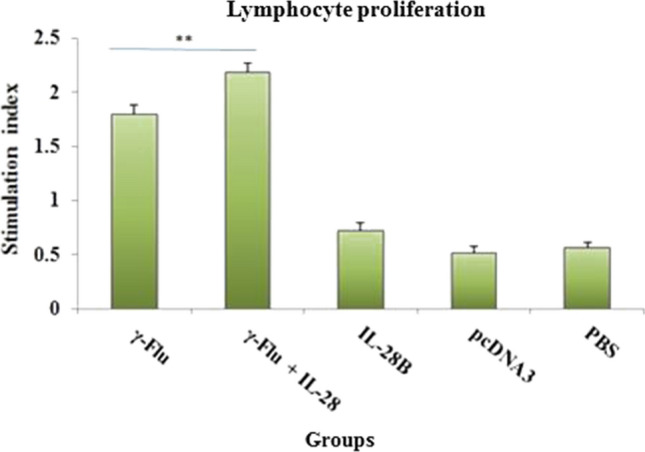
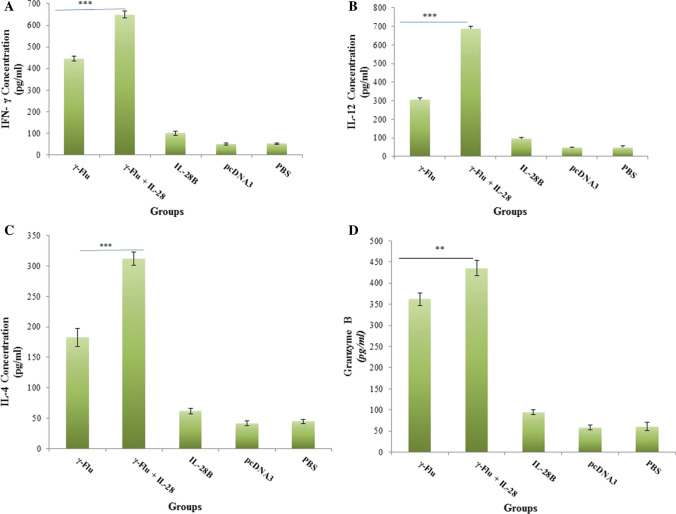
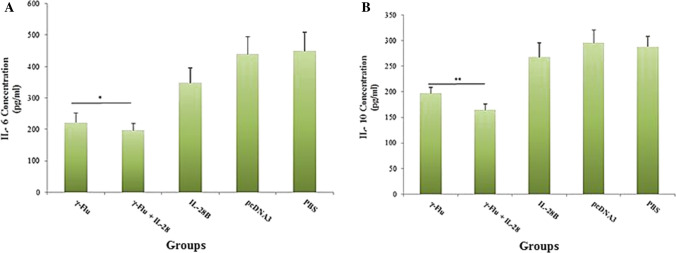
The use of gamma-irradiated influenza A virus (γ-Flu), retains most of the viral structural antigens, represent a promising option for vaccine development. However, despite the high effectiveness of γ-Flu vaccines, the need to incorporate an adjuvant to improve vaccine-mediated protection seems inevitable. Here, we examined the protective efficacy of an intranasal gamma-irradiated HIN1 vaccine co-administered with a plasmid encoding mouse interleukin-28B (mIL-28B) as a novel adjuvant in BALB/c mice. Animals were immunized intranasally three times at one-week intervals with γ-Flu, alone or in combination with the mIL-28B adjuvant, followed by viral challenge with a high lethal dose (10 LD) of A/PR/8/34 (H1N1) influenza virus. Virus-specific antibody, cellular and mucosal responses, and the balance of cytokines in the spleen IFN-γ, IL-12, and IL-4) and in lung homogenates (IL-6 and IL-10) were measured by ELISA. The lymphoproliferative activity of restimulated spleen cells was also determined by MTT assay. Furthermore, virus production in the lungs of infected mice was estimated using the Madin-Darby canine kidney (MDCK)/hemagglutination assay (HA). Our data showed that intranasal immunization with adjuvanted γ-Flu vaccine efficiently promoted humoral, cellular, and mucosal immune responses and efficiently decreased lung virus titers, all of which are associated with protection against challenge. This combination also reduced IL-6 and IL-10 levels in lung homogenates. The results suggest that IL-28B can enhance the ability of the vaccine to elicit virus-specific immune responses and could potentially be used as an effective adjuvant.
γ-射线照射流感病毒(γ-Flu)保留了大部分病毒结构抗原,是疫苗开发的有前途的选择。然而,尽管γ-Flu 疫苗的效果很高,但似乎不可避免地需要加入佐剂以提高疫苗介导的保护作用。在这里,我们研究了鼻腔内给予γ-射线照射的 HIN1 疫苗与编码小鼠白细胞介素-28B(mIL-28B)的质粒联合作为一种新型佐剂在 BALB/c 小鼠中的保护效力。动物在一周的间隔内通过鼻腔免疫三次,单独给予 γ-Flu,或与 mIL-28B 佐剂联合给予,然后用高致死剂量(10 LD)的 A/PR/8/34(H1N1)流感病毒进行病毒挑战。通过 ELISA 测量病毒特异性抗体、细胞和黏膜反应以及脾细胞中细胞因子的平衡(IFN-γ、IL-12 和 IL-4)和肺匀浆中的细胞因子(IL-6 和 IL-10)。通过 MTT 测定还测定了重新刺激的脾细胞的淋巴增殖活性。此外,使用 Madin-Darby 犬肾(MDCK)/血凝测定法(HA)估计感染小鼠肺部的病毒产量。我们的数据表明,鼻腔内给予佐剂 γ-Flu 疫苗可有效促进体液、细胞和黏膜免疫反应,并有效降低肺部病毒滴度,所有这些都与对挑战的保护有关。这种组合还降低了肺匀浆中 IL-6 和 IL-10 的水平。结果表明,IL-28B 可以增强疫苗引发病毒特异性免疫反应的能力,并可能被用作有效的佐剂。