Department of Neurology, University of Utah School of Medicine, Salt Lake City, UT, USA.
George E. Wahlen Veterans Affairs Medical Center, Salt Lake City, UT, USA.
Brain Imaging Behav. 2021 Apr;15(2):585-613. doi: 10.1007/s11682-020-00423-2. Epub 2021 Jan 7.
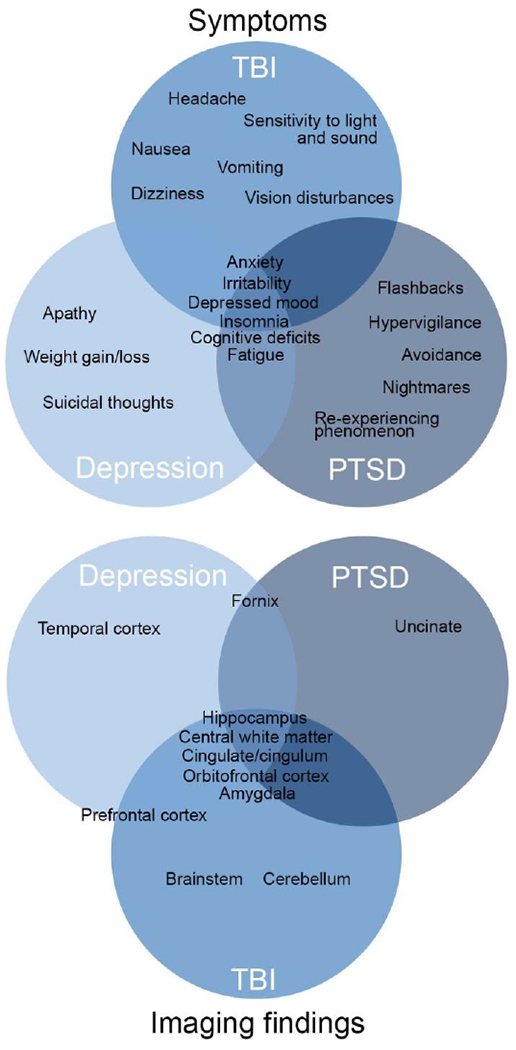
Traumatic brain injury (TBI) is common among military personnel and the civilian population and is often followed by a heterogeneous array of clinical, cognitive, behavioral, mood, and neuroimaging changes. Unlike many neurological disorders that have a characteristic abnormal central neurologic area(s) of abnormality pathognomonic to the disorder, a sufficient head impact may cause focal, multifocal, diffuse or combination of injury to the brain. This inconsistent presentation makes it difficult to establish or validate biological and imaging markers that could help improve diagnostic and prognostic accuracy in this patient population. The purpose of this manuscript is to describe both the challenges and opportunities when conducting military-relevant TBI research and introduce the Enhancing NeuroImaging Genetics through Meta-Analysis (ENIGMA) Military Brain Injury working group. ENIGMA is a worldwide consortium focused on improving replicability and analytical power through data sharing and collaboration. In this paper, we discuss challenges affecting efforts to aggregate data in this patient group. In addition, we highlight how "big data" approaches might be used to understand better the role that each of these variables might play in the imaging and functional phenotypes of TBI in Service member and Veteran populations, and how data may be used to examine important military specific issues such as return to duty, the late effects of combat-related injury, and alteration of the natural aging processes.
创伤性脑损伤(TBI)在军人和普通人群中都很常见,通常会伴有一系列不同的临床、认知、行为、情绪和神经影像学变化。与许多具有特征性中枢神经系统异常区域的神经疾病不同,头部的充分撞击可能导致大脑的局灶性、多灶性、弥漫性或混合性损伤。这种不一致的表现使得很难确定或验证生物和影像学标志物,这些标志物可以帮助提高该患者群体的诊断和预后准确性。本文的目的是描述在进行与军事相关的 TBI 研究时所面临的挑战和机遇,并介绍增强神经影像学遗传学通过荟萃分析(ENIGMA)军事脑损伤工作组。ENIGMA 是一个全球性的联盟,专注于通过数据共享和合作提高可重复性和分析能力。在本文中,我们讨论了影响在该患者群体中汇总数据的挑战。此外,我们还强调了“大数据”方法如何用于更好地理解这些变量中的每一个变量在军人和退伍军人 TBI 影像学和功能表型中的作用,以及如何利用数据来研究重要的军事特定问题,如重返工作岗位、与战斗相关的损伤的后期影响以及自然衰老过程的改变。