Department of Family Medicine, Pusan National University Hospital, Busan, 49241, South Korea.
Biomedical Research Institute, Pusan National University Hospital, Busan, 49241, South Korea.
Curr Obes Rep. 2021 Mar;10(1):14-30. doi: 10.1007/s13679-020-00422-w. Epub 2021 Jan 6.
As a chronic and relapsing disease, obesity impairs metabolism and causes cardiovascular diseases. Although behavioral modification is important for the treatment of obesity, it is difficult to achieve an ideal weight or sustain the process of long-term weight loss. Therefore, the obesity control guidelines strongly recommend lifestyle interventions along with medical treatment for patients who are overweight. There is sufficient evidence supporting that pharmacotherapy in combination with behavior-based interventions can result in significant weight loss and improved cardiometabolism.
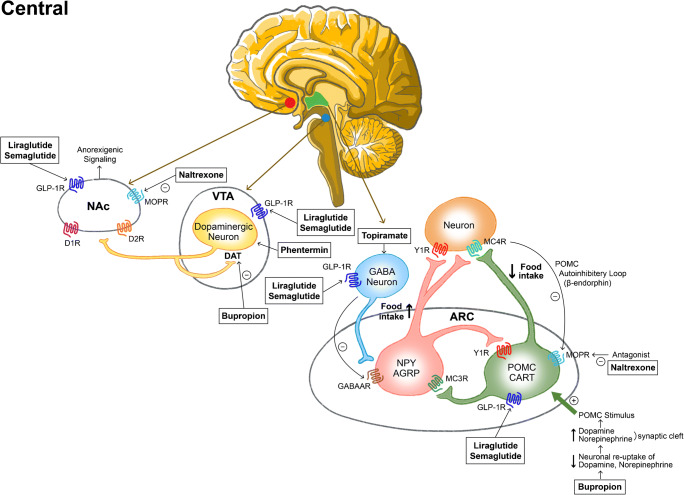
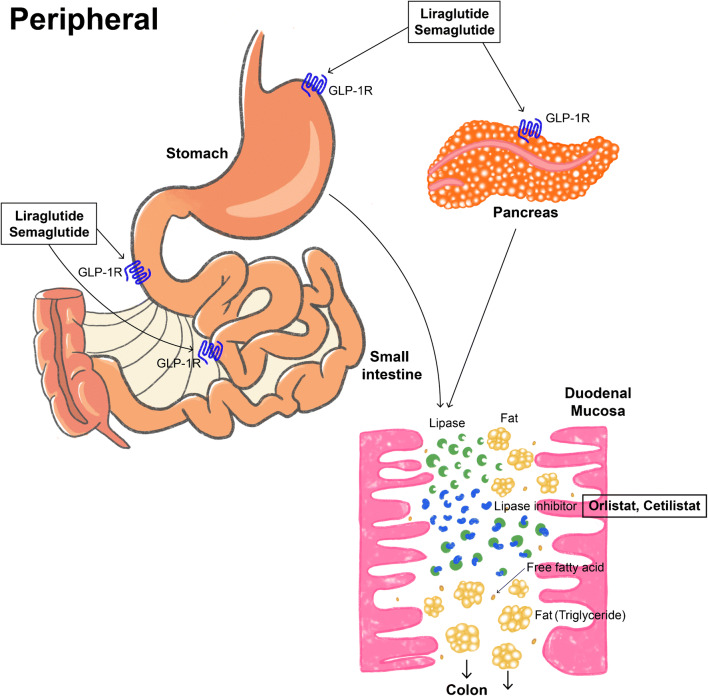
Recent meta-analyses of new anti-obesity drugs and their weight-loss efficacy have shown that the overall placebo-subtracted weight reduction (%) for at least 12 months ranged from 2.9 to 6.8% for the following drugs: phentermine/topiramate (6.8%), liraglutide (5.4%), naltrexone/bupropion (4.0%), orlistat (2.9%), and lorcaserin (3.1%). However, very recently, on February 13, 2020, the US Food and Drug Administration (FDA) ordered the withdrawal of lorcaserin from markets, as a clinical trial to assess drug safety showed an increased risk of cancer. Currently, the anti-obesity medications that have been approved by the FDA for chronic weight management are orlistat, phentermine/topiramate, naltrexone/bupropion, and liraglutide. However, they are costly and may have adverse effects in some individuals. Therefore, drug therapy should be initiated in obese individuals after weighing its benefits and risks. One of the strategies for long-term obesity control is that anti-obesity medications should be tailored for specific patients depending on their chronic conditions, comorbidities, and preferences.
肥胖是一种慢性且易复发的疾病,它会损害新陈代谢并导致心血管疾病。尽管行为改变对于肥胖症的治疗很重要,但很难达到理想的体重或维持长期减肥的过程。因此,肥胖控制指南强烈建议超重患者将生活方式干预与药物治疗相结合。有充分的证据表明,药物治疗结合基于行为的干预措施可以显著减轻体重并改善心血管代谢。
最近对新的抗肥胖药物及其减肥效果的荟萃分析表明,至少 12 个月的安慰剂减去体重减少(%)对于以下药物范围从 2.9%至 6.8%:苯丁胺/托吡酯(6.8%)、利拉鲁肽(5.4%)、纳曲酮/安非他酮(4.0%)、奥利司他(2.9%)和lorcaserin(3.1%)。然而,就在 2020 年 2 月 13 日,美国食品和药物管理局(FDA)下令从市场上撤出 lorcaserin,因为一项评估药物安全性的临床试验显示癌症风险增加。目前,FDA 批准用于慢性体重管理的抗肥胖药物有奥利司他、苯丁胺/托吡酯、纳曲酮/安非他酮和利拉鲁肽。然而,它们价格昂贵,并且可能对某些人有不良反应。因此,应权衡药物治疗的益处和风险后,再在肥胖患者中开始使用药物治疗。长期肥胖控制的策略之一是根据患者的慢性疾病、合并症和偏好,为特定患者量身定制抗肥胖药物。