Université Libre de Bruxelles (U.L.B.), Institut de Recherches en Biologie Humaine et Moléculaire (IRIBHM), and ULB Neuroscience Institute (UNI), 1070 Brussels, Belgium; VIB-KULeuven Center for Brain & Disease Research, KULeuven Department of Neurosciences, Leuven Brain Institute, 3000 Leuven, Belgium.
Curr Opin Neurobiol. 2021 Feb;66:195-204. doi: 10.1016/j.conb.2020.12.006. Epub 2021 Jan 5.
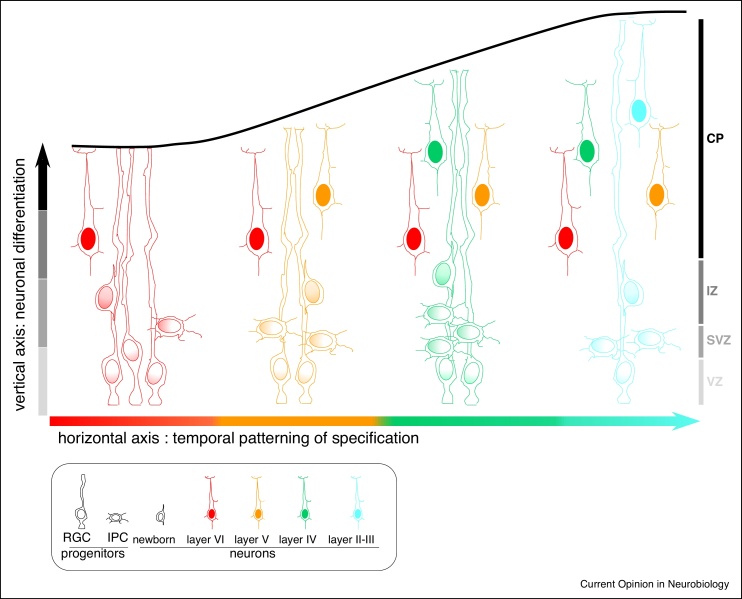
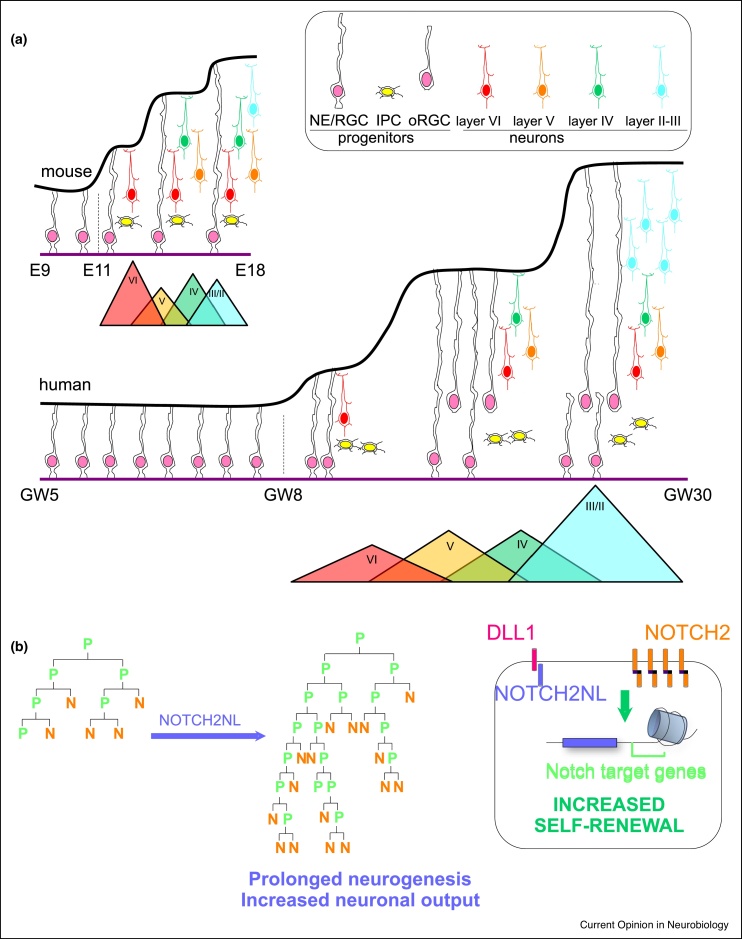
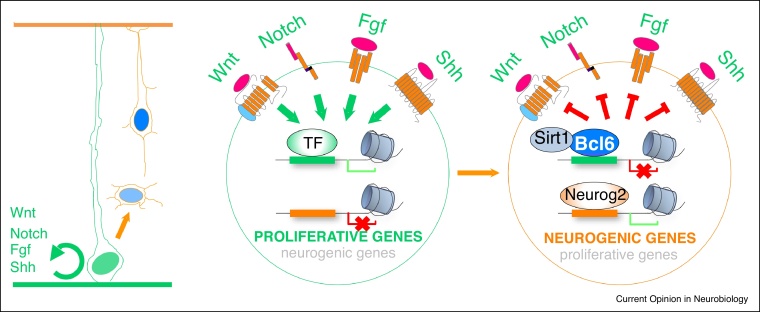
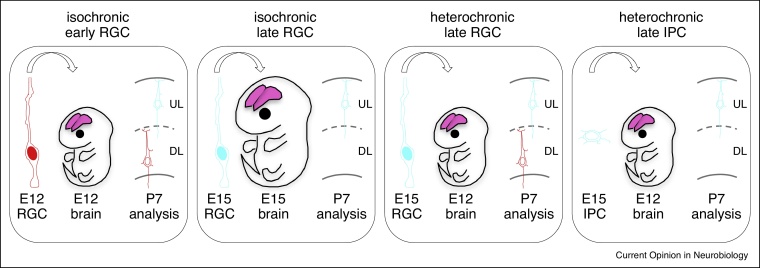
During embryonic development, neural stem/progenitor cells generate hundreds of different cell types through the combination of intrinsic and extrinsic cues. Recent data obtained in mouse and human cortical neurogenesis provide novel views about this interplay and how it evolves with time, whether during irreversible cell fate transitions that neural stem cells undergo to become neurons, or through gradual temporal changes of competence that lead to increased neuronal diversity from a common stem cell pool. In each case the temporal changes result from a dynamic balance between intracellular states and extracellular signalling factors. The underlying mechanisms are mostly conserved across species, but some display unique features in human corticogenesis, thereby linking temporal features of neurogenesis and human brain evolution.
在胚胎发育过程中,神经干细胞/祖细胞通过内在和外在线索的组合产生数百种不同的细胞类型。最近在小鼠和人类皮质神经发生中获得的数据提供了关于这种相互作用以及它如何随时间演变的新观点,无论是在神经干细胞经历不可逆的细胞命运转变成为神经元的过程中,还是通过导致来自共同干细胞池的神经元多样性增加的逐渐的时间变化的过程中。在每种情况下,时间变化都是由于细胞内状态和细胞外信号因子之间的动态平衡所致。潜在机制在物种间大多是保守的,但在人类皮质发生中也显示出一些独特的特征,从而将神经发生的时间特征与人类大脑进化联系起来。