Liver Disease Center, The Affiliated Hospital of Qingdao University, No. 59 Haier Road, Qingdao, 266003, China.
Qingdao University, No. 308 Ningxia Road, Qingdao, 266071, China.
BMC Cancer. 2021 Jan 7;21(1):31. doi: 10.1186/s12885-020-07734-z.
In recent years, the relationship between tumor-associated macrophages (TAMs) and solid tumors has become a research hotspot. This study aims to explore the close relationship of TAMs with metabolic reprogramming genes in hepatocellular carcinoma (HCC) to provide new methods of treatment for HCC.
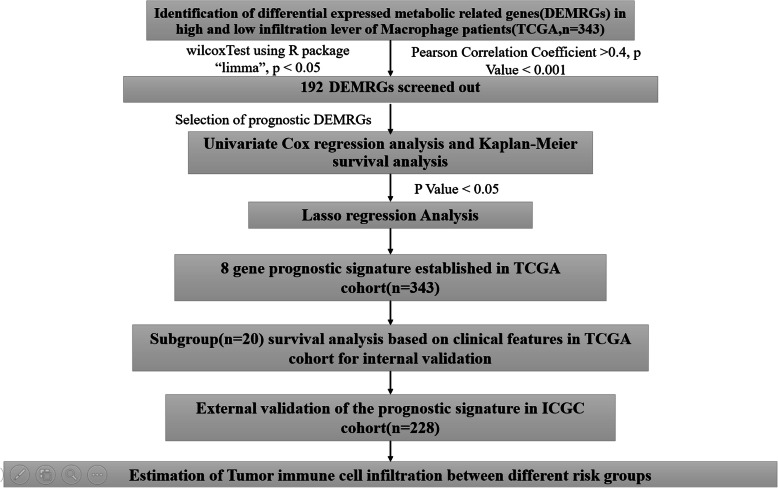
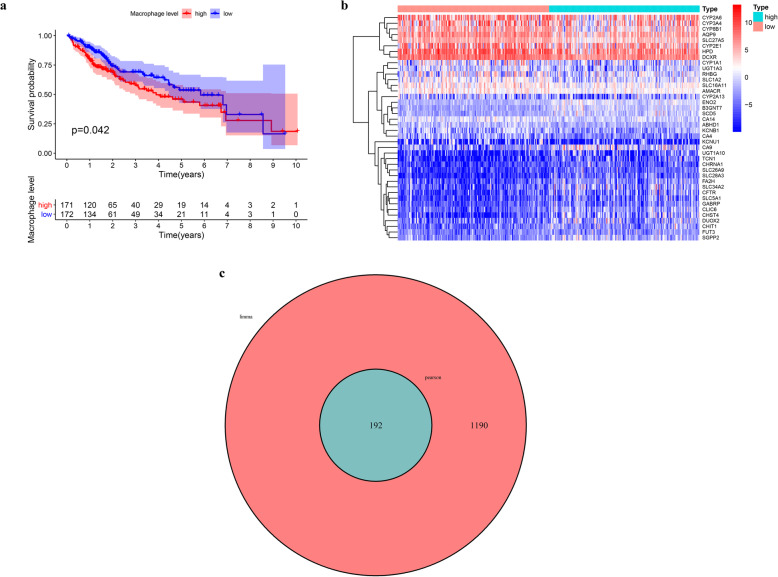
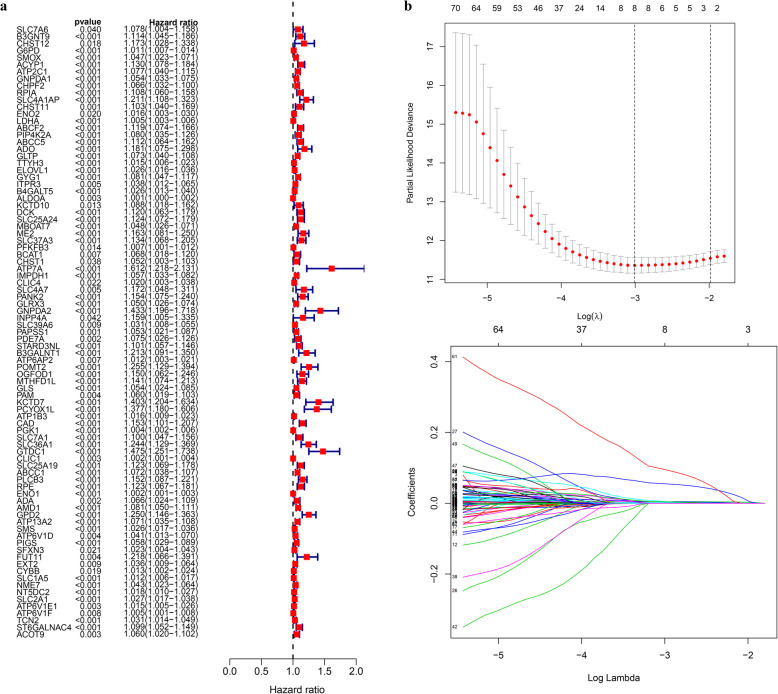
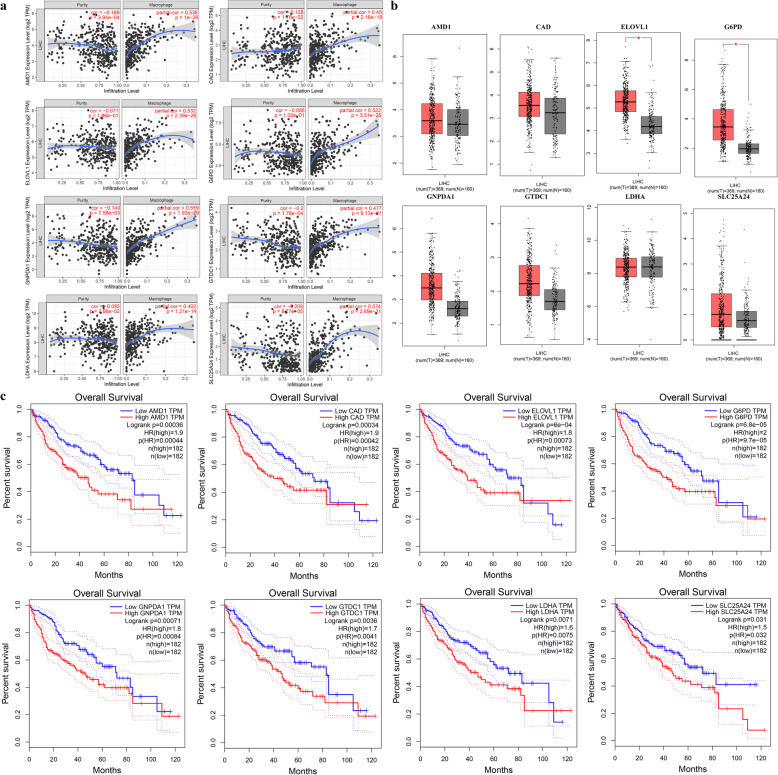
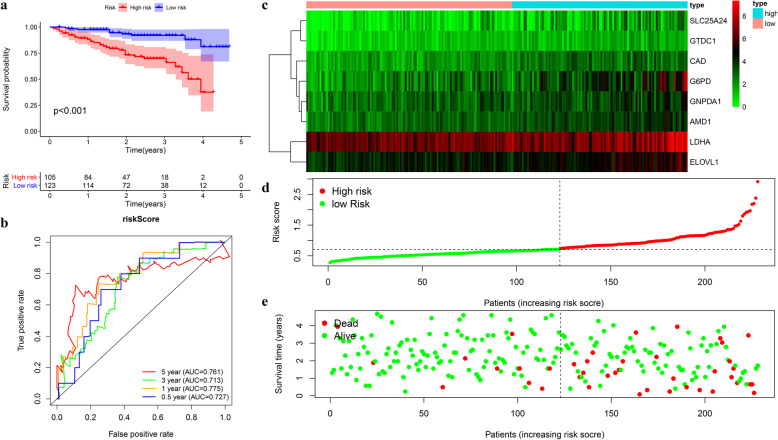
The study selected 343 HCC patients with complete survival information (survival time > = 1 month) in the Cancer Genome Atlas (TCGA) as study subjects. Kaplan-Meier survival analysis assisted in determining the relationship between macrophage infiltration and overall survival (OS), and Pearson correlation tests were used to identify metabolic reprogramming genes (MRGs) associated with tumor macrophage abundance. Lasso regression algorithms were used on prognosis-related MRGs identified by Kaplan-Meier survival analysis and univariate Cox regression analysis to construct a risk score; another independent cohort (including 228 HCC patients) from the International Cancer Genome Consortium (ICGC) was used to verify prognostic signature externally.
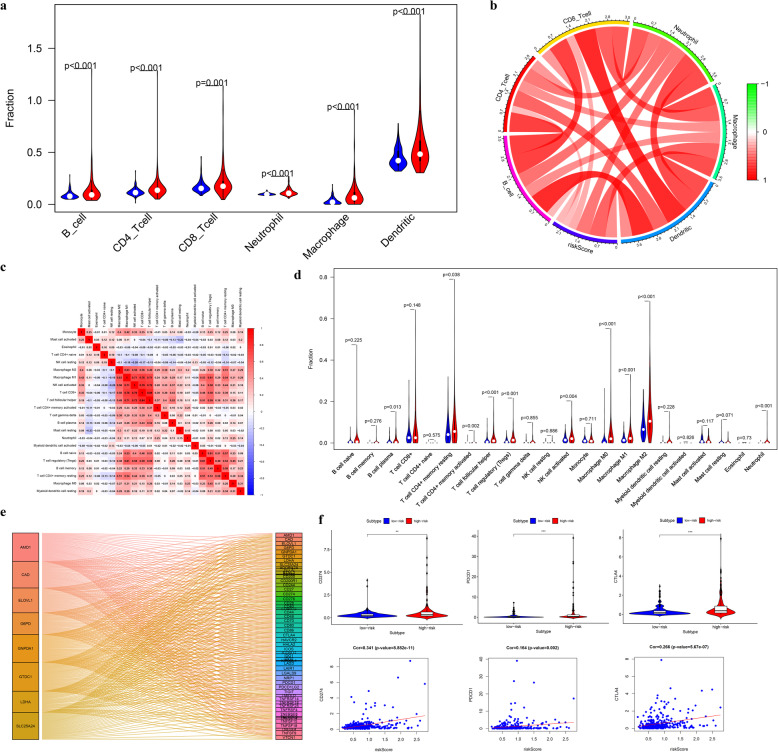
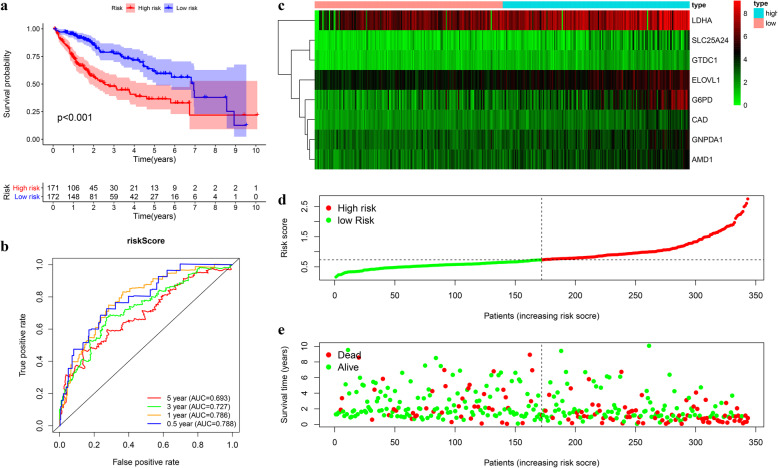
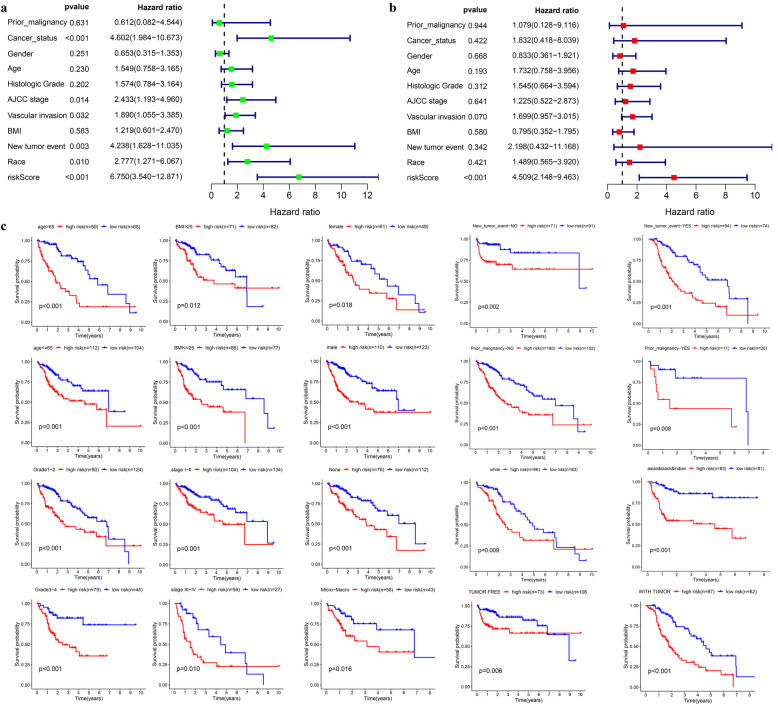
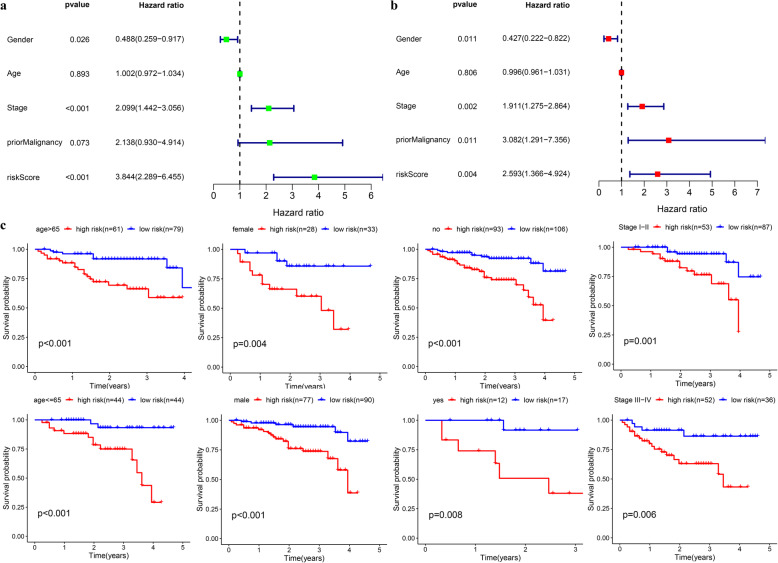
A risk score composed of 8 metabolic genes could accurately predict the OS of a training cohort (TCGA) and a testing cohort (ICGC). The risk score could be widely used for people with different clinical characteristics, and it is a predictor that is independent of other clinical factors that affect prognosis. As expected, compared with the low-risk group, the high-risk group exhibited an obviously higher macrophage abundance, together with a positive correlation between the risk score and the expression levels of three commonly used immune checkpoints (PD1, PDL1, and CTLA4).
Our study constructed and validated a novel eight-gene signature for predicting HCC patient OS, which may contribute to clinical treatment decisions.
近年来,肿瘤相关巨噬细胞(TAMs)与实体瘤之间的关系成为研究热点。本研究旨在探讨 TAMs 与肝细胞癌(HCC)代谢重编程基因的密切关系,为 HCC 治疗提供新方法。
本研究从癌症基因组图谱(TCGA)中选择了 343 例具有完整生存信息(生存时间≥1 个月)的 HCC 患者作为研究对象。Kaplan-Meier 生存分析辅助确定巨噬细胞浸润与总生存期(OS)的关系,Pearson 相关检验用于鉴定与肿瘤巨噬细胞丰度相关的代谢重编程基因(MRGs)。基于 Kaplan-Meier 生存分析和单因素 Cox 回归分析确定的预后相关 MRGs,采用 Lasso 回归算法构建风险评分;来自国际癌症基因组联盟(ICGC)的另一个独立队列(包括 228 例 HCC 患者)用于外部验证预后特征。
由 8 个代谢基因组成的风险评分可准确预测训练队列(TCGA)和测试队列(ICGC)的 OS。该风险评分可广泛应用于具有不同临床特征的人群,且是独立于其他影响预后的临床因素的预测因子。正如预期的那样,与低风险组相比,高风险组的巨噬细胞丰度明显更高,且风险评分与三种常用免疫检查点(PD1、PDL1 和 CTLA4)的表达水平呈正相关。
本研究构建并验证了一种用于预测 HCC 患者 OS 的新的 8 基因signature,可能有助于临床治疗决策。